

Schöner Brunnen
About Schöner Brunnen
Description
The Schöner Brunnen stands proudly in Nuremberg's Hauptmarkt, and honestly, the first time I saw it, I just stopped and stared for a good ten minutes. This isn't your average fountain – it's a 19-meter tall Gothic spire that shoots up from the square like something straight out of a medieval fairytale. Built originally in the 14th century, what travelers see today is actually a restored replica, but that doesn't make it any less impressive. The name translates to "Beautiful Fountain" in English, and you know what? It really lives up to that title. The structure features incredibly detailed stonework with 40 different figures arranged in four tiers, each one telling its own story. You'll find representations of philosophy, the seven liberal arts, the four evangelists, and the seven electors of the Holy Roman Empire. Back in medieval times, this fountain served as both a water source and a symbol of Nuremberg's power and wealth. What makes this fountain particularly special is how it survived World War II. The original had to be protected during the bombings, and what stands today combines both historical elements and careful restoration work. Walking around it, you can spot the famous golden ring embedded in the ironwork fence – but more on that later because there's quite a story there. The Schöner Brunnen sits right in the heart of Nuremberg's old town, surrounded by the Christmas market location during winter and regular market stalls throughout the year. It's become one of those places where locals meet tourists, where history buffs stand alongside families with kids, all craning their necks to admire the intricate carvings.Key Features
The Schöner Brunnen offers several distinctive elements that make it worth your time:- The Golden Ring – Two rings are actually embedded in the fence surrounding the fountain, but everyone focuses on the golden one. Legend says turning it three times brings good luck and fertility. I've watched countless people spin it, and honestly, it's become so smooth from millions of touches over the years
- Four-Tier Structure – Each level represents different aspects of medieval cosmology and power, from earthly philosophy to divine authority, creating a vertical journey through medieval worldview
- Forty Figures – The detailed sculptures include Moses, seven prophets, the four Gospel writers, the seven electors, nine heroes from history, and representatives of the liberal arts and philosophy
- Gothic Architecture – The spire design mimics church architecture, transforming a practical water fountain into a religious and political statement piece
- Original Iron Fencing – Dating back centuries, the ironwork fence surrounding the fountain is an artwork itself, featuring those famous rings and intricate metalwork
- Historical Significance – The fountain represents Nuremberg's golden age as a Free Imperial City and major trading center in medieval Europe
- Restoration Story – The careful preservation and reconstruction work tells its own tale about honoring historical heritage while ensuring future generations can appreciate it
Best Time to Visit
Timing your visit to the Schöner Brunnen really depends on what kind of experience you're after. And let me tell you, each season offers something completely different. December is when Nuremberg transforms into a winter wonderland, and the Christkindlesmarkt (Christmas market) sets up right around the fountain. The crowd situation? It's packed. Like, shoulder-to-shoulder packed. But if you can handle the crowds, seeing the fountain illuminated with Christmas lights while sipping mulled wine is genuinely magical. I'd recommend visiting early morning around 8-9 AM during market season if you want decent photos without fifty people in the background. Spring and early summer – we're talking April through June – offer the most pleasant weather for standing around and really studying the details. The temperatures are comfortable, and the square isn't overwhelmed with visitors yet. Plus, the market stalls are present but manageable. This is when I'd bring a good camera and spend time photographing the individual figures on each tier. September and October bring beautiful autumn light that photographers absolutely love. The golden hour here is spectacular, with the late afternoon sun hitting the fountain's western side around 5-6 PM. Fewer tourists than summer means you can actually walk around the entire perimeter without navigating a maze of selfie-takers. Early morning visits, regardless of season, give you the best chance at experiencing the fountain in relative peace. Before 9 AM, you'll mostly encounter locals crossing the square and maybe a few early-bird photographers. The fountain looks different in morning light – somehow more solemn and contemplative. Weekdays beat weekends hands down for crowd management. Tuesdays through Thursdays are typically quietest, while Saturdays get crazy busy, especially when the farmers market is in full swing. Weather-wise, overcast days actually work well for photography because you don't get harsh shadows on the intricate carvings. But sunny days let you see the golden ring sparkle, so there's tradeoffs either way.How to Get There
Getting to the Schöner Brunnen is straightforward since it's located right in Nuremberg's city center. The fountain sits in the Hauptmarkt square, which is the main market square, so pretty much everything in the old town radiates from this point. If you're arriving by train at Nuremberg's main station (Hauptbahnhof), you've got options. The walk takes about 15-20 minutes through the pedestrian shopping area, which is actually a nice way to get your bearings in the city. Just head toward the old town, following signs for "Altstadt" or "Hauptmarkt." The U-Bahn (subway) works great too. Take the U1 line to Lorenzkirche station, and from there it's a 5-minute walk north across the Pegnitz River and up to the square. Alternatively, the U2 or U3 lines to Hauptmarkt station drop you basically at the fountain's doorstep. Several tram and bus lines stop near the square as well. The 4, 6, and 8 trams all have stops within easy walking distance. Nuremberg's public transportation is efficient and runs frequently, so you won't be waiting long. For those driving – and I'll be honest here – parking in the old town is tricky. The entire Hauptmarkt area is pedestrian-only, so you'll need to use one of the parking garages on the outskirts of the old town. The Hauptmarkt parking garage is closest but fills up fast. Park there or at Parkhaus Katharinenhof, then walk. The old town is compact enough that once you're anywhere in the historic center, you can walk to the fountain easily. It's the central landmark, so if you're lost, just ask any local for "Hauptmarkt" or "Schöner Brunnen" and they'll point you in the right direction. Accessibility is decent – the square is flat and wheelchair accessible, though the cobblestones can be a bit bumpy. The fountain itself has a fence around it, so you view it from outside the perimeter.Tips for Visiting
Bring a camera with a decent zoom lens if you're into photography. Those upper-tier figures are hard to see with the naked eye, and getting good detail shots requires either zoom capability or a lot of patience. I spent an hour once trying to photograph all forty figures and still missed a few. The golden ring tradition is worth participating in, but here's the thing – there's often a line of people waiting to spin it. Don't feel pressured to rush. Take your time, make your wish, and give it a proper three rotations. And yeah, it's considered good luck, but it's also just a fun cultural experience. Download a guide or bring information about the figures beforehand. There's some signage, but not enough to identify every character on the fountain. Knowing who you're looking at makes the experience way more interesting. The symbolism and medieval iconography tell fascinating stories about how people viewed the world back then. Watch your belongings. The Hauptmarkt is generally safe, but like any tourist hotspot, pickpockets work the crowds. Keep bags zipped and phones secured, especially during busy periods. Combine your visit with the surrounding attractions. The Frauenkirche (Church of Our Lady) is right there on the square, and the entire old town is walkable. You can easily spend a full day exploring this area without needing transportation. Visit at different times if you can. The fountain looks completely different at noon versus sunset versus evening when it's lit up. Each lighting condition reveals different details in the stonework. Don't just look up – look at the base too. The lower sections have details that people often miss because everyone's focused on the spire reaching skyward. If you're traveling with kids, turn it into a scavenger hunt. Challenge them to find specific figures or count all the animals they can spot. The fountain is actually quite engaging for children once they start looking for details rather than just seeing a big structure. Respect the monument. I've seen people trying to climb the fence or touch the stonework – don't be that person. The fountain has survived centuries, and it needs visitors who appreciate rather than damage it. Grab a coffee from one of the cafes around the square and just sit for a while. Some of my best travel moments have been simply observing places rather than rushing through them. Watch how the locals interact with the fountain, how the light changes, how the square fills and empties throughout the day. The onsite services around the square include restrooms in nearby establishments (usually requiring a small purchase) and plenty of food options when you need a break. And finally – don't stress if conditions aren't perfect during your visit. Crowded or quiet, sunny or cloudy, the Schöner Brunnen has stood in that square for centuries and will likely outlast all of us. It's impressive regardless of when you see it.Key Features
- 14th-century Gothic spire-like fountain standing ~19 meters tall
- Richly carved statues of prophets, church fathers and philosophers
- Polychrome paint and restored medieval sculptural detail
- Famous golden ‘Wishing Ring’ in the outer railing (spin for luck)
- Central location in Hauptmarkt near Nuremberg’s historic town hall
More Details
Updated March 30, 2026
Table of Contents
Description
The Schöner Brunnen stands proudly in Nuremberg’s Hauptmarkt, and honestly, the first time I saw it, I just stopped and stared for a good ten minutes. This isn’t your average fountain – it’s a 19-meter tall Gothic spire that shoots up from the square like something straight out of a medieval fairytale. Built originally in the 14th century, what travelers see today is actually a restored replica, but that doesn’t make it any less impressive.
The name translates to “Beautiful Fountain” in English, and you know what? It really lives up to that title. The structure features incredibly detailed stonework with 40 different figures arranged in four tiers, each one telling its own story. You’ll find representations of philosophy, the seven liberal arts, the four evangelists, and the seven electors of the Holy Roman Empire. Back in medieval times, this fountain served as both a water source and a symbol of Nuremberg’s power and wealth.
What makes this fountain particularly special is how it survived World War II. The original had to be protected during the bombings, and what stands today combines both historical elements and careful restoration work. Walking around it, you can spot the famous golden ring embedded in the ironwork fence – but more on that later because there’s quite a story there.
The Schöner Brunnen sits right in the heart of Nuremberg’s old town, surrounded by the Christmas market location during winter and regular market stalls throughout the year. It’s become one of those places where locals meet tourists, where history buffs stand alongside families with kids, all craning their necks to admire the intricate carvings.
Key Features
The Schöner Brunnen offers several distinctive elements that make it worth your time:
- The Golden Ring – Two rings are actually embedded in the fence surrounding the fountain, but everyone focuses on the golden one. Legend says turning it three times brings good luck and fertility. I’ve watched countless people spin it, and honestly, it’s become so smooth from millions of touches over the years
- Four-Tier Structure – Each level represents different aspects of medieval cosmology and power, from earthly philosophy to divine authority, creating a vertical journey through medieval worldview
- Forty Figures – The detailed sculptures include Moses, seven prophets, the four Gospel writers, the seven electors, nine heroes from history, and representatives of the liberal arts and philosophy
- Gothic Architecture – The spire design mimics church architecture, transforming a practical water fountain into a religious and political statement piece
- Original Iron Fencing – Dating back centuries, the ironwork fence surrounding the fountain is an artwork itself, featuring those famous rings and intricate metalwork
- Historical Significance – The fountain represents Nuremberg’s golden age as a Free Imperial City and major trading center in medieval Europe
- Restoration Story – The careful preservation and reconstruction work tells its own tale about honoring historical heritage while ensuring future generations can appreciate it
Best Time to Visit
Timing your visit to the Schöner Brunnen really depends on what kind of experience you’re after. And let me tell you, each season offers something completely different.
December is when Nuremberg transforms into a winter wonderland, and the Christkindlesmarkt (Christmas market) sets up right around the fountain. The crowd situation? It’s packed. Like, shoulder-to-shoulder packed. But if you can handle the crowds, seeing the fountain illuminated with Christmas lights while sipping mulled wine is genuinely magical. I’d recommend visiting early morning around 8-9 AM during market season if you want decent photos without fifty people in the background.
Spring and early summer – we’re talking April through June – offer the most pleasant weather for standing around and really studying the details. The temperatures are comfortable, and the square isn’t overwhelmed with visitors yet. Plus, the market stalls are present but manageable. This is when I’d bring a good camera and spend time photographing the individual figures on each tier.
September and October bring beautiful autumn light that photographers absolutely love. The golden hour here is spectacular, with the late afternoon sun hitting the fountain’s western side around 5-6 PM. Fewer tourists than summer means you can actually walk around the entire perimeter without navigating a maze of selfie-takers.
Early morning visits, regardless of season, give you the best chance at experiencing the fountain in relative peace. Before 9 AM, you’ll mostly encounter locals crossing the square and maybe a few early-bird photographers. The fountain looks different in morning light – somehow more solemn and contemplative.
Weekdays beat weekends hands down for crowd management. Tuesdays through Thursdays are typically quietest, while Saturdays get crazy busy, especially when the farmers market is in full swing.
Weather-wise, overcast days actually work well for photography because you don’t get harsh shadows on the intricate carvings. But sunny days let you see the golden ring sparkle, so there’s tradeoffs either way.
How to Get There
Getting to the Schöner Brunnen is straightforward since it’s located right in Nuremberg’s city center. The fountain sits in the Hauptmarkt square, which is the main market square, so pretty much everything in the old town radiates from this point.
If you’re arriving by train at Nuremberg’s main station (Hauptbahnhof), you’ve got options. The walk takes about 15-20 minutes through the pedestrian shopping area, which is actually a nice way to get your bearings in the city. Just head toward the old town, following signs for “Altstadt” or “Hauptmarkt.”
The U-Bahn (subway) works great too. Take the U1 line to Lorenzkirche station, and from there it’s a 5-minute walk north across the Pegnitz River and up to the square. Alternatively, the U2 or U3 lines to Hauptmarkt station drop you basically at the fountain’s doorstep.
Several tram and bus lines stop near the square as well. The 4, 6, and 8 trams all have stops within easy walking distance. Nuremberg’s public transportation is efficient and runs frequently, so you won’t be waiting long.
For those driving – and I’ll be honest here – parking in the old town is tricky. The entire Hauptmarkt area is pedestrian-only, so you’ll need to use one of the parking garages on the outskirts of the old town. The Hauptmarkt parking garage is closest but fills up fast. Park there or at Parkhaus Katharinenhof, then walk.
The old town is compact enough that once you’re anywhere in the historic center, you can walk to the fountain easily. It’s the central landmark, so if you’re lost, just ask any local for “Hauptmarkt” or “Schöner Brunnen” and they’ll point you in the right direction.
Accessibility is decent – the square is flat and wheelchair accessible, though the cobblestones can be a bit bumpy. The fountain itself has a fence around it, so you view it from outside the perimeter.
Tips for Visiting
Bring a camera with a decent zoom lens if you’re into photography. Those upper-tier figures are hard to see with the naked eye, and getting good detail shots requires either zoom capability or a lot of patience. I spent an hour once trying to photograph all forty figures and still missed a few.
The golden ring tradition is worth participating in, but here’s the thing – there’s often a line of people waiting to spin it. Don’t feel pressured to rush. Take your time, make your wish, and give it a proper three rotations. And yeah, it’s considered good luck, but it’s also just a fun cultural experience.
Download a guide or bring information about the figures beforehand. There’s some signage, but not enough to identify every character on the fountain. Knowing who you’re looking at makes the experience way more interesting. The symbolism and medieval iconography tell fascinating stories about how people viewed the world back then.
Watch your belongings. The Hauptmarkt is generally safe, but like any tourist hotspot, pickpockets work the crowds. Keep bags zipped and phones secured, especially during busy periods.
Combine your visit with the surrounding attractions. The Frauenkirche (Church of Our Lady) is right there on the square, and the entire old town is walkable. You can easily spend a full day exploring this area without needing transportation.
Visit at different times if you can. The fountain looks completely different at noon versus sunset versus evening when it’s lit up. Each lighting condition reveals different details in the stonework.
Don’t just look up – look at the base too. The lower sections have details that people often miss because everyone’s focused on the spire reaching skyward.
If you’re traveling with kids, turn it into a scavenger hunt. Challenge them to find specific figures or count all the animals they can spot. The fountain is actually quite engaging for children once they start looking for details rather than just seeing a big structure.
Respect the monument. I’ve seen people trying to climb the fence or touch the stonework – don’t be that person. The fountain has survived centuries, and it needs visitors who appreciate rather than damage it.
Grab a coffee from one of the cafes around the square and just sit for a while. Some of my best travel moments have been simply observing places rather than rushing through them. Watch how the locals interact with the fountain, how the light changes, how the square fills and empties throughout the day.
The onsite services around the square include restrooms in nearby establishments (usually requiring a small purchase) and plenty of food options when you need a break.
And finally – don’t stress if conditions aren’t perfect during your visit. Crowded or quiet, sunny or cloudy, the Schöner Brunnen has stood in that square for centuries and will likely outlast all of us. It’s impressive regardless of when you see it.
Key Highlights
- 14th-century Gothic spire-like fountain standing ~19 meters tall
- Richly carved statues of prophets, church fathers and philosophers
- Polychrome paint and restored medieval sculptural detail
- Famous golden ‘Wishing Ring’ in the outer railing (spin for luck)
- Central location in Hauptmarkt near Nuremberg’s historic town hall
Location
Places to Stay Near Schöner Brunnen
Find and Book a Tour
Explore More Travel Guides
No reviews found! Be the first to review!
Schöner Brunnen is a prominent Historische Sehenswürdigkeit located in Nuremberg.
Visit us at: Hauptmarkt, 90403 Nürnberg, Germany.
Traveler Reviews for Schöner Brunnen
There are no reviews yet. Be the first one to write one.
Have you visited Schöner Brunnen? Help other travelers by sharing your review.
Nearby Attractions
You Might Also Like
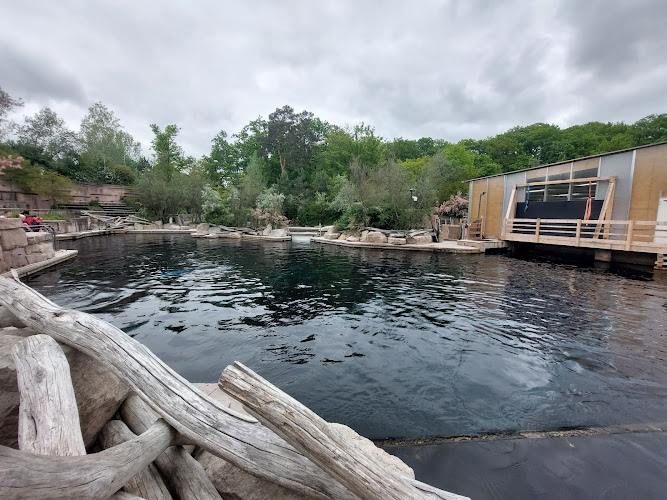
Am Tiergarten 30
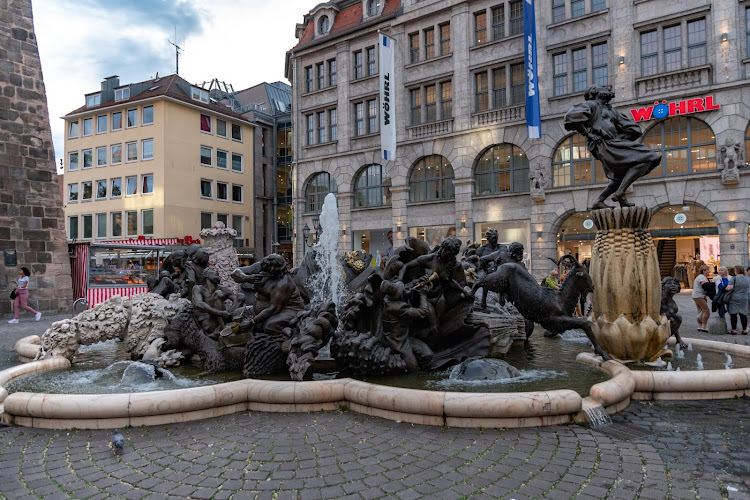
Ehekarussell
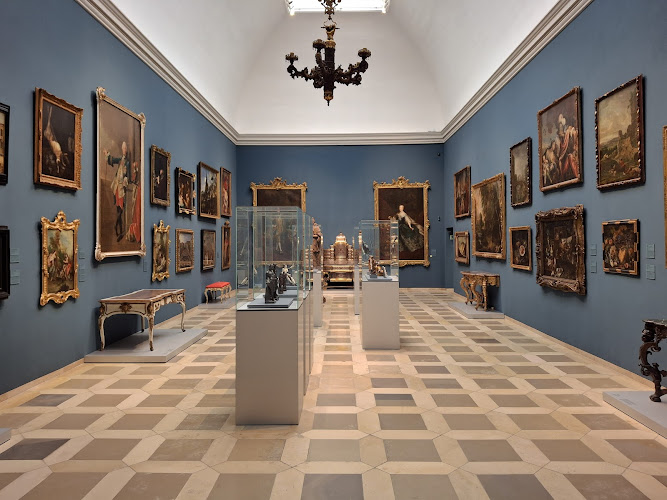
Germanic National Museum
Find Accommodations Nearby
Recommended Tours & Activities
Visitor Reviews
There are no reviews yet. Be the first one to write one.
Share Your Experience
Have you visited Schöner Brunnen? Help other travelers by leaving a review.