Ehekarussell
About Ehekarussell
Description
The Ehekarussell, which translates to Marriage Carousel in English, stands as one of Nuremberg's most thought-provoking public artworks. This isn't your typical charming European fountain that you'll find plastered on every postcard – it's something much more raw and honest. Created by sculptor Jürgen Weber and unveiled in 1984, this bronze fountain depicts the journey of marriage through a series of statues arranged in a circular pattern around a central water feature. What makes this fountain genuinely fascinating is how it brings to life a 16th-century poem by Hans Sachs called "Das bittersüße ehliche Leben" or "The Bitter-Sweet Married Life." And let me tell you, Sachs didn't sugarcoat anything. The sculptural interpretation shows various stages of matrimony, from the passionate early romance through the challenging middle years and eventually to death. It's brutally honest in ways that make some visitors uncomfortable while others find it refreshingly real. I remember the first time I stumbled upon it during a walking tour of Nuremberg's old town. My guide warned us beforehand that this wasn't going to be your grandmother's fountain, and she wasn't kidding. The sculptures range from tender moments of young love to rather explicit depictions of marital conflict and discord. Some figures appear to be fighting, others show domestic violence, and there's even imagery of the Devil himself making an appearance in the marital narrative. The fountain sits in the White Tower area near the city center, and it's become something of a cultural landmark despite – or perhaps because of – its controversial nature. Locals have mixed feelings about it, which honestly adds to its character. Some think it's an important artistic statement about the realities of long-term relationships, while others find it offensive or unnecessarily graphic. What you won't find here are sanitized fairy tale depictions of marriage. Instead, Weber's work presents marriage as a complex human experience with genuine ups and downs. The water flows continuously through and around the sculptures, creating an almost meditative backdrop to these intensely emotional bronze figures.Key Features
The Ehekarussell offers several distinctive elements that make it worth visiting during your time in Nuremberg: • Six main sculptural groups arranged in a circular narrative following the progression of married life from courtship to death • Bronze sculptures that stand several feet tall, allowing visitors to appreciate the detailed craftsmanship and emotional expressions captured in each figure • Continuously flowing water that adds movement and sound to the static bronze figures, creating an interesting contrast between the permanence of the sculptures and the ever-changing water • Wheelchair accessible viewing areas that ensure all visitors can experience and contemplate the artwork • A central location that makes it easy to incorporate into a broader walking tour of Nuremberg's historic district • Interpretive elements that reference Hans Sachs' original 16th-century poem, connecting contemporary art with medieval German literature • Nighttime illumination that casts dramatic shadows and highlights different aspects of the sculptures depending on the season • Free public access at all hours, making it an economical cultural experience for budget-conscious travelers • Photo opportunities that range from family-friendly angles to more provocative compositions depending on your perspective and comfort levelBest Time to Visit
Timing your visit to the Ehekarussell depends largely on what kind of experience you're after. The fountain is accessible year-round since it's an outdoor public installation, but different seasons offer distinct advantages. Spring months from April through June provide probably the most comfortable viewing conditions. The weather's mild enough that you can spend time really studying the individual sculptures without freezing or sweating. Plus, the surrounding area comes alive with tourists but hasn't yet reached the peak summer crowds. The water in the fountain flows beautifully during these months, and you'll have better opportunities for photography without hordes of people in your shots. Summer brings the biggest crowds to Nuremberg, and the Ehekarussell becomes a popular meeting point. If you're someone who enjoys people-watching and overhearing different reactions to the controversial artwork, summer afternoons are perfect. I'd suggest visiting either early morning around 7 or 8 AM or later in the evening around 8 or 9 PM when the light is softer and fewer tour groups are making their rounds. Autumn has always been my personal favorite time for visiting. The cooler temperatures mean fewer tourists, and there's something poetic about viewing these sculptures about life's journey while leaves are falling around you. September and October offer that sweet spot of decent weather without summer's intensity. Winter visits present their own unique charm. The fountain sometimes ices over partially, creating an almost ethereal quality to the bronze figures. However, you won't want to linger too long in freezing temperatures. The Christmas market season brings special lighting to the area, and seeing the Ehekarussell illuminated against winter darkness adds a different dimension to its already complex symbolism. Time of day matters as much as season. Early mornings offer solitude that lets you contemplate the artwork's deeper meanings without distraction. Late afternoons around 4 or 5 PM provide good natural lighting for photography. Evening visits after dark showcase the fountain's dramatic lighting installation.How to Get There
Getting to the Ehekarussell is straightforward thanks to Nuremberg's efficient public transportation system and the fountain's central location in the old town district. If you're arriving by train at Nuremberg's main station (Hauptbahnhof), you've got several options. The most scenic route involves a pleasant 15 to 20-minute walk through the city center. Just head southeast toward the old town, and you'll pass through shopping districts and historic streets before reaching the White Tower area where the fountain stands. This walk gives you a good feel for the city's layout and character. For those preferring public transit, several U-Bahn and bus lines serve the area. The U1 U-Bahn line stops at Lorenzkirche, which puts you within a five-minute walk of the fountain. Buses also run frequently through the old town with stops nearby. A day pass for Nuremberg's public transport costs around 8 euros and covers unlimited travel, which is worthwhile if you're planning to visit multiple attractions. Cyclists will find Nuremberg quite bike-friendly, with dedicated lanes throughout the old town. Bike rental shops operate near the train station and in various locations around the city center. Just remember that some areas of the old town have pedestrian-only zones during certain hours. If you're driving – though I wouldn't necessarily recommend it given parking challenges in the old town – several parking garages operate within walking distance. The Parkhaus Adler and Parkhaus City Point both offer reasonable rates and put you about ten minutes from the fountain on foot. But honestly, Nuremberg's compact old town is best explored without a car. Many visitors incorporate the Ehekarussell into a broader walking tour of Nuremberg's attractions. It sits relatively close to other landmarks like St. Lawrence Church, the Hospital of the Holy Spirit, and the Hauptmarkt square. You can easily create a self-guided walking route that hits multiple sites within a few hours.Tips for Visiting
Approaching the Ehekarussell requires some preparation, especially given its controversial nature. Here are practical insights that'll enhance your experience. First off, understand what you're about to see. This isn't a fountain that necessarily belongs on your Instagram feed if you've got young followers or conservative family members who might stumble across your posts. Some of the sculptural elements are sexually explicit and depict violence in ways that can shock unprepared visitors. I'd recommend doing a quick image search beforehand so you know what to expect. That said, the fountain is officially marked as appropriate for children, so make your own judgment call based on your family's values. Bring a good camera or ensure your phone is charged because the sculptural details really reward close examination. Wide-angle shots capture the circular arrangement, but you'll want zoom capability for individual sculptural groups. The bronze work includes facial expressions and smaller details that tell their own stories. Take your time walking around the entire circumference. The fountain's narrative structure means you need to view it sequentially to understand the full arc of the marriage story Sachs and Weber are telling. Many tourists snap one quick photo from wherever they first approach and move on, missing the point entirely. Consider visiting multiple times during your stay if possible. My experience has been that the fountain reveals different aspects depending on your mood and the time of day. A morning visit when you're fresh provides different insights than an evening visit after you've spent the day exploring Nuremberg's heavier historical sites related to World War II. The surrounding area has benches and cafes where you can sit and process what you've seen. I'd actually recommend grabbing a coffee at one of the nearby cafes and just watching how different people react to the fountain. The range of responses – from laughter to discomfort to deep contemplation – says as much about contemporary attitudes toward marriage as the artwork itself. For photography enthusiasts, overcast days actually work better than bright sunshine because you won't get harsh shadows on the bronze surfaces. Golden hour produces dramatic lighting but can create exposure challenges. Consider bringing a polarizing filter if you're shooting with a proper camera. If you're traveling with kids, prepare age-appropriate explanations beforehand. Questions will come up. Some parents use it as an opportunity to discuss art, symbolism, and how different cultures approach sensitive topics. Others hurry past quickly. Know your comfort level ahead of time. The fountain is wheelchair accessible with level approaches from multiple directions. However, the circular design means wheelchair users might need assistance to view all angles depending on mobility limitations. Don't skip reading about Hans Sachs and his original poem. Understanding the 16th-century literary context makes the sculptures significantly more meaningful. Several tourism websites and guidebooks provide translations and analysis of Sachs' work. Finally, be respectful of locals who use this area as a meeting point and gathering space. The Ehekarussell might be a tourist attraction to you, but it's part of daily life for Nuremberg residents. Keep voices down and be mindful of your space, especially if you're with a tour group. The controversial nature of this fountain is precisely what makes it worth visiting. In a world of carefully curated public art that offends no one and says nothing, the Ehekarussell stands as a bold statement about human relationships in all their complicated glory.Key Features
- Dramatic bronze sculptures depicting scenes from marriage based on Hans Sachs’ poem
- Located beside the historic Weißer Turm in Nuremberg’s old town
- Water-feature carousel design that creates movement and theatricality
- Created by Jürgen Weber in 1984, notable example of late-20th-century public art
- Strong photographic and interpretive appeal — provocative, satirical imagery
More Details
Updated March 30, 2026
Table of Contents
Description
The Ehekarussell, which translates to Marriage Carousel in English, stands as one of Nuremberg’s most thought-provoking public artworks. This isn’t your typical charming European fountain that you’ll find plastered on every postcard – it’s something much more raw and honest. Created by sculptor Jürgen Weber and unveiled in 1984, this bronze fountain depicts the journey of marriage through a series of statues arranged in a circular pattern around a central water feature.
What makes this fountain genuinely fascinating is how it brings to life a 16th-century poem by Hans Sachs called “Das bittersüße ehliche Leben” or “The Bitter-Sweet Married Life.” And let me tell you, Sachs didn’t sugarcoat anything. The sculptural interpretation shows various stages of matrimony, from the passionate early romance through the challenging middle years and eventually to death. It’s brutally honest in ways that make some visitors uncomfortable while others find it refreshingly real.
I remember the first time I stumbled upon it during a walking tour of Nuremberg’s old town. My guide warned us beforehand that this wasn’t going to be your grandmother’s fountain, and she wasn’t kidding. The sculptures range from tender moments of young love to rather explicit depictions of marital conflict and discord. Some figures appear to be fighting, others show domestic violence, and there’s even imagery of the Devil himself making an appearance in the marital narrative.
The fountain sits in the White Tower area near the city center, and it’s become something of a cultural landmark despite – or perhaps because of – its controversial nature. Locals have mixed feelings about it, which honestly adds to its character. Some think it’s an important artistic statement about the realities of long-term relationships, while others find it offensive or unnecessarily graphic.
What you won’t find here are sanitized fairy tale depictions of marriage. Instead, Weber’s work presents marriage as a complex human experience with genuine ups and downs. The water flows continuously through and around the sculptures, creating an almost meditative backdrop to these intensely emotional bronze figures.
Key Features
The Ehekarussell offers several distinctive elements that make it worth visiting during your time in Nuremberg:
• Six main sculptural groups arranged in a circular narrative following the progression of married life from courtship to death
• Bronze sculptures that stand several feet tall, allowing visitors to appreciate the detailed craftsmanship and emotional expressions captured in each figure
• Continuously flowing water that adds movement and sound to the static bronze figures, creating an interesting contrast between the permanence of the sculptures and the ever-changing water
• Wheelchair accessible viewing areas that ensure all visitors can experience and contemplate the artwork
• A central location that makes it easy to incorporate into a broader walking tour of Nuremberg’s historic district
• Interpretive elements that reference Hans Sachs’ original 16th-century poem, connecting contemporary art with medieval German literature
• Nighttime illumination that casts dramatic shadows and highlights different aspects of the sculptures depending on the season
• Free public access at all hours, making it an economical cultural experience for budget-conscious travelers
• Photo opportunities that range from family-friendly angles to more provocative compositions depending on your perspective and comfort level
Best Time to Visit
Timing your visit to the Ehekarussell depends largely on what kind of experience you’re after. The fountain is accessible year-round since it’s an outdoor public installation, but different seasons offer distinct advantages.
Spring months from April through June provide probably the most comfortable viewing conditions. The weather’s mild enough that you can spend time really studying the individual sculptures without freezing or sweating. Plus, the surrounding area comes alive with tourists but hasn’t yet reached the peak summer crowds. The water in the fountain flows beautifully during these months, and you’ll have better opportunities for photography without hordes of people in your shots.
Summer brings the biggest crowds to Nuremberg, and the Ehekarussell becomes a popular meeting point. If you’re someone who enjoys people-watching and overhearing different reactions to the controversial artwork, summer afternoons are perfect. I’d suggest visiting either early morning around 7 or 8 AM or later in the evening around 8 or 9 PM when the light is softer and fewer tour groups are making their rounds.
Autumn has always been my personal favorite time for visiting. The cooler temperatures mean fewer tourists, and there’s something poetic about viewing these sculptures about life’s journey while leaves are falling around you. September and October offer that sweet spot of decent weather without summer’s intensity.
Winter visits present their own unique charm. The fountain sometimes ices over partially, creating an almost ethereal quality to the bronze figures. However, you won’t want to linger too long in freezing temperatures. The Christmas market season brings special lighting to the area, and seeing the Ehekarussell illuminated against winter darkness adds a different dimension to its already complex symbolism.
Time of day matters as much as season. Early mornings offer solitude that lets you contemplate the artwork’s deeper meanings without distraction. Late afternoons around 4 or 5 PM provide good natural lighting for photography. Evening visits after dark showcase the fountain’s dramatic lighting installation.
How to Get There
Getting to the Ehekarussell is straightforward thanks to Nuremberg’s efficient public transportation system and the fountain’s central location in the old town district.
If you’re arriving by train at Nuremberg’s main station (Hauptbahnhof), you’ve got several options. The most scenic route involves a pleasant 15 to 20-minute walk through the city center. Just head southeast toward the old town, and you’ll pass through shopping districts and historic streets before reaching the White Tower area where the fountain stands. This walk gives you a good feel for the city’s layout and character.
For those preferring public transit, several U-Bahn and bus lines serve the area. The U1 U-Bahn line stops at Lorenzkirche, which puts you within a five-minute walk of the fountain. Buses also run frequently through the old town with stops nearby. A day pass for Nuremberg’s public transport costs around 8 euros and covers unlimited travel, which is worthwhile if you’re planning to visit multiple attractions.
Cyclists will find Nuremberg quite bike-friendly, with dedicated lanes throughout the old town. Bike rental shops operate near the train station and in various locations around the city center. Just remember that some areas of the old town have pedestrian-only zones during certain hours.
If you’re driving – though I wouldn’t necessarily recommend it given parking challenges in the old town – several parking garages operate within walking distance. The Parkhaus Adler and Parkhaus City Point both offer reasonable rates and put you about ten minutes from the fountain on foot. But honestly, Nuremberg’s compact old town is best explored without a car.
Many visitors incorporate the Ehekarussell into a broader walking tour of Nuremberg’s attractions. It sits relatively close to other landmarks like St. Lawrence Church, the Hospital of the Holy Spirit, and the Hauptmarkt square. You can easily create a self-guided walking route that hits multiple sites within a few hours.
Tips for Visiting
Approaching the Ehekarussell requires some preparation, especially given its controversial nature. Here are practical insights that’ll enhance your experience.
First off, understand what you’re about to see. This isn’t a fountain that necessarily belongs on your Instagram feed if you’ve got young followers or conservative family members who might stumble across your posts. Some of the sculptural elements are sexually explicit and depict violence in ways that can shock unprepared visitors. I’d recommend doing a quick image search beforehand so you know what to expect. That said, the fountain is officially marked as appropriate for children, so make your own judgment call based on your family’s values.
Bring a good camera or ensure your phone is charged because the sculptural details really reward close examination. Wide-angle shots capture the circular arrangement, but you’ll want zoom capability for individual sculptural groups. The bronze work includes facial expressions and smaller details that tell their own stories.
Take your time walking around the entire circumference. The fountain’s narrative structure means you need to view it sequentially to understand the full arc of the marriage story Sachs and Weber are telling. Many tourists snap one quick photo from wherever they first approach and move on, missing the point entirely.
Consider visiting multiple times during your stay if possible. My experience has been that the fountain reveals different aspects depending on your mood and the time of day. A morning visit when you’re fresh provides different insights than an evening visit after you’ve spent the day exploring Nuremberg’s heavier historical sites related to World War II.
The surrounding area has benches and cafes where you can sit and process what you’ve seen. I’d actually recommend grabbing a coffee at one of the nearby cafes and just watching how different people react to the fountain. The range of responses – from laughter to discomfort to deep contemplation – says as much about contemporary attitudes toward marriage as the artwork itself.
For photography enthusiasts, overcast days actually work better than bright sunshine because you won’t get harsh shadows on the bronze surfaces. Golden hour produces dramatic lighting but can create exposure challenges. Consider bringing a polarizing filter if you’re shooting with a proper camera.
If you’re traveling with kids, prepare age-appropriate explanations beforehand. Questions will come up. Some parents use it as an opportunity to discuss art, symbolism, and how different cultures approach sensitive topics. Others hurry past quickly. Know your comfort level ahead of time.
The fountain is wheelchair accessible with level approaches from multiple directions. However, the circular design means wheelchair users might need assistance to view all angles depending on mobility limitations.
Don’t skip reading about Hans Sachs and his original poem. Understanding the 16th-century literary context makes the sculptures significantly more meaningful. Several tourism websites and guidebooks provide translations and analysis of Sachs’ work.
Finally, be respectful of locals who use this area as a meeting point and gathering space. The Ehekarussell might be a tourist attraction to you, but it’s part of daily life for Nuremberg residents. Keep voices down and be mindful of your space, especially if you’re with a tour group.
The controversial nature of this fountain is precisely what makes it worth visiting. In a world of carefully curated public art that offends no one and says nothing, the Ehekarussell stands as a bold statement about human relationships in all their complicated glory.
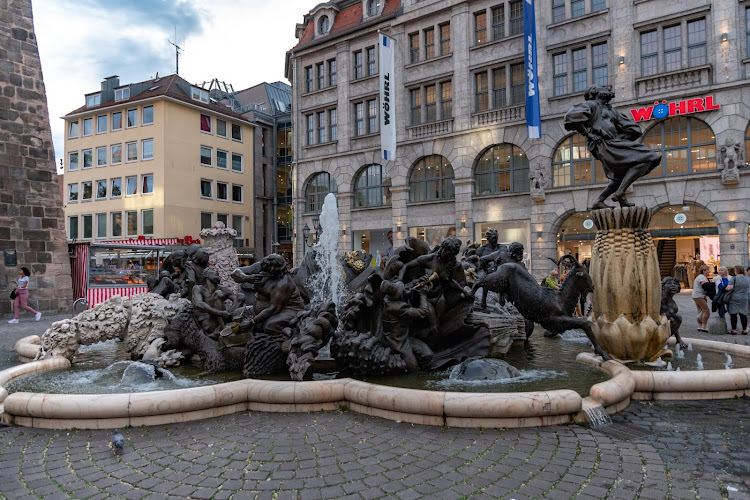
Key Highlights
- Dramatic bronze sculptures depicting scenes from marriage based on Hans Sachs’ poem
- Located beside the historic Weißer Turm in Nuremberg’s old town
- Water-feature carousel design that creates movement and theatricality
- Created by Jürgen Weber in 1984, notable example of late-20th-century public art
- Strong photographic and interpretive appeal — provocative, satirical imagery
Location
Places to Stay Near Ehekarussell
Find and Book a Tour
Explore More Travel Guides
No reviews found! Be the first to review!
Ehekarussell is a prominent attractions located in Nuremberg.
Visit us at: Am Weißen Turm, 90402 Nürnberg, Jerman.
Traveler Reviews for Ehekarussell
There are no reviews yet. Be the first one to write one.
Have you visited Ehekarussell? Help other travelers by sharing your review.
Nearby Attractions
Find Accommodations Nearby
Recommended Tours & Activities
Visitor Reviews
There are no reviews yet. Be the first one to write one.
Share Your Experience
Have you visited Ehekarussell? Help other travelers by leaving a review.
