Fontana dell’Elefante (uʻ Liotru)
About Fontana dell’Elefante (uʻ Liotru)
Description
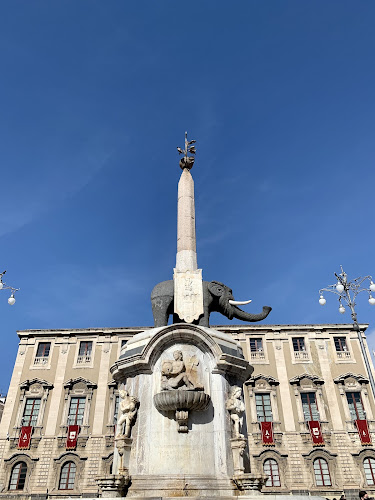
In the heart of Catania’s Piazza del Duomo stands something that has managed to capture both the soul and humor of the Sicilian people — the Fontana dell’Elefante, affectionately known as u Liotru. It’s not just a fountain; it’s a symbol, a story, a bit of magic carved in black volcanic stone. The elephant, sculpted from dark basalt, carries an ancient Egyptian obelisk on its back, a curious pairing that instantly grabs your attention. It’s one of those monuments that seems to wink at you, as if it knows more than it’s letting on.
The fountain was designed in the 1730s by architect Giovanni Battista Vaccarini, who cleverly blended Roman, Egyptian, and local styles into a single masterpiece. The elephant itself, though, is much older — likely from the Roman era. Legend has it that it represents Eliodoro, a local magician who supposedly turned people into animals (or so the story goes). The nickname “Liotru” actually comes from a mispronunciation of his name. Some locals swear the elephant has mystical powers, protecting the city from Mount Etna’s eruptions. Whether or not you believe that, it’s hard not to feel a little awe standing before it, especially when the sunlight hits the lava stone just right, giving it a warm, almost living glow.
What’s fascinating is how much affection the people of Catania have for this little elephant. You’ll see its image everywhere — on souvenirs, shop signs, even tattoos. It’s not grand or intimidating like Rome’s monuments; it’s charming, a bit quirky, and deeply Sicilian. And maybe that’s why it feels so real. It’s a piece of history that’s still alive, right in the city’s heartbeat. Travelers often describe it as smaller than expected but far more meaningful once you understand its story. That’s the thing about Catania — it’s full of surprises, and u Liotru might just be the best of them.
Key Features
- Historic Symbol: The official emblem of Catania, representing resilience and local pride.
- Material: Elephant carved from black lava stone, topped with an ancient Egyptian obelisk.
- Architect: Designed by Giovanni Battista Vaccarini in the 18th century.
- Legends: Connected to the magician Eliodoro, who is said to have given the elephant magical powers.
- Location: Central feature of Piazza del Duomo, surrounded by baroque architecture and lively streets.
- Accessibility: Wheelchair accessible and suitable for families with children.
- Atmosphere: A blend of history, myth, and local life — perfect for photos and people-watching.
Best Time to Visit
If you ask locals, they’ll tell you that the best time to visit the Fontana dell’Elefante is early in the morning, right before the city fully wakes up. The square is quiet then, the air smells faintly of espresso drifting from nearby cafés, and the morning light gives the basalt elephant a soft, bronze-like hue. It’s almost poetic. By midday, the piazza fills with chatter, laughter, and the occasional street performer, which gives it a completely different energy — busy, joyful, and very Sicilian.
Spring and autumn are ideal seasons for a visit. The weather is mild, the crowds are manageable, and the light is perfect for photography. Summer can be hot (and I mean really hot — the kind where even the stones seem to sweat), but if you don’t mind the heat, the atmosphere is electric. Evening visits are also special. The fountain glows under the city lights, and you can grab a gelato while watching locals stroll by. It’s one of those places that changes character with the time of day, and honestly, it’s worth seeing it more than once if you can.
How to Get There
Getting to the Fontana dell’Elefante is pretty straightforward since it sits right in the historic center of Catania. Most travelers arrive via the city’s main train station or airport, both of which are just a short ride away by bus or taxi. If you’re staying nearby, walking is the best option — not just because it’s convenient, but because wandering through Catania’s streets is half the fun. You’ll pass colorful markets, baroque churches, and locals chatting outside cafés, all leading you naturally toward Piazza del Duomo.
Public transportation in Catania is decent, but honestly, the city is best explored on foot. If you’re driving, be prepared for narrow streets and a bit of creative parking (Sicilian drivers have their own rhythm, let’s just say). There are also guided walking tours that include the fountain, which can be a great way to learn the deeper stories behind it — especially the ones that don’t make it into guidebooks. And if you’re a photography lover, take the route that passes through Via Etnea; you’ll get a stunning view of Mount Etna aligned perfectly behind the fountain.
Tips for Visiting
Here’s the thing — the Fontana dell’Elefante might look simple at first glance, but there’s a lot to take in if you slow down. Take a few minutes to walk around it from every angle. Notice the details: the elephant’s gentle smile, the way the obelisk is balanced, the inscriptions and symbols that hint at centuries of history. If you’re into mythology or local folklore, you’ll appreciate the layers of meaning hidden in plain sight.
Bring a camera, of course, but also take a moment to just sit on one of the benches nearby and soak in the atmosphere. The Piazza del Duomo is one of those rare places where history and daily life blend seamlessly — kids playing, locals chatting, tourists snapping photos, all under the watchful eye of u Liotru. It’s also a great spot to grab a coffee or granita from a nearby bar and just watch the rhythm of Catania unfold around you.
Here are a few personal tips to make your visit smoother:
- Go early or late: Avoid the midday rush if you want a quieter experience (and better photos).
- Stay hydrated: Sicilian sun can be intense, especially in summer — carry a water bottle.
- Look up: The surrounding buildings, like the Cathedral of Sant’Agata, are masterpieces in themselves.
- Join a local tour: Some guides share lesser-known legends about the elephant — like how it’s said to come alive at night (no proof, but fun to imagine).
- Respect the monument: It’s tempting to climb or touch, but remember this is a treasured piece of Catania’s identity.
And here’s a little personal confession — the first time I saw u Liotru, I didn’t quite get the hype. It seemed small, almost modest compared to the grand statues you see in other Italian cities. But after spending a few days in Catania, I started to understand. The elephant isn’t about grandeur; it’s about spirit. It’s about a city that has rebuilt itself time and again after earthquakes and eruptions, always with a smile and a sense of humor. That’s what makes it special. It’s not just a fountain — it’s a reminder that beauty and resilience often come in unexpected forms.
So, when you visit, don’t rush. Let the elephant tell you its story. And maybe, just maybe, you’ll leave with a little piece of Catania’s heart tucked away in yours.
Key Features
- Key Features
- Best Time to Visit
- How to Get There
- Tips for Visiting
More Details
Updated November 30, 2025
Table of Contents
Description
In the heart of Catania’s Piazza del Duomo stands something that has managed to capture both the soul and humor of the Sicilian people — the Fontana dell’Elefante, affectionately known as u Liotru. It’s not just a fountain; it’s a symbol, a story, a bit of magic carved in black volcanic stone. The elephant, sculpted from dark basalt, carries an ancient Egyptian obelisk on its back, a curious pairing that instantly grabs your attention. It’s one of those monuments that seems to wink at you, as if it knows more than it’s letting on.
The fountain was designed in the 1730s by architect Giovanni Battista Vaccarini, who cleverly blended Roman, Egyptian, and local styles into a single masterpiece. The elephant itself, though, is much older — likely from the Roman era. Legend has it that it represents Eliodoro, a local magician who supposedly turned people into animals (or so the story goes). The nickname “Liotru” actually comes from a mispronunciation of his name. Some locals swear the elephant has mystical powers, protecting the city from Mount Etna’s eruptions. Whether or not you believe that, it’s hard not to feel a little awe standing before it, especially when the sunlight hits the lava stone just right, giving it a warm, almost living glow.
What’s fascinating is how much affection the people of Catania have for this little elephant. You’ll see its image everywhere — on souvenirs, shop signs, even tattoos. It’s not grand or intimidating like Rome’s monuments; it’s charming, a bit quirky, and deeply Sicilian. And maybe that’s why it feels so real. It’s a piece of history that’s still alive, right in the city’s heartbeat. Travelers often describe it as smaller than expected but far more meaningful once you understand its story. That’s the thing about Catania — it’s full of surprises, and u Liotru might just be the best of them.
Key Features
- Historic Symbol: The official emblem of Catania, representing resilience and local pride.
- Material: Elephant carved from black lava stone, topped with an ancient Egyptian obelisk.
- Architect: Designed by Giovanni Battista Vaccarini in the 18th century.
- Legends: Connected to the magician Eliodoro, who is said to have given the elephant magical powers.
- Location: Central feature of Piazza del Duomo, surrounded by baroque architecture and lively streets.
- Accessibility: Wheelchair accessible and suitable for families with children.
- Atmosphere: A blend of history, myth, and local life — perfect for photos and people-watching.
Best Time to Visit
If you ask locals, they’ll tell you that the best time to visit the Fontana dell’Elefante is early in the morning, right before the city fully wakes up. The square is quiet then, the air smells faintly of espresso drifting from nearby cafés, and the morning light gives the basalt elephant a soft, bronze-like hue. It’s almost poetic. By midday, the piazza fills with chatter, laughter, and the occasional street performer, which gives it a completely different energy — busy, joyful, and very Sicilian.
Spring and autumn are ideal seasons for a visit. The weather is mild, the crowds are manageable, and the light is perfect for photography. Summer can be hot (and I mean really hot — the kind where even the stones seem to sweat), but if you don’t mind the heat, the atmosphere is electric. Evening visits are also special. The fountain glows under the city lights, and you can grab a gelato while watching locals stroll by. It’s one of those places that changes character with the time of day, and honestly, it’s worth seeing it more than once if you can.
How to Get There
Getting to the Fontana dell’Elefante is pretty straightforward since it sits right in the historic center of Catania. Most travelers arrive via the city’s main train station or airport, both of which are just a short ride away by bus or taxi. If you’re staying nearby, walking is the best option — not just because it’s convenient, but because wandering through Catania’s streets is half the fun. You’ll pass colorful markets, baroque churches, and locals chatting outside cafés, all leading you naturally toward Piazza del Duomo.
Public transportation in Catania is decent, but honestly, the city is best explored on foot. If you’re driving, be prepared for narrow streets and a bit of creative parking (Sicilian drivers have their own rhythm, let’s just say). There are also guided walking tours that include the fountain, which can be a great way to learn the deeper stories behind it — especially the ones that don’t make it into guidebooks. And if you’re a photography lover, take the route that passes through Via Etnea; you’ll get a stunning view of Mount Etna aligned perfectly behind the fountain.
Tips for Visiting
Here’s the thing — the Fontana dell’Elefante might look simple at first glance, but there’s a lot to take in if you slow down. Take a few minutes to walk around it from every angle. Notice the details: the elephant’s gentle smile, the way the obelisk is balanced, the inscriptions and symbols that hint at centuries of history. If you’re into mythology or local folklore, you’ll appreciate the layers of meaning hidden in plain sight.
Bring a camera, of course, but also take a moment to just sit on one of the benches nearby and soak in the atmosphere. The Piazza del Duomo is one of those rare places where history and daily life blend seamlessly — kids playing, locals chatting, tourists snapping photos, all under the watchful eye of u Liotru. It’s also a great spot to grab a coffee or granita from a nearby bar and just watch the rhythm of Catania unfold around you.
Here are a few personal tips to make your visit smoother:
- Go early or late: Avoid the midday rush if you want a quieter experience (and better photos).
- Stay hydrated: Sicilian sun can be intense, especially in summer — carry a water bottle.
- Look up: The surrounding buildings, like the Cathedral of Sant’Agata, are masterpieces in themselves.
- Join a local tour: Some guides share lesser-known legends about the elephant — like how it’s said to come alive at night (no proof, but fun to imagine).
- Respect the monument: It’s tempting to climb or touch, but remember this is a treasured piece of Catania’s identity.
And here’s a little personal confession — the first time I saw u Liotru, I didn’t quite get the hype. It seemed small, almost modest compared to the grand statues you see in other Italian cities. But after spending a few days in Catania, I started to understand. The elephant isn’t about grandeur; it’s about spirit. It’s about a city that has rebuilt itself time and again after earthquakes and eruptions, always with a smile and a sense of humor. That’s what makes it special. It’s not just a fountain — it’s a reminder that beauty and resilience often come in unexpected forms.
So, when you visit, don’t rush. Let the elephant tell you its story. And maybe, just maybe, you’ll leave with a little piece of Catania’s heart tucked away in yours.

Key Highlights
- Key Features
- Best Time to Visit
- How to Get There
- Tips for Visiting
Location
Places to Stay Near Fontana dell'Elefante (uʻ Liotru)
Find and Book a Tour
Explore More Travel Guides
No reviews found! Be the first to review!
Traveler Reviews for Fontana dell’Elefante (uʻ Liotru)
There are no reviews yet. Be the first one to write one.
Have you visited Fontana dell’Elefante (uʻ Liotru)? Help other travelers by sharing your review.
Find Accommodations Nearby
Recommended Tours & Activities
Visitor Reviews
There are no reviews yet. Be the first one to write one.
Share Your Experience
Have you visited Fontana dell’Elefante (uʻ Liotru)? Help other travelers by leaving a review.