About Chiesa della Badia di Sant’Agata

Description

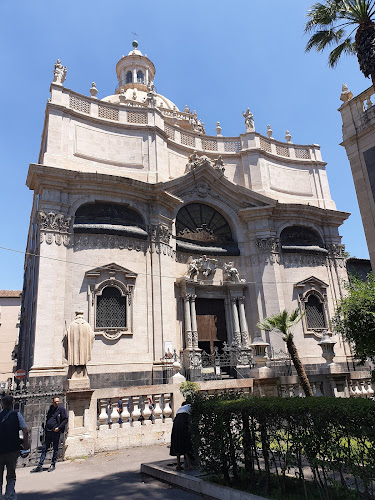
There’s something about the Chiesa della Badia di Sant’Agata that just stops you in your tracks. Maybe it’s the way the sunlight bounces off its pale Baroque curves, or how the dome seems to float above Catania’s skyline like a quiet guardian watching over the city. Built in the 18th century after the catastrophic earthquake of 1693, this church isn’t just another ornate building—it’s a story of resilience, artistry, and devotion wrapped in Sicilian stone.

Designed by the brilliant architect Giovanni Battista Vaccarini, the church stands as one of the finest examples of Sicilian Baroque architecture. It was originally part of a Benedictine convent, and even though time has changed the city around it, the Badia still feels like a place where the world slows down. When you step inside, you’re greeted by a wave of calm, the kind that only centuries-old churches seem to hold. The soft echo of footsteps on marble, the faint scent of incense, and the filtered light through the dome—it’s all quietly mesmerizing.

And that dome, oh, it’s the showstopper. Climb up the narrow staircase and you’ll find yourself rewarded with one of the most breathtaking views in Catania. From up there, you can see the Cathedral of Sant’Agata just across the way, the rooftops of the old town, and on a clear day, the mighty Mount Etna rising in the distance. It’s one of those moments that makes you feel small and infinite at the same time. I remember standing up there once, the wind tugging at my hair, thinking how this city keeps rebuilding itself—over and over again—and somehow always looks beautiful doing it.

Inside, the church is elegant but not overwhelming. It’s got that perfect balance between grandeur and simplicity. The curved lines of the architecture, the delicate stuccoes, and the play of light and shadow give it a sense of movement, as if the building itself is breathing. You can tell Vaccarini was inspired by Borromini’s Roman Baroque style, but he gave it a Sicilian twist—softer, warmer, more human somehow.

Visitors often come here after touring the nearby cathedral, but many end up staying longer than expected. There’s a serenity here that invites you to linger, to just sit and take it all in. Even if you’re not particularly religious, it’s hard not to feel something—call it peace, awe, or just appreciation for beauty crafted by human hands centuries ago. And if you’re lucky, you might catch the faint notes of an organ during a service or rehearsal, echoing softly through the dome.

Key Features

  • Baroque Architecture: A masterpiece by Giovanni Battista Vaccarini, showcasing elegant curves, symmetry, and intricate stucco details typical of Sicilian Baroque style.
  • Panoramic Dome Views: The dome offers a 360-degree view of Catania, including Mount Etna and the city’s historic center—a must for photographers and romantics alike.
  • Historical Significance: Built after the 1693 earthquake, the church symbolizes Catania’s rebirth and resilience.
  • Former Benedictine Convent: The church was once part of a cloistered convent, adding a layer of spiritual and cultural depth to its story.
  • Accessible Entrance: The main entrance is wheelchair accessible, making it easier for everyone to experience its beauty.
  • Peaceful Atmosphere: Despite being in the heart of the city, the interior maintains a calm, contemplative ambiance.
  • Proximity to Major Landmarks: Located near the Cathedral of Sant’Agata and Piazza del Duomo, it’s easy to include in a walking tour of Catania’s highlights.

Best Time to Visit

If you ask me, mornings are magic here. The light is soft, the crowds are thin, and the city hasn’t quite woken up yet. Climbing to the dome early gives you that golden Sicilian glow over the rooftops—a photographer’s dream. Late afternoons are also wonderful, especially if you want to catch the sunset with Mount Etna glowing in the distance. The church tends to be busier in the middle of the day, particularly in summer, when cruise groups roll through, so plan accordingly.

As for the time of year, spring and autumn are ideal. The weather is mild, and the air feels lighter somehow. Summer can be scorching, and while the church offers a cool refuge inside, the climb to the dome can be quite warm. Winter has its own charm though—the city is quieter, and the church feels even more intimate when it’s less crowded. Honestly, there’s no bad time to visit; it just depends on what kind of experience you’re after.

How to Get There

The Chiesa della Badia di Sant’Agata sits right in the historic heart of Catania, so getting there is pretty straightforward. If you’re staying nearby, you can easily walk—most of the city’s main attractions are within a few blocks of each other. The streets around the church are full of life: cafés spilling onto sidewalks, street vendors selling fresh arancini, and the occasional musician adding a soundtrack to your stroll.

If you’re coming from farther out, local buses and taxis can drop you nearby. Catania’s main train station isn’t too far, and from there, it’s about a 20-minute walk through some of the city’s most scenic streets. Parking, however, can be tricky—especially in the historic center—so if you’re driving, it’s best to leave your car at a paid lot and explore on foot. The area isn’t just about getting from point A to B; it’s about soaking in the rhythm of the city, the mix of old and new that defines Catania.

Tips for Visiting

First things first—bring comfortable shoes. Those cobblestone streets might look charming in photos, but they can be tough on your feet after a while. And if you’re planning to climb to the dome (which you absolutely should), expect a bit of a workout. The staircase is narrow and winding, but the view at the top is worth every step.

It’s also smart to check opening hours before you go. They can vary depending on the season or religious events. If you want to avoid the crowds, aim for early morning or just before closing. And remember, this is an active place of worship, so dress respectfully—shoulders covered, no beachwear, that sort of thing. It’s not about strict rules; it’s about showing a little respect for the history and spirituality of the place.

Photography is allowed in most areas, but flash might not be. Personally, I’d say take your time to just look before snapping away. There’s something about standing under that dome, letting your eyes trace the curves of the ceiling, that a camera just can’t capture. If you’re traveling with kids, they’ll probably enjoy the climb too—it’s a little adventure in itself.

Accessibility-wise, the main entrance is wheelchair-friendly, though the dome climb isn’t. Still, even from the ground level, the church offers plenty to admire. And if you’re into architecture or history, take a moment to notice the details—the interplay of lines and light, the way Vaccarini’s design draws your eyes upward. It’s like the building is quietly teaching you how to see beauty in balance.

Lastly, don’t rush. Catania is one of those cities that rewards slow travelers. Grab a gelato or espresso after your visit, sit in the nearby piazza, and just watch life unfold. The Badia di Sant’Agata isn’t just a church—it’s a reminder of how art, faith, and human determination can create something timeless. And honestly, that’s the kind of experience that stays with you long after you’ve left Sicily’s shores.

Key Features

  • Key Features
  • Best Time to Visit
  • How to Get There
  • Tips for Visiting

More Details

Updated November 30, 2025

Description

There’s something about the Chiesa della Badia di Sant’Agata that just stops you in your tracks. Maybe it’s the way the sunlight bounces off its pale Baroque curves, or how the dome seems to float above Catania’s skyline like a quiet guardian watching over the city. Built in the 18th century after the catastrophic earthquake of 1693, this church isn’t just another ornate building—it’s a story of resilience, artistry, and devotion wrapped in Sicilian stone.

Designed by the brilliant architect Giovanni Battista Vaccarini, the church stands as one of the finest examples of Sicilian Baroque architecture. It was originally part of a Benedictine convent, and even though time has changed the city around it, the Badia still feels like a place where the world slows down. When you step inside, you’re greeted by a wave of calm, the kind that only centuries-old churches seem to hold. The soft echo of footsteps on marble, the faint scent of incense, and the filtered light through the dome—it’s all quietly mesmerizing.

And that dome, oh, it’s the showstopper. Climb up the narrow staircase and you’ll find yourself rewarded with one of the most breathtaking views in Catania. From up there, you can see the Cathedral of Sant’Agata just across the way, the rooftops of the old town, and on a clear day, the mighty Mount Etna rising in the distance. It’s one of those moments that makes you feel small and infinite at the same time. I remember standing up there once, the wind tugging at my hair, thinking how this city keeps rebuilding itself—over and over again—and somehow always looks beautiful doing it.

Inside, the church is elegant but not overwhelming. It’s got that perfect balance between grandeur and simplicity. The curved lines of the architecture, the delicate stuccoes, and the play of light and shadow give it a sense of movement, as if the building itself is breathing. You can tell Vaccarini was inspired by Borromini’s Roman Baroque style, but he gave it a Sicilian twist—softer, warmer, more human somehow.

Visitors often come here after touring the nearby cathedral, but many end up staying longer than expected. There’s a serenity here that invites you to linger, to just sit and take it all in. Even if you’re not particularly religious, it’s hard not to feel something—call it peace, awe, or just appreciation for beauty crafted by human hands centuries ago. And if you’re lucky, you might catch the faint notes of an organ during a service or rehearsal, echoing softly through the dome.

Key Features

  • Baroque Architecture: A masterpiece by Giovanni Battista Vaccarini, showcasing elegant curves, symmetry, and intricate stucco details typical of Sicilian Baroque style.
  • Panoramic Dome Views: The dome offers a 360-degree view of Catania, including Mount Etna and the city’s historic center—a must for photographers and romantics alike.
  • Historical Significance: Built after the 1693 earthquake, the church symbolizes Catania’s rebirth and resilience.
  • Former Benedictine Convent: The church was once part of a cloistered convent, adding a layer of spiritual and cultural depth to its story.
  • Accessible Entrance: The main entrance is wheelchair accessible, making it easier for everyone to experience its beauty.
  • Peaceful Atmosphere: Despite being in the heart of the city, the interior maintains a calm, contemplative ambiance.
  • Proximity to Major Landmarks: Located near the Cathedral of Sant’Agata and Piazza del Duomo, it’s easy to include in a walking tour of Catania’s highlights.

Best Time to Visit

If you ask me, mornings are magic here. The light is soft, the crowds are thin, and the city hasn’t quite woken up yet. Climbing to the dome early gives you that golden Sicilian glow over the rooftops—a photographer’s dream. Late afternoons are also wonderful, especially if you want to catch the sunset with Mount Etna glowing in the distance. The church tends to be busier in the middle of the day, particularly in summer, when cruise groups roll through, so plan accordingly.

As for the time of year, spring and autumn are ideal. The weather is mild, and the air feels lighter somehow. Summer can be scorching, and while the church offers a cool refuge inside, the climb to the dome can be quite warm. Winter has its own charm though—the city is quieter, and the church feels even more intimate when it’s less crowded. Honestly, there’s no bad time to visit; it just depends on what kind of experience you’re after.

How to Get There

The Chiesa della Badia di Sant’Agata sits right in the historic heart of Catania, so getting there is pretty straightforward. If you’re staying nearby, you can easily walk—most of the city’s main attractions are within a few blocks of each other. The streets around the church are full of life: cafés spilling onto sidewalks, street vendors selling fresh arancini, and the occasional musician adding a soundtrack to your stroll.

If you’re coming from farther out, local buses and taxis can drop you nearby. Catania’s main train station isn’t too far, and from there, it’s about a 20-minute walk through some of the city’s most scenic streets. Parking, however, can be tricky—especially in the historic center—so if you’re driving, it’s best to leave your car at a paid lot and explore on foot. The area isn’t just about getting from point A to B; it’s about soaking in the rhythm of the city, the mix of old and new that defines Catania.

Tips for Visiting

First things first—bring comfortable shoes. Those cobblestone streets might look charming in photos, but they can be tough on your feet after a while. And if you’re planning to climb to the dome (which you absolutely should), expect a bit of a workout. The staircase is narrow and winding, but the view at the top is worth every step.

It’s also smart to check opening hours before you go. They can vary depending on the season or religious events. If you want to avoid the crowds, aim for early morning or just before closing. And remember, this is an active place of worship, so dress respectfully—shoulders covered, no beachwear, that sort of thing. It’s not about strict rules; it’s about showing a little respect for the history and spirituality of the place.

Photography is allowed in most areas, but flash might not be. Personally, I’d say take your time to just look before snapping away. There’s something about standing under that dome, letting your eyes trace the curves of the ceiling, that a camera just can’t capture. If you’re traveling with kids, they’ll probably enjoy the climb too—it’s a little adventure in itself.

Accessibility-wise, the main entrance is wheelchair-friendly, though the dome climb isn’t. Still, even from the ground level, the church offers plenty to admire. And if you’re into architecture or history, take a moment to notice the details—the interplay of lines and light, the way Vaccarini’s design draws your eyes upward. It’s like the building is quietly teaching you how to see beauty in balance.

Lastly, don’t rush. Catania is one of those cities that rewards slow travelers. Grab a gelato or espresso after your visit, sit in the nearby piazza, and just watch life unfold. The Badia di Sant’Agata isn’t just a church—it’s a reminder of how art, faith, and human determination can create something timeless. And honestly, that’s the kind of experience that stays with you long after you’ve left Sicily’s shores.

Key Highlights

  • Key Features
  • Best Time to Visit
  • How to Get There
  • Tips for Visiting

Location

Places to Stay Near Chiesa della Badia di Sant'Agata

Find and Book a Tour

Explore More Travel Guides

No reviews found! Be the first to review!

Traveler Reviews for Chiesa della Badia di Sant’Agata

There are no reviews yet. Be the first one to write one.

Share Your Experience

Have you visited Chiesa della Badia di Sant’Agata? Help other travelers by sharing your review.

Find Accommodations Nearby

Recommended Tours & Activities

Visitor Reviews

There are no reviews yet. Be the first one to write one.

Share Your Experience

Have you visited Chiesa della Badia di Sant’Agata? Help other travelers by leaving a review.