About Piazza De Ferrari

Description

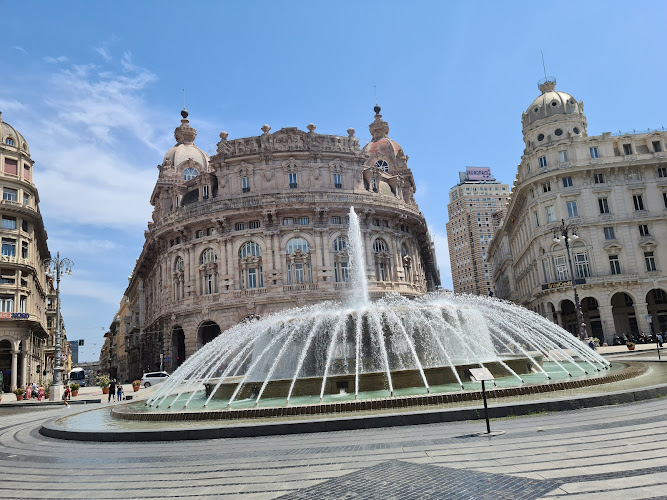
Piazza De Ferrari stands as the beating heart of Genoa, where locals rush through on their daily commute and tourists pause to soak in the architectural splendor that surrounds this iconic city square. The centerpiece—a magnificent bronze fountain from the 1930s—shoots water high into the air, creating a mesmerizing display that's particularly stunning when the late afternoon sun catches the droplets just right. I've spent more time than I'd like to admit just sitting on the edge of this square watching people, and honestly, there's something almost hypnotic about the way this place operates. The square itself isn't just another pretty spot for Instagram photos, though you'll definitely want your camera ready. It serves as the cultural and financial hub of Genoa, surrounded by some of the most significant buildings in the city. The Palazzo Ducale stands proudly on one side, the Teatro Carlo Felice opera house on another, and the Palazzo della Borsa (the old stock exchange) completing this architectural ensemble. When you stand in the middle of the piazza, you're literally surrounded by centuries of Genoese history and ambition. What strikes most visitors isn't necessarily the grandeur—though there's plenty of that—but rather how this square manages to be both monumental and oddly intimate at the same time. During the day, businesspeople in sharp suits cross paths with street performers and families feeding pigeons. The fountain's constant flow provides a soundtrack that somehow makes the busy atmosphere feel almost meditative. And yes, the square can get crowded, particularly during peak tourist season, but that's part of its charm in a way.

Key Features

The defining characteristics of Piazza De Ferrari make it an essential stop for anyone exploring Genoa's treasures: • The iconic bronze fountain dating back to 1936, designed by Giuseppe Crosa di Vergagni, which underwent extensive restoration in 2009 and now sparkles like new • Wheelchair accessible entrances and facilities throughout the square, making it genuinely accessible for visitors with mobility challenges • Palazzo Ducale on the north side, housing rotating art exhibitions and cultural events that draw art lovers from across Europe • Teatro Carlo Felice, the city's premier opera house where world-class performances light up the nights • The Church of Gesù e dei Santi Ambrogio e Andrea, a baroque masterpiece that often gets overlooked by visitors rushing to see the fountain • Underground pedestrian passages connecting different parts of the square, which locals use to navigate the area efficiently • Surrounding cafes and gelaterias offering front-row seats to the daily theater of Italian life • The monumental staircase of the Palazzo della Regione Liguria, perfect for those dramatic vacation photos • Regular events and celebrations throughout the year, from Christmas markets to political demonstrations (because this is Italy, after all) • Paid parking facilities nearby, though finding a spot during busy periods requires patience and maybe a small prayer

Best Time to Visit

Timing your visit to Piazza De Ferrari can make the difference between a pleasant experience and an overwhelming one. The square looks completely different depending on when you show up, and I learned this the hard way after visiting at noon in August when the sun was brutal and the crowds were suffocating. Early morning, particularly between 7 and 9 AM, offers something special. The fountain looks absolutely magical in the soft morning light, and you'll catch Genoese residents grabbing their espresso at nearby bars before work. There's an authenticity to this time that you simply won't find later in the day. The square belongs to the locals during these hours, and you get to witness the real rhythm of Genoese life. Late afternoon to early evening—that golden hour photographers obsess over—transforms the piazza into something almost ethereal. The changing light plays across the fountain's spray, and the surrounding buildings take on warm hues that make everything look like a Renaissance painting come to life. Around 5 or 6 PM, when offices empty out and people start their evening passeggiata, the energy shifts into something more relaxed and social. Seasonally speaking, spring and fall reign supreme. April through June and September through October offer comfortable temperatures and fewer tourists than the summer months. The weather's pleasant enough to sit comfortably at an outdoor cafe without melting into your chair. Summer brings intense heat and massive crowds, particularly in July and August when Italian families take their annual vacations. Winter has its own moody charm, especially during the Christmas season when the square gets decorated, but be prepared for cold winds and occasional rain. Weekdays generally see fewer tourists than weekends, though the square remains busy with locals regardless. If you're visiting during a major cultural event or festival, expect crowds but also expect an atmosphere that's absolutely electric with excitement.

How to Get There

Getting to Piazza De Ferrari is refreshingly straightforward, which isn't something you can say about reaching every tourist attraction in Italy. The square's central location means you've got multiple options depending on where you're starting from. If you're arriving by train at Genoa's main stations—Genova Piazza Principe or Genova Brignole—the metro becomes your best friend. The Genoa Metro's green line has a stop called "De Ferrari" that literally deposits you right at the square. You can't really get more convenient than that. The metro runs frequently and is clean, efficient, and air-conditioned, which matters more than you'd think during summer months. The city's extensive bus network also serves the area around Piazza De Ferrari. Multiple bus lines stop within easy walking distance of the square, including lines 18, 19, 33, 37, and others. Bus tickets work on an honor system with occasional inspectors, so make sure you validate your ticket in the little yellow machines onboard. Trust me on this one—the fines for riding without a validated ticket are steep. Walking to the square from various parts of Genoa's historic center is actually one of the better ways to arrive. The caruggi—those narrow medieval alleyways that Genoa is famous for—eventually lead to the piazza. Coming up Via XX Settembre, one of the city's main shopping streets, provides a dramatic reveal as the square suddenly opens up before you. For those driving, parking presents the usual Italian city challenges. There's a paid parking lot at Piazza Dante, within reasonable walking distance, and several other parking facilities scattered around the area. But honestly? Unless you absolutely need a car for your wider travels, skip the driving headache and use public transportation. Taxis and ride-sharing services can drop you off right at the square's edge, though traffic congestion during busy times might mean you'll save time by getting out a block or two away and walking.

Tips for Visiting

After multiple visits to this square over the years, I've picked up some insights that might save you from the minor frustrations and help you get more out of your time here. The cafes ringing the square charge premium prices for their prime location—that's just the reality of tourist economics. But here's the thing: sometimes paying a bit extra for an espresso while watching the world go by in such a historic setting is absolutely worth it. Just go in with your eyes open about the prices. If you want cheaper coffee, walk literally two minutes down any side street and you'll find local bars charging half the price. Photography enthusiasts should know that the best angle for capturing the fountain with the surrounding architecture requires positioning yourself near the Palazzo Ducale side. The afternoon light from around 4 PM onwards creates ideal conditions. And please, watch your belongings while you're absorbed in getting that perfect shot—pickpockets know when tourists are distracted. The square is completely wheelchair accessible, which is wonderful, but the crowds during peak times can make navigation challenging for anyone with mobility devices. Visiting during off-peak hours makes the experience much more manageable and enjoyable. If you're traveling with kids, they'll probably want to get close to the fountain, and on hot days, why not let them? Italian children do it all the time. Just be prepared for wet clothes and bring a change of outfit or a towel. The square is genuinely good for kids—there's space to run around, pigeons to chase, and the fountain provides endless entertainment. Don't limit yourself to just the square itself. The surrounding buildings often have free entry or house exhibitions worth checking out. The Palazzo Ducale regularly hosts impressive art shows, and simply wandering into the Church of Gesù costs nothing but rewards you with baroque artistry that rivals anything you'll see in bigger Italian cities. Evening visits offer a completely different atmosphere than daytime ones. The fountain gets illuminated after dark, and the square takes on a romantic quality that's perfect for couples or anyone who appreciates a good sunset-to-nighttime transition in a beautiful setting. Keep some coins handy if you're planning to use the restrooms in nearby cafes—that's just standard practice in Italy. Most establishments expect you to purchase something before using facilities, which seems fair enough. The square occasionally hosts events, protests, or celebrations that might limit access or change the usual atmosphere. This isn't necessarily a bad thing—stumbling upon a local festival or cultural event can become one of those unexpected travel highlights. Just be flexible and roll with whatever you encounter. Comfortable walking shoes are non-negotiable. The square itself has smooth paving, but if you're exploring the surrounding areas and those medieval alleyways, you'll be dealing with uneven cobblestones that can be treacherous in inappropriate footwear. Finally, take your time here. Too many visitors snap a few quick photos and rush off to check another box on their itinerary. Piazza De Ferrari rewards those who linger, who sit and observe, who let themselves simply exist in the space for a while. That's when you start noticing the details—the way locals greet each other, the changing light on the buildings, the rhythms of a city that's been here for centuries and will be here for centuries more.

Key Features

  • Key Features
  • Best Time to Visit
  • How to Get There
  • Tips for Visiting

More Details

Updated March 30, 2026

Description

Piazza De Ferrari stands as the beating heart of Genoa, where locals rush through on their daily commute and tourists pause to soak in the architectural splendor that surrounds this iconic city square. The centerpiece—a magnificent bronze fountain from the 1930s—shoots water high into the air, creating a mesmerizing display that’s particularly stunning when the late afternoon sun catches the droplets just right. I’ve spent more time than I’d like to admit just sitting on the edge of this square watching people, and honestly, there’s something almost hypnotic about the way this place operates.

The square itself isn’t just another pretty spot for Instagram photos, though you’ll definitely want your camera ready. It serves as the cultural and financial hub of Genoa, surrounded by some of the most significant buildings in the city. The Palazzo Ducale stands proudly on one side, the Teatro Carlo Felice opera house on another, and the Palazzo della Borsa (the old stock exchange) completing this architectural ensemble. When you stand in the middle of the piazza, you’re literally surrounded by centuries of Genoese history and ambition.

What strikes most visitors isn’t necessarily the grandeur—though there’s plenty of that—but rather how this square manages to be both monumental and oddly intimate at the same time. During the day, businesspeople in sharp suits cross paths with street performers and families feeding pigeons. The fountain’s constant flow provides a soundtrack that somehow makes the busy atmosphere feel almost meditative. And yes, the square can get crowded, particularly during peak tourist season, but that’s part of its charm in a way.

Key Features

The defining characteristics of Piazza De Ferrari make it an essential stop for anyone exploring Genoa’s treasures:

• The iconic bronze fountain dating back to 1936, designed by Giuseppe Crosa di Vergagni, which underwent extensive restoration in 2009 and now sparkles like new

• Wheelchair accessible entrances and facilities throughout the square, making it genuinely accessible for visitors with mobility challenges

• Palazzo Ducale on the north side, housing rotating art exhibitions and cultural events that draw art lovers from across Europe

• Teatro Carlo Felice, the city’s premier opera house where world-class performances light up the nights

• The Church of Gesù e dei Santi Ambrogio e Andrea, a baroque masterpiece that often gets overlooked by visitors rushing to see the fountain

• Underground pedestrian passages connecting different parts of the square, which locals use to navigate the area efficiently

• Surrounding cafes and gelaterias offering front-row seats to the daily theater of Italian life

• The monumental staircase of the Palazzo della Regione Liguria, perfect for those dramatic vacation photos

• Regular events and celebrations throughout the year, from Christmas markets to political demonstrations (because this is Italy, after all)

• Paid parking facilities nearby, though finding a spot during busy periods requires patience and maybe a small prayer

Best Time to Visit

Timing your visit to Piazza De Ferrari can make the difference between a pleasant experience and an overwhelming one. The square looks completely different depending on when you show up, and I learned this the hard way after visiting at noon in August when the sun was brutal and the crowds were suffocating.

Early morning, particularly between 7 and 9 AM, offers something special. The fountain looks absolutely magical in the soft morning light, and you’ll catch Genoese residents grabbing their espresso at nearby bars before work. There’s an authenticity to this time that you simply won’t find later in the day. The square belongs to the locals during these hours, and you get to witness the real rhythm of Genoese life.

Late afternoon to early evening—that golden hour photographers obsess over—transforms the piazza into something almost ethereal. The changing light plays across the fountain’s spray, and the surrounding buildings take on warm hues that make everything look like a Renaissance painting come to life. Around 5 or 6 PM, when offices empty out and people start their evening passeggiata, the energy shifts into something more relaxed and social.

Seasonally speaking, spring and fall reign supreme. April through June and September through October offer comfortable temperatures and fewer tourists than the summer months. The weather’s pleasant enough to sit comfortably at an outdoor cafe without melting into your chair. Summer brings intense heat and massive crowds, particularly in July and August when Italian families take their annual vacations. Winter has its own moody charm, especially during the Christmas season when the square gets decorated, but be prepared for cold winds and occasional rain.

Weekdays generally see fewer tourists than weekends, though the square remains busy with locals regardless. If you’re visiting during a major cultural event or festival, expect crowds but also expect an atmosphere that’s absolutely electric with excitement.

How to Get There

Getting to Piazza De Ferrari is refreshingly straightforward, which isn’t something you can say about reaching every tourist attraction in Italy. The square’s central location means you’ve got multiple options depending on where you’re starting from.

If you’re arriving by train at Genoa’s main stations—Genova Piazza Principe or Genova Brignole—the metro becomes your best friend. The Genoa Metro’s green line has a stop called “De Ferrari” that literally deposits you right at the square. You can’t really get more convenient than that. The metro runs frequently and is clean, efficient, and air-conditioned, which matters more than you’d think during summer months.

The city’s extensive bus network also serves the area around Piazza De Ferrari. Multiple bus lines stop within easy walking distance of the square, including lines 18, 19, 33, 37, and others. Bus tickets work on an honor system with occasional inspectors, so make sure you validate your ticket in the little yellow machines onboard. Trust me on this one—the fines for riding without a validated ticket are steep.

Walking to the square from various parts of Genoa’s historic center is actually one of the better ways to arrive. The caruggi—those narrow medieval alleyways that Genoa is famous for—eventually lead to the piazza. Coming up Via XX Settembre, one of the city’s main shopping streets, provides a dramatic reveal as the square suddenly opens up before you.

For those driving, parking presents the usual Italian city challenges. There’s a paid parking lot at Piazza Dante, within reasonable walking distance, and several other parking facilities scattered around the area. But honestly? Unless you absolutely need a car for your wider travels, skip the driving headache and use public transportation.

Taxis and ride-sharing services can drop you off right at the square’s edge, though traffic congestion during busy times might mean you’ll save time by getting out a block or two away and walking.

Tips for Visiting

After multiple visits to this square over the years, I’ve picked up some insights that might save you from the minor frustrations and help you get more out of your time here.

The cafes ringing the square charge premium prices for their prime location—that’s just the reality of tourist economics. But here’s the thing: sometimes paying a bit extra for an espresso while watching the world go by in such a historic setting is absolutely worth it. Just go in with your eyes open about the prices. If you want cheaper coffee, walk literally two minutes down any side street and you’ll find local bars charging half the price.

Photography enthusiasts should know that the best angle for capturing the fountain with the surrounding architecture requires positioning yourself near the Palazzo Ducale side. The afternoon light from around 4 PM onwards creates ideal conditions. And please, watch your belongings while you’re absorbed in getting that perfect shot—pickpockets know when tourists are distracted.

The square is completely wheelchair accessible, which is wonderful, but the crowds during peak times can make navigation challenging for anyone with mobility devices. Visiting during off-peak hours makes the experience much more manageable and enjoyable.

If you’re traveling with kids, they’ll probably want to get close to the fountain, and on hot days, why not let them? Italian children do it all the time. Just be prepared for wet clothes and bring a change of outfit or a towel. The square is genuinely good for kids—there’s space to run around, pigeons to chase, and the fountain provides endless entertainment.

Don’t limit yourself to just the square itself. The surrounding buildings often have free entry or house exhibitions worth checking out. The Palazzo Ducale regularly hosts impressive art shows, and simply wandering into the Church of Gesù costs nothing but rewards you with baroque artistry that rivals anything you’ll see in bigger Italian cities.

Evening visits offer a completely different atmosphere than daytime ones. The fountain gets illuminated after dark, and the square takes on a romantic quality that’s perfect for couples or anyone who appreciates a good sunset-to-nighttime transition in a beautiful setting.

Keep some coins handy if you’re planning to use the restrooms in nearby cafes—that’s just standard practice in Italy. Most establishments expect you to purchase something before using facilities, which seems fair enough.

The square occasionally hosts events, protests, or celebrations that might limit access or change the usual atmosphere. This isn’t necessarily a bad thing—stumbling upon a local festival or cultural event can become one of those unexpected travel highlights. Just be flexible and roll with whatever you encounter.

Comfortable walking shoes are non-negotiable. The square itself has smooth paving, but if you’re exploring the surrounding areas and those medieval alleyways, you’ll be dealing with uneven cobblestones that can be treacherous in inappropriate footwear.

Finally, take your time here. Too many visitors snap a few quick photos and rush off to check another box on their itinerary. Piazza De Ferrari rewards those who linger, who sit and observe, who let themselves simply exist in the space for a while. That’s when you start noticing the details—the way locals greet each other, the changing light on the buildings, the rhythms of a city that’s been here for centuries and will be here for centuries more.

Key Highlights

  • Key Features
  • Best Time to Visit
  • How to Get There
  • Tips for Visiting

Location

Places to Stay Near Piazza De Ferrari

Find and Book a Tour

Explore More Travel Guides

No reviews found! Be the first to review!

Piazza De Ferrari is a prominent attractions located in Genoa.

Visit us at: Piazza Raffaele de Ferrari, 16121 Genova GE, Italy.

Traveler Reviews for Piazza De Ferrari

There are no reviews yet. Be the first one to write one.

Share Your Experience

Have you visited Piazza De Ferrari? Help other travelers by sharing your review.

Find Accommodations Nearby

Recommended Tours & Activities

Visitor Reviews

There are no reviews yet. Be the first one to write one.

Share Your Experience

Have you visited Piazza De Ferrari? Help other travelers by leaving a review.