
Stone Bridge
About Stone Bridge
Description
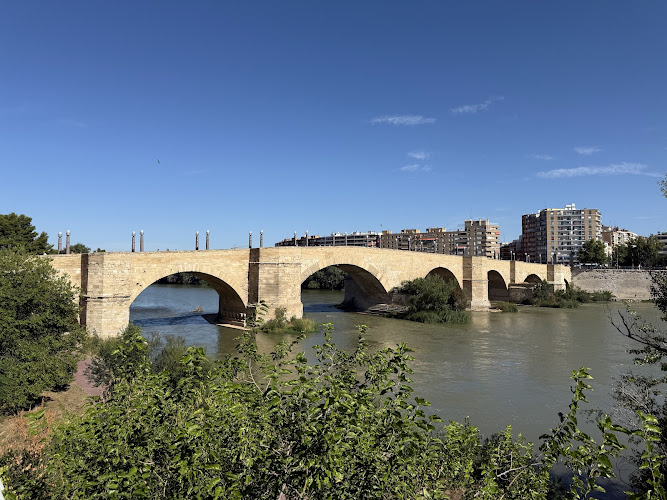
The Stone Bridge of Zaragoza, known locally as Puente de Piedra or the Bridge of Lions, spans the Ebro River with a quiet confidence that comes from surviving centuries of floods, wars, rebuilds, and new fashions in city-building. This is not a bridge that shouts; it’s a bridge that outlasts. Built in the 15th century over older foundations, it links the Casco Antiguo (Old Town) with the Arrabal district and frames one of Spain’s most photogenic cityscapes: the sweeping domes and towers of the Basílica del Pilar rising behind the water. Visitors who come looking for a postcard find it almost by accident—straight down the riverbank steps or a few minutes’ stroll from the old quarter’s plazas—and often linger, pulled in by its stone arches, long skyline, and those unmistakable lions standing guard.
From a historical perspective, Puente de Piedra is weighty. Medieval master builders, including Gil de Menestral and Felipe de Busignac, shaped its robust Gothic design—solid piers, broad cutwaters, and a rhythmic span of stone arches that had to deal with the Ebro at both its calmest and its most unruly. In the 18th century, architect Agustín Sanz strengthened parts of the structure as floods kept testing the city’s nerve. It was repaired more than once. And the truth is, it’s still here because Zaragoza never gave up on it. The citizens made sure of that. They always do.
Walkers today find a pedestrian-priority crossing with calm traffic patterns and a wonderfully open perspective. The bronze lion statues—created by Francisco Rallo Lahoz and placed on high plinths in 1991—signal the bridge’s symbolic role. The lion is on Zaragoza’s coat of arms, so these guardians do more than decorate; they embody the city’s spirit. Whether standing at the end of the bridge or halfway across, visitors get a front-row view of the Ebro River, the arches below, and the Basílica del Pilar in profile. It’s a view that locals call “de toda la vida,” meaning: always there, always right.
Is it worth crossing? Visitors almost always say yes. In traveler chatter, Puente de Piedra gets praised for its beauty at sunrise and sunset, its night reflections, and how quickly it puts the Old Town within reach of parks and paths along the river. A few voices say, well, it’s just a bridge. And that’s fair—if someone expects a big museum exhibit or a paid experience, they won’t find that here. But for free, open-air, living history with some of Spain’s best urban river views, it’s hard to beat.
There’s a quieter, lived-in feeling you notice too. Street musicians sometimes tune up at the ends; joggers riffle past; photographers set up tripods and whisper about angles; families take a break from the bustle of the plaza to breathe in the Ebro’s soft, earthy smell. The writer once crossed on a winter afternoon when the cierzo—a strong northwesterly wind famous in this valley—was whipping across the stones. Their cap nearly somersaulted into the river, and for the rest of that walk it was gripped like a precious relic. Lesson learned: this bridge has character, and the wind is part of it.
As a historic landmark, it conjures a layered city. Roman Zaragoza once had a crossing a short distance away; medieval Zaragoza reimagined it; modern Zaragoza elevated it with art and gentle lighting. Afternoon light grazes the stone, evening lights turn the arches into arcs of gold, and night reflections splay out across the Ebro. During the October Fiestas del Pilar, the whole riverside comes alive, and the bridge becomes a perfect balcony. And no ticket needed—Puente de Piedra is open, 24 hours, every day.
Key Features
- 15th-century Gothic stone arches spanning the Ebro River, connecting Casco Antiguo with the Arrabal district
- Four imposing lion statues by Francisco Rallo Lahoz (1991), emblematic guardians and a favorite photo subject
- Panoramic views of the Basílica del Pilar, La Seo, and the Ebro’s broad current—especially photogenic at sunrise, sunset, and after dark
- Pedestrian-priority crossing with a relaxed pace; cycling permitted with courtesy; private vehicle access restricted
- Wheelchair-accessible entrance with gentle gradients; some areas retain historic stonework that can feel slightly uneven
- Night illumination that turns the bridge and river into a reflective canvas for photography
- Direct connection to riverside promenades and parks for longer walks or runs
- Historic resilience: reinforced across centuries to withstand the Ebro’s frequent floods
- Free access, open 24/7, with no ticketing or turnstiles—just walk up and enjoy
Best Time to Visit
For pure atmosphere, the bridge is especially beautiful at sunrise and sunset. At dawn, the Ebro lies calmer, often with soft pastels over the Basílica del Pilar. At sunset, warm light rakes across stone and dome, and the river throws a ribbon of color back at the sky. Later at night, the lights turn the arches into glowing half-moons; it’s a quieter time to hear the rush of the water and photograph longer exposures without bumping elbows.
By season:
- Spring (March–May): Mild temps, fresh air, blooming along the banks. Prime time for comfortable strolls and unhurried photos.
- Summer (June–August): Zaragoza can run hot—30–40°C is not unusual midday. Early mornings and late evenings are best to avoid heat shimmer and crowds. Bring water.
- Autumn (September–November): Balmy days, clear light, and October’s Fiestas del Pilar. It’s popular, so consider early starts for space on the bridge.
- Winter (December–February): Cold and crisp, with a decent chance of the cierzo wind. Clear skies often mean remarkable visibility for skyline shots.
To avoid crowds, aim for early morning any day of the week. Sunset is magical but busy, particularly on weekends and during festivals. If the plan involves long exposures or tripod work, arrive 20–30 minutes early to claim a comfortable spot. One more thing: the Ebro can flood seasonally; while the bridge typically remains open, lower river paths sometimes close temporarily.
How to Get There
Puente de Piedra sits on the Ebro in central Zaragoza, a short, flat walk from the main squares of the Old Town. Most visitors start near Plaza del Pilar and simply head to the river—you’ll see the lions and know you’re there. Because of its central location, it’s easily folded into any day in the historic core.
From the railway hub (Zaragoza-Delicias), city buses or a taxi get travelers within minutes of the Old Town. Once near the Basílica del Pilar, walking is the smartest way. The bridge is part of everyday urban life; by design, private vehicles are restricted, and the crossing tends to feel safe and relaxed. Cyclists reach it via signposted bike lanes and river paths on both banks.
Airport arrivals can take the airport bus to the city center and transfer to a short walk. For anyone driving into Zaragoza, it’s wise to park in a central garage outside the Old Town’s narrow streets; then stroll in. Puente de Piedra rewards those who approach at human speed—it’s as much about the lead-up and the first look across the balustrade as it is about the crossing itself.
Note for first-time visitors: some confuse this historic bridge with the contemporary Bridge Pavilion designed by Zaha Hadid during the Expo 2008 era. The Bridge Pavilion is downstream and modern; Puente de Piedra is the classic stone showpiece right by the historic quarter.
Tips for Visiting
Practical advice makes a good visit great, and this bridge has a few quirks worth knowing:
- Timing for photos: For a straight-on portrait of the Basílica del Pilar with the river in the foreground, the north bank (Arrabal side) is ace—particularly from the riverside lawns and steps just off the end of the bridge. Golden hour delivers warm light on the domes; blue hour yields creamy reflections.
- Where to stand: Midspan on the downstream side gives a sweeping view. For a dramatic “bridge + basilica” composition, step a few meters off the bridge onto the riverside walk and angle the arches into your frame.
- Night photography: The lighting scheme is subtle but effective. A tripod helps with long exposures, and a small microfiber cloth is useful if mist lifts off the river in winter.
- Wind watch: The cierzo can be serious. Hold hats, scarves, and loose papers. Photographers—use a weighted bag on your tripod. Parents with strollers will appreciate the sturdy balustrades and gentle gradient.
- Accessibility: Entrances are wheelchair-friendly. Surfaces include historic stonework, so some patches feel a bit uneven, but the grade is manageable. If someone prefers a smoother approach, the riverside promenades are excellent.
- Cycling etiquette: Bicycles are allowed; ride slowly and yield to pedestrians. Bells are useful near the ends of the bridge where families pause for photos.
- No ticket, no turnstiles: It’s free, open 24/7. That said, during major events, expect heavier footfall and occasional access management by local authorities.
- Drone rules: Spain has national regulations governing drones over urban areas. In practice, flying over the bridge or crowds generally requires permission. Many visitors leave the drone packed and focus on handheld shots from the banks.
- What to bring: Water in summer; a light jacket most of the year; sunscreen; and steady shoes for stone surfaces. A polarizing filter helps cut glare on the water and deepen sky tones.
- Amenities: There are no restrooms on the bridge itself. Nearby cafés and public facilities in the historic quarter are the go-to. Plan a quick break before a long photo session.
- Legends and little stories: Locals sometimes joke that if a newcomer sees the lions blink, they’ll return to Zaragoza. It’s a playful way of admitting that many do in fact return—often sooner than they expected.
- Crowd-smart strategy: If sunset feels too busy, try nautical twilight. The crowds thin, the city lights come up, and the river becomes a mirror. Or set the alarm early and watch the sun push over the rooftops almost alone.
- Pairing the visit: Before or after the bridge, wander to La Seo Cathedral for Gothic and Mudéjar treasures, circle back to the Roman walls, or head into El Tubo for tapas. For modern contrast, a riverside walk takes you to other Ebro crossings and public art.
- Events and festivals: In October, during Fiestas del Pilar, the riverside hums with concerts and light displays, and the bridge turns into a prime viewing platform. During city races, you might find runners streaming across at pace—fun to cheer on from the balustrade.
A few visitors mention that it’s “just a bridge,” and that’s not wrong if someone measures an attraction by tickets or exhibitions. But Puente de Piedra’s appeal is experiential: stepping onto well-worn stone, feeling the wind, seeing the Basílica del Pilar line up with the arches, and realizing this crossing has been the city’s handshake for six centuries. The bridge serves as a vital link between old and new parts of Zaragoza, spanning the Ebro River in a way that still feels purposeful today. Whether someone is a first-time visitor or returning to the city, a slow walk across the Puente de Piedra is the moment that ties their Zaragoza story together.
One last nudge: if the schedule allows, visit twice—once at sunrise or golden hour, and again at night. The city’s character shifts with the light, and this beautiful stone bridge shows a different face each time. It’s like stepping into history, then stepping into a photograph, all within the space of a few hours. And that, quietly, is what makes the Stone Bridge Zaragoza Spain impossible to forget.
Key Features
- 15th-century Gothic stone arches spanning the Ebro River, connecting Casco Antiguo with the Arrabal district
- Four imposing lion statues by Francisco Rallo Lahoz (1991), emblematic guardians and a favorite photo subject
- Panoramic views of the Basílica del Pilar, La Seo, and the Ebro’s broad current—especially photogenic at sunrise, sunset, and after dark
- Pedestrian-priority crossing with a relaxed pace; cycling permitted with courtesy; private vehicle access restricted
- Wheelchair-accessible entrance with gentle gradients; some areas retain historic stonework that can feel slightly uneven
- Night illumination that turns the bridge and river into a reflective canvas for photography
- Direct connection to riverside promenades and parks for longer walks or runs
- Historic resilience: reinforced across centuries to withstand the Ebro’s frequent floods
More Details
Updated November 3, 2025
Table of Contents
Description
The Stone Bridge of Zaragoza, known locally as Puente de Piedra or the Bridge of Lions, spans the Ebro River with a quiet confidence that comes from surviving centuries of floods, wars, rebuilds, and new fashions in city-building. This is not a bridge that shouts; it’s a bridge that outlasts. Built in the 15th century over older foundations, it links the Casco Antiguo (Old Town) with the Arrabal district and frames one of Spain’s most photogenic cityscapes: the sweeping domes and towers of the Basílica del Pilar rising behind the water. Visitors who come looking for a postcard find it almost by accident—straight down the riverbank steps or a few minutes’ stroll from the old quarter’s plazas—and often linger, pulled in by its stone arches, long skyline, and those unmistakable lions standing guard.
From a historical perspective, Puente de Piedra is weighty. Medieval master builders, including Gil de Menestral and Felipe de Busignac, shaped its robust Gothic design—solid piers, broad cutwaters, and a rhythmic span of stone arches that had to deal with the Ebro at both its calmest and its most unruly. In the 18th century, architect Agustín Sanz strengthened parts of the structure as floods kept testing the city’s nerve. It was repaired more than once. And the truth is, it’s still here because Zaragoza never gave up on it. The citizens made sure of that. They always do.
Walkers today find a pedestrian-priority crossing with calm traffic patterns and a wonderfully open perspective. The bronze lion statues—created by Francisco Rallo Lahoz and placed on high plinths in 1991—signal the bridge’s symbolic role. The lion is on Zaragoza’s coat of arms, so these guardians do more than decorate; they embody the city’s spirit. Whether standing at the end of the bridge or halfway across, visitors get a front-row view of the Ebro River, the arches below, and the Basílica del Pilar in profile. It’s a view that locals call “de toda la vida,” meaning: always there, always right.
Is it worth crossing? Visitors almost always say yes. In traveler chatter, Puente de Piedra gets praised for its beauty at sunrise and sunset, its night reflections, and how quickly it puts the Old Town within reach of parks and paths along the river. A few voices say, well, it’s just a bridge. And that’s fair—if someone expects a big museum exhibit or a paid experience, they won’t find that here. But for free, open-air, living history with some of Spain’s best urban river views, it’s hard to beat.
There’s a quieter, lived-in feeling you notice too. Street musicians sometimes tune up at the ends; joggers riffle past; photographers set up tripods and whisper about angles; families take a break from the bustle of the plaza to breathe in the Ebro’s soft, earthy smell. The writer once crossed on a winter afternoon when the cierzo—a strong northwesterly wind famous in this valley—was whipping across the stones. Their cap nearly somersaulted into the river, and for the rest of that walk it was gripped like a precious relic. Lesson learned: this bridge has character, and the wind is part of it.
As a historic landmark, it conjures a layered city. Roman Zaragoza once had a crossing a short distance away; medieval Zaragoza reimagined it; modern Zaragoza elevated it with art and gentle lighting. Afternoon light grazes the stone, evening lights turn the arches into arcs of gold, and night reflections splay out across the Ebro. During the October Fiestas del Pilar, the whole riverside comes alive, and the bridge becomes a perfect balcony. And no ticket needed—Puente de Piedra is open, 24 hours, every day.
Key Features
- 15th-century Gothic stone arches spanning the Ebro River, connecting Casco Antiguo with the Arrabal district
- Four imposing lion statues by Francisco Rallo Lahoz (1991), emblematic guardians and a favorite photo subject
- Panoramic views of the Basílica del Pilar, La Seo, and the Ebro’s broad current—especially photogenic at sunrise, sunset, and after dark
- Pedestrian-priority crossing with a relaxed pace; cycling permitted with courtesy; private vehicle access restricted
- Wheelchair-accessible entrance with gentle gradients; some areas retain historic stonework that can feel slightly uneven
- Night illumination that turns the bridge and river into a reflective canvas for photography
- Direct connection to riverside promenades and parks for longer walks or runs
- Historic resilience: reinforced across centuries to withstand the Ebro’s frequent floods
- Free access, open 24/7, with no ticketing or turnstiles—just walk up and enjoy
Best Time to Visit
For pure atmosphere, the bridge is especially beautiful at sunrise and sunset. At dawn, the Ebro lies calmer, often with soft pastels over the Basílica del Pilar. At sunset, warm light rakes across stone and dome, and the river throws a ribbon of color back at the sky. Later at night, the lights turn the arches into glowing half-moons; it’s a quieter time to hear the rush of the water and photograph longer exposures without bumping elbows.
By season:
- Spring (March–May): Mild temps, fresh air, blooming along the banks. Prime time for comfortable strolls and unhurried photos.
- Summer (June–August): Zaragoza can run hot—30–40°C is not unusual midday. Early mornings and late evenings are best to avoid heat shimmer and crowds. Bring water.
- Autumn (September–November): Balmy days, clear light, and October’s Fiestas del Pilar. It’s popular, so consider early starts for space on the bridge.
- Winter (December–February): Cold and crisp, with a decent chance of the cierzo wind. Clear skies often mean remarkable visibility for skyline shots.
To avoid crowds, aim for early morning any day of the week. Sunset is magical but busy, particularly on weekends and during festivals. If the plan involves long exposures or tripod work, arrive 20–30 minutes early to claim a comfortable spot. One more thing: the Ebro can flood seasonally; while the bridge typically remains open, lower river paths sometimes close temporarily.
How to Get There
Puente de Piedra sits on the Ebro in central Zaragoza, a short, flat walk from the main squares of the Old Town. Most visitors start near Plaza del Pilar and simply head to the river—you’ll see the lions and know you’re there. Because of its central location, it’s easily folded into any day in the historic core.
From the railway hub (Zaragoza-Delicias), city buses or a taxi get travelers within minutes of the Old Town. Once near the Basílica del Pilar, walking is the smartest way. The bridge is part of everyday urban life; by design, private vehicles are restricted, and the crossing tends to feel safe and relaxed. Cyclists reach it via signposted bike lanes and river paths on both banks.
Airport arrivals can take the airport bus to the city center and transfer to a short walk. For anyone driving into Zaragoza, it’s wise to park in a central garage outside the Old Town’s narrow streets; then stroll in. Puente de Piedra rewards those who approach at human speed—it’s as much about the lead-up and the first look across the balustrade as it is about the crossing itself.
Note for first-time visitors: some confuse this historic bridge with the contemporary Bridge Pavilion designed by Zaha Hadid during the Expo 2008 era. The Bridge Pavilion is downstream and modern; Puente de Piedra is the classic stone showpiece right by the historic quarter.
Tips for Visiting
Practical advice makes a good visit great, and this bridge has a few quirks worth knowing:
- Timing for photos: For a straight-on portrait of the Basílica del Pilar with the river in the foreground, the north bank (Arrabal side) is ace—particularly from the riverside lawns and steps just off the end of the bridge. Golden hour delivers warm light on the domes; blue hour yields creamy reflections.
- Where to stand: Midspan on the downstream side gives a sweeping view. For a dramatic “bridge + basilica” composition, step a few meters off the bridge onto the riverside walk and angle the arches into your frame.
- Night photography: The lighting scheme is subtle but effective. A tripod helps with long exposures, and a small microfiber cloth is useful if mist lifts off the river in winter.
- Wind watch: The cierzo can be serious. Hold hats, scarves, and loose papers. Photographers—use a weighted bag on your tripod. Parents with strollers will appreciate the sturdy balustrades and gentle gradient.
- Accessibility: Entrances are wheelchair-friendly. Surfaces include historic stonework, so some patches feel a bit uneven, but the grade is manageable. If someone prefers a smoother approach, the riverside promenades are excellent.
- Cycling etiquette: Bicycles are allowed; ride slowly and yield to pedestrians. Bells are useful near the ends of the bridge where families pause for photos.
- No ticket, no turnstiles: It’s free, open 24/7. That said, during major events, expect heavier footfall and occasional access management by local authorities.
- Drone rules: Spain has national regulations governing drones over urban areas. In practice, flying over the bridge or crowds generally requires permission. Many visitors leave the drone packed and focus on handheld shots from the banks.
- What to bring: Water in summer; a light jacket most of the year; sunscreen; and steady shoes for stone surfaces. A polarizing filter helps cut glare on the water and deepen sky tones.
- Amenities: There are no restrooms on the bridge itself. Nearby cafés and public facilities in the historic quarter are the go-to. Plan a quick break before a long photo session.
- Legends and little stories: Locals sometimes joke that if a newcomer sees the lions blink, they’ll return to Zaragoza. It’s a playful way of admitting that many do in fact return—often sooner than they expected.
- Crowd-smart strategy: If sunset feels too busy, try nautical twilight. The crowds thin, the city lights come up, and the river becomes a mirror. Or set the alarm early and watch the sun push over the rooftops almost alone.
- Pairing the visit: Before or after the bridge, wander to La Seo Cathedral for Gothic and Mudéjar treasures, circle back to the Roman walls, or head into El Tubo for tapas. For modern contrast, a riverside walk takes you to other Ebro crossings and public art.
- Events and festivals: In October, during Fiestas del Pilar, the riverside hums with concerts and light displays, and the bridge turns into a prime viewing platform. During city races, you might find runners streaming across at pace—fun to cheer on from the balustrade.
A few visitors mention that it’s “just a bridge,” and that’s not wrong if someone measures an attraction by tickets or exhibitions. But Puente de Piedra’s appeal is experiential: stepping onto well-worn stone, feeling the wind, seeing the Basílica del Pilar line up with the arches, and realizing this crossing has been the city’s handshake for six centuries. The bridge serves as a vital link between old and new parts of Zaragoza, spanning the Ebro River in a way that still feels purposeful today. Whether someone is a first-time visitor or returning to the city, a slow walk across the Puente de Piedra is the moment that ties their Zaragoza story together.
One last nudge: if the schedule allows, visit twice—once at sunrise or golden hour, and again at night. The city’s character shifts with the light, and this beautiful stone bridge shows a different face each time. It’s like stepping into history, then stepping into a photograph, all within the space of a few hours. And that, quietly, is what makes the Stone Bridge Zaragoza Spain impossible to forget.
Key Highlights
- 15th-century Gothic stone arches spanning the Ebro River, connecting Casco Antiguo with the Arrabal district
- Four imposing lion statues by Francisco Rallo Lahoz (1991), emblematic guardians and a favorite photo subject
- Panoramic views of the Basílica del Pilar, La Seo, and the Ebro’s broad current—especially photogenic at sunrise, sunset, and after dark
- Pedestrian-priority crossing with a relaxed pace; cycling permitted with courtesy; private vehicle access restricted
- Wheelchair-accessible entrance with gentle gradients; some areas retain historic stonework that can feel slightly uneven
- Night illumination that turns the bridge and river into a reflective canvas for photography
- Direct connection to riverside promenades and parks for longer walks or runs
- Historic resilience: reinforced across centuries to withstand the Ebro’s frequent floods
Location
Places to Stay Near Stone Bridge
Find and Book a Tour
Explore More Travel Guides
No reviews found! Be the first to review!
Traveler Reviews for Stone Bridge
There are no reviews yet. Be the first one to write one.
Have you visited Stone Bridge? Help other travelers by sharing your review.
You Might Also Like

Palacio de Sástago
Museum of Lanterns and Crystal Rosaries

Caesaraugusta River Harbor Museum
Find Accommodations Nearby
Recommended Tours & Activities
Visitor Reviews
There are no reviews yet. Be the first one to write one.
Share Your Experience
Have you visited Stone Bridge? Help other travelers by leaving a review.