

Palacio de Sástago
About Palacio de Sástago
Description
Palacio de Sástago is one of those historic buildings that quietly steals the show the moment travelers step inside. This Aragonese Renaissance palace, commissioned in the 16th century by Artal de Alagón y Luna, Count of Sástago, has worn many hats across the centuries. Today it doubles as a cultural powerhouse and exhibition venue run by the provincial government (you’ll sometimes see “DPZ” mentioned on posters). In other words: a beautiful historic space that also happens to host regularly rotating exhibitions of art, design, photography, and local history.
Architecturally, it’s a textbook example of a Renaissance palace in Aragón. The sober brick facade, the arched, columned courtyard, and the elegant staircase are all signatures of the regional style. Yet it doesn’t feel museum-stuffy. The ground-floor courtyard floods with light, the galleries are uncluttered, and the details—coffered wood, stone coats of arms, ceramics—reveal themselves slowly. More than a few visitors walk in for “just five minutes” and end up staying an hour. It’s that kind of place.
As a cultural attraction, Palacio de Sástago stands out for two reasons. First, the exhibitions tend to be smart, focused, and almost always free entry. That alone can reshape your Zaragoza itinerary: if you’re chasing value, this is a no-brainer. Second, the building itself is part of the experience. Guided visits (when running) don’t just talk about the art; they unpack the palace’s storied past, from royal receptions—yes, figures like Felipe II and later Carlos IV and Mª Luisa de Parma feature in local lore—to how the structure was saved and sensitively restored in the late 20th century. The restoration was so admired it drew recognition from Europa Nostra, and it shows in every brick line and capital.
The balance of old-meets-now is spot on. One week you might find contemporary pieces by local and regional artists; the next, a scholarly exhibit on Zaragoza’s urban memory or a deep dive into a milestone institution de la ciudad. Recent shows have even leaned into hands-on, family-friendly elements—mini workshops, scavenger-style leaflets for kids, or weekend activities. If traveling with children, this is one of those attractions where their curiosity won’t be punished with “don’t touch” signs at every turn. It’s good for kids, and the staff typically leans welcoming over rigid.
Practicalities matter, too. Accessibility is better than most historical sites: the entrance is wheelchair accessible and the ground-floor galleries are straightforward to navigate. Do note there isn’t a dedicated wheelchair-accessible parking lot at the palace itself; public parking sits around the historic center and short curbside drop-offs work best. Inside, ask about elevator access to upper levels when exhibitions use them—access sometimes depends on the specific setup of la muestra.
Location-wise, visitors could hardly ask for easier. The palace sits in Zaragoza’s Casco Antiguo, a short, pleasant walk from major landmarks like the Basilica del Pilar, La Seo, and the Goya Museum. For travel planners, that makes Palacio de Sástago a perfect anchor between headline sights. Pro tip: if your schedule looks tight, it’s very doable as a quick visit—20 to 40 minutes for the architecture, a bit longer if an exhibition grabs you. On a recent visit, this writer planned “a peek” and left 75 minutes later after getting happily stuck on the grand staircase comparing stonework.
And yes, anything free and well-located can draw crowds. Weekends and late afternoons can get busy. Occasionally, you might arrive to find it closed for exhibition changeover, or discover that some panels are Spanish-only (though bilingual signage is increasingly common). That’s the tradeoff with living venues: they change. But the upside is freshness—there’s almost always something different to see, and that transforms the palace from a one-time stop to a repeat visit kind of place.
Key Features
- Aragonese Renaissance architecture: a brick facade, elegant arcades, and a classic columned courtyard that define the regional Renaissance palace style.
- Grand staircase: arguably the palace’s showpiece, with sculpted stone details and historically minded ornament that reward a slow look.
- Exhibition hub: regularly hosts interesting exhibitions—art, photography, design, and heritage—often curated with a local or regional lens.
- Free entry: most exhibitions are free, making Palacio de Sástago one of Zaragoza’s highest-value cultural stops.
- Guided building tours: tours of the building are sometimes scheduled and typically free; advance sign-up is usually required and spots can go fast.
- Family-friendly: good for kids, with occasional workshops and activity sheets that keep younger travelers engaged.
- Photography friendly: photography is often allowed without flash; specific exhibits may impose restrictions, so check signs at the door.
- Central location: in the heart of the historic center, an easy add-on between Plaza del Pilar and the city’s other major sights.
- Accessibility: wheelchair accessible entrance and level ground-floor spaces; no dedicated accessible parking on site, so plan drop-off accordingly.
- Award-winning restoration: a recognized example of careful heritage conservation that preserves the palace’s 16th-century character.
Best Time to Visit
Zaragoza can run to climatic extremes: warm to hot in summer, and windy in winter when the cierzo kicks up. For comfort, spring (April–June) and fall (September–October) are the sweet spot. Temperatures are kinder, and the palace’s brick textures look fantastic in the soft light of mid-morning or just after the galleries reopen in the early evening.
In terms of day planning, it typically follows a split schedule: late morning opening, a midday closure, then a second session in the evening. If combining with other attractions, you can do Pilar and La Seo in the morning, break for lunch, and swing by Palacio de Sástago at evening opening when crowds tend to thin. Weekdays are generally calmer than weekends. If you want photos of the courtyard without too many people, be outside just before opening and head straight in when doors open.
Special exhibitions can change the crowd pattern. When a high-profile show opens—think major local heritage anniversaries or big art prize exhibitions—you might see lines on Friday evenings and Saturdays. During those runs, late weekday afternoons are reliably breathable. Winter can be lovely too: fewer tourists, moody light on the facade. But do bring a jacket; even inside Spain, Zaragoza is not shy about winter wind.
How to Get There
Palacio de Sástago is in the Casco Antiguo (historic center), so it’s easiest reached on foot once you’re downtown. From Plaza del Pilar, it’s a short, flat walk through streets dotted with shops and cafes. If arriving by tram, get off around the Plaza España area and walk a few minutes; the palace sits just off the Coso boulevard, which is one of Zaragoza’s historic spines.
By public transport, multiple city buses serve the Coso/Paseo Independencia corridor, dropping you close enough for a 3–7 minute stroll. If you’re coming from Zaragoza-Delicias (the main train/bus hub), taxis are quick and straightforward, and buses run frequently into the center. Cyclists will find bike lanes feeding into the Old Town and shared bike stations dotted around the perimeter; this being a pedestrian-friendly area, plan to park the bike and walk the last block or two.
Driving right up to the palace isn’t recommended. Street parking is scarce and often regulated; there’s no dedicated parking lot attached to the palace, and there isn’t a wheelchair-accessible parking lot on the premises. The workable setup is to use a central parking garage and walk, or have a drop-off along nearby streets and then park elsewhere. For those with limited mobility, taxis can arrange curbside drop-off close to the entrance—honestly the least stressful option in the Old Town.
Tips for Visiting
- Check current opening hours: scheduling often follows a two-block day (late morning and evening), but times can shift by season or exhibition. Arrive near opening to avoid queues.
- Look for active exhibitions: the palace regularly hosts cultural exhibitions, sometimes with hands-on components for families. If the building is closed, it may be between exhibitions, so plan to be flexible or roll the visit to another day.
- Budget your time: a quick walk-around of the courtyard and grand staircase can be done in 20–30 minutes, but a full exhibit can easily stretch to 60–90 minutes, especially if you read panels and linger on details.
- Photography etiquette: photography is commonly allowed without flash, but individual exhibits can restrict it. Always check the signs at the entrance to the gallery space.
- Guided tours: tours of the building, when available, are typically free but require prior reservation. These tours go deeper into the palace’s fabric—stonework, coats of arms, the Counts of Sástago, and neat anecdotes—so they’re worth stalking the schedule for.
- Language notes: many panels are in Spanish, with English becoming more common. If you don’t speak Spanish, bring a translation app. The staff is friendly, and even basic questions get you far.
- Accessibility: the entrance is wheelchair accessible and the ground floor is level. Ask staff about access to upper floors; it can depend on exhibit layout. There’s no on-site accessible parking lot, so plan drop-off near the entrance or use a taxi.
- Family strategies: pick up any children’s handouts at the desk—they turn the visit into a mini treasure hunt. If traveling with a stroller, the ground floor is easy-going and staff can advise on elevator use if needed.
- Combine smartly: pair Palacio de Sástago with nearby heavy hitters—Basilica del Pilar, La Seo, the Goya Museum—or a cafe crawl along Coso and in the surrounding alleys. It slots neatly into a half-day walking route.
- Weather watch: Zaragoza summers can be hot (30–35°C is normal in July/August), so the cooler evening session feels great. In winter, the cierzo wind makes gloves feel like a genius idea. Inside the palace, temperatures are generally stable.
- Respect the space: it’s a living cultural venue inside a centuries-old palace. Please avoid leaning on delicate surfaces, watch small hands around sculptures, and mind the rope barriers.
- When it’s crowded: if weekends feel busy, try a weekday evening just after reopening. The flow is gentler, and the courtyard’s dusk light is a quiet sort of magic for photos.
- If you love architecture: linger on the staircase stonework, trace the lines of the arcade, and look for the palace’s heraldic motifs. The more you look, the more you find—Renaissance restraint with plenty of personality.
- Cost and tickets: expect free entry for exhibitions and, often, for building tours as well. You typically don’t need to book in advance to enter exhibits. For tours, pre-booking is the norm, and dates can fill up quickly.
Palacio de Sástago, Zaragoza, Spain, belongs on shortlists for travelers who like their culture layered: a Renaissance palace that now stages contemporary narratives, a historic building that prefers to be used rather than just admired. Between its free entry policy, central location, and rotation of thoughtful shows, it’s one of the most dependable cultural wins in the historic center. Visitors who love heritage conservation will appreciate the careful restoration; those into art will find a steady variety of art and culture; families benefit from a welcoming attitude and open spaces; and photographers get drama from the courtyard arches and that famous staircase.
Is Zaragoza worth visiting? Absolutely. And in the unavoidable tug-of-war between big-ticket landmarks and smaller discoveries, Palacio de Sástago punches well above its weight. Plan 45–60 minutes, go at opening if you can, keep an eye on the exhibition calendar, and don’t be surprised if it turns from a quick stop into one of your favorite memories of the city.
Key Features
- 16th‑century Aragonese Renaissance architecture
- Brick gallery and elegant inner courtyard
- Restored interior adapted for exhibitions and cultural events
- Historical association with the Counts of Sástago (Artal de Alagón y Luna)
- Central location on the Coso in Zaragoza’s Casco Antiguo
More Details
Updated November 3, 2025
Table of Contents
Description
Palacio de Sástago is one of those historic buildings that quietly steals the show the moment travelers step inside. This Aragonese Renaissance palace, commissioned in the 16th century by Artal de Alagón y Luna, Count of Sástago, has worn many hats across the centuries. Today it doubles as a cultural powerhouse and exhibition venue run by the provincial government (you’ll sometimes see “DPZ” mentioned on posters). In other words: a beautiful historic space that also happens to host regularly rotating exhibitions of art, design, photography, and local history.
Architecturally, it’s a textbook example of a Renaissance palace in Aragón. The sober brick facade, the arched, columned courtyard, and the elegant staircase are all signatures of the regional style. Yet it doesn’t feel museum-stuffy. The ground-floor courtyard floods with light, the galleries are uncluttered, and the details—coffered wood, stone coats of arms, ceramics—reveal themselves slowly. More than a few visitors walk in for “just five minutes” and end up staying an hour. It’s that kind of place.
As a cultural attraction, Palacio de Sástago stands out for two reasons. First, the exhibitions tend to be smart, focused, and almost always free entry. That alone can reshape your Zaragoza itinerary: if you’re chasing value, this is a no-brainer. Second, the building itself is part of the experience. Guided visits (when running) don’t just talk about the art; they unpack the palace’s storied past, from royal receptions—yes, figures like Felipe II and later Carlos IV and Mª Luisa de Parma feature in local lore—to how the structure was saved and sensitively restored in the late 20th century. The restoration was so admired it drew recognition from Europa Nostra, and it shows in every brick line and capital.
The balance of old-meets-now is spot on. One week you might find contemporary pieces by local and regional artists; the next, a scholarly exhibit on Zaragoza’s urban memory or a deep dive into a milestone institution de la ciudad. Recent shows have even leaned into hands-on, family-friendly elements—mini workshops, scavenger-style leaflets for kids, or weekend activities. If traveling with children, this is one of those attractions where their curiosity won’t be punished with “don’t touch” signs at every turn. It’s good for kids, and the staff typically leans welcoming over rigid.
Practicalities matter, too. Accessibility is better than most historical sites: the entrance is wheelchair accessible and the ground-floor galleries are straightforward to navigate. Do note there isn’t a dedicated wheelchair-accessible parking lot at the palace itself; public parking sits around the historic center and short curbside drop-offs work best. Inside, ask about elevator access to upper levels when exhibitions use them—access sometimes depends on the specific setup of la muestra.
Location-wise, visitors could hardly ask for easier. The palace sits in Zaragoza’s Casco Antiguo, a short, pleasant walk from major landmarks like the Basilica del Pilar, La Seo, and the Goya Museum. For travel planners, that makes Palacio de Sástago a perfect anchor between headline sights. Pro tip: if your schedule looks tight, it’s very doable as a quick visit—20 to 40 minutes for the architecture, a bit longer if an exhibition grabs you. On a recent visit, this writer planned “a peek” and left 75 minutes later after getting happily stuck on the grand staircase comparing stonework.
And yes, anything free and well-located can draw crowds. Weekends and late afternoons can get busy. Occasionally, you might arrive to find it closed for exhibition changeover, or discover that some panels are Spanish-only (though bilingual signage is increasingly common). That’s the tradeoff with living venues: they change. But the upside is freshness—there’s almost always something different to see, and that transforms the palace from a one-time stop to a repeat visit kind of place.
Key Features
- Aragonese Renaissance architecture: a brick facade, elegant arcades, and a classic columned courtyard that define the regional Renaissance palace style.
- Grand staircase: arguably the palace’s showpiece, with sculpted stone details and historically minded ornament that reward a slow look.
- Exhibition hub: regularly hosts interesting exhibitions—art, photography, design, and heritage—often curated with a local or regional lens.
- Free entry: most exhibitions are free, making Palacio de Sástago one of Zaragoza’s highest-value cultural stops.
- Guided building tours: tours of the building are sometimes scheduled and typically free; advance sign-up is usually required and spots can go fast.
- Family-friendly: good for kids, with occasional workshops and activity sheets that keep younger travelers engaged.
- Photography friendly: photography is often allowed without flash; specific exhibits may impose restrictions, so check signs at the door.
- Central location: in the heart of the historic center, an easy add-on between Plaza del Pilar and the city’s other major sights.
- Accessibility: wheelchair accessible entrance and level ground-floor spaces; no dedicated accessible parking on site, so plan drop-off accordingly.
- Award-winning restoration: a recognized example of careful heritage conservation that preserves the palace’s 16th-century character.
Best Time to Visit
Zaragoza can run to climatic extremes: warm to hot in summer, and windy in winter when the cierzo kicks up. For comfort, spring (April–June) and fall (September–October) are the sweet spot. Temperatures are kinder, and the palace’s brick textures look fantastic in the soft light of mid-morning or just after the galleries reopen in the early evening.
In terms of day planning, it typically follows a split schedule: late morning opening, a midday closure, then a second session in the evening. If combining with other attractions, you can do Pilar and La Seo in the morning, break for lunch, and swing by Palacio de Sástago at evening opening when crowds tend to thin. Weekdays are generally calmer than weekends. If you want photos of the courtyard without too many people, be outside just before opening and head straight in when doors open.
Special exhibitions can change the crowd pattern. When a high-profile show opens—think major local heritage anniversaries or big art prize exhibitions—you might see lines on Friday evenings and Saturdays. During those runs, late weekday afternoons are reliably breathable. Winter can be lovely too: fewer tourists, moody light on the facade. But do bring a jacket; even inside Spain, Zaragoza is not shy about winter wind.
How to Get There
Palacio de Sástago is in the Casco Antiguo (historic center), so it’s easiest reached on foot once you’re downtown. From Plaza del Pilar, it’s a short, flat walk through streets dotted with shops and cafes. If arriving by tram, get off around the Plaza España area and walk a few minutes; the palace sits just off the Coso boulevard, which is one of Zaragoza’s historic spines.
By public transport, multiple city buses serve the Coso/Paseo Independencia corridor, dropping you close enough for a 3–7 minute stroll. If you’re coming from Zaragoza-Delicias (the main train/bus hub), taxis are quick and straightforward, and buses run frequently into the center. Cyclists will find bike lanes feeding into the Old Town and shared bike stations dotted around the perimeter; this being a pedestrian-friendly area, plan to park the bike and walk the last block or two.
Driving right up to the palace isn’t recommended. Street parking is scarce and often regulated; there’s no dedicated parking lot attached to the palace, and there isn’t a wheelchair-accessible parking lot on the premises. The workable setup is to use a central parking garage and walk, or have a drop-off along nearby streets and then park elsewhere. For those with limited mobility, taxis can arrange curbside drop-off close to the entrance—honestly the least stressful option in the Old Town.
Tips for Visiting
- Check current opening hours: scheduling often follows a two-block day (late morning and evening), but times can shift by season or exhibition. Arrive near opening to avoid queues.
- Look for active exhibitions: the palace regularly hosts cultural exhibitions, sometimes with hands-on components for families. If the building is closed, it may be between exhibitions, so plan to be flexible or roll the visit to another day.
- Budget your time: a quick walk-around of the courtyard and grand staircase can be done in 20–30 minutes, but a full exhibit can easily stretch to 60–90 minutes, especially if you read panels and linger on details.
- Photography etiquette: photography is commonly allowed without flash, but individual exhibits can restrict it. Always check the signs at the entrance to the gallery space.
- Guided tours: tours of the building, when available, are typically free but require prior reservation. These tours go deeper into the palace’s fabric—stonework, coats of arms, the Counts of Sástago, and neat anecdotes—so they’re worth stalking the schedule for.
- Language notes: many panels are in Spanish, with English becoming more common. If you don’t speak Spanish, bring a translation app. The staff is friendly, and even basic questions get you far.
- Accessibility: the entrance is wheelchair accessible and the ground floor is level. Ask staff about access to upper floors; it can depend on exhibit layout. There’s no on-site accessible parking lot, so plan drop-off near the entrance or use a taxi.
- Family strategies: pick up any children’s handouts at the desk—they turn the visit into a mini treasure hunt. If traveling with a stroller, the ground floor is easy-going and staff can advise on elevator use if needed.
- Combine smartly: pair Palacio de Sástago with nearby heavy hitters—Basilica del Pilar, La Seo, the Goya Museum—or a cafe crawl along Coso and in the surrounding alleys. It slots neatly into a half-day walking route.
- Weather watch: Zaragoza summers can be hot (30–35°C is normal in July/August), so the cooler evening session feels great. In winter, the cierzo wind makes gloves feel like a genius idea. Inside the palace, temperatures are generally stable.
- Respect the space: it’s a living cultural venue inside a centuries-old palace. Please avoid leaning on delicate surfaces, watch small hands around sculptures, and mind the rope barriers.
- When it’s crowded: if weekends feel busy, try a weekday evening just after reopening. The flow is gentler, and the courtyard’s dusk light is a quiet sort of magic for photos.
- If you love architecture: linger on the staircase stonework, trace the lines of the arcade, and look for the palace’s heraldic motifs. The more you look, the more you find—Renaissance restraint with plenty of personality.
- Cost and tickets: expect free entry for exhibitions and, often, for building tours as well. You typically don’t need to book in advance to enter exhibits. For tours, pre-booking is the norm, and dates can fill up quickly.
Palacio de Sástago, Zaragoza, Spain, belongs on shortlists for travelers who like their culture layered: a Renaissance palace that now stages contemporary narratives, a historic building that prefers to be used rather than just admired. Between its free entry policy, central location, and rotation of thoughtful shows, it’s one of the most dependable cultural wins in the historic center. Visitors who love heritage conservation will appreciate the careful restoration; those into art will find a steady variety of art and culture; families benefit from a welcoming attitude and open spaces; and photographers get drama from the courtyard arches and that famous staircase.
Is Zaragoza worth visiting? Absolutely. And in the unavoidable tug-of-war between big-ticket landmarks and smaller discoveries, Palacio de Sástago punches well above its weight. Plan 45–60 minutes, go at opening if you can, keep an eye on the exhibition calendar, and don’t be surprised if it turns from a quick stop into one of your favorite memories of the city.
Key Highlights
- 16th‑century Aragonese Renaissance architecture
- Brick gallery and elegant inner courtyard
- Restored interior adapted for exhibitions and cultural events
- Historical association with the Counts of Sástago (Artal de Alagón y Luna)
- Central location on the Coso in Zaragoza’s Casco Antiguo
Location
Places to Stay Near Palacio de Sástago
Find and Book a Tour
Explore More Travel Guides
No reviews found! Be the first to review!
Traveler Reviews for Palacio de Sástago
There are no reviews yet. Be the first one to write one.
Have you visited Palacio de Sástago? Help other travelers by sharing your review.
Nearby Attractions
You Might Also Like
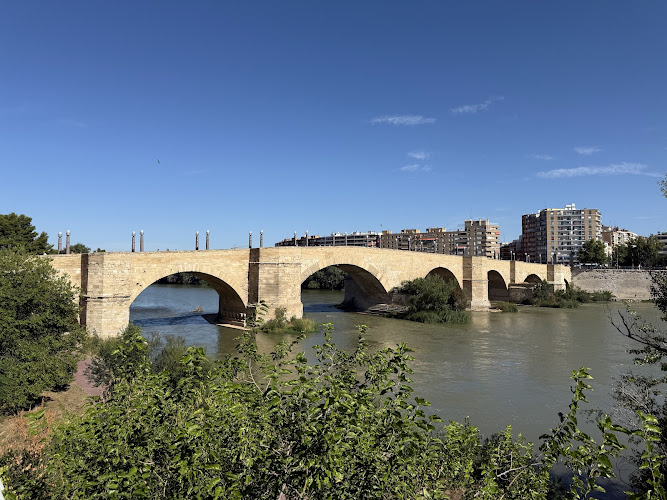
Stone Bridge

Sala de Exposiciones La Lonja

Cathedral of the Savior of Zaragoza
Find Accommodations Nearby
Recommended Tours & Activities
Visitor Reviews
There are no reviews yet. Be the first one to write one.
Share Your Experience
Have you visited Palacio de Sástago? Help other travelers by leaving a review.