
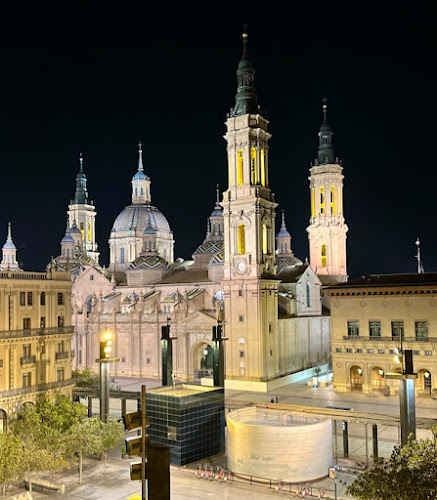
Cathedral-Basilica of Our Lady of the Pillar
About Cathedral-Basilica of Our Lady of the Pillar
Description
The Cathedral-Basilica of Our Lady of the Pillar is the landmark Zaragoza is proud to put on every postcard, and honestly, it deserves the attention. From a distance, those colorful tiled cupolas and four corner towers rise above the Ebro River like a painted skyline, Baroque and confident. Up close, the details keep multiplying: geometric ceramic domes catching the sun, facades layered with centuries of faith, and inside, chapels that whisper stories people still cross continents to hear.
This is both a working Catholic church and one of Spain’s most important Marian shrines. Tradition holds that the Virgin Mary appeared here to the Apostle James in the first century, while she was still living, leaving a jasper pillar as a sign of encouragement. The tiny statue of the Virgen del Pilar and that pillar — protected in the Holy Chapel, the Santa Capilla — remain the spiritual heart of the Basílica de Nuestra Señora del Pilar. Pilgrims press in, day after day, to touch or kiss the pillar through a small opening behind the altar. Faith or curiosity, solemn or simply intrigued, most visitors feel the moment slow down here.
Architecturally, the Cathedral-Basilica is textbook “go big.” The present church was largely built between 1681 and the 19th century, layering Baroque confidence onto earlier Romanesque and Gothic roots. Step through the doors and the scale hits first — height, length, and light. Then the eye starts climbing: white vaults, domes, and pendentives frescoed by a young and then not-so-young Francisco Goya. If that name makes your heart skip (same), count this as one of the few places you can stand under his work in situ, not just in a museum. In a way, El Pilar quietly doubles as a Goya pilgrimage site.
My own first visit was on a winter morning. The plaza was quiet, the Ebro rolled past with that slow, slate-colored confidence, and the basilica’s tiles looked almost frosted. Inside, it was warmer, but the hush was the thing. I remember the Santa Capilla glowing — designed by architect Ventura Rodríguez — and a steady, patient line for the pillar. You don’t have to be devout to find meaning in ritual; sometimes you’re just witnessing the continuity of a place that has mattered to people for a very, very long time. Later, someone pointed out a pair of unexploded bombs from the Spanish Civil War displayed inside, reminders of a night when ordnance dropped on the church and, by all accounts, did not detonate. History leaves relics, and this building keeps them.
The basilica doesn’t try to be precious about being a tourist attraction. It’s a living church first. So expect masses, choir rehearsals, candles, and quiet. Photography rules change by area and time of day, and they’re posted — more on that below — but the idea is simple: it’s a sanctuary, act accordingly. That said, it’s also downright photogenic from outside. Walk to the riverbank or the stone bridge and the cupolas line up like a row of bright marbles. At golden hour, the tiles go from pretty to show-offy.
Not everything is perfect — what is? Interiors can feel darker than some visitors expect, queues form in peak hours, and on busy days the atmosphere shifts from prayerful to buzzing. Occasionally, parts of the interior or exterior are under restoration (a centuries-old structure needs TLC). But take a breath on Plaza del Pilar and the city’s heartbeat is right there: street musicians, kids on scooters, light bouncing off the fountain, and the basilica anchoring it all.
Key Features
- Iconic Baroque skyline with colorful cupolas and four corner towers, visible from the Ebro River and the historic center
- Santa Capilla (Holy Chapel) by Ventura Rodríguez, housing the revered pillar and image of Our Lady of the Pillar
- Frescoes by Francisco Goya on domes and vaults, viewable from the nave and designated areas
- Main alabaster altarpiece attributed to Damián Forment, a luminous centerpiece worth lingering over
- Tradition of the cinta del Pilar: slim devotional ribbons tied to the Virgin’s measure, meaningful for many pilgrims and a unique local keepsake
- Unexploded bombs from the Spanish Civil War on display, a historical curiosity and a story locals know by heart
- Panoramic tower elevator (seasonal schedule) for sweeping views across Zaragoza and the Ebro
- Onsite services and a wheelchair-accessible entrance, making a visit workable for travelers with mobility needs
- Paid parking options (garages and lots) in the surrounding historic area if arriving by car
- Immediate proximity to other top sights: La Seo (the co-cathedral), Roman Caesaraugusta remains, the Lonja, and river walks
Best Time to Visit
Early morning is the sweet spot. Doors open early (typically before 7 am), and that’s when the basilica feels like a sanctuary rather than a landmark on a checklist. You’ll share the space with locals and a few pilgrims, and you can actually hear your footsteps cross the stone. If mornings are not your thing, late afternoon works too; just watch for mass times when certain areas are reserved for worship.
Seasonally, spring and fall are comfortable, with softer light that flatters those tiled cupolas. In summer, Zaragoza can get hot — 35°C to 40°C isn’t rare — so aim for the tower views in the morning or early evening and save the interior for midday heat. October 12, the Feast of Our Lady of the Pillar (which overlaps with Spain’s National Day), is a colorful and deeply meaningful time to be here, but it’s full-on: processions, crowds, flowers, emotion. If you love big civic-religious festivals, go then; if not, pick a quieter week and enjoy the plaza breathing room.
Tip from the impatient traveler in me: if the Santa Capilla line is long, take a lap around the nave to admire the Goya frescoes and come back. Lines ebb and flow surprisingly fast, especially outside mass hours.
How to Get There
Zaragoza is well connected by high-speed trains and buses. From the main train hub, Zaragoza-Delicias, the basilica is roughly 2.5–3 km away:
- Taxi or rideshare: 10–15 minutes, door to door, the stress-free option with luggage
- City bus: frequent lines link the station area to the historic center near Plaza del Pilar; ride time 15–25 minutes depending on traffic
- Tram + walk: the modern tram stops along the city spine; hop off near Plaza España or César Augusto and walk about 10–15 minutes to the basilica
- On foot: a 35–40 minute walk if you enjoy stretching your legs; it’s a straight-ish route but plan for sun in summer
Driving into the Casco Antiguo can be a puzzle thanks to traffic restrictions and narrow streets. It’s doable, but most travelers park in a paid garage on the outskirts of the old town and walk the last few minutes. The plaza is pedestrian-forward, so the final approach is always on foot. Cyclists will find racks in the vicinity, and the river paths make for a scenic approach if you’re arriving by bike.
Tips for Visiting
Practicalities can make or break a visit, so here’s the short-and-honest version from someone who’s learned by doing (and occasionally missing closing times by five minutes).
- Opening hours: The cathedral-basilica typically opens very early (around 6:45–7:00) and closes in the evening. The tower elevator and cultural visit areas keep shorter, seasonal hours, often mid-morning to mid-afternoon and again in late afternoon. Schedules adjust for liturgical events and holidays. If you’re timing a tower ride, aim morning to avoid wind closures.
- Tickets and access: Entry to the main basilica is generally free. The tower elevator and museum/cultural visit areas require a separate, small fee. Expect just a few euros for the tower; budget around 3–5€ per adult, with reduced or free options for kids and seniors depending on the season.
- Dress code: It’s a functioning Catholic church. Shoulders covered, knees modestly covered, hats off inside for men. No one is measuring hems, but respectful attire makes everything smoother.
- Photography: Interior rules vary by space and time. Often, no-flash photos are acceptable in some areas, but photography can be restricted during mass or in the Santa Capilla. Always follow posted signs and staff guidance. Outside, photograph to your heart’s content.
- Drones: The historic center and the area around the basilica are not a playground for drones. Urban no-fly rules and safety concerns apply — assume it’s off-limits and leave the drone in the bag.
- Guided visits: Cultural tours often combine El Pilar with La Seo, the Tapestry Museum, and a climb to the tower via the panoramic elevator. These are efficient if you like context. Ask on-site about English-language slots; they’ll point you to times or audio guide options.
- Santa Capilla etiquette: If you want to approach the pillar opening behind the chapel, join the line and keep the flow moving. It’s a brief contact, a moment, not a photoshoot. If you don’t wish to queue, you can still admire the chapel from the nave side.
- Cinta del Pilar: Yes, they have the ribbons. Locals keep them on mirrors, in wallets, on stroller handles. If you’re asking yourself Tienen su cinta del Pilar?? — the answer is usually sí, and they make tasteful souvenirs.
- Best photo spots:
- Puente de Piedra at sunset or dawn for the textbook skyline and reflections
- Ebro riverbank paths for low-angle cupola shots and joggers cameos
- Plaza del Pilar, near the Fuente de la Hispanidad, for a dramatic foreground
- The tower viewpoint for a city-wide panorama and a great look at the tiled domes
- Capturing the scale: Use a wide-angle lens and include a human figure or a plaza lamppost for scale. From the far side of Plaza del Pilar, shoot vertically to stack the towers and domes without warping too much. If you’re team phone-only, turn on gridlines and align the horizon with the fountain edge.
- Nearby attractions: Walk a few minutes to La Seo (the Cathedral of San Salvador) to see one of Spain’s finest alabaster altarpieces and the Tapestry Museum. The Lonja exhibition hall is close by, and the Caesaraugusta Forum Museum sits beneath the plaza. Hungry? Thread through El Tubo district for classic tapas after your visit.
- Best way to explore the area: Do a loop — plaza, basilica interior, riverbank photo stop, La Seo, then a coffee back on the square. It’s efficient and you won’t miss the basilica’s varied angles.
- Accessibility: There’s a wheelchair-accessible entrance, and staff are generally helpful if you ask. The plaza surface is smooth by old-town standards. The tower access includes an elevator for the main ascent, though final viewpoints may involve a few steps.
- Mass and quiet times: If you want silence, arrive early. If you want music, look for times when the organ or choir rehearses. Do not wander into roped-off areas during services.
- Safety and belongings: Normal city savvy applies. The plaza is wide and open; keep cameras close in crowds and lines.
- Weather plan: In summer, tour the interior during peak heat, then chase shade under the arcades. In winter, the interior can be chilly; bring a light layer. Wind can affect tower openings.
- What Zaragoza is famous for: Ask locals and you’ll hear El Pilar, Goya, Roman roots, and food. Visiting this basilica — with its legend of Saint James, its pillar of jasper, and its Baroque bravado — checks all those boxes in a single stop.
One more thought, if you’re into stories: the legend says Mary appeared to the Apostle James here to uplift him when his mission felt impossible. Whether you take it as faith, folklore, or a beautiful narrative, it makes sense that a city would wrap itself around a story about encouragement. On a good day, that’s the feeling this place leaves you with — that you can keep going. And yes, you’ll probably leave with way too many photos of those cupolas. I still do.
Key Features
- Baroque architecture with distinctive tiled domes and four towers
- Venerated image of Our Lady of the Pillar and the original pillar shrine
- Interior frescoes by Francisco de Goya and other notable artists
- Access to bell tower viewpoints overlooking the Ebro River and Plaza del Pilar
- Central location next to Plaza del Pilar and La Seo co-cathedral
More Details
Updated November 4, 2025
Table of Contents
- Description
- Key Features
- Best Time to Visit
- How to Get There
- Tips for Visiting
- Key Highlights
- Location
- Places to Stay Near Cathedral-Basilica of Our Lady of the Pillar
- Find and Book a Tour
- Explore More Travel Guides
- Nearby Places You Might Like
- Traveler Reviews for Cathedral-Basilica of Our Lady of the Pillar
- Share Your Experience
Description
The Cathedral-Basilica of Our Lady of the Pillar is the landmark Zaragoza is proud to put on every postcard, and honestly, it deserves the attention. From a distance, those colorful tiled cupolas and four corner towers rise above the Ebro River like a painted skyline, Baroque and confident. Up close, the details keep multiplying: geometric ceramic domes catching the sun, facades layered with centuries of faith, and inside, chapels that whisper stories people still cross continents to hear.
This is both a working Catholic church and one of Spain’s most important Marian shrines. Tradition holds that the Virgin Mary appeared here to the Apostle James in the first century, while she was still living, leaving a jasper pillar as a sign of encouragement. The tiny statue of the Virgen del Pilar and that pillar — protected in the Holy Chapel, the Santa Capilla — remain the spiritual heart of the Basílica de Nuestra Señora del Pilar. Pilgrims press in, day after day, to touch or kiss the pillar through a small opening behind the altar. Faith or curiosity, solemn or simply intrigued, most visitors feel the moment slow down here.
Architecturally, the Cathedral-Basilica is textbook “go big.” The present church was largely built between 1681 and the 19th century, layering Baroque confidence onto earlier Romanesque and Gothic roots. Step through the doors and the scale hits first — height, length, and light. Then the eye starts climbing: white vaults, domes, and pendentives frescoed by a young and then not-so-young Francisco Goya. If that name makes your heart skip (same), count this as one of the few places you can stand under his work in situ, not just in a museum. In a way, El Pilar quietly doubles as a Goya pilgrimage site.
My own first visit was on a winter morning. The plaza was quiet, the Ebro rolled past with that slow, slate-colored confidence, and the basilica’s tiles looked almost frosted. Inside, it was warmer, but the hush was the thing. I remember the Santa Capilla glowing — designed by architect Ventura Rodríguez — and a steady, patient line for the pillar. You don’t have to be devout to find meaning in ritual; sometimes you’re just witnessing the continuity of a place that has mattered to people for a very, very long time. Later, someone pointed out a pair of unexploded bombs from the Spanish Civil War displayed inside, reminders of a night when ordnance dropped on the church and, by all accounts, did not detonate. History leaves relics, and this building keeps them.
The basilica doesn’t try to be precious about being a tourist attraction. It’s a living church first. So expect masses, choir rehearsals, candles, and quiet. Photography rules change by area and time of day, and they’re posted — more on that below — but the idea is simple: it’s a sanctuary, act accordingly. That said, it’s also downright photogenic from outside. Walk to the riverbank or the stone bridge and the cupolas line up like a row of bright marbles. At golden hour, the tiles go from pretty to show-offy.
Not everything is perfect — what is? Interiors can feel darker than some visitors expect, queues form in peak hours, and on busy days the atmosphere shifts from prayerful to buzzing. Occasionally, parts of the interior or exterior are under restoration (a centuries-old structure needs TLC). But take a breath on Plaza del Pilar and the city’s heartbeat is right there: street musicians, kids on scooters, light bouncing off the fountain, and the basilica anchoring it all.
Key Features
- Iconic Baroque skyline with colorful cupolas and four corner towers, visible from the Ebro River and the historic center
- Santa Capilla (Holy Chapel) by Ventura Rodríguez, housing the revered pillar and image of Our Lady of the Pillar
- Frescoes by Francisco Goya on domes and vaults, viewable from the nave and designated areas
- Main alabaster altarpiece attributed to Damián Forment, a luminous centerpiece worth lingering over
- Tradition of the cinta del Pilar: slim devotional ribbons tied to the Virgin’s measure, meaningful for many pilgrims and a unique local keepsake
- Unexploded bombs from the Spanish Civil War on display, a historical curiosity and a story locals know by heart
- Panoramic tower elevator (seasonal schedule) for sweeping views across Zaragoza and the Ebro
- Onsite services and a wheelchair-accessible entrance, making a visit workable for travelers with mobility needs
- Paid parking options (garages and lots) in the surrounding historic area if arriving by car
- Immediate proximity to other top sights: La Seo (the co-cathedral), Roman Caesaraugusta remains, the Lonja, and river walks
Best Time to Visit
Early morning is the sweet spot. Doors open early (typically before 7 am), and that’s when the basilica feels like a sanctuary rather than a landmark on a checklist. You’ll share the space with locals and a few pilgrims, and you can actually hear your footsteps cross the stone. If mornings are not your thing, late afternoon works too; just watch for mass times when certain areas are reserved for worship.
Seasonally, spring and fall are comfortable, with softer light that flatters those tiled cupolas. In summer, Zaragoza can get hot — 35°C to 40°C isn’t rare — so aim for the tower views in the morning or early evening and save the interior for midday heat. October 12, the Feast of Our Lady of the Pillar (which overlaps with Spain’s National Day), is a colorful and deeply meaningful time to be here, but it’s full-on: processions, crowds, flowers, emotion. If you love big civic-religious festivals, go then; if not, pick a quieter week and enjoy the plaza breathing room.
Tip from the impatient traveler in me: if the Santa Capilla line is long, take a lap around the nave to admire the Goya frescoes and come back. Lines ebb and flow surprisingly fast, especially outside mass hours.
How to Get There
Zaragoza is well connected by high-speed trains and buses. From the main train hub, Zaragoza-Delicias, the basilica is roughly 2.5–3 km away:
- Taxi or rideshare: 10–15 minutes, door to door, the stress-free option with luggage
- City bus: frequent lines link the station area to the historic center near Plaza del Pilar; ride time 15–25 minutes depending on traffic
- Tram + walk: the modern tram stops along the city spine; hop off near Plaza España or César Augusto and walk about 10–15 minutes to the basilica
- On foot: a 35–40 minute walk if you enjoy stretching your legs; it’s a straight-ish route but plan for sun in summer
Driving into the Casco Antiguo can be a puzzle thanks to traffic restrictions and narrow streets. It’s doable, but most travelers park in a paid garage on the outskirts of the old town and walk the last few minutes. The plaza is pedestrian-forward, so the final approach is always on foot. Cyclists will find racks in the vicinity, and the river paths make for a scenic approach if you’re arriving by bike.
Tips for Visiting
Practicalities can make or break a visit, so here’s the short-and-honest version from someone who’s learned by doing (and occasionally missing closing times by five minutes).
- Opening hours: The cathedral-basilica typically opens very early (around 6:45–7:00) and closes in the evening. The tower elevator and cultural visit areas keep shorter, seasonal hours, often mid-morning to mid-afternoon and again in late afternoon. Schedules adjust for liturgical events and holidays. If you’re timing a tower ride, aim morning to avoid wind closures.
- Tickets and access: Entry to the main basilica is generally free. The tower elevator and museum/cultural visit areas require a separate, small fee. Expect just a few euros for the tower; budget around 3–5€ per adult, with reduced or free options for kids and seniors depending on the season.
- Dress code: It’s a functioning Catholic church. Shoulders covered, knees modestly covered, hats off inside for men. No one is measuring hems, but respectful attire makes everything smoother.
- Photography: Interior rules vary by space and time. Often, no-flash photos are acceptable in some areas, but photography can be restricted during mass or in the Santa Capilla. Always follow posted signs and staff guidance. Outside, photograph to your heart’s content.
- Drones: The historic center and the area around the basilica are not a playground for drones. Urban no-fly rules and safety concerns apply — assume it’s off-limits and leave the drone in the bag.
- Guided visits: Cultural tours often combine El Pilar with La Seo, the Tapestry Museum, and a climb to the tower via the panoramic elevator. These are efficient if you like context. Ask on-site about English-language slots; they’ll point you to times or audio guide options.
- Santa Capilla etiquette: If you want to approach the pillar opening behind the chapel, join the line and keep the flow moving. It’s a brief contact, a moment, not a photoshoot. If you don’t wish to queue, you can still admire the chapel from the nave side.
- Cinta del Pilar: Yes, they have the ribbons. Locals keep them on mirrors, in wallets, on stroller handles. If you’re asking yourself Tienen su cinta del Pilar?? — the answer is usually sí, and they make tasteful souvenirs.
- Best photo spots:
- Puente de Piedra at sunset or dawn for the textbook skyline and reflections
- Ebro riverbank paths for low-angle cupola shots and joggers cameos
- Plaza del Pilar, near the Fuente de la Hispanidad, for a dramatic foreground
- The tower viewpoint for a city-wide panorama and a great look at the tiled domes
- Capturing the scale: Use a wide-angle lens and include a human figure or a plaza lamppost for scale. From the far side of Plaza del Pilar, shoot vertically to stack the towers and domes without warping too much. If you’re team phone-only, turn on gridlines and align the horizon with the fountain edge.
- Nearby attractions: Walk a few minutes to La Seo (the Cathedral of San Salvador) to see one of Spain’s finest alabaster altarpieces and the Tapestry Museum. The Lonja exhibition hall is close by, and the Caesaraugusta Forum Museum sits beneath the plaza. Hungry? Thread through El Tubo district for classic tapas after your visit.
- Best way to explore the area: Do a loop — plaza, basilica interior, riverbank photo stop, La Seo, then a coffee back on the square. It’s efficient and you won’t miss the basilica’s varied angles.
- Accessibility: There’s a wheelchair-accessible entrance, and staff are generally helpful if you ask. The plaza surface is smooth by old-town standards. The tower access includes an elevator for the main ascent, though final viewpoints may involve a few steps.
- Mass and quiet times: If you want silence, arrive early. If you want music, look for times when the organ or choir rehearses. Do not wander into roped-off areas during services.
- Safety and belongings: Normal city savvy applies. The plaza is wide and open; keep cameras close in crowds and lines.
- Weather plan: In summer, tour the interior during peak heat, then chase shade under the arcades. In winter, the interior can be chilly; bring a light layer. Wind can affect tower openings.
- What Zaragoza is famous for: Ask locals and you’ll hear El Pilar, Goya, Roman roots, and food. Visiting this basilica — with its legend of Saint James, its pillar of jasper, and its Baroque bravado — checks all those boxes in a single stop.
One more thought, if you’re into stories: the legend says Mary appeared to the Apostle James here to uplift him when his mission felt impossible. Whether you take it as faith, folklore, or a beautiful narrative, it makes sense that a city would wrap itself around a story about encouragement. On a good day, that’s the feeling this place leaves you with — that you can keep going. And yes, you’ll probably leave with way too many photos of those cupolas. I still do.
Key Highlights
- Baroque architecture with distinctive tiled domes and four towers
- Venerated image of Our Lady of the Pillar and the original pillar shrine
- Interior frescoes by Francisco de Goya and other notable artists
- Access to bell tower viewpoints overlooking the Ebro River and Plaza del Pilar
- Central location next to Plaza del Pilar and La Seo co-cathedral
Location
Places to Stay Near Cathedral-Basilica of Our Lady of the Pillar
Find and Book a Tour
Explore More Travel Guides
No reviews found! Be the first to review!
Traveler Reviews for Cathedral-Basilica of Our Lady of the Pillar
There are no reviews yet. Be the first one to write one.
Have you visited Cathedral-Basilica of Our Lady of the Pillar? Help other travelers by sharing your review.
Nearby Attractions
You Might Also Like

Mercado Central de Zaragoza

Museo del Teatro de Caesaraugusta

Alma Mater Museum
Find Accommodations Nearby
Recommended Tours & Activities
Visitor Reviews
There are no reviews yet. Be the first one to write one.
Share Your Experience
Have you visited Cathedral-Basilica of Our Lady of the Pillar? Help other travelers by leaving a review.