
Palatine Gallery
About Palatine Gallery
Description
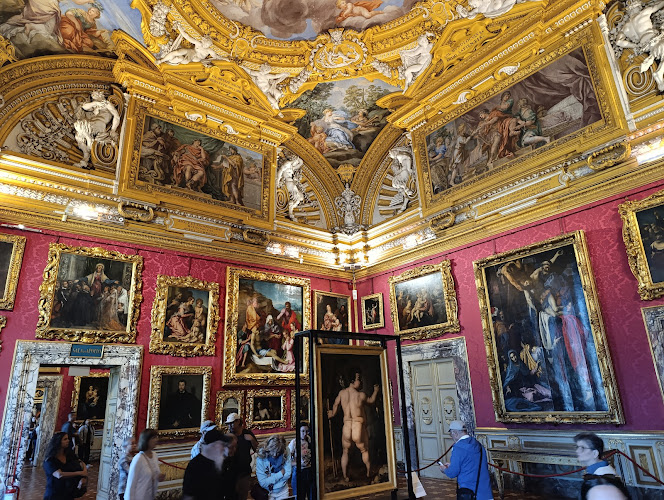
The Palatine Gallery is one of those places that quietly rewires how you think about art museums. It sits inside the Pitti Palace, and yes, that matters. A lot. This isn’t a white-wall, minimalist space where paintings politely line up at eye level. Instead, the Palatine Gallery throws you straight into the Medici worldview: art as power, beauty as status, and abundance as a statement. Paintings stack up the walls, frames nearly touching, ceilings dripping with frescoes, and rooms so ornate that you sometimes forget to look at the actual artwork. I did that once. Stood there staring at a gilded ceiling for a solid minute before realizing a Raphael was quietly judging me from below.
The collection is mostly the result of centuries of Medici collecting, and it shows. These weren’t curators thinking about wall labels or visitor flow. These were rulers saying, “Yes, I’ll take that Titian too.” And the result feels personal, even a little chaotic in a good way. You walk through rooms that were once living spaces, not galleries, and that intimacy changes how you look at the art. You’re not just seeing Renaissance masterpieces; you’re seeing them where dukes once woke up, argued politics, and probably complained about drafts.
Raphael is the big name here, and deservedly so. The Palatine Gallery holds one of the world’s most important collections of his works. Seeing multiple Raphaels in one visit does something strange to your brain. You start noticing patterns, preferences, the way his Madonnas tilt their heads just so. But it’s not a one-artist show. There’s Titian, Rubens, Caravaggio, Andrea del Sarto, and plenty of others who maybe don’t scream for attention but reward a slower look.
What I appreciate most is that the Palatine Gallery doesn’t try to simplify itself for you. It trusts you to wander, to feel overwhelmed, to pick favorites. Some travelers adore that. Others find it a bit much, especially if they’re expecting a calm, curated museum experience. Both reactions are fair. This place has a strong personality, and it doesn’t apologize for it.
Key Features
- Extensive Raphael collection, including portraits and religious works displayed across multiple rooms
- Original Medici-era room layouts, offering a rare glimpse into how art was once lived with, not just displayed
- Lavish interiors with frescoed ceilings, stucco work, and historical furnishings
- Masterpieces by Titian, Rubens, Caravaggio, and other Renaissance and Baroque heavyweights
- Located within the vast Pitti Palace complex, allowing easy pairing with other museums and the Boboli Gardens
- Wheelchair-accessible entrance and restrooms, which honestly isn’t a given in historic buildings like this
- On-site amenities including restrooms and a restaurant for mid-visit breaks
- Family-friendly atmosphere, with enough visual drama to keep kids interested (at least for a while)
Best Time to Visit
Timing matters here more than people admit. The Palatine Gallery can feel magical when it’s quiet and mildly exhausting when it’s packed. Early morning is your best bet, especially if you arrive right when doors open. The rooms feel calmer, and you can actually step back to take in those floor-to-ceiling displays without someone’s backpack nudging you.
Late afternoon can also work, particularly in the off-season. I once wandered through on a rainy November day, and the whole palace felt hushed, almost conspiratorial. The guards chatted softly, footsteps echoed, and the paintings seemed louder somehow. Summer, on the other hand, brings crowds. Not unbearable, but you’ll need patience and maybe a sense of humor.
Weekdays tend to be easier than weekends, and Tuesdays through Thursdays usually strike a good balance. If you’re visiting Florence during peak months, booking tickets in advance is less a suggestion and more a survival strategy. You don’t want to stand outside staring at that massive palace wondering why you didn’t plan ahead. Trust me.
How to Get There
The Palatine Gallery is part of the Pitti Palace complex, which sits just across the Arno from Florence’s historic center. If you’re staying near the Duomo or around Piazza della Signoria, it’s a pleasant walk. Crossing the river gives you that subtle feeling of entering a different Florence, one that’s slightly quieter and more residential, even with tourists milling about.
Public transportation gets you close enough, and from there it’s a short walk. Taxis are an option too, especially if you’re juggling kids or just tired of cobblestones. And honestly, those stones can wear you down after a few days. Walking remains the most rewarding approach, though. You see street life, small shops, and the gradual shift in atmosphere as the palace looms larger.
Once inside the palace grounds, follow the signage toward the Palatine Gallery. The complex is big, and it’s easy to second-guess yourself. But that slight disorientation kind of fits the experience. You’re entering a place that was designed to impress, not to be efficient.
Tips for Visiting
First tip: pace yourself. The Palatine Gallery is visually dense. Trying to see everything with equal attention is a recipe for burnout. Pick a few rooms that grab you and linger there. It’s okay to breeze past others. Art fatigue is real, and there’s no prize for seeing every single canvas.
Second, look up. Seriously. Some of the most astonishing details are on the ceilings, and it’s easy to forget them while focusing on the paintings. I once caught myself with a stiff neck afterward because I’d been craning upward so much. Worth it, though.
If you’re traveling with kids, set expectations. The gallery is surprisingly kid-friendly in terms of space and facilities, but the content is still classical art. Turning it into a game helps. Spot the angels, count the dogs, find the weirdest facial expression. You’ll be amazed how engaged they become when it’s playful.
Photography rules can change, so pay attention to signs and staff instructions. Even when photos are allowed, this isn’t the place to live through your phone. The rooms deserve your full attention, at least for a bit. And the lighting can be tricky anyway, making photos less impressive than the real thing.
Take advantage of the amenities. There are restrooms inside, and a restaurant nearby if you need a break. Sitting down after an hour or two of visual overload can reset your brain. I like to jot a few notes while resting, just quick impressions. Later, those scribbles help me remember what actually moved me versus what I just saw.
Accessibility is better than you might expect for a Renaissance palace. Wheelchair-accessible entrances and restrooms make a real difference, and staff are generally helpful if you need assistance. It’s not perfect, but it’s thoughtful, and that counts.
One last thing: don’t rush out the moment you’re done. Step back outside, take a breath, and let it all settle. The Palatine Gallery isn’t about checking a box. It’s about absorbing a worldview where art, power, and daily life were completely intertwined. You might not love every room. You might even feel overwhelmed. But chances are, at least one painting will stick with you long after you’ve left Florence. And that’s kind of the point, isn’t it?
Key Features
- Extensive Raphael collection, including portraits and religious works displayed across multiple rooms
- Original Medici-era room layouts, offering a rare glimpse into how art was once lived with, not just displayed
- Lavish interiors with frescoed ceilings, stucco work, and historical furnishings
- Masterpieces by Titian, Rubens, Caravaggio, and other Renaissance and Baroque heavyweights
- Located within the vast Pitti Palace complex, allowing easy pairing with other museums and the Boboli Gardens
- Wheelchair-accessible entrance and restrooms, which honestly isn’t a given in historic buildings like this
- On-site amenities including restrooms and a restaurant for mid-visit breaks
- Family-friendly atmosphere, with enough visual drama to keep kids interested (at least for a while)
More Details
Updated December 31, 2025
Table of Contents
Description
The Palatine Gallery is one of those places that quietly rewires how you think about art museums. It sits inside the Pitti Palace, and yes, that matters. A lot. This isn’t a white-wall, minimalist space where paintings politely line up at eye level. Instead, the Palatine Gallery throws you straight into the Medici worldview: art as power, beauty as status, and abundance as a statement. Paintings stack up the walls, frames nearly touching, ceilings dripping with frescoes, and rooms so ornate that you sometimes forget to look at the actual artwork. I did that once. Stood there staring at a gilded ceiling for a solid minute before realizing a Raphael was quietly judging me from below.
The collection is mostly the result of centuries of Medici collecting, and it shows. These weren’t curators thinking about wall labels or visitor flow. These were rulers saying, “Yes, I’ll take that Titian too.” And the result feels personal, even a little chaotic in a good way. You walk through rooms that were once living spaces, not galleries, and that intimacy changes how you look at the art. You’re not just seeing Renaissance masterpieces; you’re seeing them where dukes once woke up, argued politics, and probably complained about drafts.
Raphael is the big name here, and deservedly so. The Palatine Gallery holds one of the world’s most important collections of his works. Seeing multiple Raphaels in one visit does something strange to your brain. You start noticing patterns, preferences, the way his Madonnas tilt their heads just so. But it’s not a one-artist show. There’s Titian, Rubens, Caravaggio, Andrea del Sarto, and plenty of others who maybe don’t scream for attention but reward a slower look.
What I appreciate most is that the Palatine Gallery doesn’t try to simplify itself for you. It trusts you to wander, to feel overwhelmed, to pick favorites. Some travelers adore that. Others find it a bit much, especially if they’re expecting a calm, curated museum experience. Both reactions are fair. This place has a strong personality, and it doesn’t apologize for it.
Key Features
- Extensive Raphael collection, including portraits and religious works displayed across multiple rooms
- Original Medici-era room layouts, offering a rare glimpse into how art was once lived with, not just displayed
- Lavish interiors with frescoed ceilings, stucco work, and historical furnishings
- Masterpieces by Titian, Rubens, Caravaggio, and other Renaissance and Baroque heavyweights
- Located within the vast Pitti Palace complex, allowing easy pairing with other museums and the Boboli Gardens
- Wheelchair-accessible entrance and restrooms, which honestly isn’t a given in historic buildings like this
- On-site amenities including restrooms and a restaurant for mid-visit breaks
- Family-friendly atmosphere, with enough visual drama to keep kids interested (at least for a while)
Best Time to Visit
Timing matters here more than people admit. The Palatine Gallery can feel magical when it’s quiet and mildly exhausting when it’s packed. Early morning is your best bet, especially if you arrive right when doors open. The rooms feel calmer, and you can actually step back to take in those floor-to-ceiling displays without someone’s backpack nudging you.
Late afternoon can also work, particularly in the off-season. I once wandered through on a rainy November day, and the whole palace felt hushed, almost conspiratorial. The guards chatted softly, footsteps echoed, and the paintings seemed louder somehow. Summer, on the other hand, brings crowds. Not unbearable, but you’ll need patience and maybe a sense of humor.
Weekdays tend to be easier than weekends, and Tuesdays through Thursdays usually strike a good balance. If you’re visiting Florence during peak months, booking tickets in advance is less a suggestion and more a survival strategy. You don’t want to stand outside staring at that massive palace wondering why you didn’t plan ahead. Trust me.
How to Get There
The Palatine Gallery is part of the Pitti Palace complex, which sits just across the Arno from Florence’s historic center. If you’re staying near the Duomo or around Piazza della Signoria, it’s a pleasant walk. Crossing the river gives you that subtle feeling of entering a different Florence, one that’s slightly quieter and more residential, even with tourists milling about.
Public transportation gets you close enough, and from there it’s a short walk. Taxis are an option too, especially if you’re juggling kids or just tired of cobblestones. And honestly, those stones can wear you down after a few days. Walking remains the most rewarding approach, though. You see street life, small shops, and the gradual shift in atmosphere as the palace looms larger.
Once inside the palace grounds, follow the signage toward the Palatine Gallery. The complex is big, and it’s easy to second-guess yourself. But that slight disorientation kind of fits the experience. You’re entering a place that was designed to impress, not to be efficient.
Tips for Visiting
First tip: pace yourself. The Palatine Gallery is visually dense. Trying to see everything with equal attention is a recipe for burnout. Pick a few rooms that grab you and linger there. It’s okay to breeze past others. Art fatigue is real, and there’s no prize for seeing every single canvas.
Second, look up. Seriously. Some of the most astonishing details are on the ceilings, and it’s easy to forget them while focusing on the paintings. I once caught myself with a stiff neck afterward because I’d been craning upward so much. Worth it, though.
If you’re traveling with kids, set expectations. The gallery is surprisingly kid-friendly in terms of space and facilities, but the content is still classical art. Turning it into a game helps. Spot the angels, count the dogs, find the weirdest facial expression. You’ll be amazed how engaged they become when it’s playful.
Photography rules can change, so pay attention to signs and staff instructions. Even when photos are allowed, this isn’t the place to live through your phone. The rooms deserve your full attention, at least for a bit. And the lighting can be tricky anyway, making photos less impressive than the real thing.
Take advantage of the amenities. There are restrooms inside, and a restaurant nearby if you need a break. Sitting down after an hour or two of visual overload can reset your brain. I like to jot a few notes while resting, just quick impressions. Later, those scribbles help me remember what actually moved me versus what I just saw.
Accessibility is better than you might expect for a Renaissance palace. Wheelchair-accessible entrances and restrooms make a real difference, and staff are generally helpful if you need assistance. It’s not perfect, but it’s thoughtful, and that counts.
One last thing: don’t rush out the moment you’re done. Step back outside, take a breath, and let it all settle. The Palatine Gallery isn’t about checking a box. It’s about absorbing a worldview where art, power, and daily life were completely intertwined. You might not love every room. You might even feel overwhelmed. But chances are, at least one painting will stick with you long after you’ve left Florence. And that’s kind of the point, isn’t it?
Key Highlights
- Extensive Raphael collection, including portraits and religious works displayed across multiple rooms
- Original Medici-era room layouts, offering a rare glimpse into how art was once lived with, not just displayed
- Lavish interiors with frescoed ceilings, stucco work, and historical furnishings
- Masterpieces by Titian, Rubens, Caravaggio, and other Renaissance and Baroque heavyweights
- Located within the vast Pitti Palace complex, allowing easy pairing with other museums and the Boboli Gardens
- Wheelchair-accessible entrance and restrooms, which honestly isn’t a given in historic buildings like this
- On-site amenities including restrooms and a restaurant for mid-visit breaks
- Family-friendly atmosphere, with enough visual drama to keep kids interested (at least for a while)
Location
Places to Stay Near Palatine Gallery
Find and Book a Tour
Explore More Travel Guides
No reviews found! Be the first to review!
Traveler Reviews for Palatine Gallery
There are no reviews yet. Be the first one to write one.
Have you visited Palatine Gallery? Help other travelers by sharing your review.
You Might Also Like

Uffizi Gallery

Museo di San Marco
Chiesa di Santa Maria del Carmine
Find Accommodations Nearby
Recommended Tours & Activities
Visitor Reviews
There are no reviews yet. Be the first one to write one.
Share Your Experience
Have you visited Palatine Gallery? Help other travelers by leaving a review.