
David
About David
Description
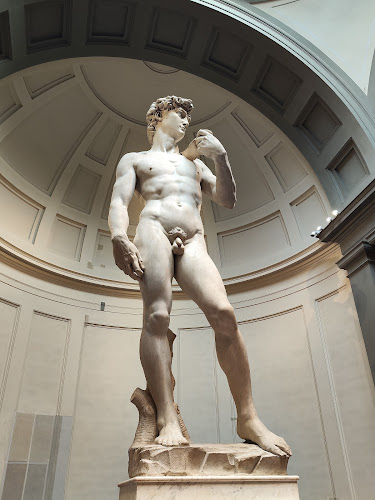
Michelangelo’s David is one of those rare works of art that you think you already know… until you’re standing in front of it, neck slightly craned, mouth probably hanging open, wondering why nobody warned you about the scale of it. And I don’t just mean tall. I mean emotionally tall. It dominates the room at the Galleria dell’Accademia in Florence in a way that photos, documentaries, and art history textbooks never quite prepare you for.
This Renaissance-era marble sculpture depicts the biblical hero David, but not in the victorious, sword-wielding moment you might expect. Instead, Michelangelo shows David before the battle with Goliath. He’s tense, alert, brows furrowed, weight shifted subtly onto one leg. There’s a coiled energy there, like he’s holding his breath. I remember thinking, the first time I saw it, that it felt less like looking at a statue and more like interrupting someone’s private moment of concentration.
The sculpture was carved from a single block of Carrara marble in the early 1500s. Fun fact that often gets skipped: that marble block had already been partially worked on and then abandoned by other artists. It was considered flawed. Michelangelo, in his mid-20s (overachiever, honestly), took on the challenge and somehow turned “flawed marble” into what many consider the greatest sculpture ever made. That alone adds an extra layer of respect when you’re standing there.
David was originally intended for an outdoor buttress of Florence Cathedral, which feels wild when you see how detailed it is. Eventually, it was placed in the Piazza della Signoria as a political symbol of the Florentine Republic. Today, the original rests indoors, protected from weather and over-enthusiastic pigeons. And yes, the museum can get crowded, sometimes uncomfortably so. But even with the murmurs, the shuffling feet, and the occasional selfie stick drifting into your peripheral vision, the statue still commands silence in its own way.
Is it perfect? Almost. Some visitors find the hype overwhelming, or feel rushed through the gallery. And sure, the setting isn’t huge, so during peak hours it can feel like you’re part of a slow-moving herd. But the craftsmanship, the anatomy (those hands!), the quiet psychological tension… it earns its reputation. I’ve seen people walk in skeptical and walk out strangely moved, which says a lot.
Key Features
- Carved from a single block of Carrara marble, standing over 17 feet tall
- Depicts David before his battle with Goliath, emphasizing tension and focus
- Created by Michelangelo between 1501 and 1504
- Located inside the Galleria dell’Accademia for preservation
- Remarkable anatomical detail, especially in the hands, veins, and facial expression
- Wheelchair accessible entrance and onsite visitor services
- Surrounded by unfinished Michelangelo sculptures that give context to his process
Best Time to Visit
If you ask me, timing is everything with David. Early morning is your best bet, especially right when the museum opens. There’s something almost sacred about seeing the statue before the crowds swell. The room feels calmer, and you can actually linger without feeling like you’re blocking traffic. Late afternoons can also work, but mornings win.
Avoid weekends if you can. Seriously. Florence is beautiful every day of the week, but weekends bring tour groups in full force. If your schedule is tight and weekends are your only option, aim for the very first or very last entry slots. Midday, especially in summer, is… a test of patience. And I say that as someone who loves people-watching.
Season-wise, spring and fall are ideal. April, May, September, and October strike a good balance between pleasant weather and manageable crowds. Summer is hot, busy, and loud, though the museum itself is climate-controlled, which can feel like a blessing after wandering Florentine streets. Winter is underrated. Fewer tourists, shorter lines, and a quieter atmosphere that somehow suits the sculpture’s intensity.
How to Get There
The Galleria dell’Accademia sits comfortably within Florence’s historic center, which means getting there is refreshingly simple. If you’re already staying in central Florence, chances are you can walk. And honestly, walking is half the joy here. Narrow streets, random bakeries, the occasional Vespa zooming past… it’s all part of the experience.
If you’re coming from farther out, public transportation will get you close enough. Florence isn’t a sprawling city, so even buses drop you within a short stroll. Trains bring you into Santa Maria Novella station, from which it’s an easy walk if you don’t mind 15 minutes on foot. I usually do. Gives me time to mentally prepare, and maybe grab an espresso because, priorities.
Taxis are available, but unless mobility is an issue, they’re often unnecessary. Traffic restrictions in the historic center can slow things down anyway. And if you’re using a wheelchair or traveling with someone who is, the museum’s accessible entrance makes planning easier than you might expect in a city this old.
Tips for Visiting
First tip: give yourself permission to slow down. Many people rush in, snap a few photos, and rush out. David deserves more than that. Walk around the statue. Look from different angles. Notice how the proportions change depending on where you stand. The head and hands are slightly oversized, intentionally so, to correct for the original outdoor viewing angle. It’s a clever detail that often goes unnoticed.
Second, don’t skip the rest of the gallery. The unfinished sculptures known as the Prisoners or Slaves are, in my opinion, almost as fascinating as David himself. You can see figures emerging from raw marble, like they’re fighting their way out. It gives context to Michelangelo’s mind and makes David feel even more miraculous.
Photography is allowed, but skip the flash and maybe don’t spend the entire time behind your phone. I’ve made that mistake before, trying to capture the “perfect” shot, only to realize later I barely remember the moment. Take a couple of photos, then just look. Your memory will thank you.
Wear comfortable shoes. This sounds obvious, but Florence’s stone streets are unforgiving, and you’ll likely be standing for a while inside the museum. Also, check bag policies ahead of time. Large bags usually aren’t allowed, and dealing with storage can eat into your visit.
And lastly, manage your expectations, but not too much. Yes, it’s famous. Yes, it’s crowded. Yes, you might hear five different languages being spoken around you. But there’s a reason people have been making pilgrimages to see this sculpture for centuries. Even with its flaws, or maybe because of them, David has a way of cutting through the noise and reminding you why art matters. And if you walk out feeling even a little bit changed, that’s a pretty good return on your time.
Key Features
- Carved from a single block of Carrara marble, standing over 17 feet tall
- Depicts David before his battle with Goliath, emphasizing tension and focus
- Created by Michelangelo between 1501 and 1504
- Located inside the Galleria dell’Accademia for preservation
- Remarkable anatomical detail, especially in the hands, veins, and facial expression
- Wheelchair accessible entrance and onsite visitor services
- Surrounded by unfinished Michelangelo sculptures that give context to his process
More Details
Updated December 31, 2025
Table of Contents
Description
Michelangelo’s David is one of those rare works of art that you think you already know… until you’re standing in front of it, neck slightly craned, mouth probably hanging open, wondering why nobody warned you about the scale of it. And I don’t just mean tall. I mean emotionally tall. It dominates the room at the Galleria dell’Accademia in Florence in a way that photos, documentaries, and art history textbooks never quite prepare you for.
This Renaissance-era marble sculpture depicts the biblical hero David, but not in the victorious, sword-wielding moment you might expect. Instead, Michelangelo shows David before the battle with Goliath. He’s tense, alert, brows furrowed, weight shifted subtly onto one leg. There’s a coiled energy there, like he’s holding his breath. I remember thinking, the first time I saw it, that it felt less like looking at a statue and more like interrupting someone’s private moment of concentration.
The sculpture was carved from a single block of Carrara marble in the early 1500s. Fun fact that often gets skipped: that marble block had already been partially worked on and then abandoned by other artists. It was considered flawed. Michelangelo, in his mid-20s (overachiever, honestly), took on the challenge and somehow turned “flawed marble” into what many consider the greatest sculpture ever made. That alone adds an extra layer of respect when you’re standing there.
David was originally intended for an outdoor buttress of Florence Cathedral, which feels wild when you see how detailed it is. Eventually, it was placed in the Piazza della Signoria as a political symbol of the Florentine Republic. Today, the original rests indoors, protected from weather and over-enthusiastic pigeons. And yes, the museum can get crowded, sometimes uncomfortably so. But even with the murmurs, the shuffling feet, and the occasional selfie stick drifting into your peripheral vision, the statue still commands silence in its own way.
Is it perfect? Almost. Some visitors find the hype overwhelming, or feel rushed through the gallery. And sure, the setting isn’t huge, so during peak hours it can feel like you’re part of a slow-moving herd. But the craftsmanship, the anatomy (those hands!), the quiet psychological tension… it earns its reputation. I’ve seen people walk in skeptical and walk out strangely moved, which says a lot.
Key Features
- Carved from a single block of Carrara marble, standing over 17 feet tall
- Depicts David before his battle with Goliath, emphasizing tension and focus
- Created by Michelangelo between 1501 and 1504
- Located inside the Galleria dell’Accademia for preservation
- Remarkable anatomical detail, especially in the hands, veins, and facial expression
- Wheelchair accessible entrance and onsite visitor services
- Surrounded by unfinished Michelangelo sculptures that give context to his process
Best Time to Visit
If you ask me, timing is everything with David. Early morning is your best bet, especially right when the museum opens. There’s something almost sacred about seeing the statue before the crowds swell. The room feels calmer, and you can actually linger without feeling like you’re blocking traffic. Late afternoons can also work, but mornings win.
Avoid weekends if you can. Seriously. Florence is beautiful every day of the week, but weekends bring tour groups in full force. If your schedule is tight and weekends are your only option, aim for the very first or very last entry slots. Midday, especially in summer, is… a test of patience. And I say that as someone who loves people-watching.
Season-wise, spring and fall are ideal. April, May, September, and October strike a good balance between pleasant weather and manageable crowds. Summer is hot, busy, and loud, though the museum itself is climate-controlled, which can feel like a blessing after wandering Florentine streets. Winter is underrated. Fewer tourists, shorter lines, and a quieter atmosphere that somehow suits the sculpture’s intensity.
How to Get There
The Galleria dell’Accademia sits comfortably within Florence’s historic center, which means getting there is refreshingly simple. If you’re already staying in central Florence, chances are you can walk. And honestly, walking is half the joy here. Narrow streets, random bakeries, the occasional Vespa zooming past… it’s all part of the experience.
If you’re coming from farther out, public transportation will get you close enough. Florence isn’t a sprawling city, so even buses drop you within a short stroll. Trains bring you into Santa Maria Novella station, from which it’s an easy walk if you don’t mind 15 minutes on foot. I usually do. Gives me time to mentally prepare, and maybe grab an espresso because, priorities.
Taxis are available, but unless mobility is an issue, they’re often unnecessary. Traffic restrictions in the historic center can slow things down anyway. And if you’re using a wheelchair or traveling with someone who is, the museum’s accessible entrance makes planning easier than you might expect in a city this old.
Tips for Visiting
First tip: give yourself permission to slow down. Many people rush in, snap a few photos, and rush out. David deserves more than that. Walk around the statue. Look from different angles. Notice how the proportions change depending on where you stand. The head and hands are slightly oversized, intentionally so, to correct for the original outdoor viewing angle. It’s a clever detail that often goes unnoticed.
Second, don’t skip the rest of the gallery. The unfinished sculptures known as the Prisoners or Slaves are, in my opinion, almost as fascinating as David himself. You can see figures emerging from raw marble, like they’re fighting their way out. It gives context to Michelangelo’s mind and makes David feel even more miraculous.
Photography is allowed, but skip the flash and maybe don’t spend the entire time behind your phone. I’ve made that mistake before, trying to capture the “perfect” shot, only to realize later I barely remember the moment. Take a couple of photos, then just look. Your memory will thank you.
Wear comfortable shoes. This sounds obvious, but Florence’s stone streets are unforgiving, and you’ll likely be standing for a while inside the museum. Also, check bag policies ahead of time. Large bags usually aren’t allowed, and dealing with storage can eat into your visit.
And lastly, manage your expectations, but not too much. Yes, it’s famous. Yes, it’s crowded. Yes, you might hear five different languages being spoken around you. But there’s a reason people have been making pilgrimages to see this sculpture for centuries. Even with its flaws, or maybe because of them, David has a way of cutting through the noise and reminding you why art matters. And if you walk out feeling even a little bit changed, that’s a pretty good return on your time.
Key Highlights
- Carved from a single block of Carrara marble, standing over 17 feet tall
- Depicts David before his battle with Goliath, emphasizing tension and focus
- Created by Michelangelo between 1501 and 1504
- Located inside the Galleria dell’Accademia for preservation
- Remarkable anatomical detail, especially in the hands, veins, and facial expression
- Wheelchair accessible entrance and onsite visitor services
- Surrounded by unfinished Michelangelo sculptures that give context to his process
Location
Places to Stay Near David
Find and Book a Tour
Explore More Travel Guides
No reviews found! Be the first to review!
Traveler Reviews for David
There are no reviews yet. Be the first one to write one.
Have you visited David? Help other travelers by sharing your review.
You Might Also Like

Museo di San Marco
Opera del Duomo Museum

Brunelleschi's dome
Find Accommodations Nearby
Recommended Tours & Activities
Visitor Reviews
There are no reviews yet. Be the first one to write one.
Share Your Experience
Have you visited David? Help other travelers by leaving a review.