
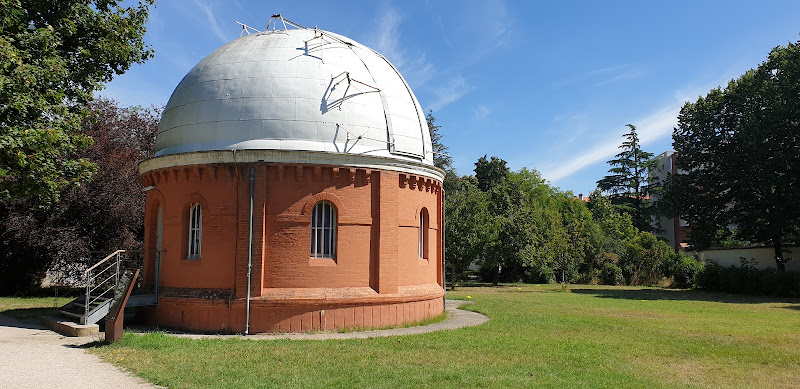
Observatoire de Jolimont
About Observatoire de Jolimont
Description
The Observatoire de Jolimont stands as one of those fascinating places where science meets history in the most unexpected ways. You know how some attractions feel like they're just going through the motions? This isn't one of them. Built in the late 19th century, this observatory has been keeping its eyes on the stars for well over a hundred years, and there's something genuinely compelling about standing in a place where generations of astronomers have peered into the cosmos. What really strikes visitors about this observatory is how it manages to bridge the gap between serious scientific work and public engagement. Unlike some observatories that feel more like museums frozen in time, Jolimont maintains an active relationship with both professional astronomy and curious travelers who just want to understand what's happening up there in the night sky. The facility itself isn't massive or overwhelming – it's got this intimate quality that makes the whole experience feel personal rather than like you're being herded through another tourist trap. And here's the thing that most people don't realize until they visit: the observatory isn't just about looking at planets and stars. It's situated in an area that offers surprisingly pleasant surroundings for a leisurely afternoon. The grounds provide a peaceful retreat from busier tourist circuits, and you'll find that the staff genuinely care about sharing their passion for astronomy rather than just selling tickets and moving people along. I've heard from travelers who went expecting a quick half-hour stop and ended up spending several hours just soaking in the atmosphere and asking questions. The building itself tells a story of architectural ambition from another era. When you see those distinctive domes against the skyline, you're looking at structures that were designed with both functionality and aesthetic appeal in mind. The brass instruments, the carefully preserved equipment, the sense that this place has witnessed countless celestial events – it all adds up to create an experience that feels authentic in ways that modern attractions sometimes struggle to achieve.Key Features
The Observatoire de Jolimont offers several distinctive elements that make it worth adding to your travel itinerary:- Historic telescope equipment that dates back to the observatory's founding, with some instruments still in working condition and occasionally used for observations
- Regular public viewing sessions where visitors can actually look through professional-grade telescopes rather than just reading about them behind glass
- Educational exhibits that explain astronomical concepts in accessible language without dumbing down the science too much
- Wheelchair accessible facilities throughout, including the entrance and parking areas, making it genuinely inclusive for visitors with mobility considerations
- A dedicated parking lot on-site, though it does require payment – a small price for the convenience of not hunting for street parking
- Kid-friendly programming that manages to engage younger visitors without boring adults who came along
- Knowledgeable staff members who often include practicing astronomers and passionate enthusiasts rather than just tour guides reading from scripts
- Architectural features that photography enthusiasts absolutely love, particularly during golden hour when the light hits those copper domes just right
- A collection of historical documents and photographs that chronicle the observatory's role in various astronomical discoveries over the decades
- Peaceful grounds that provide a quiet space for contemplation, something increasingly rare in popular tourist destinations
Best Time to Visit
Timing your visit to the Observatoire de Jolimont requires a bit more thought than your typical attraction. Obviously, if you want to actually observe celestial objects through the telescopes, you'll need to come during evening hours when the sky is dark. But here's where it gets interesting – the experience changes dramatically depending on when you go. Summer months bring longer days and warmer weather, which sounds great until you realize that means waiting until quite late for proper darkness. However, summer does offer the advantage of more comfortable temperatures if you're planning to spend time outside on the observatory grounds. The facility typically schedules special events during summer that take advantage of the pleasant weather, and you'll find larger crowds of fellow astronomy enthusiasts to share the experience with. Winter visiting has its own appeal, though. The sky gets dark much earlier, meaning you can have a full stargazing session and still get back to your accommodation at a reasonable hour. Clear winter nights often provide some of the best viewing conditions, with crisper air and less atmospheric distortion. Just dress warmly – standing around looking at stars gets chilly faster than you'd think, and there's nothing that ruins an astronomical experience quite like shivering too much to focus. Spring and autumn represent something of a sweet spot. The weather's generally moderate, darkness falls at reasonable hours, and you'll encounter smaller crowds than peak summer season. I'd personally lean toward autumn visits, actually. There's something about the quality of light in September and October that makes the whole experience feel more atmospheric. Pay attention to the lunar calendar too. A full moon is gorgeous to look at, sure, but it washes out fainter stars and deep-sky objects. If you're serious about seeing galaxies and nebulae, plan your visit around the new moon phase when the sky is at its darkest. Weekday visits typically offer a more relaxed experience than weekends, when families and school groups tend to fill the schedule. That's not necessarily a bad thing – the energy can be infectious – but if you prefer a quieter, more contemplative visit, Tuesday through Thursday tends to be your best bet.How to Get There
Getting to the Observatoire de Jolimont requires a bit of planning, but it's certainly manageable for most travelers. The observatory sits in a location that's accessible yet somewhat removed from the absolute center of major tourist areas, which honestly works in its favor – you get that sense of discovering something slightly off the beaten path. If you're driving, you'll appreciate the dedicated parking lot, even though it does charge a fee. The roads leading to the observatory are well-maintained and clearly marked, though GPS sometimes gets a bit confused in the immediate vicinity, so keep your eyes open for directional signage as you get close. The parking situation is particularly convenient for visitors with mobility needs, as the wheelchair accessible parking connects directly to the accessible entrance. Public transportation is viable, though it requires more time and patience. Local bus routes serve the area, but you'll want to check schedules carefully, especially if you're planning an evening visit for stargazing. The last thing you want is to finish a fantastic night of astronomy only to discover you've missed the last bus back. Some visitors find that taking public transport there and arranging a taxi or rideshare for the return journey offers a good compromise. Cycling is an option that more adventurous travelers might consider, particularly during warmer months and for daytime visits. The area around the observatory has decent cycling infrastructure, and there are places to secure bikes. Just remember that you'll be cycling back in the dark if you're there for evening observations. For international travelers staying in nearby cities, the observatory makes a reasonable day trip or evening excursion. The journey shouldn't take more than reasonable driving time depending on your starting point, and the roads are generally straightforward to navigate.Tips for Visiting
Here's what you actually need to know before you go, based on what tends to trip up visitors who didn't plan ahead properly. First and foremost: dress in layers, seriously. Even if it seems warm when you arrive, observatories get cold once the sun goes down and you're standing relatively still for extended periods. I can't stress this enough – bring a jacket even in summer. You'll look silly arriving with a parka in July, but you'll be the comfortable one when everyone else is shivering at 10 PM. Check the weather forecast obsessively if you're going specifically for stargazing. Cloudy nights happen, and while the observatory still offers interesting exhibits and information, the experience obviously shines (literally) when you can actually see celestial objects. Some facilities offer raincheck policies or alternative programs during poor viewing conditions, so ask about this when booking or purchasing tickets. Bring your own red flashlight if you have one. Red light preserves night vision, which matters when you're trying to observe faint objects in the sky. The observatory staff use them, and having your own means you can check your phone or find items in your bag without disrupting everyone's adjusted vision. The observatory is genuinely good for kids, but set realistic expectations. Younger children sometimes struggle with the patience required for astronomical observation – there's a lot of waiting, looking at what might seem like tiny dots, and standing quietly. Older children and teenagers often find it fascinating, especially if they've shown any interest in space beforehand. Consider visiting during a special family program designed with younger attention spans in mind. Don't be afraid to ask questions. The staff at Jolimont generally love talking about astronomy, and you'll get much more out of your visit if you engage rather than just passively observing. That said, during busy public viewing sessions, be mindful of monopolizing staff time when others are waiting. Photography can be tricky. While the observatory itself makes a great subject for daytime photos, photographing through telescopes requires specific equipment and technique. Ask staff about their photography policies before attempting astrophotography – some telescopes allow it with proper equipment, others don't. Your smartphone probably won't capture much through a telescope eyepiece, despite what you might have seen on social media. Plan for at least two to three hours if you're doing an evening observation session. This gives you time to let your eyes adjust, observe multiple objects, ask questions, and really absorb the experience. Rushing through defeats the purpose. The paid parking lot accepts various payment methods, but it's worth confirming current policies before arrival. Having some cash as backup never hurts, even in our increasingly cashless world. Finally, manage your expectations about what you'll see through telescopes. Planets and the moon look spectacular, but distant galaxies and nebulae appear much fainter and less colorful than those dramatic photos you've seen online. Those images are long-exposure photographs that collect light over minutes or hours. Your eye sees in real-time, which means dimmer, smaller images. That doesn't make them less awe-inspiring – there's something profound about seeing photons that traveled millions of light-years directly with your own eye – but knowing this beforehand prevents disappointment. The Observatoire de Jolimont rewards visitors who come with curiosity and patience. It's not a quick-hit attraction where you snap photos and move on, but rather a place that invites you to slow down and contemplate your place in the universe. And honestly? We could all use a bit more of that in our travels.Key Features
- Historic observatory built in 1846 with original architecture
- Collection of classified historical instruments (meridian telescope, Carte du Ciel refractor, 38 cm refractor, 830 mm telescope)
- Guided tours led by the Société d’Astronomie Populaire with local astronomy historians
- Small domes and period interiors offering an authentic 19th-century observatory atmosphere
- Garden setting in Jolimont providing pleasant outdoor surroundings and city views
More Details
Updated March 30, 2026
Table of Contents
Description
The Observatoire de Jolimont stands as one of those fascinating places where science meets history in the most unexpected ways. You know how some attractions feel like they’re just going through the motions? This isn’t one of them. Built in the late 19th century, this observatory has been keeping its eyes on the stars for well over a hundred years, and there’s something genuinely compelling about standing in a place where generations of astronomers have peered into the cosmos.
What really strikes visitors about this observatory is how it manages to bridge the gap between serious scientific work and public engagement. Unlike some observatories that feel more like museums frozen in time, Jolimont maintains an active relationship with both professional astronomy and curious travelers who just want to understand what’s happening up there in the night sky. The facility itself isn’t massive or overwhelming – it’s got this intimate quality that makes the whole experience feel personal rather than like you’re being herded through another tourist trap.
And here’s the thing that most people don’t realize until they visit: the observatory isn’t just about looking at planets and stars. It’s situated in an area that offers surprisingly pleasant surroundings for a leisurely afternoon. The grounds provide a peaceful retreat from busier tourist circuits, and you’ll find that the staff genuinely care about sharing their passion for astronomy rather than just selling tickets and moving people along. I’ve heard from travelers who went expecting a quick half-hour stop and ended up spending several hours just soaking in the atmosphere and asking questions.
The building itself tells a story of architectural ambition from another era. When you see those distinctive domes against the skyline, you’re looking at structures that were designed with both functionality and aesthetic appeal in mind. The brass instruments, the carefully preserved equipment, the sense that this place has witnessed countless celestial events – it all adds up to create an experience that feels authentic in ways that modern attractions sometimes struggle to achieve.
Key Features
The Observatoire de Jolimont offers several distinctive elements that make it worth adding to your travel itinerary:
- Historic telescope equipment that dates back to the observatory’s founding, with some instruments still in working condition and occasionally used for observations
- Regular public viewing sessions where visitors can actually look through professional-grade telescopes rather than just reading about them behind glass
- Educational exhibits that explain astronomical concepts in accessible language without dumbing down the science too much
- Wheelchair accessible facilities throughout, including the entrance and parking areas, making it genuinely inclusive for visitors with mobility considerations
- A dedicated parking lot on-site, though it does require payment – a small price for the convenience of not hunting for street parking
- Kid-friendly programming that manages to engage younger visitors without boring adults who came along
- Knowledgeable staff members who often include practicing astronomers and passionate enthusiasts rather than just tour guides reading from scripts
- Architectural features that photography enthusiasts absolutely love, particularly during golden hour when the light hits those copper domes just right
- A collection of historical documents and photographs that chronicle the observatory’s role in various astronomical discoveries over the decades
- Peaceful grounds that provide a quiet space for contemplation, something increasingly rare in popular tourist destinations
Best Time to Visit
Timing your visit to the Observatoire de Jolimont requires a bit more thought than your typical attraction. Obviously, if you want to actually observe celestial objects through the telescopes, you’ll need to come during evening hours when the sky is dark. But here’s where it gets interesting – the experience changes dramatically depending on when you go.
Summer months bring longer days and warmer weather, which sounds great until you realize that means waiting until quite late for proper darkness. However, summer does offer the advantage of more comfortable temperatures if you’re planning to spend time outside on the observatory grounds. The facility typically schedules special events during summer that take advantage of the pleasant weather, and you’ll find larger crowds of fellow astronomy enthusiasts to share the experience with.
Winter visiting has its own appeal, though. The sky gets dark much earlier, meaning you can have a full stargazing session and still get back to your accommodation at a reasonable hour. Clear winter nights often provide some of the best viewing conditions, with crisper air and less atmospheric distortion. Just dress warmly – standing around looking at stars gets chilly faster than you’d think, and there’s nothing that ruins an astronomical experience quite like shivering too much to focus.
Spring and autumn represent something of a sweet spot. The weather’s generally moderate, darkness falls at reasonable hours, and you’ll encounter smaller crowds than peak summer season. I’d personally lean toward autumn visits, actually. There’s something about the quality of light in September and October that makes the whole experience feel more atmospheric.
Pay attention to the lunar calendar too. A full moon is gorgeous to look at, sure, but it washes out fainter stars and deep-sky objects. If you’re serious about seeing galaxies and nebulae, plan your visit around the new moon phase when the sky is at its darkest.
Weekday visits typically offer a more relaxed experience than weekends, when families and school groups tend to fill the schedule. That’s not necessarily a bad thing – the energy can be infectious – but if you prefer a quieter, more contemplative visit, Tuesday through Thursday tends to be your best bet.
How to Get There
Getting to the Observatoire de Jolimont requires a bit of planning, but it’s certainly manageable for most travelers. The observatory sits in a location that’s accessible yet somewhat removed from the absolute center of major tourist areas, which honestly works in its favor – you get that sense of discovering something slightly off the beaten path.
If you’re driving, you’ll appreciate the dedicated parking lot, even though it does charge a fee. The roads leading to the observatory are well-maintained and clearly marked, though GPS sometimes gets a bit confused in the immediate vicinity, so keep your eyes open for directional signage as you get close. The parking situation is particularly convenient for visitors with mobility needs, as the wheelchair accessible parking connects directly to the accessible entrance.
Public transportation is viable, though it requires more time and patience. Local bus routes serve the area, but you’ll want to check schedules carefully, especially if you’re planning an evening visit for stargazing. The last thing you want is to finish a fantastic night of astronomy only to discover you’ve missed the last bus back. Some visitors find that taking public transport there and arranging a taxi or rideshare for the return journey offers a good compromise.
Cycling is an option that more adventurous travelers might consider, particularly during warmer months and for daytime visits. The area around the observatory has decent cycling infrastructure, and there are places to secure bikes. Just remember that you’ll be cycling back in the dark if you’re there for evening observations.
For international travelers staying in nearby cities, the observatory makes a reasonable day trip or evening excursion. The journey shouldn’t take more than reasonable driving time depending on your starting point, and the roads are generally straightforward to navigate.
Tips for Visiting
Here’s what you actually need to know before you go, based on what tends to trip up visitors who didn’t plan ahead properly.
First and foremost: dress in layers, seriously. Even if it seems warm when you arrive, observatories get cold once the sun goes down and you’re standing relatively still for extended periods. I can’t stress this enough – bring a jacket even in summer. You’ll look silly arriving with a parka in July, but you’ll be the comfortable one when everyone else is shivering at 10 PM.
Check the weather forecast obsessively if you’re going specifically for stargazing. Cloudy nights happen, and while the observatory still offers interesting exhibits and information, the experience obviously shines (literally) when you can actually see celestial objects. Some facilities offer raincheck policies or alternative programs during poor viewing conditions, so ask about this when booking or purchasing tickets.
Bring your own red flashlight if you have one. Red light preserves night vision, which matters when you’re trying to observe faint objects in the sky. The observatory staff use them, and having your own means you can check your phone or find items in your bag without disrupting everyone’s adjusted vision.
The observatory is genuinely good for kids, but set realistic expectations. Younger children sometimes struggle with the patience required for astronomical observation – there’s a lot of waiting, looking at what might seem like tiny dots, and standing quietly. Older children and teenagers often find it fascinating, especially if they’ve shown any interest in space beforehand. Consider visiting during a special family program designed with younger attention spans in mind.
Don’t be afraid to ask questions. The staff at Jolimont generally love talking about astronomy, and you’ll get much more out of your visit if you engage rather than just passively observing. That said, during busy public viewing sessions, be mindful of monopolizing staff time when others are waiting.
Photography can be tricky. While the observatory itself makes a great subject for daytime photos, photographing through telescopes requires specific equipment and technique. Ask staff about their photography policies before attempting astrophotography – some telescopes allow it with proper equipment, others don’t. Your smartphone probably won’t capture much through a telescope eyepiece, despite what you might have seen on social media.
Plan for at least two to three hours if you’re doing an evening observation session. This gives you time to let your eyes adjust, observe multiple objects, ask questions, and really absorb the experience. Rushing through defeats the purpose.
The paid parking lot accepts various payment methods, but it’s worth confirming current policies before arrival. Having some cash as backup never hurts, even in our increasingly cashless world.
Finally, manage your expectations about what you’ll see through telescopes. Planets and the moon look spectacular, but distant galaxies and nebulae appear much fainter and less colorful than those dramatic photos you’ve seen online. Those images are long-exposure photographs that collect light over minutes or hours. Your eye sees in real-time, which means dimmer, smaller images. That doesn’t make them less awe-inspiring – there’s something profound about seeing photons that traveled millions of light-years directly with your own eye – but knowing this beforehand prevents disappointment.
The Observatoire de Jolimont rewards visitors who come with curiosity and patience. It’s not a quick-hit attraction where you snap photos and move on, but rather a place that invites you to slow down and contemplate your place in the universe. And honestly? We could all use a bit more of that in our travels.
Key Highlights
- Historic observatory built in 1846 with original architecture
- Collection of classified historical instruments (meridian telescope, Carte du Ciel refractor, 38 cm refractor, 830 mm telescope)
- Guided tours led by the Société d’Astronomie Populaire with local astronomy historians
- Small domes and period interiors offering an authentic 19th-century observatory atmosphere
- Garden setting in Jolimont providing pleasant outdoor surroundings and city views
Location
Places to Stay Near Observatoire de Jolimont
Find and Book a Tour
Explore More Travel Guides
No reviews found! Be the first to review!
Observatoire de Jolimont is a prominent attractions located in Toulouse.
Visit us at: Jardin de l’Observatoire, 1 Av. Camille Flammarion, 31500 Toulouse, France.
Traveler Reviews for Observatoire de Jolimont
There are no reviews yet. Be the first one to write one.
Have you visited Observatoire de Jolimont? Help other travelers by sharing your review.
Nearby Attractions
You Might Also Like
Pl. Saint-Jacques
All. de l

Les Abattoirs
Find Accommodations Nearby
Recommended Tours & Activities
Visitor Reviews
There are no reviews yet. Be the first one to write one.
Share Your Experience
Have you visited Observatoire de Jolimont? Help other travelers by leaving a review.