About Grossmünster

Description

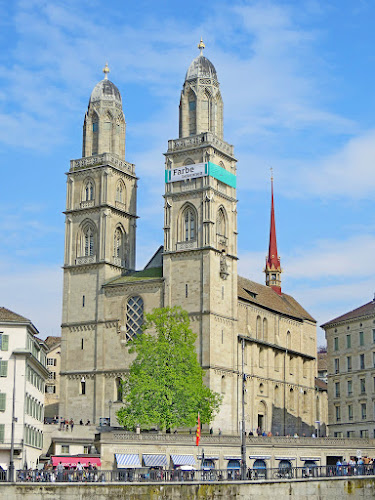
The Grossmünster stands as one of Zurich's most recognizable landmarks, its distinctive twin towers rising above the city's old town like two stone sentinels keeping watch over centuries of Swiss history. This Romanesque Protestant church isn't just another pretty face in Zurich's architectural lineup—it's where the Swiss Reformation literally changed the course of European religious history back in the 1500s. I've always found there's something almost defiant about the Grossmünster's stark, austere beauty. Unlike the ornate Catholic cathedrals you'll find scattered across Europe, this place wears its Protestant heritage proudly. The towers, built between the 11th and 13th centuries, dominate Zurich's skyline in a way that feels both imposing and oddly welcoming at the same time. And yes, you can climb one of those towers—but we'll get to that in a bit. Legend has it that Charlemagne founded the church after discovering the graves of Zurich's patron saints, Felix and Regula. Whether that's historically accurate or just a good story people liked telling over the centuries, who really knows? But what we do know is that this church became ground zero for the Reformation in German-speaking Switzerland when Huldrych Zwingli started preaching here in 1519. The guy basically turned religious practice on its head, and his sermons from this very pulpit sparked changes that rippled across Europe. The building itself went through quite a transformation during the Reformation. Zwingli and his followers stripped away much of the Catholic ornamentation—goodbye statues, farewell frescoes. What remains is a space that feels almost meditative in its simplicity. But don't mistake simple for boring. The church underwent extensive renovations throughout the 20th century, and modern artists have left their mark too. The stained glass windows by Augusto Giacometti, installed in 1932, cast this incredible blue-green light throughout the interior that feels almost otherworldly.

Key Features

  • The Twin Towers: These bad boys are the church's calling card. The south tower, known as the Karlsturm, is open to visitors willing to tackle 187 steps for panoramic views over Zurich, the Limmat River, and on clear days, even the Alps. Your calves might complain, but your Instagram feed will thank you.
  • Zwingli's Legacy: The church maintains a permanent exhibition about Huldrych Zwingli and the Reformation. It's fascinating stuff, especially if you're into understanding how one preacher's ideas literally reshaped Switzerland's religious and political landscape.
  • The Crypt: Dating back to the 12th century, the atmospheric crypt features remnants of the original church and sculptures. There's something about being underground in a space that old that just hits different.
  • Augusto Giacometti Windows: The stained glass in the choir is stunning—abstract patterns in blues and greens that feel surprisingly modern for something installed nearly a century ago. They survived World War II bombings and still knock visitors' socks off today.
  • Bronze Doors: Otto Münch created these impressive doors in 1935-1936, depicting scenes from Zurich's history and the Reformation. They're easy to overlook in your rush to get inside, but worth pausing to appreciate.
  • The Organ: The church has hosted several organs throughout its history. The current one, while not original, produces rich tones that fill the stark interior during services and concerts.
  • Archaeological Finds: Excavations beneath the church revealed Roman graves and earlier church structures, adding layers to the site's already rich history.
  • Wheelchair Accessibility: The church provides accessible entrance options, making it possible for visitors with mobility concerns to experience this historic site, though parking specifically for wheelchair users isn't available on site.

Best Time to Visit

Timing your visit to the Grossmünster can make the difference between a memorable experience and feeling like a sardine in a very old, very Protestant can. The absolute best time to visit is early morning on weekdays, particularly Tuesday through Thursday. I'm talking 10 AM when the church just opens. You'll have the space largely to yourself, which honestly makes such a difference when you're trying to absorb the weight of history around you. The morning light through those Giacometti windows is pretty special too—there's a quality to it that afternoon sunshine just doesn't match. Summer months from June through August bring the biggest crowds. Zurich's a popular destination for European travelers, and everyone and their cousin seems to have "climb the Grossmünster tower" on their itinerary. If you're visiting during peak season, either get there right at opening or consider going later in the afternoon around 4 PM when tour groups have mostly dispersed. Weather-wise, the church is obviously indoor viewing, but climbing that tower is a whole different story. Winter months can be brutally cold up top, and those narrow spiral staircases get slippery when wet. Spring (April-May) and fall (September-October) offer the sweet spot of decent weather and smaller crowds. Plus, autumn in Zurich is gorgeous—the trees along the Limmat turn golden, and the air gets crisp without being teeth-chattering cold. The church occasionally closes for special services or events, so checking their schedule before you go saves disappointment. Christmas services are particularly popular, but good luck finding elbow room. Sunday mornings are reserved for worship services, which means limited tourist access. If you're interested in experiencing the church as a functioning place of worship rather than just a tourist attraction, attending a service offers a different perspective. But if you're just wanting to explore and take photos, Sunday mornings aren't your friend. For photographers, overcast days actually work better than bright sunshine. The diffused light brings out details in the stone architecture without harsh shadows, and you won't be fighting glare on your lens.

How to Get There

Getting to the Grossmünster is refreshingly straightforward—one of those rare situations where something touristy is actually easy to reach. The church sits right in Zurich's old town (Altstadt) on the east bank of the Limmat River, making it accessible by pretty much any method of transportation you choose. From Zurich's main train station (Hauptbahnhof), you've got several options that all take roughly 10-15 minutes. Walking is honestly the best choice if the weather cooperates. Head east from the Hauptbahnhof, cross the Bahnhofbrücke bridge, and follow the river north along the Limmatquai. It's about a kilometer, maybe 12-15 minutes at a casual pace, and you'll pass other landmarks along the way. The route is flat, scenic, and gives you a feel for Zurich's layout. Public transportation in Zurich is efficient to the point of being almost aggressive about it. Trams are your friend here. From Hauptbahnhof, take tram 4 heading toward Tiefenbrunnen and get off at the "Helmhaus" stop, which drops you literally at the church's doorstep. The whole journey takes about 5 minutes, not counting waiting time. Alternatively, tram 15 to "Kunsthaus" works too, putting you just a short walk away. If you're staying somewhere else in Zurich, the tram network connects pretty much everywhere to the old town. Just punch "Grossmünster" into Google Maps or the ZVV (Zurich public transport) app, and it'll route you there. Zurich's public transport operates on an honor system with spot checks, so buy your ticket before boarding unless you enjoy expensive fines. Driving and parking? Forget it. Well, don't actually forget it, but know that parking in Zurich's old town ranges from difficult to basically impossible. Street parking is limited, expensive, and usually occupied. The few parking garages nearby charge rates that'll make your wallet weep. If you must drive, park at a Park and Ride facility on the city's outskirts and take the tram in. Biking is popular in Zurich, and you can absolutely cycle to the Grossmünster. Bike racks are available nearby, though be mindful that Zurich takes bike theft seriously—use a good lock. The city also has a bike-sharing system called "Züri rollt" with stations scattered throughout. From Zurich Airport, take the train to Hauptbahnhof (about 10 minutes) and then walk or tram from there. The Swiss train system is punctual to an almost supernatural degree, making airport connections stress-free.

Tips for Visiting

Let me share some practical wisdom that'll make your Grossmünster experience smoother than Swiss chocolate. First off, dress appropriately. This is still a functioning Protestant church and place of worship. You don't need to show up in your Sunday best, but maybe leave the beach attire at your hotel. Shoulders and knees covered is a good rule of thumb, and it shows basic respect for the space and the people who worship there regularly. The tower climb deserves its own conversation. Those 187 steps spiral up in a narrow medieval staircase where you'll occasionally need to squeeze past people coming down. If you have claustrophobia or mobility issues, maybe admire the towers from ground level. Wear comfortable shoes with good grip—those stone steps have been worn smooth by centuries of feet and can be slippery. And honestly? Take your time. There's no prize for speed, and passing out from rushing up medieval stairs isn't the Zurich memory you want. Entry to the church itself is free, but climbing the tower costs a small fee—usually around 4-5 Swiss Francs. It's cash or card nowadays, but having some Swiss Francs on hand never hurts in Zurich. Photography is allowed inside, which is great, but be respectful. No flash photography, and be mindful of people praying or in quiet contemplation. This isn't Disneyland. The tower views are absolutely photograph-worthy, but watch your phone or camera up there—dropping it 187 steps would ruin your day pretty thoroughly. Guided tours are available and actually worth considering if you want deeper historical context. The church's role in the Reformation is complex, and having someone explain the nuances brings the place alive in ways that reading plaques doesn't quite manage. Audio guides are another option if you prefer exploring at your own pace. The area around the Grossmünster is worth exploring too. The Limmat riverfront, the narrow streets of the old town, nearby chocolate shops (this is Switzerland, after all)—budget some time to wander. The Fraumünster church across the river has Marc Chagall windows that are absolutely worth seeing while you're in the neighborhood. Zurich tap water is perfectly safe to drink and tastes better than most bottled water you'll buy. Bring a refillable bottle—there are fountains throughout the old town where you can fill up for free. If you're visiting in summer, the church interior offers welcome relief from heat. The thick medieval walls keep things cool even when outside temperatures climb. Conversely, in winter, bring layers because stone churches don't exactly radiate warmth. Check the schedule for concerts and special events. The Grossmünster hosts regular organ concerts and other musical performances that showcase the building's acoustics. Experiencing music in that space adds another dimension to your visit. Finally, don't rush. I know itineraries are packed, and Zurich has plenty to see, but this church has stood for nearly a thousand years. Give it at least an hour, maybe more if you're climbing the tower and really taking things in. The history here deserves more than a quick selfie and dash to the next attraction.

Key Features

  • Key Features
  • Best Time to Visit
  • How to Get There
  • Tips for Visiting

More Details

Updated January 17, 2026

Description

The Grossmünster stands as one of Zurich’s most recognizable landmarks, its distinctive twin towers rising above the city’s old town like two stone sentinels keeping watch over centuries of Swiss history. This Romanesque Protestant church isn’t just another pretty face in Zurich’s architectural lineup—it’s where the Swiss Reformation literally changed the course of European religious history back in the 1500s.

I’ve always found there’s something almost defiant about the Grossmünster’s stark, austere beauty. Unlike the ornate Catholic cathedrals you’ll find scattered across Europe, this place wears its Protestant heritage proudly. The towers, built between the 11th and 13th centuries, dominate Zurich’s skyline in a way that feels both imposing and oddly welcoming at the same time. And yes, you can climb one of those towers—but we’ll get to that in a bit.

Legend has it that Charlemagne founded the church after discovering the graves of Zurich’s patron saints, Felix and Regula. Whether that’s historically accurate or just a good story people liked telling over the centuries, who really knows? But what we do know is that this church became ground zero for the Reformation in German-speaking Switzerland when Huldrych Zwingli started preaching here in 1519. The guy basically turned religious practice on its head, and his sermons from this very pulpit sparked changes that rippled across Europe.

The building itself went through quite a transformation during the Reformation. Zwingli and his followers stripped away much of the Catholic ornamentation—goodbye statues, farewell frescoes. What remains is a space that feels almost meditative in its simplicity. But don’t mistake simple for boring. The church underwent extensive renovations throughout the 20th century, and modern artists have left their mark too. The stained glass windows by Augusto Giacometti, installed in 1932, cast this incredible blue-green light throughout the interior that feels almost otherworldly.

Key Features

  • The Twin Towers: These bad boys are the church’s calling card. The south tower, known as the Karlsturm, is open to visitors willing to tackle 187 steps for panoramic views over Zurich, the Limmat River, and on clear days, even the Alps. Your calves might complain, but your Instagram feed will thank you.
  • Zwingli’s Legacy: The church maintains a permanent exhibition about Huldrych Zwingli and the Reformation. It’s fascinating stuff, especially if you’re into understanding how one preacher’s ideas literally reshaped Switzerland’s religious and political landscape.
  • The Crypt: Dating back to the 12th century, the atmospheric crypt features remnants of the original church and sculptures. There’s something about being underground in a space that old that just hits different.
  • Augusto Giacometti Windows: The stained glass in the choir is stunning—abstract patterns in blues and greens that feel surprisingly modern for something installed nearly a century ago. They survived World War II bombings and still knock visitors’ socks off today.
  • Bronze Doors: Otto Münch created these impressive doors in 1935-1936, depicting scenes from Zurich’s history and the Reformation. They’re easy to overlook in your rush to get inside, but worth pausing to appreciate.
  • The Organ: The church has hosted several organs throughout its history. The current one, while not original, produces rich tones that fill the stark interior during services and concerts.
  • Archaeological Finds: Excavations beneath the church revealed Roman graves and earlier church structures, adding layers to the site’s already rich history.
  • Wheelchair Accessibility: The church provides accessible entrance options, making it possible for visitors with mobility concerns to experience this historic site, though parking specifically for wheelchair users isn’t available on site.

Best Time to Visit

Timing your visit to the Grossmünster can make the difference between a memorable experience and feeling like a sardine in a very old, very Protestant can.

The absolute best time to visit is early morning on weekdays, particularly Tuesday through Thursday. I’m talking 10 AM when the church just opens. You’ll have the space largely to yourself, which honestly makes such a difference when you’re trying to absorb the weight of history around you. The morning light through those Giacometti windows is pretty special too—there’s a quality to it that afternoon sunshine just doesn’t match.

Summer months from June through August bring the biggest crowds. Zurich’s a popular destination for European travelers, and everyone and their cousin seems to have “climb the Grossmünster tower” on their itinerary. If you’re visiting during peak season, either get there right at opening or consider going later in the afternoon around 4 PM when tour groups have mostly dispersed.

Weather-wise, the church is obviously indoor viewing, but climbing that tower is a whole different story. Winter months can be brutally cold up top, and those narrow spiral staircases get slippery when wet. Spring (April-May) and fall (September-October) offer the sweet spot of decent weather and smaller crowds. Plus, autumn in Zurich is gorgeous—the trees along the Limmat turn golden, and the air gets crisp without being teeth-chattering cold.

The church occasionally closes for special services or events, so checking their schedule before you go saves disappointment. Christmas services are particularly popular, but good luck finding elbow room.

Sunday mornings are reserved for worship services, which means limited tourist access. If you’re interested in experiencing the church as a functioning place of worship rather than just a tourist attraction, attending a service offers a different perspective. But if you’re just wanting to explore and take photos, Sunday mornings aren’t your friend.

For photographers, overcast days actually work better than bright sunshine. The diffused light brings out details in the stone architecture without harsh shadows, and you won’t be fighting glare on your lens.

How to Get There

Getting to the Grossmünster is refreshingly straightforward—one of those rare situations where something touristy is actually easy to reach.

The church sits right in Zurich’s old town (Altstadt) on the east bank of the Limmat River, making it accessible by pretty much any method of transportation you choose. From Zurich’s main train station (Hauptbahnhof), you’ve got several options that all take roughly 10-15 minutes.

Walking is honestly the best choice if the weather cooperates. Head east from the Hauptbahnhof, cross the Bahnhofbrücke bridge, and follow the river north along the Limmatquai. It’s about a kilometer, maybe 12-15 minutes at a casual pace, and you’ll pass other landmarks along the way. The route is flat, scenic, and gives you a feel for Zurich’s layout.

Public transportation in Zurich is efficient to the point of being almost aggressive about it. Trams are your friend here. From Hauptbahnhof, take tram 4 heading toward Tiefenbrunnen and get off at the “Helmhaus” stop, which drops you literally at the church’s doorstep. The whole journey takes about 5 minutes, not counting waiting time. Alternatively, tram 15 to “Kunsthaus” works too, putting you just a short walk away.

If you’re staying somewhere else in Zurich, the tram network connects pretty much everywhere to the old town. Just punch “Grossmünster” into Google Maps or the ZVV (Zurich public transport) app, and it’ll route you there. Zurich’s public transport operates on an honor system with spot checks, so buy your ticket before boarding unless you enjoy expensive fines.

Driving and parking? Forget it. Well, don’t actually forget it, but know that parking in Zurich’s old town ranges from difficult to basically impossible. Street parking is limited, expensive, and usually occupied. The few parking garages nearby charge rates that’ll make your wallet weep. If you must drive, park at a Park and Ride facility on the city’s outskirts and take the tram in.

Biking is popular in Zurich, and you can absolutely cycle to the Grossmünster. Bike racks are available nearby, though be mindful that Zurich takes bike theft seriously—use a good lock. The city also has a bike-sharing system called “Züri rollt” with stations scattered throughout.

From Zurich Airport, take the train to Hauptbahnhof (about 10 minutes) and then walk or tram from there. The Swiss train system is punctual to an almost supernatural degree, making airport connections stress-free.

Tips for Visiting

Let me share some practical wisdom that’ll make your Grossmünster experience smoother than Swiss chocolate.

First off, dress appropriately. This is still a functioning Protestant church and place of worship. You don’t need to show up in your Sunday best, but maybe leave the beach attire at your hotel. Shoulders and knees covered is a good rule of thumb, and it shows basic respect for the space and the people who worship there regularly.

The tower climb deserves its own conversation. Those 187 steps spiral up in a narrow medieval staircase where you’ll occasionally need to squeeze past people coming down. If you have claustrophobia or mobility issues, maybe admire the towers from ground level. Wear comfortable shoes with good grip—those stone steps have been worn smooth by centuries of feet and can be slippery. And honestly? Take your time. There’s no prize for speed, and passing out from rushing up medieval stairs isn’t the Zurich memory you want.

Entry to the church itself is free, but climbing the tower costs a small fee—usually around 4-5 Swiss Francs. It’s cash or card nowadays, but having some Swiss Francs on hand never hurts in Zurich.

Photography is allowed inside, which is great, but be respectful. No flash photography, and be mindful of people praying or in quiet contemplation. This isn’t Disneyland. The tower views are absolutely photograph-worthy, but watch your phone or camera up there—dropping it 187 steps would ruin your day pretty thoroughly.

Guided tours are available and actually worth considering if you want deeper historical context. The church’s role in the Reformation is complex, and having someone explain the nuances brings the place alive in ways that reading plaques doesn’t quite manage. Audio guides are another option if you prefer exploring at your own pace.

The area around the Grossmünster is worth exploring too. The Limmat riverfront, the narrow streets of the old town, nearby chocolate shops (this is Switzerland, after all)—budget some time to wander. The Fraumünster church across the river has Marc Chagall windows that are absolutely worth seeing while you’re in the neighborhood.

Zurich tap water is perfectly safe to drink and tastes better than most bottled water you’ll buy. Bring a refillable bottle—there are fountains throughout the old town where you can fill up for free.

If you’re visiting in summer, the church interior offers welcome relief from heat. The thick medieval walls keep things cool even when outside temperatures climb. Conversely, in winter, bring layers because stone churches don’t exactly radiate warmth.

Check the schedule for concerts and special events. The Grossmünster hosts regular organ concerts and other musical performances that showcase the building’s acoustics. Experiencing music in that space adds another dimension to your visit.

Finally, don’t rush. I know itineraries are packed, and Zurich has plenty to see, but this church has stood for nearly a thousand years. Give it at least an hour, maybe more if you’re climbing the tower and really taking things in. The history here deserves more than a quick selfie and dash to the next attraction.

Key Highlights

  • Key Features
  • Best Time to Visit
  • How to Get There
  • Tips for Visiting

Location

Places to Stay Near Grossmünster

Find and Book a Tour

Explore More Travel Guides

No reviews found! Be the first to review!

Traveler Reviews for Grossmünster

There are no reviews yet. Be the first one to write one.

Share Your Experience

Have you visited Grossmünster? Help other travelers by sharing your review.

Find Accommodations Nearby

Recommended Tours & Activities

Visitor Reviews

There are no reviews yet. Be the first one to write one.

Share Your Experience

Have you visited Grossmünster? Help other travelers by leaving a review.