
Casa dello Scheletro
About Casa dello Scheletro
Description
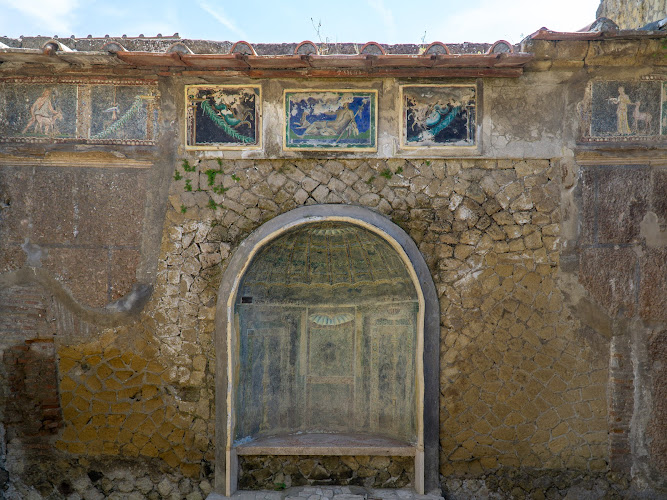
The Casa dello Scheletro, a remarkable archaeological gem in ancient Herculaneum, stands as one of the most fascinating private residences preserved from the Roman era. I was absolutely blown away by the intricate details still visible in this two-story house, which gets its quirky name (“House of the Skeleton”) from a human skeleton discovered during excavations in 1831. You’d never guess that this elegant home was buried under volcanic materials for nearly two thousand years!
The architectural layout seriously impressed me – it follows the classic Roman domus style but with some unique twists. The moment you step through the entrance, you’re greeted by a stunning atrium with what remains of an impluvium (that’s the fancy Roman term for their rainwater collection basin). But what really caught my eye were the incredible floor mosaics – they’re some of the best-preserved I’ve seen in all my travels through Italy’s archaeological sites.
Key Features
• Stunning black and white geometric floor mosaics throughout the main rooms
• Well-preserved two-story structure with visible upper floor remains
• Original painted wall frescoes featuring mythological scenes
• Classic Roman atrium with impluvium system
• Elegant peristyle garden area with surviving columns
• Separate thermal bath complex with heating system remains
• Multiple cubicula (bedrooms) with decorative elements
• Large triclinium (dining room) with elaborate floor patterns
• Original wooden elements preserved by the volcanic materials
• Connected merchant shops along the street facade
Best Time to Visit
From my experience, spring (April-May) and fall (September-October) offer the most pleasant conditions for exploring Casa dello Scheletro. The summer months can be brutally hot, especially since much of the site is exposed to direct sunlight. I learned this the hard way during my July visit – trust me, you don’t want to be examining those amazing mosaics while sweating buckets!
Early morning visits are your best bet, particularly right when the site opens. That’s when you’ll find fewer crowds and better lighting for photographs. And speaking of photos, the afternoon sun can create harsh shadows that make it tricky to capture the intricate details of the frescoes and mosaics.
How to Get There
Getting to Casa dello Scheletro is pretty straightforward since it’s part of the main Herculaneum archaeological site. The Circumvesuviana train from Naples stops at Ercolano Scavi station, and it’s about a 10-minute walk downhill to the site entrance. I actually found it easier to reach than Pompeii!
If you’re driving (which I’ve done, though I wouldn’t necessarily recommend it), there are several paid parking lots near the site entrance. Just keep in mind that Italian driving can be… let’s say interesting, especially around Naples.
You can also join organized tours from Naples, Sorrento, or Rome that include transportation. But honestly, making your own way there gives you more flexibility with timing and how long you spend examining each fascinating detail.
Tips for Visiting
After several visits to Herculaneum, I’ve picked up some useful tricks that’ll make your experience at Casa dello Scheletro more enjoyable. Bring a water bottle – there’s a fountain near the entrance where you can fill up. Wear comfortable shoes with good grip – those ancient Roman floors can be slippery!
I’d strongly recommend hiring a guide or at least grabbing an audio guide. There’s so much historical context that’s easy to miss without some explanation. The first time I visited, I walked right past some incredibly significant features because I didn’t know what I was looking at!
Give yourself at least 30 minutes just for this house – there’s so much detail to take in. Take advantage of the less crowded moments to really study the mosaics. The morning light makes them particularly spectacular.
Keep your eyes peeled for the subtle architectural details that often go unnoticed – like the clever water management systems and the remaining wooden elements that survived the eruption. These are the kinds of details that really bring the ancient world to life.
Oh, and don’t forget to bring a hat and sunscreen – there’s limited shade in the archaeological park. Also, try to avoid Mondays when it’s typically more crowded with tour groups. And if you’re into photography, bring your camera – the light through the remaining upper story creates some amazing shots.
Remember that you’re visiting an active archaeological site – some areas might be closed for conservation work. But that’s part of what makes each visit unique – you never know what new discoveries might be unveiled!
Key Features
- Key Features
- Best Time to Visit
- How to Get There
- Tips for Visiting
More Details
Updated September 14, 2025
Table of Contents
Description
The Casa dello Scheletro, a remarkable archaeological gem in ancient Herculaneum, stands as one of the most fascinating private residences preserved from the Roman era. I was absolutely blown away by the intricate details still visible in this two-story house, which gets its quirky name (“House of the Skeleton”) from a human skeleton discovered during excavations in 1831. You’d never guess that this elegant home was buried under volcanic materials for nearly two thousand years!
The architectural layout seriously impressed me – it follows the classic Roman domus style but with some unique twists. The moment you step through the entrance, you’re greeted by a stunning atrium with what remains of an impluvium (that’s the fancy Roman term for their rainwater collection basin). But what really caught my eye were the incredible floor mosaics – they’re some of the best-preserved I’ve seen in all my travels through Italy’s archaeological sites.
Key Features
• Stunning black and white geometric floor mosaics throughout the main rooms
• Well-preserved two-story structure with visible upper floor remains
• Original painted wall frescoes featuring mythological scenes
• Classic Roman atrium with impluvium system
• Elegant peristyle garden area with surviving columns
• Separate thermal bath complex with heating system remains
• Multiple cubicula (bedrooms) with decorative elements
• Large triclinium (dining room) with elaborate floor patterns
• Original wooden elements preserved by the volcanic materials
• Connected merchant shops along the street facade
Best Time to Visit
From my experience, spring (April-May) and fall (September-October) offer the most pleasant conditions for exploring Casa dello Scheletro. The summer months can be brutally hot, especially since much of the site is exposed to direct sunlight. I learned this the hard way during my July visit – trust me, you don’t want to be examining those amazing mosaics while sweating buckets!
Early morning visits are your best bet, particularly right when the site opens. That’s when you’ll find fewer crowds and better lighting for photographs. And speaking of photos, the afternoon sun can create harsh shadows that make it tricky to capture the intricate details of the frescoes and mosaics.
How to Get There
Getting to Casa dello Scheletro is pretty straightforward since it’s part of the main Herculaneum archaeological site. The Circumvesuviana train from Naples stops at Ercolano Scavi station, and it’s about a 10-minute walk downhill to the site entrance. I actually found it easier to reach than Pompeii!
If you’re driving (which I’ve done, though I wouldn’t necessarily recommend it), there are several paid parking lots near the site entrance. Just keep in mind that Italian driving can be… let’s say interesting, especially around Naples.
You can also join organized tours from Naples, Sorrento, or Rome that include transportation. But honestly, making your own way there gives you more flexibility with timing and how long you spend examining each fascinating detail.
Tips for Visiting
After several visits to Herculaneum, I’ve picked up some useful tricks that’ll make your experience at Casa dello Scheletro more enjoyable. Bring a water bottle – there’s a fountain near the entrance where you can fill up. Wear comfortable shoes with good grip – those ancient Roman floors can be slippery!
I’d strongly recommend hiring a guide or at least grabbing an audio guide. There’s so much historical context that’s easy to miss without some explanation. The first time I visited, I walked right past some incredibly significant features because I didn’t know what I was looking at!
Give yourself at least 30 minutes just for this house – there’s so much detail to take in. Take advantage of the less crowded moments to really study the mosaics. The morning light makes them particularly spectacular.
Keep your eyes peeled for the subtle architectural details that often go unnoticed – like the clever water management systems and the remaining wooden elements that survived the eruption. These are the kinds of details that really bring the ancient world to life.
Oh, and don’t forget to bring a hat and sunscreen – there’s limited shade in the archaeological park. Also, try to avoid Mondays when it’s typically more crowded with tour groups. And if you’re into photography, bring your camera – the light through the remaining upper story creates some amazing shots.
Remember that you’re visiting an active archaeological site – some areas might be closed for conservation work. But that’s part of what makes each visit unique – you never know what new discoveries might be unveiled!
Key Highlights
- Key Features
- Best Time to Visit
- How to Get There
- Tips for Visiting
Location
Places to Stay Near Casa dello Scheletro
Find and Book a Tour
Explore More Travel Guides
No reviews found! Be the first to review!
Traveler Reviews for Casa dello Scheletro
There are no reviews yet. Be the first one to write one.
Have you visited Casa dello Scheletro? Help other travelers by sharing your review.
You Might Also Like
Villa La Favorita

Associazione Vesuvio Natura da Esplorare

B&B HERCULANEUM RUINS
Find Accommodations Nearby
Recommended Tours & Activities
Visitor Reviews
There are no reviews yet. Be the first one to write one.
Share Your Experience
Have you visited Casa dello Scheletro? Help other travelers by leaving a review.