
Arco dei Gigli
About Arco dei Gigli
Arco dei Gigli (Porta Sole), Perugia — What to Know Before You Go
At the uphill end of Via Bontempi in Perugia’s historic core, the Arco dei Gigli is a compact lesson in the city’s urban archaeology. It’s one of the historic openings along the Etruscan wall circuit, later reshaped in the Middle Ages, and renamed in the 1500s when a Farnese lily (giglio) emblem was set on the arch. You’ll pass beneath it en route to quiet side streets that locals still use as a daily shortcut—a simple, free stop with outsized historical value.
Quick facts
- Location: Via Bontempi, 06122 Perugia (historic center).
- Also called: Porta Sole and, in older guides, Arco dei Montesperelli (from a nearby noble family residence).
- Era & fabric: Etruscan wall base in large travertine blocks; arch profile reworked to a pointed (ogival) form in the 13th century; traces of the original full-centred Etruscan arch still read on the right jamb.
- Name origin (1535): After a city visit by Pope Paul III Farnese, the gate took the nickname “dei Gigli” from the Farnese lily placed on the arch.
---
Why this small gate matters
Perugia’s ancient perimeter ran roughly 3 km across two hills—Colle del Sole and Colle Landone—with monumental gates marking each rione (district). The Arco dei Gigli occupies the Porta Sole sector and helps you visualize how Etruscan, Roman, and medieval phases stack in one spot: megalithic stone at the base, finer medieval brickwork above, and a Renaissance rebranding via heraldry. Few places show the city’s stratigraphy this clearly at eye level.
There’s a scholarly debate about the exact position of the original “Porta Sole” cited by Dante. Some authors place the earliest gate higher up the slope, suggesting the name migrated over time to the nearest everyday crossing—a common toponymic drift in walled cities. Expect to see both names—Porta Sole and Arco dei Gigli—used interchangeably in signage and literature.
---
What to look for when you’re standing there
- Travertine vs. brick: Step back and scan the imposts and jambs. The large, squared travertine blocks are the Etruscan fabric; the pointed arch you walk under is a medieval rebuild. On the right exterior side, look for the start of the earlier round (a tutto sesto) arch—a subtle but telling seam.
- Heraldry layer: The gate’s “lily” moniker dates to 1535, when Paul III toured Perugia; a Farnese giglio was recorded on the arch. Even if a readable badge isn’t obvious today, this naming event is why locals still say dei Gigli.
- Street logic: Via Bontempi aligns with an ancient decumanus (east–west trunk route) that once connected toward Porta Trasimena; in the communal era it became one of the “vie regali” radiating from the main square. The gate is here because traffic always was.
> Accessibility note: The approach involves slopes and steps on side streets around Via Bontempi. Surfaces are uneven. Plan extra time if mobility is limited. (This is a general condition of Perugia’s upper town streets rather than a site policy.)
---
A short, high-yield walk
If you’ve got 45–60 minutes, this compact loop strings several eras together:
1. Arco dei Gigli → Via del Roscetto: The arch crosses Via Bontempi and leads toward Via del Roscetto, a quieter lane with period façades.
2. Etruscan Wall Line: Follow the perimeter (signage and topography help) to feel how the wall hugged the contour of Colle del Sole.
3. Arco di Sant’Ercolano (Porta Cornea): Another gate on the circuit, rebuilt in the Middle Ages; contrasts nicely with the compact scale of Arco dei Gigli.
4. Arco Etrusco (Porta di Augusto): The showpiece Etruscan gate—monumental, textbook voussoir work—reminds you what Perugia’s major portals looked like when new. Umbria
---
Context to enrich your visit
Etruscan to medieval continuity
The Etruscan enceinte likely started in the 4th century BCE, then saw Roman-era and later communal interventions. Many gates are not single-date objects but palimpsests. Arco dei Gigli is a tidy example: original Etruscan stonework below, 13th-century pointed arch above.
The Porta Sole rione
Administrative and neighborhood identities in Perugia long tied to gate names. The “Rione di Porta Sole” (documented by 1038) either took its name from a now-lost gate (Arco della Piaggia dei Calderari) or from the Arco dei Gigli itself—evidence that toponyms could shift with urban change.
Why “dei Gigli”?
In 1535, during a period of tense papal–communal politics, Paul III Farnese visited Perugia and the Farnese lily—his house device—was added to the arch, and the gate acquired the descriptive label “del Giglio / dei Gigli.” It’s a neat snapshot of how Renaissance propaganda left marks even on medieval infrastructure.
---
Practical planning tips
- Cost & hours: This is a public thoroughfare—no ticket office. Many third-party listings mark the site as open at all hours because it’s part of the street network; in practice, you’ll simply walk through it. (If a platform shows “opening times” or suggests “tickets,” treat that as aggregator boilerplate, not an official policy.)
- Best light: Morning light strikes the north-east-facing exterior nicely; late afternoon works for the interior passage. (Orientation inferred from site alignment and mapping.)
- Crowd pattern: The arch sits off the main Corso Vannucci flow, so even in high season foot traffic is lighter than at the Arco Etrusco. Great for quick photos between headline stops.
- Wayfinding: Search for “Via Bontempi” in your map app. The arch frames the street, then your route can continue to Via del Roscetto or back toward Piazza IV Novembre via lanes and stairs.
---
Reading the stones: a mini field guide
- Block size & tool marks: Etruscan courses use large, regular travertine ashlars—bigger than typical medieval blocks. If you see tight, thin bricks above, you’re looking at a later skin.
- Arch geometry: The ogival profile is a medieval cue. On the right exterior reveal, an earlier round-headed springing initiates, indicating successive re-profilings.
- Name plates and plaques: Modern plaques and guide panels vary; some label it Arco dei Gigli, others Porta Sole. Both are legitimate in context.
---
Nearby anchors to pair with your stop
- Arco Etrusco (Porta di Augusto): Monumental Etruscan gate and the easiest place to grasp the scale of the ancient perimeter. Umbria
- Porta Marzia (spolia set into the Rocca Paolina): Another Etruscan gate, relocated and integrated into later fortifications—useful for comparing how gates were repurposed.
---
Accuracy & updates
- Terminology and dating draw on the Comune di Perugia’s official page and Italian-language reference entries; the Dante/Porta Sole placement remains debated among local historians. If you see signage or brochures that simplify the story (“this is Porta Sole”), understand that the name drift is acknowledged in the literature.
- Aggregator sites occasionally list “tickets” or “hours” for indexing purposes. There is no staffed ticket office at Arco dei Gigli. If this changes (rare), it would likely be part of a broader municipal interpretive project; check the Comune di Perugia site before your trip.
---
Bottom line
The Arco dei Gigli won’t take more than a few minutes, but it condenses 2,000 years of city-building into a single frame: Etruscan foundations, medieval adjustments, and a Renaissance renaming. Fold it into a wall-line stroll and you’ll come away with a sharper mental map of Perugia’s topography and its long memory in stone.
---
Sources: municipal and specialist pages on Perugia’s gates and walls; cross-checked with on-the-ground descriptions and itinerary guides cited throughout.
Key Features
Arco dei Gigli
You Might Also Like
Abbazia di San Pietro
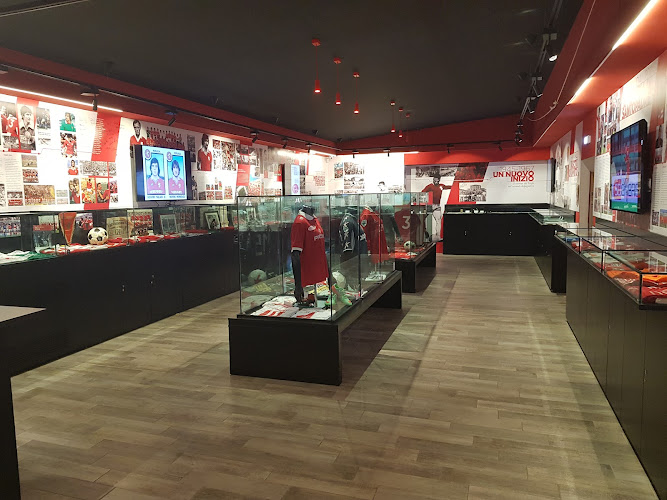
AC Perugia Calcio Museum
Acquedotto medievale di Perugia
Tours & Activities
GetYourGuide provides this tour inventory. We may earn a commission if you book through it; verify current availability, prices, and terms with the provider.
Visitor Reviews
There are no reviews yet. Be the first one to write one.
Share Your Experience
Have you visited Arco dei Gigli? Help other travelers by leaving a review.