
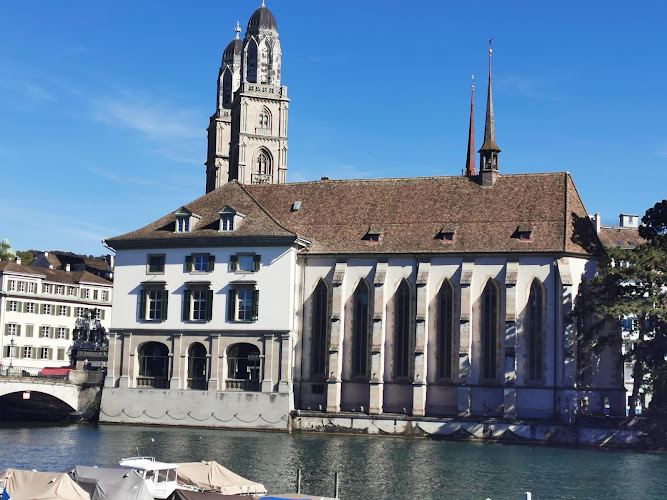
Wasserkirche
About Wasserkirche
Description
Standing proudly along the riverbank in Zurich's historic Altstadt, the Wasserkirche presents itself as one of those fascinating architectural anomalies that makes you stop and wonder about its story. And trust me, this place has quite a story to tell. Built in the 13th century, this Reformed church literally rose from the waters of the Limmat River – hence its name, which translates to "Water Church" in English. The building itself represents an exceptional example of late Gothic architecture that somehow managed to survive Zurich's turbulent religious reformation period. What really gets me about the Wasserkirche is how it started life on a small island in the middle of the Limmat before the channel was filled in during the 19th century. You can still see evidence of its aquatic origins if you know where to look, and there's something genuinely special about standing in a place that was once completely surrounded by flowing water. The church's crypt holds particular significance for those interested in Zurich's religious history. Legend has it that Felix and Regula, the city's patron saints, were martyred on this very spot in the 3rd century. Whether you're a believer or a skeptic, there's no denying the weight of history these walls carry. The crypt itself survived when many similar structures didn't, making it an authentic connection to medieval Zurich that few other buildings can match. Today, the Wasserkirche functions as both an active place of worship and a cultural landmark that draws visitors from around the globe. It's refreshing to encounter a heritage building that hasn't been turned into just another museum – real services still happen here, real community gatherings still take place. That living, breathing quality makes exploring the space feel less like touring a relic and more like stepping into something that's managed to stay relevant across eight centuries.Key Features
The Wasserkirche offers several distinctive elements that separate it from other churches you'll encounter during your European travels:- Original 13th-century construction with architectural details that showcase late Gothic craftsmanship at its finest
- Historic crypt that allegedly marks the martyrdom site of Zurich's patron saints Felix and Regula
- Unique location along the Limmat River where the building once stood as an island church
- Active Reformed congregation maintaining traditional worship services in a centuries-old setting
- Assistive hearing loop technology that bridges medieval architecture with modern accessibility needs
- LGBTQ+ friendly and transgender safe space designation, showing how historic institutions can embrace progressive values
- Proximity to other major Zurich landmarks including the Grossmünster and Fraumünster churches
- Atmospheric interior that maintains much of its historical character without excessive modern renovation
- Connection to Zurich's founding mythology and early Christian history in Switzerland
- Regular cultural events and concerts that utilize the building's exceptional acoustics
Best Time to Visit
I've learned through experience that timing can make or break a visit to popular heritage sites, and the Wasserkirche is no exception. The church sees varying crowd levels depending on when you show up, so a bit of strategic planning goes a long way. Early mornings during weekdays offer your best chance for a peaceful, contemplative visit. Before 10 AM, you'll likely find the space relatively quiet, allowing you to really absorb the atmosphere without jostling for position with tour groups. I'm partial to visiting around 9 AM when morning light filters through the windows in a particularly lovely way. If you're hoping to attend an actual worship service, Sunday mornings bring the church to life with its intended purpose. There's something genuinely moving about experiencing the building as it was designed to be used, surrounded by a community rather than just other tourists. But be aware that this isn't the time for casual wandering around with your camera – respect for the service is expected. Summer months from June through August bring the largest crowds to Zurich, which means the Wasserkirche experiences increased foot traffic. The weather is glorious during these months, making the riverside location particularly appealing. However, you might find yourself waiting to enter or sharing the space with multiple tour groups simultaneously. Shoulder seasons in spring (April-May) and autumn (September-October) strike an excellent balance. Weather remains pleasant enough for comfortable exploring, but tourist numbers drop considerably compared to high summer. I've had some of my most memorable visits during October when autumn colors frame the church's exterior and the tourist rush has died down. Winter visits offer their own charm, particularly if you catch the church during Advent or the Christmas season when special services and musical performances enliven the space. The riverside can be bitterly cold in January and February though, so bundle up appropriately. Weather-wise, Zurich's temperamental nature means you should prepare for sudden changes regardless of season. The church provides shelter from rain, which actually makes it a practical stop when weather turns nasty during your explorations of the Altstadt.How to Get There
Getting to the Wasserkirche ranks among the easier navigation challenges you'll face in Zurich, thanks to the city's exemplary public transportation system and the church's central location. The closest tram stop is Helmhaus, served by trams 4 and 15. From there, it's genuinely just a minute's walk to the church entrance. You literally step off the tram and the building is right there along the river. Zurich's tram system runs with Swiss precision, so you can actually rely on published schedules without the skepticism you might apply elsewhere. If you're coming from Zurich Hauptbahnhof (the main railway station), you have multiple options. The walk takes about 15 minutes through pleasant streets, which I'd actually recommend if weather permits. You'll pass through parts of the Altstadt and get a feel for Zurich's layout. Alternatively, catch tram 4 toward Tiefenbrunnen and get off at Helmhaus. For those staying in other parts of Zurich, the Rathaus tram stop (served by trams 2, 4, 5, 8, 9, 11, and 15) sits just across the Limmat River from the church. From Rathaus, you'll walk across one of Zurich's picturesque bridges with excellent views of the waterfront. The church isn't accessible by car in any practical sense – Zurich's Altstadt restricts vehicle access, and honestly, you wouldn't want to navigate those narrow medieval streets anyway. Parking exists in paid garages and lots in the surrounding area, but you're much better off using public transport. If you're combining your visit with other Zurich attractions, consider that the Wasserkirche sits in the heart of the historic district. Grossmünster is literally across the river, Fraumünster is a five-minute walk away, and you can easily construct a walking tour that includes all three plus other historic sites. For visitors with mobility concerns, I should mention that the church doesn't offer wheelchair accessibility. The historic nature of the building means it predates modern accessibility standards, and retrofitting hasn't been feasible. The entrance involves steps, and navigating the interior presents challenges for those using mobility aids.Tips for Visiting
After exploring numerous historic churches across Europe, I've developed some practical wisdom that applies specifically to making the most of your Wasserkirche experience. First off, dress appropriately. While Zurich is generally liberal and the church welcomes all visitors, modest clothing shows respect particularly if services are underway. You don't need to dress formally, but maybe skip the beach wear. I've seen tourists turned away from other churches for inappropriate attire, though the Wasserkirche tends to be more relaxed. Photography policies can be tricky in active places of worship. Generally, photography is permitted when services aren't in progress, but be discreet and respectful. Flash photography is typically frowned upon, and you shouldn't photograph people who are praying or in moments of worship. When in doubt, ask someone or look for posted signs. The church doesn't maintain dedicated restroom facilities, so plan accordingly. Public restrooms exist in the surrounding area, but they're not abundant in the Altstadt. Take care of these practical matters before arriving. Budget some time to explore the crypt if it's accessible during your visit. Many visitors skip this portion, but it's genuinely one of the most historically significant parts of the building. The atmosphere down there differs completely from the main church, and you'll get a much fuller understanding of the site's religious importance. Combine your visit with a walk along the Limmat riverbank. The church's location makes it an ideal starting or ending point for exploring Zurich's waterfront. I particularly enjoy walking from the Wasserkirche toward Lake Zurich, which gives you beautiful views and connects you to other attractions naturally. If you're interested in the religious and cultural aspects beyond just architecture, check whether any concerts or special events are scheduled during your visit. The church hosts various musical performances that showcase its acoustic properties, and experiencing a concert here offers an entirely different perspective than a daytime tourist visit. Don't rely on onsite services – there aren't any. Come prepared with whatever you might need, including water if you're sensitive to Zurich's sometimes warm summers. The surrounding area has plenty of cafes and shops, but the church itself is purely a place of worship and heritage. For those using hearing aids, take advantage of the assistive hearing loop system if you're attending a service or event. This modern addition to the historic space demonstrates how heritage sites can accommodate visitors with different needs. Plan your visit as part of a larger Altstadt exploration rather than making it a standalone destination. The church deserves your time, but given its location and the concentration of other significant sites nearby, you'll get more value from your day by creating a logical route through the historic district. Finally, remember that this is a functioning church first and tourist attraction second. Services take precedence over sightseeing, and there may be times when parts of the building are closed for religious activities. A little flexibility and respect goes a long way toward ensuring both you and the local community have positive experiences sharing this remarkable space.Key Features
- Original 13th-century construction with architectural details that showcase late Gothic craftsmanship at its finest
- Historic crypt that allegedly marks the martyrdom site of Zurich's patron saints Felix and Regula
- Unique location along the Limmat River where the building once stood as an island church
- Active Reformed congregation maintaining traditional worship services in a centuries-old setting
- Assistive hearing loop technology that bridges medieval architecture with modern accessibility needs
- LGBTQ+ friendly and transgender safe space designation, showing how historic institutions can embrace progressive values
- Proximity to other major Zurich landmarks including the Grossmünster and Fraumünster churches
- Atmospheric interior that maintains much of its historical character without excessive modern renovation
More Details
Updated January 17, 2026
Table of Contents
Description
Standing proudly along the riverbank in Zurich’s historic Altstadt, the Wasserkirche presents itself as one of those fascinating architectural anomalies that makes you stop and wonder about its story. And trust me, this place has quite a story to tell. Built in the 13th century, this Reformed church literally rose from the waters of the Limmat River – hence its name, which translates to “Water Church” in English.
The building itself represents an exceptional example of late Gothic architecture that somehow managed to survive Zurich’s turbulent religious reformation period. What really gets me about the Wasserkirche is how it started life on a small island in the middle of the Limmat before the channel was filled in during the 19th century. You can still see evidence of its aquatic origins if you know where to look, and there’s something genuinely special about standing in a place that was once completely surrounded by flowing water.
The church’s crypt holds particular significance for those interested in Zurich’s religious history. Legend has it that Felix and Regula, the city’s patron saints, were martyred on this very spot in the 3rd century. Whether you’re a believer or a skeptic, there’s no denying the weight of history these walls carry. The crypt itself survived when many similar structures didn’t, making it an authentic connection to medieval Zurich that few other buildings can match.
Today, the Wasserkirche functions as both an active place of worship and a cultural landmark that draws visitors from around the globe. It’s refreshing to encounter a heritage building that hasn’t been turned into just another museum – real services still happen here, real community gatherings still take place. That living, breathing quality makes exploring the space feel less like touring a relic and more like stepping into something that’s managed to stay relevant across eight centuries.
Key Features
The Wasserkirche offers several distinctive elements that separate it from other churches you’ll encounter during your European travels:
- Original 13th-century construction with architectural details that showcase late Gothic craftsmanship at its finest
- Historic crypt that allegedly marks the martyrdom site of Zurich’s patron saints Felix and Regula
- Unique location along the Limmat River where the building once stood as an island church
- Active Reformed congregation maintaining traditional worship services in a centuries-old setting
- Assistive hearing loop technology that bridges medieval architecture with modern accessibility needs
- LGBTQ+ friendly and transgender safe space designation, showing how historic institutions can embrace progressive values
- Proximity to other major Zurich landmarks including the Grossmünster and Fraumünster churches
- Atmospheric interior that maintains much of its historical character without excessive modern renovation
- Connection to Zurich’s founding mythology and early Christian history in Switzerland
- Regular cultural events and concerts that utilize the building’s exceptional acoustics
Best Time to Visit
I’ve learned through experience that timing can make or break a visit to popular heritage sites, and the Wasserkirche is no exception. The church sees varying crowd levels depending on when you show up, so a bit of strategic planning goes a long way.
Early mornings during weekdays offer your best chance for a peaceful, contemplative visit. Before 10 AM, you’ll likely find the space relatively quiet, allowing you to really absorb the atmosphere without jostling for position with tour groups. I’m partial to visiting around 9 AM when morning light filters through the windows in a particularly lovely way.
If you’re hoping to attend an actual worship service, Sunday mornings bring the church to life with its intended purpose. There’s something genuinely moving about experiencing the building as it was designed to be used, surrounded by a community rather than just other tourists. But be aware that this isn’t the time for casual wandering around with your camera – respect for the service is expected.
Summer months from June through August bring the largest crowds to Zurich, which means the Wasserkirche experiences increased foot traffic. The weather is glorious during these months, making the riverside location particularly appealing. However, you might find yourself waiting to enter or sharing the space with multiple tour groups simultaneously.
Shoulder seasons in spring (April-May) and autumn (September-October) strike an excellent balance. Weather remains pleasant enough for comfortable exploring, but tourist numbers drop considerably compared to high summer. I’ve had some of my most memorable visits during October when autumn colors frame the church’s exterior and the tourist rush has died down.
Winter visits offer their own charm, particularly if you catch the church during Advent or the Christmas season when special services and musical performances enliven the space. The riverside can be bitterly cold in January and February though, so bundle up appropriately.
Weather-wise, Zurich’s temperamental nature means you should prepare for sudden changes regardless of season. The church provides shelter from rain, which actually makes it a practical stop when weather turns nasty during your explorations of the Altstadt.
How to Get There
Getting to the Wasserkirche ranks among the easier navigation challenges you’ll face in Zurich, thanks to the city’s exemplary public transportation system and the church’s central location.
The closest tram stop is Helmhaus, served by trams 4 and 15. From there, it’s genuinely just a minute’s walk to the church entrance. You literally step off the tram and the building is right there along the river. Zurich’s tram system runs with Swiss precision, so you can actually rely on published schedules without the skepticism you might apply elsewhere.
If you’re coming from Zurich Hauptbahnhof (the main railway station), you have multiple options. The walk takes about 15 minutes through pleasant streets, which I’d actually recommend if weather permits. You’ll pass through parts of the Altstadt and get a feel for Zurich’s layout. Alternatively, catch tram 4 toward Tiefenbrunnen and get off at Helmhaus.
For those staying in other parts of Zurich, the Rathaus tram stop (served by trams 2, 4, 5, 8, 9, 11, and 15) sits just across the Limmat River from the church. From Rathaus, you’ll walk across one of Zurich’s picturesque bridges with excellent views of the waterfront.
The church isn’t accessible by car in any practical sense – Zurich’s Altstadt restricts vehicle access, and honestly, you wouldn’t want to navigate those narrow medieval streets anyway. Parking exists in paid garages and lots in the surrounding area, but you’re much better off using public transport.
If you’re combining your visit with other Zurich attractions, consider that the Wasserkirche sits in the heart of the historic district. Grossmünster is literally across the river, Fraumünster is a five-minute walk away, and you can easily construct a walking tour that includes all three plus other historic sites.
For visitors with mobility concerns, I should mention that the church doesn’t offer wheelchair accessibility. The historic nature of the building means it predates modern accessibility standards, and retrofitting hasn’t been feasible. The entrance involves steps, and navigating the interior presents challenges for those using mobility aids.
Tips for Visiting
After exploring numerous historic churches across Europe, I’ve developed some practical wisdom that applies specifically to making the most of your Wasserkirche experience.
First off, dress appropriately. While Zurich is generally liberal and the church welcomes all visitors, modest clothing shows respect particularly if services are underway. You don’t need to dress formally, but maybe skip the beach wear. I’ve seen tourists turned away from other churches for inappropriate attire, though the Wasserkirche tends to be more relaxed.
Photography policies can be tricky in active places of worship. Generally, photography is permitted when services aren’t in progress, but be discreet and respectful. Flash photography is typically frowned upon, and you shouldn’t photograph people who are praying or in moments of worship. When in doubt, ask someone or look for posted signs.
The church doesn’t maintain dedicated restroom facilities, so plan accordingly. Public restrooms exist in the surrounding area, but they’re not abundant in the Altstadt. Take care of these practical matters before arriving.
Budget some time to explore the crypt if it’s accessible during your visit. Many visitors skip this portion, but it’s genuinely one of the most historically significant parts of the building. The atmosphere down there differs completely from the main church, and you’ll get a much fuller understanding of the site’s religious importance.
Combine your visit with a walk along the Limmat riverbank. The church’s location makes it an ideal starting or ending point for exploring Zurich’s waterfront. I particularly enjoy walking from the Wasserkirche toward Lake Zurich, which gives you beautiful views and connects you to other attractions naturally.
If you’re interested in the religious and cultural aspects beyond just architecture, check whether any concerts or special events are scheduled during your visit. The church hosts various musical performances that showcase its acoustic properties, and experiencing a concert here offers an entirely different perspective than a daytime tourist visit.
Don’t rely on onsite services – there aren’t any. Come prepared with whatever you might need, including water if you’re sensitive to Zurich’s sometimes warm summers. The surrounding area has plenty of cafes and shops, but the church itself is purely a place of worship and heritage.
For those using hearing aids, take advantage of the assistive hearing loop system if you’re attending a service or event. This modern addition to the historic space demonstrates how heritage sites can accommodate visitors with different needs.
Plan your visit as part of a larger Altstadt exploration rather than making it a standalone destination. The church deserves your time, but given its location and the concentration of other significant sites nearby, you’ll get more value from your day by creating a logical route through the historic district.
Finally, remember that this is a functioning church first and tourist attraction second. Services take precedence over sightseeing, and there may be times when parts of the building are closed for religious activities. A little flexibility and respect goes a long way toward ensuring both you and the local community have positive experiences sharing this remarkable space.
Key Highlights
- Original 13th-century construction with architectural details that showcase late Gothic craftsmanship at its finest
- Historic crypt that allegedly marks the martyrdom site of Zurich's patron saints Felix and Regula
- Unique location along the Limmat River where the building once stood as an island church
- Active Reformed congregation maintaining traditional worship services in a centuries-old setting
- Assistive hearing loop technology that bridges medieval architecture with modern accessibility needs
- LGBTQ+ friendly and transgender safe space designation, showing how historic institutions can embrace progressive values
- Proximity to other major Zurich landmarks including the Grossmünster and Fraumünster churches
- Atmospheric interior that maintains much of its historical character without excessive modern renovation
Location
Places to Stay Near Wasserkirche
Find and Book a Tour
Explore More Travel Guides
No reviews found! Be the first to review!
Traveler Reviews for Wasserkirche
There are no reviews yet. Be the first one to write one.
Have you visited Wasserkirche? Help other travelers by sharing your review.
You Might Also Like
FIFA Museum

Old Botanical Garden

Giacometti-Halle
Find Accommodations Nearby
Recommended Tours & Activities
Visitor Reviews
There are no reviews yet. Be the first one to write one.
Share Your Experience
Have you visited Wasserkirche? Help other travelers by leaving a review.