
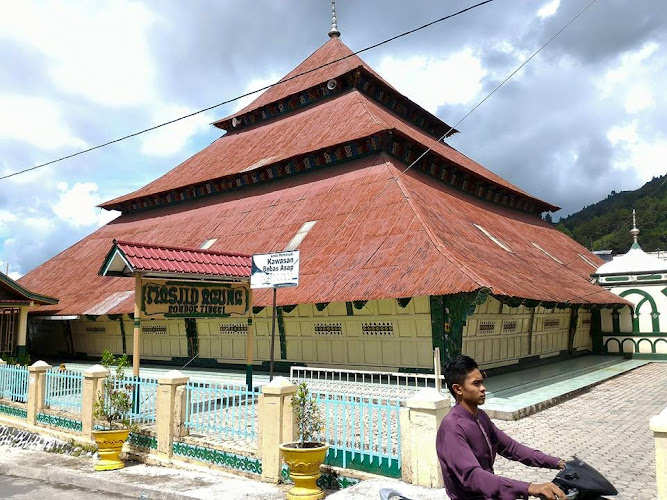
Pondok Tinggi Grand Mosque
About Pondok Tinggi Grand Mosque
Description
The Pondok Tinggi Grand Mosque stands as one of Jambi's most remarkable architectural treasures, drawing visitors from across Indonesia and beyond with its stunning traditional Minangkabau design. This historic mosque represents more than just a place of worship—it's a living testament to the rich cultural heritage that defines this region of Sumatra.
What strikes you first about this mosque isn't just its size, though it certainly commands attention. It's the intricate details that make you pause and really look. The traditional roof structure, with its distinctive curved lines that seem to dance against the sky, tells a story that goes back generations. And honestly, photographs just don't do it justice—you need to see it in person to appreciate the craftsmanship.
I've always been fascinated by how religious architecture can serve dual purposes, and this mosque does exactly that. While it remains an active place of worship for the local Muslim community, it has also become a significant tourist destination that welcomes visitors who want to learn about Indonesian Islamic culture and architecture. The fact that it manages to maintain its spiritual significance while embracing tourism speaks to the community's approach to cultural preservation.
The mosque's location in Sungai Penuh adds another layer to its appeal. This isn't some isolated monument—it's integrated into the daily life of the community, which gives visitors a more authentic experience than you might find at more commercialized attractions.
Key Features
The Pondok Tinggi Grand Mosque offers several distinctive features that set it apart from other religious sites in the region:
- Traditional Minangkabau Architecture: The mosque showcases authentic architectural elements that have been preserved for generations, featuring the characteristic curved rooflines that the Minangkabau people are famous for
- Historic Significance: As one of the older mosques in the Jambi region, it serves as a connection to the area's Islamic heritage and cultural development
- Active Worship Space: Unlike many tourist attractions, this remains a functioning mosque where locals gather for daily prayers, providing visitors with insight into contemporary Indonesian Muslim life
- Architectural Photography Opportunities: The intricate details and traditional design elements make it a favorite among photographers and architecture enthusiasts
- Cultural Learning Experience: Visitors can observe traditional Islamic practices in a distinctly Indonesian context, different from Middle Eastern or other Islamic architectural traditions
- Peaceful Atmosphere: The mosque maintains a serene environment that offers respite from busy travel schedules
- Community Integration: Its location within the local community provides authentic cultural interaction opportunities
Best Time to Visit
Timing your visit to the Pondok Tinggi Grand Mosque can significantly impact your experience, and there are several factors to consider beyond just the weather.
The dry season, running from May through September, typically offers the most comfortable conditions for exploring. But here's something most guidebooks won't tell you—visiting during Ramadan can actually be quite special if you're respectful and understand what's happening. The evening atmosphere during iftar (breaking of the fast) provides a unique glimpse into local religious life, though you'll want to be more mindful about timing your visit.
Early morning visits, around 8-9 AM, tend to offer the best lighting for photography and fewer crowds. The morning call to prayer (fajr) happens before sunrise, so by mid-morning, there's usually a peaceful lull that's perfect for exploration. Afternoon visits can be quite warm—Sumatra's climate doesn't mess around—so bring water and dress appropriately.
Fridays hold special significance as the day for Jumu'ah (congregational prayers), typically occurring around midday. While this means more activity and potentially larger crowds, it also offers insight into the mosque's role in community life. Just remember to be extra respectful during prayer times and consider visiting either before 11 AM or after 2 PM on Fridays.
Avoid visiting during the five daily prayer times if you're planning an extensive tour, as these are sacred moments that require quiet and respect from visitors.
How to Get There
Getting to the Pondok Tinggi Grand Mosque requires a bit of planning, but the journey is part of the experience. Sungai Penuh isn't exactly on the main tourist trail, which is honestly part of its charm—you won't be fighting crowds of tour buses.
If you're flying in, the nearest major airport is Sultan Thaha Airport in Jambi City, about 4-5 hours by road from Sungai Penuh. From there, you have a few options. Local buses run regularly between Jambi City and Sungai Penuh, though the journey can take longer than expected depending on road conditions and stops. The bus ride itself offers great views of Sumatra's landscape, so don't consider it just transit time.
Renting a car or motorbike gives you more flexibility, especially if you plan to explore other attractions in the area. The roads are generally decent, though mountain routes can be winding. I'd recommend having some experience with Indonesian traffic patterns before attempting this on your own.
For those coming from other parts of Sumatra, overland buses connect Sungai Penuh to cities like Padang and Bengkulu. These longer journeys can be quite an adventure—just make sure you're prepared for several hours on the road.
Once you arrive in Sungai Penuh, the mosque is accessible by local transport including ojeks (motorcycle taxis) and angkots (shared minivans). Most locals know the mosque well, so asking for directions is usually straightforward, even with basic Indonesian language skills.
Tips for Visiting
Visiting a functioning mosque requires more cultural awareness than your typical tourist attraction, and honestly, this makes the experience more meaningful if you approach it right.
Dress code is non-negotiable—cover your arms, legs, and if you're a woman, bring a headscarf. Many mosques provide coverings for visitors who arrive unprepared, but it's respectful to come properly dressed. Loose-fitting clothing in lightweight fabrics works best given Sumatra's climate.
Remove your shoes before entering the mosque proper. There are usually designated areas for footwear, but keep an eye on where you place them—losing shoes is more common than you'd think at busy religious sites.
Photography etiquette matters here. While the mosque generally allows photography, avoid taking pictures during prayer times and always ask permission before photographing people. The architecture and decorative elements offer plenty of photographic opportunities without intruding on worship.
Basic Indonesian phrases go a long way. "Permisi" (excuse me) and "terima kasih" (thank you) show respect and often lead to more welcoming interactions with locals. Don't be surprised if someone approaches you wanting to practice their English—Indonesians are generally friendly toward foreign visitors.
Bring cash for any donations or local purchases. Credit cards aren't widely accepted in this area, and having small bills makes transactions smoother.
Consider hiring a local guide if you want deeper insight into the mosque's history and significance. This also supports the local economy and often leads to more authentic cultural exchanges.
Plan for the climate—bring water, sun protection, and maybe a small towel. The tropical humidity can be intense, especially if you're not accustomed to it. And remember, this is an active religious site first and tourist attraction second, so patience and flexibility will serve you well if plans need to adjust around religious activities.
Key Features
- Key Features
- Best Time to Visit
- How to Get There
- Tips for Visiting
More Details
Updated September 15, 2025
Description
The Pondok Tinggi Grand Mosque stands as one of Jambi’s most remarkable architectural treasures, drawing visitors from across Indonesia and beyond with its stunning traditional Minangkabau design. This historic mosque represents more than just a place of worship—it’s a living testament to the rich cultural heritage that defines this region of Sumatra.
What strikes you first about this mosque isn’t just its size, though it certainly commands attention. It’s the intricate details that make you pause and really look. The traditional roof structure, with its distinctive curved lines that seem to dance against the sky, tells a story that goes back generations. And honestly, photographs just don’t do it justice—you need to see it in person to appreciate the craftsmanship.
I’ve always been fascinated by how religious architecture can serve dual purposes, and this mosque does exactly that. While it remains an active place of worship for the local Muslim community, it has also become a significant tourist destination that welcomes visitors who want to learn about Indonesian Islamic culture and architecture. The fact that it manages to maintain its spiritual significance while embracing tourism speaks to the community’s approach to cultural preservation.
The mosque’s location in Sungai Penuh adds another layer to its appeal. This isn’t some isolated monument—it’s integrated into the daily life of the community, which gives visitors a more authentic experience than you might find at more commercialized attractions.
Key Features
The Pondok Tinggi Grand Mosque offers several distinctive features that set it apart from other religious sites in the region:
- Traditional Minangkabau Architecture: The mosque showcases authentic architectural elements that have been preserved for generations, featuring the characteristic curved rooflines that the Minangkabau people are famous for
- Historic Significance: As one of the older mosques in the Jambi region, it serves as a connection to the area’s Islamic heritage and cultural development
- Active Worship Space: Unlike many tourist attractions, this remains a functioning mosque where locals gather for daily prayers, providing visitors with insight into contemporary Indonesian Muslim life
- Architectural Photography Opportunities: The intricate details and traditional design elements make it a favorite among photographers and architecture enthusiasts
- Cultural Learning Experience: Visitors can observe traditional Islamic practices in a distinctly Indonesian context, different from Middle Eastern or other Islamic architectural traditions
- Peaceful Atmosphere: The mosque maintains a serene environment that offers respite from busy travel schedules
- Community Integration: Its location within the local community provides authentic cultural interaction opportunities
Best Time to Visit
Timing your visit to the Pondok Tinggi Grand Mosque can significantly impact your experience, and there are several factors to consider beyond just the weather.
The dry season, running from May through September, typically offers the most comfortable conditions for exploring. But here’s something most guidebooks won’t tell you—visiting during Ramadan can actually be quite special if you’re respectful and understand what’s happening. The evening atmosphere during iftar (breaking of the fast) provides a unique glimpse into local religious life, though you’ll want to be more mindful about timing your visit.
Early morning visits, around 8-9 AM, tend to offer the best lighting for photography and fewer crowds. The morning call to prayer (fajr) happens before sunrise, so by mid-morning, there’s usually a peaceful lull that’s perfect for exploration. Afternoon visits can be quite warm—Sumatra’s climate doesn’t mess around—so bring water and dress appropriately.
Fridays hold special significance as the day for Jumu’ah (congregational prayers), typically occurring around midday. While this means more activity and potentially larger crowds, it also offers insight into the mosque’s role in community life. Just remember to be extra respectful during prayer times and consider visiting either before 11 AM or after 2 PM on Fridays.
Avoid visiting during the five daily prayer times if you’re planning an extensive tour, as these are sacred moments that require quiet and respect from visitors.
How to Get There
Getting to the Pondok Tinggi Grand Mosque requires a bit of planning, but the journey is part of the experience. Sungai Penuh isn’t exactly on the main tourist trail, which is honestly part of its charm—you won’t be fighting crowds of tour buses.
If you’re flying in, the nearest major airport is Sultan Thaha Airport in Jambi City, about 4-5 hours by road from Sungai Penuh. From there, you have a few options. Local buses run regularly between Jambi City and Sungai Penuh, though the journey can take longer than expected depending on road conditions and stops. The bus ride itself offers great views of Sumatra’s landscape, so don’t consider it just transit time.
Renting a car or motorbike gives you more flexibility, especially if you plan to explore other attractions in the area. The roads are generally decent, though mountain routes can be winding. I’d recommend having some experience with Indonesian traffic patterns before attempting this on your own.
For those coming from other parts of Sumatra, overland buses connect Sungai Penuh to cities like Padang and Bengkulu. These longer journeys can be quite an adventure—just make sure you’re prepared for several hours on the road.
Once you arrive in Sungai Penuh, the mosque is accessible by local transport including ojeks (motorcycle taxis) and angkots (shared minivans). Most locals know the mosque well, so asking for directions is usually straightforward, even with basic Indonesian language skills.
Tips for Visiting
Visiting a functioning mosque requires more cultural awareness than your typical tourist attraction, and honestly, this makes the experience more meaningful if you approach it right.
Dress code is non-negotiable—cover your arms, legs, and if you’re a woman, bring a headscarf. Many mosques provide coverings for visitors who arrive unprepared, but it’s respectful to come properly dressed. Loose-fitting clothing in lightweight fabrics works best given Sumatra’s climate.
Remove your shoes before entering the mosque proper. There are usually designated areas for footwear, but keep an eye on where you place them—losing shoes is more common than you’d think at busy religious sites.
Photography etiquette matters here. While the mosque generally allows photography, avoid taking pictures during prayer times and always ask permission before photographing people. The architecture and decorative elements offer plenty of photographic opportunities without intruding on worship.
Basic Indonesian phrases go a long way. “Permisi” (excuse me) and “terima kasih” (thank you) show respect and often lead to more welcoming interactions with locals. Don’t be surprised if someone approaches you wanting to practice their English—Indonesians are generally friendly toward foreign visitors.
Bring cash for any donations or local purchases. Credit cards aren’t widely accepted in this area, and having small bills makes transactions smoother.
Consider hiring a local guide if you want deeper insight into the mosque’s history and significance. This also supports the local economy and often leads to more authentic cultural exchanges.
Plan for the climate—bring water, sun protection, and maybe a small towel. The tropical humidity can be intense, especially if you’re not accustomed to it. And remember, this is an active religious site first and tourist attraction second, so patience and flexibility will serve you well if plans need to adjust around religious activities.
Key Highlights
- Key Features
- Best Time to Visit
- How to Get There
- Tips for Visiting
Location
Places to Stay Near Pondok Tinggi Grand Mosque
Find and Book a Tour
Explore More Travel Guides
No reviews found! Be the first to review!
Traveler Reviews for Pondok Tinggi Grand Mosque
There are no reviews yet. Be the first one to write one.
Have you visited Pondok Tinggi Grand Mosque? Help other travelers by sharing your review.
You Might Also Like

Hotel Kerinci

Bukit Impian

Taman Bunga
Find Accommodations Nearby
Recommended Tours & Activities
Visitor Reviews
There are no reviews yet. Be the first one to write one.
Share Your Experience
Have you visited Pondok Tinggi Grand Mosque? Help other travelers by leaving a review.