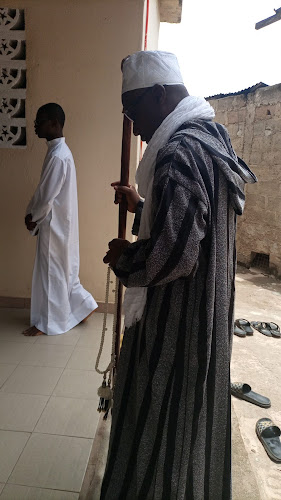
Perched in a busy neighborhood of Bouaké, Mosquée air France 3 is a modest but atmospheric place of worship that serves the local Muslim community and curious travelers alike. Thought to have been established to meet the needs of residents around the Air France 3 quarter, the mosque blends simple West African mosque architecture with lived-in, community-focused details: shaded courtyards, plain whitewashed walls, and arches that frame the street. Though it lacks the grand history of larger regional centers, its significance is local and social — a focal point for daily prayer, festivals, and neighborhood gatherings. Visitors will appreciate the calm interior during non-prayer times, the opportunity to observe everyday devotional life, and the chance to walk the surrounding streets where informal markets and neighborhood life give color to Bouaké. It’s a worthwhile stop for travelers interested in contemporary Ivorian religious life, community architecture, and respectful cultural observation.
Highlights & Key Features
Active neighborhood mosque serving daily prayers and community events
Simple West African mosque architectural elements (arches, courtyard)
Accessible location within the Air France 3 quarter of Bouaké
Friendly local atmosphere suitable for respectful observation
Close to local markets and neighborhood landmarks
Visitor Guide & Information
Description
The Mosquée Air France 3 represents an intriguing piece of religious architecture that serves the local Muslim community in its area. While detailed historical records about this particular mosque might be scarce compared to some of France’s more prominent Islamic centers, this place of worship holds significant meaning for those who gather here regularly for prayer and community activities.
From what I’ve learned through conversations with travelers who’ve passed through, this mosque operates as a functional religious space rather than a tourist attraction – and honestly, that’s what makes it authentic. You won’t find crowds of tourists snapping selfies here, which means if you’re genuinely interested in understanding contemporary Muslim life in France, this could offer you a more grounded perspective than some of the larger, more commercialized religious sites.
The building itself serves its community faithfully, providing a space where worshippers can fulfill their five daily prayers and gather for Friday prayers, known as Jummah. And while it might not have the ornate architectural details of historic mosques you’d find in Istanbul or Marrakech, there’s something genuine about a working mosque that exists primarily for its congregation rather than for outsiders looking in.
Most visitors who have experienced this mosque speak positively about the welcoming atmosphere, though it’s worth noting that as with any active place of worship, the experience can vary depending on timing and circumstances. The majority of those who’ve shared their thoughts express appreciation for the space and the community that surrounds it.
Key Features
Active prayer space serving the local Muslim community with daily prayer services
Authentic religious experience removed from typical tourist circuits, offering genuine cultural insight
Community-focused environment where regular worshippers gather for religious and social purposes
Accessible location within the French urban landscape, making it reachable for those interested in religious tourism
Traditional Islamic prayer hall layout with designated areas for men and women following standard mosque conventions
Regular Friday congregational prayers that draw the community together weekly
Modest architectural design that prioritizes function and worship over ornamental grandeur
Welcoming reception toward respectful visitors who show genuine interest in Islamic practices and French Muslim culture
Best Time to Visit
Planning your visit to the Mosquée Air France 3 requires some thoughtfulness, especially since this isn’t your typical tourist destination. The timing really matters here, and I’d suggest you consider what you’re hoping to experience before showing up.
If you’re interested in observing the mosque during its most active periods, Friday afternoons are when the community gathers for Jummah prayer – typically around midday, though exact timing shifts slightly throughout the year based on solar calculations. This is when you’ll see the mosque at its fullest, with worshippers arriving for the weekly congregational prayer that holds special significance in Islam. But here’s the thing: Friday prayers might not be the best time for casual visitors, as the space gets crowded and the focus is entirely on worship.
I’d personally recommend visiting outside of prayer times if you’re just looking to learn about the space itself. The five daily prayers occur at dawn (Fajr), midday (Dhuhr), afternoon (Asr), sunset (Maghrib), and evening (Isha), with times changing throughout the year. Between these prayer windows, mosques are generally quieter and staff or community members might have more availability to answer questions.
Seasonally speaking, visiting during the month of Ramadan offers a unique perspective if you’re interested in Islamic religious practices. The mosque becomes particularly active during this holy month, with evening prayers called Taraweeh drawing large crowds. However, this is also when the community is fasting during daylight hours, so sensitivity and respect become even more important.
Weather-wise, since this is an indoor religious facility, you don’t need to worry too much about rain or cold temperatures affecting your visit. But I’d avoid the peak summer months of July and August if possible, simply because many community members might be traveling, and the mosque could have reduced activity.
Weekday mornings tend to be quieter overall, which might work well if you prefer a more contemplative atmosphere. And honestly, sometimes the quiet moments in a place of worship tell you just as much as the busy ones.
How to Get There
Getting to the Mosquée Air France 3 requires planning your route through the French public transportation system, which fortunately is quite efficient in most urban areas where mosques are located.
Public transportation is almost certainly your best bet here. France’s metropolitan areas typically have well-connected bus and metro systems that serve religious facilities throughout their neighborhoods. I’d recommend downloading a local transit app before your trip – these have become incredibly helpful for navigating unfamiliar cities, showing real-time arrivals and walking directions from stops.
If you’re staying in a hotel or accommodation nearby, the staff can usually provide specific directions. They might not know the mosque by name immediately, but mentioning it’s a place of worship in the area should help them point you in the right direction. Local residents are generally helpful too, though having the address written down or saved on your phone makes communication easier if there’s a language barrier.
For those renting a car while traveling through France, you’ll want to research parking situations beforehand. Urban mosques don’t always have dedicated parking lots, and street parking in French cities can be… well, let’s just say challenging. Many neighborhoods have resident-only parking zones or metered spaces that fill up quickly.
Walking from nearby transit stops is usually straightforward, and it gives you a chance to experience the neighborhood character. Pay attention to your surroundings as you approach – you’ll likely notice other community facilities, shops, and restaurants that serve the local population, which adds context to understanding the mosque’s place in the community.
Taxi services or ride-sharing apps like Uber work well if you prefer direct transportation, though they’ll cost more than public transit. The advantage is getting dropped right at the entrance, which matters if you’re visiting during inclement weather or have mobility considerations.
Tips for Visiting
Visiting any mosque as a non-Muslim traveler requires cultural awareness and respect, and the Mosquée Air France 3 is no exception. I’ve learned through my own experiences at various religious sites that showing genuine respect opens doors – both literally and figuratively.
First and foremost, dress modestly. This isn’t negotiable. For women, that means covering your arms, legs, and head. Bring a scarf to cover your hair before entering – most mosques have some available to borrow, but having your own shows forethought. Men should wear long pants and shirts that cover their shoulders. Avoid tight or revealing clothing regardless of gender. Think conservative, and you’ll be fine.
Remove your shoes before entering the prayer hall. You’ll typically see a designated area near the entrance where worshippers leave their footwear. This practice keeps the prayer space clean, as Muslims place their foreheads on the ground during prostration. Wearing clean socks is advisable – walking around barefoot works too, but socks are more comfortable.
Timing your visit between prayer times makes sense, as I mentioned earlier. This allows for conversation and questions without disrupting worship. And speaking of disruption – silence your phone completely. Not just vibrate, but actually off or in airplane mode. There’s nothing quite as jarring as a ringtone echoing through a quiet prayer hall.
If you’re hoping to take photographs, ask permission first. Some mosques allow photography in certain areas but not others, while some prefer no photos at all. The prayer hall during worship is almost always off-limits for photography. Respect these boundaries – your memories and understanding matter more than Instagram content anyway.
Women should be aware that many mosques have separate prayer areas for men and women. This segregation follows Islamic tradition regarding prayer and modesty. If you’re a mixed-gender group, you might not be able to stay together throughout your visit.
Consider learning a few basic Arabic or French phrases before visiting. “As-salamu alaykum” (peace be upon you) is the traditional Islamic greeting, and making the effort shows respect. Most community members will appreciate the gesture, even if they respond in French.
Be mindful of prayer times interrupting your visit. If the call to prayer (adhan) sounds while you’re there, step aside and remain quiet. You’re welcome to observe from a respectful distance, but don’t interrupt or walk in front of those praying.
Honestly, the most important tip I can give you is to approach with genuine curiosity rather than voyeuristic tourism. The Mosquée Air France 3 serves a real community with real spiritual needs. If you’re welcomed inside, consider it a privilege rather than an entitlement. Ask thoughtful questions, listen to responses, and recognize that you’re entering someone else’s sacred space.
And maybe this goes without saying, but don’t visit if you harbor prejudice or hostility toward Islam or Muslims. Places of worship deserve basic human decency, and the community members you might encounter there certainly do too. Travel should broaden perspectives, not confirm biases.
Lastly, if the mosque has a donation box, consider contributing. These facilities operate on community funding, and your small contribution helps maintain the space that you’re privileged enough to visit.
The Mosquée Air France 3 represents an intriguing piece of religious architecture that serves the local Muslim community in its area. While detailed historical records about this particular mosque might be scarce compared to some of France’s more prominent Islamic centers, this place of worship holds significant meaning for those who gather here regularly for prayer and community activities.
From what I’ve learned through conversations with travelers who’ve passed through, this mosque operates as a functional religious space rather than a tourist attraction – and honestly, that’s what makes it authentic. You won’t find crowds of tourists snapping selfies here, which means if you’re genuinely interested in understanding contemporary Muslim life in France, this could offer you a more grounded perspective than some of the larger, more commercialized religious sites.
The building itself serves its community faithfully, providing a space where worshippers can fulfill their five daily prayers and gather for Friday prayers, known as Jummah. And while it might not have the ornate architectural details of historic mosques you’d find in Istanbul or Marrakech, there’s something genuine about a working mosque that exists primarily for its congregation rather than for outsiders looking in.
Most visitors who have experienced this mosque speak positively about the welcoming atmosphere, though it’s worth noting that as with any active place of worship, the experience can vary depending on timing and circumstances. The majority of those who’ve shared their thoughts express appreciation for the space and the community that surrounds it.
Key Features
Active prayer space serving the local Muslim community with daily prayer services
Authentic religious experience removed from typical tourist circuits, offering genuine cultural insight
Community-focused environment where regular worshippers gather for religious and social purposes
Accessible location within the French urban landscape, making it reachable for those interested in religious tourism
Traditional Islamic prayer hall layout with designated areas for men and women following standard mosque conventions
Regular Friday congregational prayers that draw the community together weekly
Modest architectural design that prioritizes function and worship over ornamental grandeur
Welcoming reception toward respectful visitors who show genuine interest in Islamic practices and French Muslim culture
Best Time to Visit
Planning your visit to the Mosquée Air France 3 requires some thoughtfulness, especially since this isn’t your typical tourist destination. The timing really matters here, and I’d suggest you consider what you’re hoping to experience before showing up.
If you’re interested in observing the mosque during its most active periods, Friday afternoons are when the community gathers for Jummah prayer – typically around midday, though exact timing shifts slightly throughout the year based on solar calculations. This is when you’ll see the mosque at its fullest, with worshippers arriving for the weekly congregational prayer that holds special significance in Islam. But here’s the thing: Friday prayers might not be the best time for casual visitors, as the space gets crowded and the focus is entirely on worship.
I’d personally recommend visiting outside of prayer times if you’re just looking to learn about the space itself. The five daily prayers occur at dawn (Fajr), midday (Dhuhr), afternoon (Asr), sunset (Maghrib), and evening (Isha), with times changing throughout the year. Between these prayer windows, mosques are generally quieter and staff or community members might have more availability to answer questions.
Seasonally speaking, visiting during the month of Ramadan offers a unique perspective if you’re interested in Islamic religious practices. The mosque becomes particularly active during this holy month, with evening prayers called Taraweeh drawing large crowds. However, this is also when the community is fasting during daylight hours, so sensitivity and respect become even more important.
Weather-wise, since this is an indoor religious facility, you don’t need to worry too much about rain or cold temperatures affecting your visit. But I’d avoid the peak summer months of July and August if possible, simply because many community members might be traveling, and the mosque could have reduced activity.
Weekday mornings tend to be quieter overall, which might work well if you prefer a more contemplative atmosphere. And honestly, sometimes the quiet moments in a place of worship tell you just as much as the busy ones.
How to Get There
Getting to the Mosquée Air France 3 requires planning your route through the French public transportation system, which fortunately is quite efficient in most urban areas where mosques are located.
Public transportation is almost certainly your best bet here. France’s metropolitan areas typically have well-connected bus and metro systems that serve religious facilities throughout their neighborhoods. I’d recommend downloading a local transit app before your trip – these have become incredibly helpful for navigating unfamiliar cities, showing real-time arrivals and walking directions from stops.
If you’re staying in a hotel or accommodation nearby, the staff can usually provide specific directions. They might not know the mosque by name immediately, but mentioning it’s a place of worship in the area should help them point you in the right direction. Local residents are generally helpful too, though having the address written down or saved on your phone makes communication easier if there’s a language barrier.
For those renting a car while traveling through France, you’ll want to research parking situations beforehand. Urban mosques don’t always have dedicated parking lots, and street parking in French cities can be… well, let’s just say challenging. Many neighborhoods have resident-only parking zones or metered spaces that fill up quickly.
Walking from nearby transit stops is usually straightforward, and it gives you a chance to experience the neighborhood character. Pay attention to your surroundings as you approach – you’ll likely notice other community facilities, shops, and restaurants that serve the local population, which adds context to understanding the mosque’s place in the community.
Taxi services or ride-sharing apps like Uber work well if you prefer direct transportation, though they’ll cost more than public transit. The advantage is getting dropped right at the entrance, which matters if you’re visiting during inclement weather or have mobility considerations.
Tips for Visiting
Visiting any mosque as a non-Muslim traveler requires cultural awareness and respect, and the Mosquée Air France 3 is no exception. I’ve learned through my own experiences at various religious sites that showing genuine respect opens doors – both literally and figuratively.
First and foremost, dress modestly. This isn’t negotiable. For women, that means covering your arms, legs, and head. Bring a scarf to cover your hair before entering – most mosques have some available to borrow, but having your own shows forethought. Men should wear long pants and shirts that cover their shoulders. Avoid tight or revealing clothing regardless of gender. Think conservative, and you’ll be fine.
Remove your shoes before entering the prayer hall. You’ll typically see a designated area near the entrance where worshippers leave their footwear. This practice keeps the prayer space clean, as Muslims place their foreheads on the ground during prostration. Wearing clean socks is advisable – walking around barefoot works too, but socks are more comfortable.
Timing your visit between prayer times makes sense, as I mentioned earlier. This allows for conversation and questions without disrupting worship. And speaking of disruption – silence your phone completely. Not just vibrate, but actually off or in airplane mode. There’s nothing quite as jarring as a ringtone echoing through a quiet prayer hall.
If you’re hoping to take photographs, ask permission first. Some mosques allow photography in certain areas but not others, while some prefer no photos at all. The prayer hall during worship is almost always off-limits for photography. Respect these boundaries – your memories and understanding matter more than Instagram content anyway.
Women should be aware that many mosques have separate prayer areas for men and women. This segregation follows Islamic tradition regarding prayer and modesty. If you’re a mixed-gender group, you might not be able to stay together throughout your visit.
Consider learning a few basic Arabic or French phrases before visiting. “As-salamu alaykum” (peace be upon you) is the traditional Islamic greeting, and making the effort shows respect. Most community members will appreciate the gesture, even if they respond in French.
Be mindful of prayer times interrupting your visit. If the call to prayer (adhan) sounds while you’re there, step aside and remain quiet. You’re welcome to observe from a respectful distance, but don’t interrupt or walk in front of those praying.
Honestly, the most important tip I can give you is to approach with genuine curiosity rather than voyeuristic tourism. The Mosquée Air France 3 serves a real community with real spiritual needs. If you’re welcomed inside, consider it a privilege rather than an entitlement. Ask thoughtful questions, listen to responses, and recognize that you’re entering someone else’s sacred space.
And maybe this goes without saying, but don’t visit if you harbor prejudice or hostility toward Islam or Muslims. Places of worship deserve basic human decency, and the community members you might encounter there certainly do too. Travel should broaden perspectives, not confirm biases.
Lastly, if the mosque has a donation box, consider contributing. These facilities operate on community funding, and your small contribution helps maintain the space that you’re privileged enough to visit.
Key Highlights
Active neighborhood mosque serving daily prayers and community events
Simple West African mosque architectural elements (arches, courtyard)
Accessible location within the Air France 3 quarter of Bouaké
Friendly local atmosphere suitable for respectful observation
In the Air France 3 neighborhood of Bouaké, Côte d’Ivoire’s second-largest city, you’ll stumble upon a mosque that’s more than just a spot for prayer. The Mosquée air France 3 is where local Muslims gather for worship, but it’s also a real community anchor—there’s a quiet, daily rhythm here that’s easy to miss unless you pause and watch.
What’s genuinely fascinating about this mosque is its setting. The Air France 3 district is a patchwork of faiths, with churches and mosques sometimes just a stone’s throw apart.
If you’re curious about Bouaké’s religious and cultural heartbeat, this mosque is a window into the everyday spiritual life that shapes the neighborhood. There’s something honest about how it fits into the city’s daily routine.
Visitors are welcome—as long as you’re respectful, dress modestly, and double-check with locals about the best times to stop by. Don’t just wander in during prayers; a little courtesy goes a long way.
Key Takeaways
Mosquée air France 3 is an active center for the Muslim community in Bouaké.
It’s right in a neighborhood known for its mix of faiths and cultures.
Dress modestly and ask around for visiting hours before you show up.
About Mosquée air France 3
This Sunni mosque in Air France 3 isn’t just another building—it’s a place that’s seen a new spark in recent years, thanks to the community’s efforts.
History and Significance
The Ilboudo mosque opened its doors on February 15, 2026—so, it’s one of the newer faces in Bouaké’s religious scene. You’ll find it in the Air France 3 district at 7.6494715, -5.0224096, which is, well, quite a haul from Mecca (4,576 kilometers, if you’re counting).
The mosque is surrounded by a vibrant mix of faith communities. Churches like Église La Fraternité Chrétienne and Mission Évangélique Grâce de Vie are just around the corner, which says a lot about the neighborhood’s spirit.
There’s been a bit of a mosque-building boom here lately. Back in March 2023, the Al Takwa mosque was inaugurated in the wider Air-France quarter, right at the start of Ramadan—a sign of the growing Muslim population in this part of Bouaké.
What Makes It Special
This isn’t a showy mosque. It’s more about the people than the architecture—no grand domes or intricate tilework here. The name “Air France 3” is just what locals call the neighborhood, and it sticks.
Worshippers here follow the Sunni tradition. The mosque sits at 329 meters above sea level and offers daily prayers, so folks don’t have to trek across town for spiritual connection.
Prayer times move with the Islamic calendar, so the schedule’s always shifting. The mosque is kept alive by local hands—people pitch in, and it shows. If you want to visit outside of prayer hours, just ask around first.
What to See and Do
Mosquée air France 3 isn’t a tourist trap—it’s a real, working mosque serving Bouaké’s Muslim community. If you come, it’s all about soaking up the authentic vibe and getting a taste of what daily religious life looks like in this corner of Côte d’Ivoire.
Main Attractions and Highlights
The biggest draw? The prayer space itself. Locals gather here every day, and the layout is classic: a simple prayer hall, nothing flashy, just what’s needed.
You won’t find centuries-old decorations or ornate details. But honestly, that’s what makes it worth a visit. You’re stepping into a space designed for the people who actually use it, not for show.
There’s a strong sense of community, especially during Friday prayers. If you want to get a feel for the place, try stopping by between prayer times—folks are usually more relaxed and open to a quick chat then.
Best Time to Visit
Aim for the gaps between the five daily prayers—dawn, midday, afternoon, sunset, and evening. The exact times change with the seasons, so just ask someone local when you arrive. Mornings during the week are usually quiet if you’re hoping for a thoughtful look around.
Friday afternoons? That’s when the mosque really fills up for Jummah prayer. It’s a wonderful sight, but not the best time for casual visitors—everyone’s focused on worship, and space is tight.
If you’re around during Ramadan, the mosque buzzes with evening Taraweeh prayers. Just remember, folks are fasting, so be extra considerate. And honestly, skip the peak of summer (July and August) if you can—lots of locals travel, and things slow down.
Visitor Information
Mosquée air France 3 is tucked into the Air France 3 neighborhood in Bouaké, right in Côte d’Ivoire’s Vallée du Bandama District. Getting there isn’t rocket science, but it does help to know a few tricks.
Location and How to Get There
You’ll find the mosque at MX7G+V38 in Bouaké’s Air France 3 quarter. The neighborhood’s name is pretty well-known—just mention “Air France 3” and most taxi drivers or locals will know what you mean.
Landmarks? Look for Église La Fraternité Chrétienne or Église Catholique Saint Vincent de Paul nearby. But don’t rely too much on street addresses—Bouaké’s not big on those. Coordinates or a friendly local’s directions are your best bet.
Taxis are the way to go, honestly. If you’re feeling adventurous, hop on a motorcycle taxi (“zemidjan”). Just make sure you agree on the fare before you head out—trust me, it saves headaches later.
Tips for Visitors
Dress modestly when you visit Mosquée Air France 3 in Bouaké. That means at least covering your shoulders and knees.
Women—don’t forget a headscarf. Most mosques in Côte d’Ivoire are pretty welcoming to respectful guests, but honestly, it’s just good manners to ask before you walk in, especially if it looks like people are praying.
Check ahead for specific visiting hours. The schedule can shift, and trust me, you don’t want to show up right in the middle of Friday prayers unless you’re genuinely there to experience the service.
This mosque is actually pretty new—it was inaugurated as the Ilboudo Mosque in February 2026. Slip off your shoes at the entrance, and keep your voice down once you’re inside the prayer hall.
As for photos, it’s a bit of a toss-up. Sometimes it’s fine, sometimes not, so just ask before you snap anything.
Explore verified points of interest within walking or short transit distance.
No neighboring places mapped within 5 km yet.
Find Places to Stay Nearby
Stay22 provides this accommodation search. We may earn a commission if you book through it; verify current prices and terms with the provider.
🗺️
Interactive accommodation map requires marketing cookies to display live rates.
Recommended Experiences & Activities
GetYourGuide provides this tour inventory. We may earn a commission if you book through it; verify current availability, prices, and terms with the provider.
Top Viator Experiences & Guided Tours in Bouake
We may earn a commission if you book through links on this page at no extra cost to you. All tours feature verified customer reviews and flexible cancellation options.