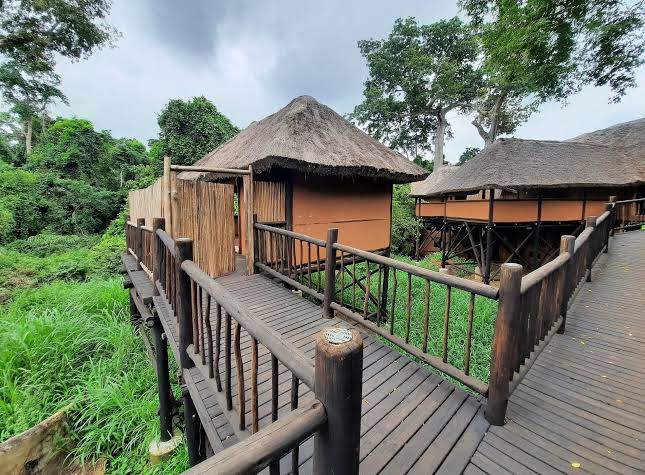
Perched on the banks of the N’Zi River near Bouaké, Nzi River Lodge is a rustic yet thoughtfully run indoor lodging that invites travelers into a slice of Ivorian wilderness. Founded by local conservation-minded hosts to showcase the region’s savanna, gallery forest and river habitats, the lodge blends simple indoor comforts with immersive nature experiences — birding at dawn, river-side walks and guided drives through a 41,000 ha voluntary nature reserve. What makes it special is the combination of warm, locally rooted hospitality and an off-the-beaten-track setting where guests can watch hippos and myriad waterbirds from discreet river viewpoints, dine on Ivorian and Creole-inspired meals prepared from local ingredients, and sleep in solid indoor rooms that offer shelter from the elements while feeling close to the landscape. Visitors come to disconnect, to learn about local ecology and Baoulé culture, and to use the lodge as a base for photography, conservation volunteering or simply slow, restorative time beside the water.
Highlights & Key Features
Indoor rooms with river and reserve views
Located within/adjacent to a 41,000 ha voluntary nature reserve
Guided birdwatching, river walks and wildlife viewing
Meals prepared with local ingredients and Baoulé culinary influences
Off-grid, low-impact ethos with warm local hospitality
Visitor Guide & Information
Description
The Nzi River Lodge stands as an appealing accommodation choice for travelers seeking a genuine wilderness experience in a relatively remote setting. This indoor lodging facility offers guests the opportunity to disconnect from urban chaos and reconnect with nature along the banks of the Nzi River. The property has earned a solid reputation among visitors, with many returning guests praising the peaceful atmosphere and authentic bush experience it delivers.
From my perspective, what really sets this place apart isn’t just the location itself—though that’s certainly impressive—but the way it manages to balance comfort with that raw, unfiltered connection to the natural world. You won’t find over-the-top luxury here, and honestly, that’s part of its charm. The lodge caters to travelers who appreciate simplicity done right, where the focus shifts from fancy amenities to the incredible surroundings that envelope the property.
The accommodations provide a comfortable base for exploring the surrounding wilderness, and guests consistently mention the tranquil setting as a major highlight. There’s something profoundly restorative about waking up to the sounds of the river and the calls of exotic birds rather than traffic noise and city commotion. And let me tell you, that kind of peace is increasingly hard to find these days.
The lodge attracts a diverse crowd—from solo adventurers and couples seeking romantic getaways to families wanting to introduce their children to the wonders of the African bush. The property’s design respects the natural landscape while providing modern conveniences that make your stay comfortable rather than challenging. But fair warning: if you’re the type who needs a shopping mall within walking distance or can’t live without constant high-speed internet, this probably isn’t your spot.
Key Features
The Nzi River Lodge offers several distinctive features that enhance the guest experience:
• Riverside location providing direct access to the Nzi River and opportunities for water-based activities and wildlife viewing along the banks
• Indoor lodging facilities designed to provide shelter and comfort while maintaining an authentic bush atmosphere
• Proximity to diverse ecosystems supporting varied wildlife populations, making it excellent for nature enthusiasts and wildlife photographers
• Quiet and secluded setting away from crowded tourist circuits, offering genuine solitude and peaceful retreats
• Accommodation options suitable for different group sizes and travel styles, from solo adventurers to family units
• Outdoor spaces and common areas where guests can gather, share experiences, and enjoy the natural surroundings
• Strategic location for exploring the broader region’s natural attractions and wildlife reserves
• On-site facilities that cater to basic traveler needs without overwhelming the natural setting
• Opportunities for guided activities and self-directed exploration depending on your preference for structure versus freedom
• Evening atmosphere perfect for stargazing, with minimal light pollution revealing spectacular night skies
Best Time to Visit
Timing your visit to Nzi River Lodge can significantly impact your experience, and I’ve learned through various travels that understanding seasonal variations really matters. The dry season, typically running from June through September, offers the most reliable weather conditions and excellent wildlife viewing opportunities. During these months, animals congregate around water sources like the Nzi River, making sightings more frequent and predictable.
The temperatures during dry season are generally more comfortable for outdoor activities, though nights can get surprisingly cool—something I wish someone had told me before my first bush experience years ago when I packed entirely wrong! You’ll want to bring layers because that temperature swing between day and night can catch you off guard.
From October through March, the wet season transforms the landscape into a lush, green paradise. The river swells with water, bird populations explode with migratory species joining resident ones, and the vegetation becomes incredibly dense. Some travelers actually prefer this period because the scenery is more dramatic and there are fewer tourists competing for space. However, you should prepare for afternoon thunderstorms and occasionally challenging road conditions.
The shoulder seasons—April, May, and October—offer compromises between the two extremes. You might encounter some rain, but you’ll also benefit from lower accommodation rates and fewer crowds. These months work particularly well for photographers seeking that perfect combination of dramatic skies and good wildlife activity.
But here’s my honest take: there isn’t really a “bad” time to visit if you set your expectations appropriately. Each season offers unique experiences, and what matters most is aligning your visit with what you personally hope to gain from the experience.
How to Get There
Reaching Nzi River Lodge requires some planning, as the property’s remote location is both its greatest asset and its logistical challenge. Most visitors arrive via private vehicle, which offers flexibility and independence once you’re in the region. The journey itself becomes part of the adventure, taking you through changing landscapes and local communities that provide context for your destination.
If you’re flying into the region, you’ll need to arrange ground transportation from the nearest airport. Self-driving is certainly possible and gives you freedom to explore at your own pace, though you should ensure your vehicle is appropriate for potentially rough road conditions, particularly during or after rainy periods. A 4×4 vehicle isn’t always mandatory, but it definitely provides peace of mind and better capability should conditions deteriorate.
Some guests arrange transfers through the lodge itself or through local tour operators, which eliminates navigation concerns and allows you to relax during the journey. This option works especially well if you’re unfamiliar with the area or prefer not to drive after a long international flight. The drivers typically know the routes intimately and can point out interesting sights along the way.
Road signage can be minimal in remote areas, so GPS navigation or downloaded offline maps are essential. And honestly, even with GPS, you might still second-guess yourself a few times—that’s just part of the adventure. Make sure your phone is charged and consider bringing a portable power bank because the last thing you want is your navigation dying halfway through the journey.
Allow more travel time than you think you’ll need. Rural roads rarely permit the speeds that mapping applications estimate, and you’ll want buffer time for unexpected delays, photo opportunities, or simply getting slightly turned around—which happens to the best of us.
Tips for Visiting
Preparing properly for your stay at Nzi River Lodge enhances your experience significantly. First and foremost, pack appropriate clothing for variable conditions. Lightweight, breathable fabrics in neutral colors work best for daytime activities, while warmer layers become essential for cooler evenings. Comfortable, closed-toe walking shoes are non-negotiable, and I’d strongly recommend bringing a light rain jacket regardless of season.
Insect repellent and sunscreen should be at the top of your packing list. The riverside environment naturally attracts mosquitoes, particularly around dawn and dusk, so protecting yourself isn’t just about comfort—it’s about health. Apply repellent liberally and consider treating clothing with permethrin before your trip for added protection.
Bring binoculars if you have them. Even a basic pair transforms wildlife viewing from merely spotting animals to actually observing their behaviors and appreciations their details. I resisted carrying binoculars for years thinking they were cumbersome, but now I never travel to wildlife areas without them.
Cash is important because remote locations rarely offer reliable card payment systems or ATM access. Bring sufficient local currency for incidental expenses, tips for staff (which are greatly appreciated), and any activities or purchases you might want to make. Running out of cash in a remote lodge is awkward for everyone involved.
A good flashlight or headlamp is essential for navigating the property after dark. The minimal artificial lighting that makes stargazing spectacular also makes walking around at night challenging without your own light source. Choose one with red light settings to preserve your night vision and avoid disturbing wildlife.
Consider your photography equipment carefully. While professional cameras capture stunning images, they also require care in dusty, humid conditions. Bring protective bags and cleaning supplies, and don’t underestimate what modern smartphones can achieve—some of my favorite wildlife shots came from a phone camera simply because it was immediately accessible when an unexpected moment occurred.
Manage your expectations around connectivity. Internet access may be limited or nonexistent, which is actually wonderful if you embrace it. Inform family and friends beforehand that you’ll be largely unreachable, and treat it as an opportunity for genuine digital detox rather than a frustrating inconvenience.
Finally, maintain flexibility in your plans and attitude. Nature operates on its own schedule, not yours, and weather or wildlife movements might alter planned activities. The travelers who enjoy remote lodges most are those who can adapt cheerfully to changing circumstances and find joy in unexpected experiences rather than rigidly adhering to predetermined itineraries.
The Nzi River Lodge stands as an appealing accommodation choice for travelers seeking a genuine wilderness experience in a relatively remote setting. This indoor lodging facility offers guests the opportunity to disconnect from urban chaos and reconnect with nature along the banks of the Nzi River. The property has earned a solid reputation among visitors, with many returning guests praising the peaceful atmosphere and authentic bush experience it delivers.
From my perspective, what really sets this place apart isn’t just the location itself—though that’s certainly impressive—but the way it manages to balance comfort with that raw, unfiltered connection to the natural world. You won’t find over-the-top luxury here, and honestly, that’s part of its charm. The lodge caters to travelers who appreciate simplicity done right, where the focus shifts from fancy amenities to the incredible surroundings that envelope the property.
The accommodations provide a comfortable base for exploring the surrounding wilderness, and guests consistently mention the tranquil setting as a major highlight. There’s something profoundly restorative about waking up to the sounds of the river and the calls of exotic birds rather than traffic noise and city commotion. And let me tell you, that kind of peace is increasingly hard to find these days.
The lodge attracts a diverse crowd—from solo adventurers and couples seeking romantic getaways to families wanting to introduce their children to the wonders of the African bush. The property’s design respects the natural landscape while providing modern conveniences that make your stay comfortable rather than challenging. But fair warning: if you’re the type who needs a shopping mall within walking distance or can’t live without constant high-speed internet, this probably isn’t your spot.
Key Features
The Nzi River Lodge offers several distinctive features that enhance the guest experience:
• Riverside location providing direct access to the Nzi River and opportunities for water-based activities and wildlife viewing along the banks
• Indoor lodging facilities designed to provide shelter and comfort while maintaining an authentic bush atmosphere
• Proximity to diverse ecosystems supporting varied wildlife populations, making it excellent for nature enthusiasts and wildlife photographers
• Quiet and secluded setting away from crowded tourist circuits, offering genuine solitude and peaceful retreats
• Accommodation options suitable for different group sizes and travel styles, from solo adventurers to family units
• Outdoor spaces and common areas where guests can gather, share experiences, and enjoy the natural surroundings
• Strategic location for exploring the broader region’s natural attractions and wildlife reserves
• On-site facilities that cater to basic traveler needs without overwhelming the natural setting
• Opportunities for guided activities and self-directed exploration depending on your preference for structure versus freedom
• Evening atmosphere perfect for stargazing, with minimal light pollution revealing spectacular night skies
Best Time to Visit
Timing your visit to Nzi River Lodge can significantly impact your experience, and I’ve learned through various travels that understanding seasonal variations really matters. The dry season, typically running from June through September, offers the most reliable weather conditions and excellent wildlife viewing opportunities. During these months, animals congregate around water sources like the Nzi River, making sightings more frequent and predictable.
The temperatures during dry season are generally more comfortable for outdoor activities, though nights can get surprisingly cool—something I wish someone had told me before my first bush experience years ago when I packed entirely wrong! You’ll want to bring layers because that temperature swing between day and night can catch you off guard.
From October through March, the wet season transforms the landscape into a lush, green paradise. The river swells with water, bird populations explode with migratory species joining resident ones, and the vegetation becomes incredibly dense. Some travelers actually prefer this period because the scenery is more dramatic and there are fewer tourists competing for space. However, you should prepare for afternoon thunderstorms and occasionally challenging road conditions.
The shoulder seasons—April, May, and October—offer compromises between the two extremes. You might encounter some rain, but you’ll also benefit from lower accommodation rates and fewer crowds. These months work particularly well for photographers seeking that perfect combination of dramatic skies and good wildlife activity.
But here’s my honest take: there isn’t really a “bad” time to visit if you set your expectations appropriately. Each season offers unique experiences, and what matters most is aligning your visit with what you personally hope to gain from the experience.
How to Get There
Reaching Nzi River Lodge requires some planning, as the property’s remote location is both its greatest asset and its logistical challenge. Most visitors arrive via private vehicle, which offers flexibility and independence once you’re in the region. The journey itself becomes part of the adventure, taking you through changing landscapes and local communities that provide context for your destination.
If you’re flying into the region, you’ll need to arrange ground transportation from the nearest airport. Self-driving is certainly possible and gives you freedom to explore at your own pace, though you should ensure your vehicle is appropriate for potentially rough road conditions, particularly during or after rainy periods. A 4×4 vehicle isn’t always mandatory, but it definitely provides peace of mind and better capability should conditions deteriorate.
Some guests arrange transfers through the lodge itself or through local tour operators, which eliminates navigation concerns and allows you to relax during the journey. This option works especially well if you’re unfamiliar with the area or prefer not to drive after a long international flight. The drivers typically know the routes intimately and can point out interesting sights along the way.
Road signage can be minimal in remote areas, so GPS navigation or downloaded offline maps are essential. And honestly, even with GPS, you might still second-guess yourself a few times—that’s just part of the adventure. Make sure your phone is charged and consider bringing a portable power bank because the last thing you want is your navigation dying halfway through the journey.
Allow more travel time than you think you’ll need. Rural roads rarely permit the speeds that mapping applications estimate, and you’ll want buffer time for unexpected delays, photo opportunities, or simply getting slightly turned around—which happens to the best of us.
Tips for Visiting
Preparing properly for your stay at Nzi River Lodge enhances your experience significantly. First and foremost, pack appropriate clothing for variable conditions. Lightweight, breathable fabrics in neutral colors work best for daytime activities, while warmer layers become essential for cooler evenings. Comfortable, closed-toe walking shoes are non-negotiable, and I’d strongly recommend bringing a light rain jacket regardless of season.
Insect repellent and sunscreen should be at the top of your packing list. The riverside environment naturally attracts mosquitoes, particularly around dawn and dusk, so protecting yourself isn’t just about comfort—it’s about health. Apply repellent liberally and consider treating clothing with permethrin before your trip for added protection.
Bring binoculars if you have them. Even a basic pair transforms wildlife viewing from merely spotting animals to actually observing their behaviors and appreciations their details. I resisted carrying binoculars for years thinking they were cumbersome, but now I never travel to wildlife areas without them.
Cash is important because remote locations rarely offer reliable card payment systems or ATM access. Bring sufficient local currency for incidental expenses, tips for staff (which are greatly appreciated), and any activities or purchases you might want to make. Running out of cash in a remote lodge is awkward for everyone involved.
A good flashlight or headlamp is essential for navigating the property after dark. The minimal artificial lighting that makes stargazing spectacular also makes walking around at night challenging without your own light source. Choose one with red light settings to preserve your night vision and avoid disturbing wildlife.
Consider your photography equipment carefully. While professional cameras capture stunning images, they also require care in dusty, humid conditions. Bring protective bags and cleaning supplies, and don’t underestimate what modern smartphones can achieve—some of my favorite wildlife shots came from a phone camera simply because it was immediately accessible when an unexpected moment occurred.
Manage your expectations around connectivity. Internet access may be limited or nonexistent, which is actually wonderful if you embrace it. Inform family and friends beforehand that you’ll be largely unreachable, and treat it as an opportunity for genuine digital detox rather than a frustrating inconvenience.
Finally, maintain flexibility in your plans and attitude. Nature operates on its own schedule, not yours, and weather or wildlife movements might alter planned activities. The travelers who enjoy remote lodges most are those who can adapt cheerfully to changing circumstances and find joy in unexpected experiences rather than rigidly adhering to predetermined itineraries.
Key Highlights
Indoor rooms with river and reserve views
Located within/adjacent to a 41,000 ha voluntary nature reserve
Guided birdwatching, river walks and wildlife viewing
Meals prepared with local ingredients and Baoulé culinary influences
Off-grid, low-impact ethos with warm local hospitality
Tucked away in Ivory Coast’s central region, about 45 kilometers from Bouake, there’s a wildlife reserve that most travelers breeze right past. Nzi River Lodge gives you a rare shot at West African wilderness on a 41,000-hectare private reserve—forest buffalo, antelopes, and even Ivory Coast’s last white rhinoceros wander here, mostly unbothered.
The lodge hugs a bend in the winding Nzi River, surrounded by savanna woodlands and gallery forests that feel properly wild. It’s quiet, almost secretive—definitely not the spot for crowds.
What grabbed me most was the lodge’s focus on conservation, not mass tourism. Since 2001, they’ve been quietly rebuilding wildlife populations, and just by staying here, you’re helping out.
It’s an authentic bush experience, the kind that’s getting harder to find in this part of West Africa.
Key Takeaways
Nzi River Lodge sits inside a 41,000-hectare nature reserve, about 45 kilometers northeast of Bouake.
The reserve is home to forest buffalo, several antelope species, primates, and Ivory Coast’s last white rhinoceros.
Accommodations include air-conditioned rooms and safari tents, with full-board packages covering meals and activities.
Louis-Frédéric Diakité founded N’zi River Lodge in 2001, aiming to protect dwindling wildlife in central Côte d’Ivoire. The reserve covers private land and four classified forests—MAFA, BESSE BOKA, LAKA, and FETEKRO—forming a continuous protected stretch where the N’zi and Mafa rivers meet.
Security and anti-poaching teams have been on it since day one. Wildlife that once seemed on the brink is now making a comeback across the savanna and gallery forests.
If you’re into rare sightings, this place delivers: Côte d’Ivoire’s last white rhinoceros lives here, but honestly, that’s just the start. Forest buffalo, warthogs, Buffon’s kob, defassa waterbuck, and a handful of antelope species are now thriving.
What Makes It Special
The landscape at N’zi River Lodge is something else. Rivers snake through the Baoulé hills, with Sudano-Guinean savanna rolling out on either side—a patchwork of open grasslands and thick riverside woods.
You can stay in air-conditioned rooms at the main guesthouse (look for the massive iroko tree), or opt for safari tents at Okassu camp if you want to wake up to birdsong and a bit more adventure. Full-board rates include meals, non-alcoholic drinks, and activities—usually around 120,000 CFA francs, but it’s always smart to check the latest prices.
Wildlife viewing here is different—you’ll spot animals that are rare elsewhere in West Africa. Beyond the big mammals, keep an eye out for patas monkeys and galagos. Birders love this place, though it’s still a bit of an undiscovered gem for serious ornithology.
Best time to visit? Dry season, November through March. You’ll get better wildlife viewing and the roads are less of a headache. The reserve is about 25 kilometers from Brobo, so it’s accessible, but still feels off-the-grid.
What to See and Do
N’Zi River Lodge is right in the heart of the reserve, where the N’Zi and Mafa rivers meet. It’s a landscape of rolling savannas and gallery forests, with wildlife roaming free.
Main Attractions and Highlights
Wildlife viewing is the main event. Zebras, giraffes, and all sorts of antelope wander the reserve, and if luck’s on your side, you might even catch elephants by the water. Sunrise safaris are your best bet for spotting animals at their most active.
Guided nature walks are another highlight. You get to wander the golden plains and dip into forested patches, learning about local plants and the smaller creatures you’d probably miss from a jeep.
Mont Sika rises up inside the reserve—if you’re up for it, the climb is sweaty but the views over the river valleys and savanna are worth every step. The guides know all the best routes.
Back at the lodge, the pool is a welcome sight after a hot day. Or you can just sprawl out by the riverbank and let the silence do its thing. With no phone signal, it’s a rare kind of peace.
Cultural activities pop up too—think Baoulé traditions and local customs, which add a bit more flavor to your stay.
Best Time to Visit
November to March is the sweet spot—the dry season makes travel easier and animals cluster around water. The weather’s pleasant, and the roads are more forgiving.
Rainy season (April to October) isn’t all bad though. The landscape goes emerald green and you’ll have the place mostly to yourself. Just know that the 45 km from Bouaké can get tricky if the rains are heavy—double-check road conditions before you book.
Weekends and holidays, especially around Christmas and New Year, get busier with Ivorian families escaping city life. If you’re after solitude, weekday stays are your friend.
Visitor Information
Getting to N’zi River Lodge takes a bit of planning, but that’s half the fun, right? Heading out to this wild corner near Bouaké is an adventure in itself.
Location and How to Get There
You’ll find N’zi River Lodge in the heart of a 41,000-hectare reserve, where the N’zi and Mafa rivers cross paths. It’s all savanna, gallery forests, and those rolling Baoulé hills—pretty far removed from city chaos.
First, you’ll need to get to Bouaké. Most folks drive up from Abidjan, which is about three or four hours north. From Bouaké, you keep going, deeper into the reserve.
Forget smooth highways once you leave the main road—it’s dirt tracks from there. A 4×4 is basically a must, especially if you’re coming during the rainy season when things can get a bit dicey.
Heads up: there’s no mobile network at the lodge. Make sure you’ve got directions sorted before you lose signal, and maybe let someone know your travel plans before you vanish into the wild.
Tips for Visitors
Honestly, the dry season—November through March—is your best bet. The roads to Nzi River Lodge are friendlier, and animals tend to gather at the water, making for some pretty epic sightings.
If you’re coming, pack for the bush. Trust me, you’ll want sturdy walking shoes for nature walks.
Don’t forget insect repellent and long sleeves for those buggy evenings. The sun here doesn’t mess around either, so sunscreen and a hat are a must.
Bring a flashlight or headlamp—the lodge is off the grid, and it gets dark out there.
Electricity’s limited at Nzi River Lodge, so charge your gadgets when you get the chance. As for cell service? It basically doesn’t exist, but honestly, that’s half the point. Let yourself unplug for a while.
Room rates and activity times can change with the seasons, so check locally before you go. Breakfast is included, and I’d come hungry—the chef’s cooking gets rave reviews for a reason.
Explore verified points of interest within walking or short transit distance.
No neighboring places mapped within 5 km yet.
Find Places to Stay Nearby
Stay22 provides this accommodation search. We may earn a commission if you book through it; verify current prices and terms with the provider.
🗺️
Interactive accommodation map requires marketing cookies to display live rates.
Recommended Experiences & Activities
GetYourGuide provides this tour inventory. We may earn a commission if you book through it; verify current availability, prices, and terms with the provider.
Top Viator Experiences & Guided Tours in Bouake
We may earn a commission if you book through links on this page at no extra cost to you. All tours feature verified customer reviews and flexible cancellation options.