
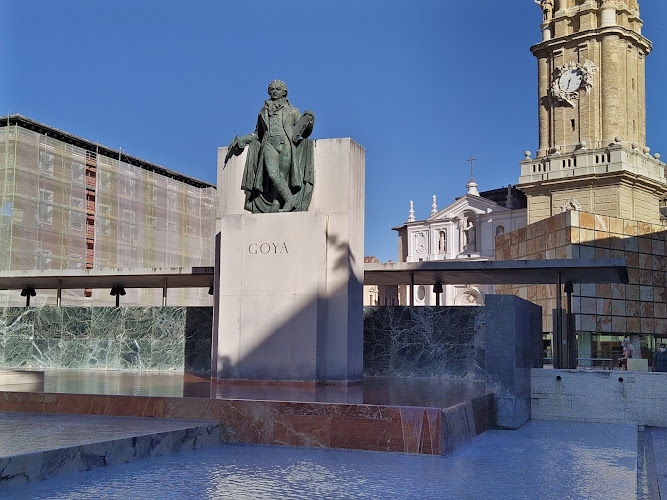
Monumento a Francisco de Goya
About Monumento a Francisco de Goya
Description
The Monumento a Francisco de Goya is one of those stops in Zaragoza that quietly ties the city’s past to the present. Set on the broad, open expanse of Plaza de Nuestra Señora del Pilar, this sculpture ensemble salutes the Aragonese painter who shook up European art: Francisco de Goya y Lucientes. Visitors stepping into the heart of Zaragoza will find Goya right there—composed, keen-eyed, and very much at home among the basilica towers, the river breeze, and the hum of everyday life.
What makes this place special isn’t just the central statue of Goya. The monument, designed by architect José Beltrán Navarro with sculptures by the Catalan artist Federico Marès, is a thoughtful composition of bronze and stone inaugurated in 1960. Goya appears as the revered master and the curious observer, the painter who understood court splendor and street grit. Around him, figures dressed as majos and majas (those stylish 18th-century Madrileños Goya immortalized in his tapestry cartoons) remind visitors that he celebrated daily life and values long before “costumbrista” became a neat label in textbooks.
Beyond the sculptural poetry, there’s a tangible Zaragoza story here. Goya was born in nearby Fuendetodos and grew up in the city, trained as a young pintor, and later became pintor de cámara del rey for the Bourbon court. He painted frescoes in the Basilica de Nuestra Señora del Pilar just steps away, including the radiant Regina Martyrum dome—so when you see him honored in this square, it’s less a coincidence, more a homecoming. The monument doubles as public art—arte público—woven into the everyday rhythm of the plaza. Children chase pigeons, school groups pause for a talk, and travelers line up a shot with the Basilica as the backdrop. It’s the kind of place where a free, five-minute look can turn into a lingering half hour because the setting keeps unfolding.
Most travelers remark on the monument’s elegance and the way it slots into the “big trio” of nearby sights: the Basilica, La Seo Cathedral, and the Lonja. Some say the experience is a quick photo-op—and that’s fair. There’s no ticketed museum inside, no docents pacing with clipboards. But give it time. The inscription on the stone—Goya’s reflection on fantasy and reason—still stirs modern souls. The sculpted majos y majas feel surprisingly contemporary in their swagger. And the plaza’s scale—clean lines, water features nearby, broad pavements—lets the whole ensemble breathe. As monuments go, this one is easygoing, public-facing, and honest. It’s not trying to overwhelm you; it’s inviting you to look closer.
In practical terms, it’s accessible and welcoming. The approach is step-free and smooth, the space wide enough for wheelchairs, strollers, and group visits. The surrounding Casco Antiguo is wonderfully walkable, and the monument is free and open at all hours. Night photography is superb when the plaza lights glow, and even on a windy day (Zaragoza’s famous cierzo has opinions), the statue of Goya stands steady—like he’s seen worse and painted it.
Why does this matter to travelers? Because understanding Zaragoza without Goya would be like visiting Madrid without noticing Velázquez, or Seville without hearing flamenco. Goya’s fingerprints are all over the city’s cultural heritage. He’s the artist behind the Black Paintings, the Maja series, and The Third of May 1808—the one every art student remembers. He documented war, society, and human folly in ways that feel uncomfortably current. And standing before the Monumento a Goya, with the Basilica de Nuestra Señora del Pilar just behind, it all clicks into place: the artist, the city, and the ongoing conversation between reason and imagination.
Key Features
- Evocative ensemble: The statue of Goya and companion groups of majos and majas by sculptor Federico Marès, set on a stone composition by architect José Beltrán Navarro.
- Historic context: A tribute to one of Spain’s artistic geniuses—Francisco de Goya—whose life connects Fuendetodos, Zaragoza, Madrid, and beyond.
- Signature inscription: Goya’s famous thought on fantasy and reason, echoing his lifelong tug-of-war between imagination and truth.
- Prime location: In the Plaza del Pilar in Zaragoza (Casco Antiguo), steps from the Basilica de Nuestra Señora del Pilar, La Seo Cathedral, and La Lonja.
- Photo-ready angles: Align the statue of Goya with basilica towers, capture the sculpted majos in profile, or shoot at blue hour for cinematic results.
- Open 24/7: Free, no tickets, no barriers—ideal for early birds, families, and travelers with tight schedules.
- Wheelchair-friendly approach: Smooth surfaces and wide space around the monument; an easy stop for all mobility levels.
- Kid-approved: Safe, open plaza with plenty to see; nearby fountains and street life help hold short attention spans.
- Great pairing: Combine with Museo Goya (Colección Ibercaja), La Seo, and the Ebro River walk for a half-day circuit.
- Gateway to local flavor: From Calle Alfonso I to El Tubo tapas streets, the monument sits near some of the city’s best bites and coffee stops.
Best Time to Visit
Zaragoza is famous for its light—hard, crystalline on summer afternoons, soft and honeyed in spring and autumn. For the Monumento a Francisco de Goya, the sweet spot is early morning or late afternoon when the sun rakes the statues and pulls texture from the bronze and stone. Blue hour (just after sunset) is stunning; the whole Plaza del Pilar settles into a calm glow, and Goya seems to lean forward in conversation with the basilica’s towers.
Spring (April to June) and autumn (September to early November) are the most comfortable seasons for lingering outdoors. Summer can be toasty—think 30°C+—so plan a morning visit, then duck into a museum or café when the heat hits. Winter is perfectly manageable, just bring layers for the cierzo, the brisk north wind that sweeps through the Ebro Valley and will redecorate your hairstyle without asking.
October brings the Fiestas del Pilar, Zaragoza’s biggest celebration. The atmosphere is electric—music, events, crowds—but it’s not the moment for a quiet photo session at the monument. If you’re chasing serenity and clean frames, go at sunrise or swing back later in the week once the festivities wind down.
How to Get There
The monument stands in the heart of Zaragoza’s Casco Antiguo, within Plaza del Pilar, so reaching it is straightforward.
- On foot from the historic center: Follow Calle Alfonso I toward the basilica; the square opens like a stage, and the Monumento a Goya appears near La Lonja and La Seo. The walk from Plaza España takes roughly 10–12 minutes.
- By tram: Take the city tram (Line 1) and hop off at Plaza del Pilar–Murallas or César Augusto. From either stop, it’s a short, flat stroll to the plaza.
- By bus: Several city lines serve the central area around the Basilica and Coso. Look for routes heading to Plaza del Pilar or nearby stops along Avenida César Augusto and El Coso; it’s then a few minutes’ walk.
- From Zaragoza-Delicias station: A taxi to Plaza del Pilar usually takes about 10–15 minutes depending on traffic. Public buses and the tram also connect the station to the center if you prefer a budget option.
- By car: Driving into the old town is possible but not particularly relaxing. If you must, use one of the underground car parks near the square or by the river, then continue on foot. Street parking is limited and regulated.
Good news for families and travelers with mobility needs: the plaza’s surfaces are mostly level and broad, making navigation simple with wheelchairs or strollers.
Tips for Visiting
Consider these practical ideas to make the most of a stop at the Monumento a Francisco de Goya in Zaragoza, Spain:
- Build a half-day route: Start at the Monumento a Goya, step into the Basilica de Nuestra Señora del Pilar (note respectful attire if a service is in progress), continue to La Seo Cathedral to admire its Mudéjar heritage, and peek inside La Lonja when exhibitions are on. Wrap up at Museo Goya for context on the artist’s life and works.
- Expect it to be free and always open: The monument is an open-air tribute—no tickets and no line. It’s ideal for a quick cultural stop that still feels meaningful.
- Photography playbook: For crisp portrait-style shots of the statue of Goya, aim for early morning when the plaza is calm. For drama, try twilight: the basilica lights and the bronze surfaces produce bold contrasts. Use a wide lens to catch Goya and the basilica’s towers in one frame, then a tighter lens for the majos y majas details.
- Learn-on-the-go: While the monument itself doesn’t have an audio guide, city walking tours often include it, and the nearby tourist office can point you toward guided routes that fold in Plaza del Pilar in Zaragoza and the surrounding landmarks. Museo Goya offers excellent interpretation; pairing both experiences bridges the art and the place.
- Read the message: Goya’s inscription about fantasy and reason isn’t just decoration; it’s a manifesto. Keep it in mind when you later encounter his Disasters of War etchings or the Black Paintings in other cities—it connects the cheerful majos here with the darker truths he painted elsewhere.
- Think kid-friendly: Children tend to enjoy the open plaza and the lively scene. Set clear boundaries around any shallow water features, then reward patience with a chocolate-dipped fruta or ice cream nearby. The stop is short and satisfying—perfect for small attention spans.
- Watch the weather: Zaragoza summers run hot and dry; bring a hat, sunscreen, and water. In winter, the cierzo can be brisk—gloves and a snug scarf help. If the wind kicks up, use buildings as a shield while you photograph.
- Respect the setting: Plaza del Pilar is both civic stage and sacred space. If a religious event is underway, keep a quiet profile and give worshippers space. Drones are not a good idea here—crowds, heritage buildings, and regulations don’t mix well.
- Safety commonsense: It’s a busy public area. Keep an eye on bags and pockets, especially at peak times and festivals. Pickpocketing is uncommon but not unheard of when cameras come out and attention narrows.
- Stay curious: Ask, what did Goya mean to Zaragoza? Answer: almost everything. He trained here, painted for the Basilica, returned often in memory and myth. This is why the Ayuntamiento de Zaragoza treats the monument as living heritage rather than a standalone statue.
- Small detail many miss: The sculpted clothing on the majos y majas nods directly to Goya’s tapestry cartoons in Madrid. Seen up close, the posture and folds suggest movement—he didn’t just depict society; he caught it mid-gesture.
- Timing for quiet: If you want the plaza mostly to yourself, sunrise on a weekday is golden. The bells might keep time for you, the basilica staff moves softly, and suddenly it’s just you and Goya—well, you and a few pigeons.
Travelers often wonder whether the Monumento a Goya is “worth it” compared with the blockbusters like the Aljafería Palace or the Basilica. The short answer is yes, but in a different key. The monument is a calibration point. It’s where Zaragoza, the heart of Aragon, tips its hat to the artist who painted its ceilings and its soul. It doesn’t demand hours; it leaves you free to wander, and somehow, that freedom feels very Goya—reason and fantasy, standing side by side in the open air.
For those planning a day-by-day Zaragoza itinerary, a smart sequence is: morning at the Monumento a Francisco de Goya and the Basilica de Nuestra Señora del Pilar, late morning at La Seo, lunch in El Tubo (tapear a gusto), afternoon at Museo Goya, and sunset across the Puente de Piedra for river views. Each step ties back to Goya in a different way—public square, sacred art, civic heritage, personal works, and the landscape that shaped him.
If there’s one takeaway to tuck into your pocket: the “statue of Goya” isn’t just a statue. It’s a compact, open-air lesson in why Zaragoza matters to Spanish art, and why Goya still matters to us. Stand in front of him for a minute, then turn around and look at the basilica domes. That conversation between canvas and city is the whole point. And it’s free, outdoors, and open whenever you happen to arrive.
Key Features
- Central bronze statue of Francisco de Goya on a high pedestal
- Allegorical figures and reliefs referencing Goya’s themes
- Prominent location in Plaza de la Virgen del Pilar (Plaza del Pilar)
- Close visual dialogue with nearby landmarks like La Seo and the Basilica del Pilar
- Accessible open setting ideal for photography and brief reflection
More Details
Updated November 3, 2025
Table of Contents
Description
The Monumento a Francisco de Goya is one of those stops in Zaragoza that quietly ties the city’s past to the present. Set on the broad, open expanse of Plaza de Nuestra Señora del Pilar, this sculpture ensemble salutes the Aragonese painter who shook up European art: Francisco de Goya y Lucientes. Visitors stepping into the heart of Zaragoza will find Goya right there—composed, keen-eyed, and very much at home among the basilica towers, the river breeze, and the hum of everyday life.
What makes this place special isn’t just the central statue of Goya. The monument, designed by architect José Beltrán Navarro with sculptures by the Catalan artist Federico Marès, is a thoughtful composition of bronze and stone inaugurated in 1960. Goya appears as the revered master and the curious observer, the painter who understood court splendor and street grit. Around him, figures dressed as majos and majas (those stylish 18th-century Madrileños Goya immortalized in his tapestry cartoons) remind visitors that he celebrated daily life and values long before “costumbrista” became a neat label in textbooks.
Beyond the sculptural poetry, there’s a tangible Zaragoza story here. Goya was born in nearby Fuendetodos and grew up in the city, trained as a young pintor, and later became pintor de cámara del rey for the Bourbon court. He painted frescoes in the Basilica de Nuestra Señora del Pilar just steps away, including the radiant Regina Martyrum dome—so when you see him honored in this square, it’s less a coincidence, more a homecoming. The monument doubles as public art—arte público—woven into the everyday rhythm of the plaza. Children chase pigeons, school groups pause for a talk, and travelers line up a shot with the Basilica as the backdrop. It’s the kind of place where a free, five-minute look can turn into a lingering half hour because the setting keeps unfolding.
Most travelers remark on the monument’s elegance and the way it slots into the “big trio” of nearby sights: the Basilica, La Seo Cathedral, and the Lonja. Some say the experience is a quick photo-op—and that’s fair. There’s no ticketed museum inside, no docents pacing with clipboards. But give it time. The inscription on the stone—Goya’s reflection on fantasy and reason—still stirs modern souls. The sculpted majos y majas feel surprisingly contemporary in their swagger. And the plaza’s scale—clean lines, water features nearby, broad pavements—lets the whole ensemble breathe. As monuments go, this one is easygoing, public-facing, and honest. It’s not trying to overwhelm you; it’s inviting you to look closer.
In practical terms, it’s accessible and welcoming. The approach is step-free and smooth, the space wide enough for wheelchairs, strollers, and group visits. The surrounding Casco Antiguo is wonderfully walkable, and the monument is free and open at all hours. Night photography is superb when the plaza lights glow, and even on a windy day (Zaragoza’s famous cierzo has opinions), the statue of Goya stands steady—like he’s seen worse and painted it.
Why does this matter to travelers? Because understanding Zaragoza without Goya would be like visiting Madrid without noticing Velázquez, or Seville without hearing flamenco. Goya’s fingerprints are all over the city’s cultural heritage. He’s the artist behind the Black Paintings, the Maja series, and The Third of May 1808—the one every art student remembers. He documented war, society, and human folly in ways that feel uncomfortably current. And standing before the Monumento a Goya, with the Basilica de Nuestra Señora del Pilar just behind, it all clicks into place: the artist, the city, and the ongoing conversation between reason and imagination.
Key Features
- Evocative ensemble: The statue of Goya and companion groups of majos and majas by sculptor Federico Marès, set on a stone composition by architect José Beltrán Navarro.
- Historic context: A tribute to one of Spain’s artistic geniuses—Francisco de Goya—whose life connects Fuendetodos, Zaragoza, Madrid, and beyond.
- Signature inscription: Goya’s famous thought on fantasy and reason, echoing his lifelong tug-of-war between imagination and truth.
- Prime location: In the Plaza del Pilar in Zaragoza (Casco Antiguo), steps from the Basilica de Nuestra Señora del Pilar, La Seo Cathedral, and La Lonja.
- Photo-ready angles: Align the statue of Goya with basilica towers, capture the sculpted majos in profile, or shoot at blue hour for cinematic results.
- Open 24/7: Free, no tickets, no barriers—ideal for early birds, families, and travelers with tight schedules.
- Wheelchair-friendly approach: Smooth surfaces and wide space around the monument; an easy stop for all mobility levels.
- Kid-approved: Safe, open plaza with plenty to see; nearby fountains and street life help hold short attention spans.
- Great pairing: Combine with Museo Goya (Colección Ibercaja), La Seo, and the Ebro River walk for a half-day circuit.
- Gateway to local flavor: From Calle Alfonso I to El Tubo tapas streets, the monument sits near some of the city’s best bites and coffee stops.
Best Time to Visit
Zaragoza is famous for its light—hard, crystalline on summer afternoons, soft and honeyed in spring and autumn. For the Monumento a Francisco de Goya, the sweet spot is early morning or late afternoon when the sun rakes the statues and pulls texture from the bronze and stone. Blue hour (just after sunset) is stunning; the whole Plaza del Pilar settles into a calm glow, and Goya seems to lean forward in conversation with the basilica’s towers.
Spring (April to June) and autumn (September to early November) are the most comfortable seasons for lingering outdoors. Summer can be toasty—think 30°C+—so plan a morning visit, then duck into a museum or café when the heat hits. Winter is perfectly manageable, just bring layers for the cierzo, the brisk north wind that sweeps through the Ebro Valley and will redecorate your hairstyle without asking.
October brings the Fiestas del Pilar, Zaragoza’s biggest celebration. The atmosphere is electric—music, events, crowds—but it’s not the moment for a quiet photo session at the monument. If you’re chasing serenity and clean frames, go at sunrise or swing back later in the week once the festivities wind down.
How to Get There
The monument stands in the heart of Zaragoza’s Casco Antiguo, within Plaza del Pilar, so reaching it is straightforward.
- On foot from the historic center: Follow Calle Alfonso I toward the basilica; the square opens like a stage, and the Monumento a Goya appears near La Lonja and La Seo. The walk from Plaza España takes roughly 10–12 minutes.
- By tram: Take the city tram (Line 1) and hop off at Plaza del Pilar–Murallas or César Augusto. From either stop, it’s a short, flat stroll to the plaza.
- By bus: Several city lines serve the central area around the Basilica and Coso. Look for routes heading to Plaza del Pilar or nearby stops along Avenida César Augusto and El Coso; it’s then a few minutes’ walk.
- From Zaragoza-Delicias station: A taxi to Plaza del Pilar usually takes about 10–15 minutes depending on traffic. Public buses and the tram also connect the station to the center if you prefer a budget option.
- By car: Driving into the old town is possible but not particularly relaxing. If you must, use one of the underground car parks near the square or by the river, then continue on foot. Street parking is limited and regulated.
Good news for families and travelers with mobility needs: the plaza’s surfaces are mostly level and broad, making navigation simple with wheelchairs or strollers.
Tips for Visiting
Consider these practical ideas to make the most of a stop at the Monumento a Francisco de Goya in Zaragoza, Spain:
- Build a half-day route: Start at the Monumento a Goya, step into the Basilica de Nuestra Señora del Pilar (note respectful attire if a service is in progress), continue to La Seo Cathedral to admire its Mudéjar heritage, and peek inside La Lonja when exhibitions are on. Wrap up at Museo Goya for context on the artist’s life and works.
- Expect it to be free and always open: The monument is an open-air tribute—no tickets and no line. It’s ideal for a quick cultural stop that still feels meaningful.
- Photography playbook: For crisp portrait-style shots of the statue of Goya, aim for early morning when the plaza is calm. For drama, try twilight: the basilica lights and the bronze surfaces produce bold contrasts. Use a wide lens to catch Goya and the basilica’s towers in one frame, then a tighter lens for the majos y majas details.
- Learn-on-the-go: While the monument itself doesn’t have an audio guide, city walking tours often include it, and the nearby tourist office can point you toward guided routes that fold in Plaza del Pilar in Zaragoza and the surrounding landmarks. Museo Goya offers excellent interpretation; pairing both experiences bridges the art and the place.
- Read the message: Goya’s inscription about fantasy and reason isn’t just decoration; it’s a manifesto. Keep it in mind when you later encounter his Disasters of War etchings or the Black Paintings in other cities—it connects the cheerful majos here with the darker truths he painted elsewhere.
- Think kid-friendly: Children tend to enjoy the open plaza and the lively scene. Set clear boundaries around any shallow water features, then reward patience with a chocolate-dipped fruta or ice cream nearby. The stop is short and satisfying—perfect for small attention spans.
- Watch the weather: Zaragoza summers run hot and dry; bring a hat, sunscreen, and water. In winter, the cierzo can be brisk—gloves and a snug scarf help. If the wind kicks up, use buildings as a shield while you photograph.
- Respect the setting: Plaza del Pilar is both civic stage and sacred space. If a religious event is underway, keep a quiet profile and give worshippers space. Drones are not a good idea here—crowds, heritage buildings, and regulations don’t mix well.
- Safety commonsense: It’s a busy public area. Keep an eye on bags and pockets, especially at peak times and festivals. Pickpocketing is uncommon but not unheard of when cameras come out and attention narrows.
- Stay curious: Ask, what did Goya mean to Zaragoza? Answer: almost everything. He trained here, painted for the Basilica, returned often in memory and myth. This is why the Ayuntamiento de Zaragoza treats the monument as living heritage rather than a standalone statue.
- Small detail many miss: The sculpted clothing on the majos y majas nods directly to Goya’s tapestry cartoons in Madrid. Seen up close, the posture and folds suggest movement—he didn’t just depict society; he caught it mid-gesture.
- Timing for quiet: If you want the plaza mostly to yourself, sunrise on a weekday is golden. The bells might keep time for you, the basilica staff moves softly, and suddenly it’s just you and Goya—well, you and a few pigeons.
Travelers often wonder whether the Monumento a Goya is “worth it” compared with the blockbusters like the Aljafería Palace or the Basilica. The short answer is yes, but in a different key. The monument is a calibration point. It’s where Zaragoza, the heart of Aragon, tips its hat to the artist who painted its ceilings and its soul. It doesn’t demand hours; it leaves you free to wander, and somehow, that freedom feels very Goya—reason and fantasy, standing side by side in the open air.
For those planning a day-by-day Zaragoza itinerary, a smart sequence is: morning at the Monumento a Francisco de Goya and the Basilica de Nuestra Señora del Pilar, late morning at La Seo, lunch in El Tubo (tapear a gusto), afternoon at Museo Goya, and sunset across the Puente de Piedra for river views. Each step ties back to Goya in a different way—public square, sacred art, civic heritage, personal works, and the landscape that shaped him.
If there’s one takeaway to tuck into your pocket: the “statue of Goya” isn’t just a statue. It’s a compact, open-air lesson in why Zaragoza matters to Spanish art, and why Goya still matters to us. Stand in front of him for a minute, then turn around and look at the basilica domes. That conversation between canvas and city is the whole point. And it’s free, outdoors, and open whenever you happen to arrive.
Key Highlights
- Central bronze statue of Francisco de Goya on a high pedestal
- Allegorical figures and reliefs referencing Goya’s themes
- Prominent location in Plaza de la Virgen del Pilar (Plaza del Pilar)
- Close visual dialogue with nearby landmarks like La Seo and the Basilica del Pilar
- Accessible open setting ideal for photography and brief reflection
Location
Places to Stay Near Monumento a Francisco de Goya
Find and Book a Tour
Explore More Travel Guides
No reviews found! Be the first to review!
Traveler Reviews for Monumento a Francisco de Goya
There are no reviews yet. Be the first one to write one.
Have you visited Monumento a Francisco de Goya? Help other travelers by sharing your review.
Nearby Attractions
You Might Also Like

Sala de Exposiciones La Lonja
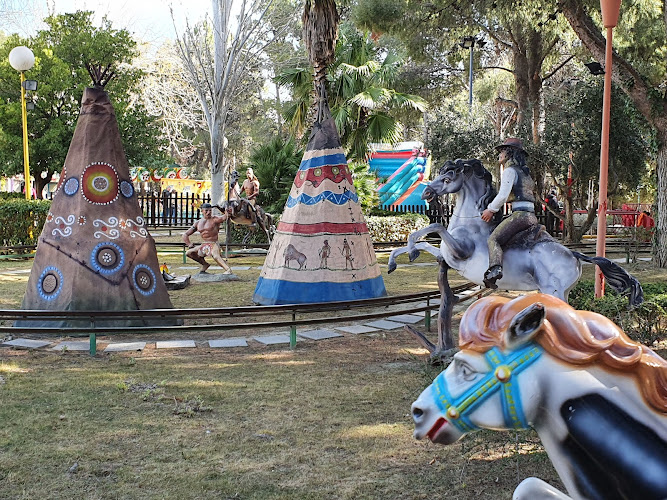
Zaragoza Amusement Park

Arco del Deán
Find Accommodations Nearby
Recommended Tours & Activities
Visitor Reviews
There are no reviews yet. Be the first one to write one.
Share Your Experience
Have you visited Monumento a Francisco de Goya? Help other travelers by leaving a review.