
Matsugamine Catholic Church
About Matsugamine Catholic Church
Description
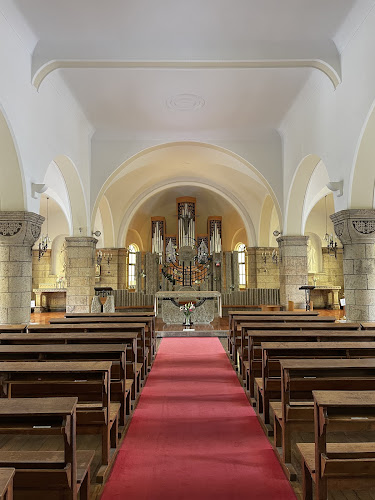
Standing as a remarkable testament to early 20th-century ecclesiastical architecture, Matsugamine Catholic Church represents one of those rare discoveries that catches you completely off guard. Completed in 1932, this Romanesque-style beauty showcases construction techniques and materials that were quite unusual for its time in Japan. The entire structure was built using Oya stone, an igneous rock quarried from the Tochigi Prefecture, giving the church a distinctive greenish-gray appearance that honestly looks unlike anything else you'll encounter during your travels through the country. What struck me most during my own visit was just how European this place feels while still maintaining something uniquely Japanese in its presence. The architects really committed to the Romanesque vision here, with rounded arches, thick walls, and that solid, fortress-like quality that defines the style. But there's this interesting juxtaposition because you're standing in Japan, surrounded by completely different architectural traditions, which makes the whole experience a bit surreal in the best possible way. The church houses a magnificent pipe organ that absolutely deserves its own mention. This isn't just some decorative piece - it's a fully functional instrument that fills the stone interior with incredible acoustics. I've been lucky enough to hear it played during a service, and let me tell you, the sound bouncing off those Oya stone walls creates something almost otherworldly. The reverberation is just perfect, neither too echo-y nor too dampened. For travelers who appreciate religious architecture, historical buildings, or just places with genuine character, Matsugamine Catholic Church delivers something special. It's not overly touristy, which I personally appreciate. You won't find massive tour buses or crowds jostling for photos. Instead, you get a more contemplative experience that lets you really absorb the craftsmanship and atmosphere at your own pace.Key Features
The church offers several distinctive elements that make it worth adding to your itinerary:- Complete construction from Oya stone, an igneous volcanic rock with distinctive texture and coloring that's been used in Japanese architecture for centuries but rarely for entire church buildings
- Authentic Romanesque architectural design featuring rounded arches, barrel vaults, and massive walls that create that characteristic medieval European aesthetic
- Large pipe organ with exceptional acoustics thanks to the stone interior, offering regular performances and serving as a centerpiece of the church's musical heritage
- Historical significance as a 1932 structure that survived various challenges including World War II, maintaining its original character and integrity
- Wheelchair accessible parking facilities making it available to visitors with mobility considerations
- Restroom amenities on-site, which honestly isn't always guaranteed at historical religious buildings in Japan
- Active place of worship that continues serving its original purpose while welcoming respectful visitors
- Photography opportunities both inside and outside, with the stone facade providing particularly striking images in different lighting conditions
- Relatively quiet atmosphere compared to major tourist attractions, allowing for genuine reflection and appreciation
- Unique cultural crossroads where Western religious architecture meets Japanese craftsmanship and materials
Best Time to Visit
Timing your visit to Matsugamine Catholic Church can really enhance the overall experience. From my observations and conversations with locals, the sweet spot tends to be during spring or autumn when weather conditions are most pleasant and the surrounding landscape adds extra beauty to the setting. Spring brings cherry blossoms to the area, and while the church itself isn't surrounded by sakura trees, the contrast between delicate pink blossoms and solid gray stone creates some memorable photo opportunities if you explore the neighborhood. The mild temperatures during April and May also mean you can comfortably spend time examining the exterior details without freezing or melting. Autumn, particularly October through early November, might actually be the optimal choice. The fall foliage provides gorgeous backdrop colors, and there's something about the crisp air that just works with stone architecture. Plus, you're avoiding both the humid Japanese summer and the potentially harsh winter conditions. If you're interested in experiencing the church as a living, breathing place of worship rather than just a tourist attraction, attending a service can be incredibly rewarding. Sunday morning masses showcase the pipe organ and give you a sense of the acoustic properties and community atmosphere. Just remember to be respectful of the religious proceedings - this isn't a performance for tourists, it's genuine worship. Weather-wise, I'd suggest avoiding the rainy season in June and July. Oya stone when wet can look beautiful, sure, but navigating around the exterior and parking areas becomes less pleasant. And the humidity during those months can make the stone interior feel a bit clammy. Weekdays generally see fewer visitors than weekends, so if you prefer a quieter, more contemplative experience, aim for Tuesday through Thursday. Early mornings right after the church opens or late afternoons about an hour before closing tend to be the calmest periods regardless of day. Winter visits have their own charm - the stone looks particularly dramatic against snow, and the interior feels cozy despite the cold materials. But be prepared for chilly temperatures since these old stone buildings don't exactly have modern heating systems.How to Get There
Getting to Matsugamine Catholic Church requires a bit of planning since it's not located right in the center of major tourist districts, but that's partly what makes it special. The journey itself becomes part of the experience. For most international travelers, you'll likely be coming from Tokyo. The train system remains your best bet, though you'll need to combine rail travel with either walking, taxi, or local bus depending on your mobility preferences and budget. The nearest major station serves as your gateway, from which point you've got several options. Taking a taxi from the station offers the most straightforward approach, especially if you're traveling with companions to split the cost. The ride takes about 10 to 15 minutes depending on traffic, and drivers generally know the church even if your Japanese pronunciation isn't perfect. I always keep the Japanese name written down on my phone to show drivers just in case. Local buses do run in the area, but fair warning - the bus system can be confusing if you're not familiar with Japanese transit networks. Routes don't always follow intuitive patterns, and stops aren't always announced in English. That said, if you're feeling adventurous and have time to spare, figuring out the local bus can feel like a small victory and saves you some money. Walking from the station is absolutely doable for those who enjoy exploring on foot. It takes roughly 25 to 30 minutes at a casual pace, and you'll pass through residential neighborhoods that give you a glimpse of everyday Japanese life beyond the tourist zones. I actually recommend this option if weather permits and you're not carrying heavy luggage. If you're driving, the church provides wheelchair accessible parking, which is convenient though spaces can fill up during services or special events. GPS navigation works reliably, and you can input the church name in either Japanese or English depending on your system. Coming from other regions of Japan, check train connections to the nearest major hub first, then follow the local transportation options mentioned above. The Japanese rail system makes day trips quite feasible from surrounding prefectures.Tips for Visiting
Making the most of your visit requires understanding both the practical aspects and the cultural context. First and foremost, remember this is an active place of worship, not just a historical monument. Respectful behavior isn't just appreciated - it's essential. That means keeping voices low, dressing modestly (covering shoulders and knees), and refraining from disruptive behavior during services. Photography policies can vary, so it's best to ask permission before snapping away inside the church. The exterior is generally fine to photograph, but interior photography during services might be restricted or prohibited. I learned this the slightly embarrassing way during my first visit, so save yourself that awkward moment. The restroom facilities are available, which is genuinely helpful, but come prepared just in case. Carrying tissues and hand sanitizer remains good practice when visiting any attraction in Japan, even those with facilities. Wheelchair accessibility extends to the parking lot, but the church itself has some areas that might be challenging depending on mobility levels. The main worship area is accessible, though certain sections or features might require navigating steps. If you have specific accessibility needs, contacting the church beforehand can help you plan accordingly. Timing your visit outside of service hours gives you more freedom to explore at leisure, but attending a service provides that authentic cultural and spiritual experience. If you do attend a service, arrive a few minutes early and observe what regular attendees do - when they stand, sit, or kneel. You're not expected to participate in communion if you're not Catholic, and it's perfectly acceptable to remain seated during those portions. The Oya stone construction means the interior stays relatively cool even in summer, so bringing a light jacket isn't a bad idea regardless of season. Conversely, winter visits can be genuinely cold inside despite any heating, so layer up. Don't rush your visit. One of the beautiful things about Matsugamine Catholic Church is that it rewards slow, careful observation. Notice the details in the stonework, the way light filters through the windows, the craftsmanship in the woodwork around the organ. These elements tell stories about the builders, the era, and the community that created this space. If you're interested in the musical aspect, check whether any concerts or special performances are scheduled during your visit. The church occasionally hosts organ recitals that showcase the instrument's capabilities in a more formal setting than regular services. Combine your church visit with exploration of the surrounding neighborhood for a fuller experience. Local cafes and small shops in the area provide opportunities to decompress and reflect after your visit while supporting local businesses. Finally, approach your visit with an open mind. Whether you're religious or not, whether you typically enjoy church architecture or not, Matsugamine Catholic Church has this way of surprising people. It's that combination of unexpected location, unique materials, historical perseverance, and continued active use that creates something memorable. And isn't that really what travel's about - finding those places that stick with you long after you've returned home?Key Features
- Complete construction from Oya stone, an igneous volcanic rock with distinctive texture and coloring that's been used in Japanese architecture for centuries but rarely for entire church buildings
- Authentic Romanesque architectural design featuring rounded arches, barrel vaults, and massive walls that create that characteristic medieval European aesthetic
- Large pipe organ with exceptional acoustics thanks to the stone interior, offering regular performances and serving as a centerpiece of the church's musical heritage
- Historical significance as a 1932 structure that survived various challenges including World War II, maintaining its original character and integrity
- Wheelchair accessible parking facilities making it available to visitors with mobility considerations
- Restroom amenities on-site, which honestly isn't always guaranteed at historical religious buildings in Japan
- Active place of worship that continues serving its original purpose while welcoming respectful visitors
- Photography opportunities both inside and outside, with the stone facade providing particularly striking images in different lighting conditions
More Details
Updated March 30, 2026
Table of Contents
Description
Standing as a remarkable testament to early 20th-century ecclesiastical architecture, Matsugamine Catholic Church represents one of those rare discoveries that catches you completely off guard. Completed in 1932, this Romanesque-style beauty showcases construction techniques and materials that were quite unusual for its time in Japan. The entire structure was built using Oya stone, an igneous rock quarried from the Tochigi Prefecture, giving the church a distinctive greenish-gray appearance that honestly looks unlike anything else you’ll encounter during your travels through the country.
What struck me most during my own visit was just how European this place feels while still maintaining something uniquely Japanese in its presence. The architects really committed to the Romanesque vision here, with rounded arches, thick walls, and that solid, fortress-like quality that defines the style. But there’s this interesting juxtaposition because you’re standing in Japan, surrounded by completely different architectural traditions, which makes the whole experience a bit surreal in the best possible way.
The church houses a magnificent pipe organ that absolutely deserves its own mention. This isn’t just some decorative piece – it’s a fully functional instrument that fills the stone interior with incredible acoustics. I’ve been lucky enough to hear it played during a service, and let me tell you, the sound bouncing off those Oya stone walls creates something almost otherworldly. The reverberation is just perfect, neither too echo-y nor too dampened.
For travelers who appreciate religious architecture, historical buildings, or just places with genuine character, Matsugamine Catholic Church delivers something special. It’s not overly touristy, which I personally appreciate. You won’t find massive tour buses or crowds jostling for photos. Instead, you get a more contemplative experience that lets you really absorb the craftsmanship and atmosphere at your own pace.
Key Features
The church offers several distinctive elements that make it worth adding to your itinerary:
- Complete construction from Oya stone, an igneous volcanic rock with distinctive texture and coloring that’s been used in Japanese architecture for centuries but rarely for entire church buildings
- Authentic Romanesque architectural design featuring rounded arches, barrel vaults, and massive walls that create that characteristic medieval European aesthetic
- Large pipe organ with exceptional acoustics thanks to the stone interior, offering regular performances and serving as a centerpiece of the church’s musical heritage
- Historical significance as a 1932 structure that survived various challenges including World War II, maintaining its original character and integrity
- Wheelchair accessible parking facilities making it available to visitors with mobility considerations
- Restroom amenities on-site, which honestly isn’t always guaranteed at historical religious buildings in Japan
- Active place of worship that continues serving its original purpose while welcoming respectful visitors
- Photography opportunities both inside and outside, with the stone facade providing particularly striking images in different lighting conditions
- Relatively quiet atmosphere compared to major tourist attractions, allowing for genuine reflection and appreciation
- Unique cultural crossroads where Western religious architecture meets Japanese craftsmanship and materials
Best Time to Visit
Timing your visit to Matsugamine Catholic Church can really enhance the overall experience. From my observations and conversations with locals, the sweet spot tends to be during spring or autumn when weather conditions are most pleasant and the surrounding landscape adds extra beauty to the setting.
Spring brings cherry blossoms to the area, and while the church itself isn’t surrounded by sakura trees, the contrast between delicate pink blossoms and solid gray stone creates some memorable photo opportunities if you explore the neighborhood. The mild temperatures during April and May also mean you can comfortably spend time examining the exterior details without freezing or melting.
Autumn, particularly October through early November, might actually be the optimal choice. The fall foliage provides gorgeous backdrop colors, and there’s something about the crisp air that just works with stone architecture. Plus, you’re avoiding both the humid Japanese summer and the potentially harsh winter conditions.
If you’re interested in experiencing the church as a living, breathing place of worship rather than just a tourist attraction, attending a service can be incredibly rewarding. Sunday morning masses showcase the pipe organ and give you a sense of the acoustic properties and community atmosphere. Just remember to be respectful of the religious proceedings – this isn’t a performance for tourists, it’s genuine worship.
Weather-wise, I’d suggest avoiding the rainy season in June and July. Oya stone when wet can look beautiful, sure, but navigating around the exterior and parking areas becomes less pleasant. And the humidity during those months can make the stone interior feel a bit clammy.
Weekdays generally see fewer visitors than weekends, so if you prefer a quieter, more contemplative experience, aim for Tuesday through Thursday. Early mornings right after the church opens or late afternoons about an hour before closing tend to be the calmest periods regardless of day.
Winter visits have their own charm – the stone looks particularly dramatic against snow, and the interior feels cozy despite the cold materials. But be prepared for chilly temperatures since these old stone buildings don’t exactly have modern heating systems.
How to Get There
Getting to Matsugamine Catholic Church requires a bit of planning since it’s not located right in the center of major tourist districts, but that’s partly what makes it special. The journey itself becomes part of the experience.
For most international travelers, you’ll likely be coming from Tokyo. The train system remains your best bet, though you’ll need to combine rail travel with either walking, taxi, or local bus depending on your mobility preferences and budget. The nearest major station serves as your gateway, from which point you’ve got several options.
Taking a taxi from the station offers the most straightforward approach, especially if you’re traveling with companions to split the cost. The ride takes about 10 to 15 minutes depending on traffic, and drivers generally know the church even if your Japanese pronunciation isn’t perfect. I always keep the Japanese name written down on my phone to show drivers just in case.
Local buses do run in the area, but fair warning – the bus system can be confusing if you’re not familiar with Japanese transit networks. Routes don’t always follow intuitive patterns, and stops aren’t always announced in English. That said, if you’re feeling adventurous and have time to spare, figuring out the local bus can feel like a small victory and saves you some money.
Walking from the station is absolutely doable for those who enjoy exploring on foot. It takes roughly 25 to 30 minutes at a casual pace, and you’ll pass through residential neighborhoods that give you a glimpse of everyday Japanese life beyond the tourist zones. I actually recommend this option if weather permits and you’re not carrying heavy luggage.
If you’re driving, the church provides wheelchair accessible parking, which is convenient though spaces can fill up during services or special events. GPS navigation works reliably, and you can input the church name in either Japanese or English depending on your system.
Coming from other regions of Japan, check train connections to the nearest major hub first, then follow the local transportation options mentioned above. The Japanese rail system makes day trips quite feasible from surrounding prefectures.
Tips for Visiting
Making the most of your visit requires understanding both the practical aspects and the cultural context. First and foremost, remember this is an active place of worship, not just a historical monument. Respectful behavior isn’t just appreciated – it’s essential. That means keeping voices low, dressing modestly (covering shoulders and knees), and refraining from disruptive behavior during services.
Photography policies can vary, so it’s best to ask permission before snapping away inside the church. The exterior is generally fine to photograph, but interior photography during services might be restricted or prohibited. I learned this the slightly embarrassing way during my first visit, so save yourself that awkward moment.
The restroom facilities are available, which is genuinely helpful, but come prepared just in case. Carrying tissues and hand sanitizer remains good practice when visiting any attraction in Japan, even those with facilities.
Wheelchair accessibility extends to the parking lot, but the church itself has some areas that might be challenging depending on mobility levels. The main worship area is accessible, though certain sections or features might require navigating steps. If you have specific accessibility needs, contacting the church beforehand can help you plan accordingly.
Timing your visit outside of service hours gives you more freedom to explore at leisure, but attending a service provides that authentic cultural and spiritual experience. If you do attend a service, arrive a few minutes early and observe what regular attendees do – when they stand, sit, or kneel. You’re not expected to participate in communion if you’re not Catholic, and it’s perfectly acceptable to remain seated during those portions.
The Oya stone construction means the interior stays relatively cool even in summer, so bringing a light jacket isn’t a bad idea regardless of season. Conversely, winter visits can be genuinely cold inside despite any heating, so layer up.
Don’t rush your visit. One of the beautiful things about Matsugamine Catholic Church is that it rewards slow, careful observation. Notice the details in the stonework, the way light filters through the windows, the craftsmanship in the woodwork around the organ. These elements tell stories about the builders, the era, and the community that created this space.
If you’re interested in the musical aspect, check whether any concerts or special performances are scheduled during your visit. The church occasionally hosts organ recitals that showcase the instrument’s capabilities in a more formal setting than regular services.
Combine your church visit with exploration of the surrounding neighborhood for a fuller experience. Local cafes and small shops in the area provide opportunities to decompress and reflect after your visit while supporting local businesses.
Finally, approach your visit with an open mind. Whether you’re religious or not, whether you typically enjoy church architecture or not, Matsugamine Catholic Church has this way of surprising people. It’s that combination of unexpected location, unique materials, historical perseverance, and continued active use that creates something memorable. And isn’t that really what travel’s about – finding those places that stick with you long after you’ve returned home?
Key Highlights
- Complete construction from Oya stone, an igneous volcanic rock with distinctive texture and coloring that's been used in Japanese architecture for centuries but rarely for entire church buildings
- Authentic Romanesque architectural design featuring rounded arches, barrel vaults, and massive walls that create that characteristic medieval European aesthetic
- Large pipe organ with exceptional acoustics thanks to the stone interior, offering regular performances and serving as a centerpiece of the church's musical heritage
- Historical significance as a 1932 structure that survived various challenges including World War II, maintaining its original character and integrity
- Wheelchair accessible parking facilities making it available to visitors with mobility considerations
- Restroom amenities on-site, which honestly isn't always guaranteed at historical religious buildings in Japan
- Active place of worship that continues serving its original purpose while welcoming respectful visitors
- Photography opportunities both inside and outside, with the stone facade providing particularly striking images in different lighting conditions
Location
Places to Stay Near Matsugamine Catholic Church
Find and Book a Tour
Explore More Travel Guides
No reviews found! Be the first to review!
Matsugamine Catholic Church is a prominent attractions located in Utsunomiya.
Visit us at: 1 Chome-1-5 Matsugamine, Utsunomiya, Tochigi 320-0807, Japan.
Traveler Reviews for Matsugamine Catholic Church
There are no reviews yet. Be the first one to write one.
Have you visited Matsugamine Catholic Church? Help other travelers by sharing your review.
You Might Also Like
Utsunomiya English Centre (UEC)
Hachimanyama Park Adventure Bridge
Ōya Temple (Oya Kannon)
Find Accommodations Nearby
Recommended Tours & Activities
Visitor Reviews
There are no reviews yet. Be the first one to write one.
Share Your Experience
Have you visited Matsugamine Catholic Church? Help other travelers by leaving a review.