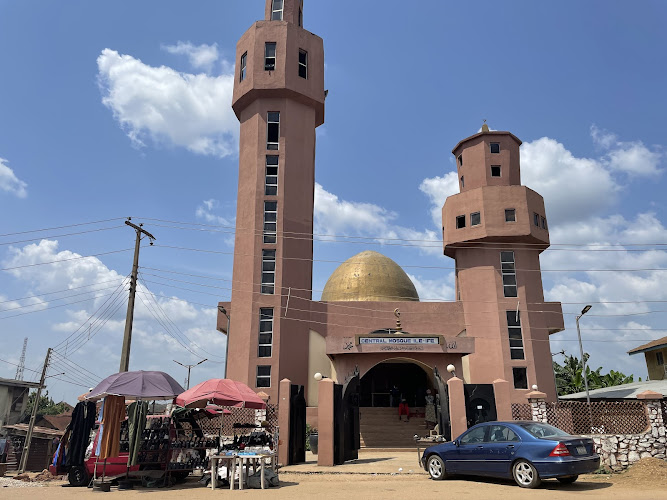
Perched in the historic heart of Ilé-Ifè, the Ile Ife Central Mosque is a quietly elegant landmark that blends religious function with local heritage. Dating back many decades as one of the older mosques in southwestern Nigeria, it serves both congregants and visitors seeking to understand the role of Islam within Yoruba culture. The building’s modest yet dignified architecture—set near Enuwa Square and close to traditional shrines and Ifa temples—creates a striking contrast that highlights Ilé-Ifè’s layered spiritual landscape. Visitors come for the serene atmosphere, to observe daily prayers, and to witness communal life during Friday Jumuʿah services and Islamic festivals. The mosque’s location on Oduduwa College Street places it within easy walking distance of civic and cultural sites, making it a meaningful stop on a broader exploration of the ancient city. Respectful visitors will find the mosque an accessible window into local religious practices and a reminder of Ilé-Ifè’s living traditions.
Highlights & Key Features
Historic mosque serving the Ilé-Ifè Muslim community
Located on Oduduwa Coll Street near Enuwa Square
Close to traditional Yoruba shrines and Ifa temples, offering cultural contrast
Active daily prayers and larger gatherings for Friday Jumuʿah
Easily reachable on foot from central Ife attractions
Visitor Guide & Information
Description
The Ile Ife Central Mosque stands as one of the most significant religious landmarks in Ile Ife, a city deeply rooted in Yoruba culture and history. For travelers exploring the spiritual landscape of southwestern Nigeria, this mosque represents an important destination that offers insight into the Islamic faith as practiced in this ancient city. The mosque serves as a central gathering place for the local Muslim community and welcomes visitors who wish to understand more about Islamic worship practices in this region.
What makes this mosque particularly interesting for travelers is its role as a bridge between traditional Yoruba heritage and Islamic religious practice. Ile Ife itself is known as the cradle of Yoruba civilization, and seeing how Islam has woven itself into the cultural fabric of this historic city provides a fascinating perspective on religious diversity in West Africa. The mosque’s architecture reflects local building traditions while maintaining the essential elements required for Islamic worship.
Visitors to the mosque will find that it’s more than just a place of prayer. It functions as a community center where educational activities take place and where the local Muslim population gathers for important religious observances. The atmosphere around the mosque is generally peaceful, though it can become quite busy during Friday prayers and major Islamic holidays. I’ve found that religious sites like this offer some of the most authentic cultural experiences when traveling, as long as visitors approach them with respect and genuine curiosity.
Key Features
The Ile Ife Central Mosque offers several notable features that make it worth including in your travel itinerary:
Wheelchair accessible entrance that makes the mosque welcoming to visitors with mobility challenges, which is unfortunately not always the case with religious buildings in the region
Dedicated parking area with wheelchair accessible spaces, making it convenient for those arriving by vehicle
Clean restroom facilities available for visitors, which is an important practical consideration when planning your day
Prayer hall that accommodates a large congregation, particularly impressive during Friday prayers when the community gathers
Opportunity to observe authentic Islamic worship practices in a West African context, providing educational value for those interested in comparative religion
Location within walking distance of other Ile Ife attractions, making it easy to incorporate into a broader tour of the city
Welcoming atmosphere for respectful visitors who wish to learn about Islam, though it’s always best to visit outside of prayer times if you’re not participating in worship
Integration of local architectural elements that reflect the Yoruba cultural context while maintaining Islamic design principles
Best Time to Visit
Planning when to visit the Ile Ife Central Mosque requires some thought about what you want to experience. If you’re hoping to witness the mosque at its most active and see the community in worship, Friday between noon and 2 PM is when the main congregational prayer takes place. This weekly gathering draws the largest crowds and provides the most authentic experience of Islamic community worship. But be prepared for crowds and remember that during this time, the focus is on prayer, not tourism.
For travelers who want to explore the mosque more quietly and perhaps have conversations with community members, weekday mornings or late afternoons work better. You’ll find fewer people around, and locals may have more time to answer questions or show you around. I always think there’s something special about visiting religious sites during their quieter moments – you can really absorb the atmosphere without feeling like you’re intruding.
The dry season from November through March offers the most comfortable weather conditions for your visit. Nigerian heat can be intense, and since you’ll likely be covering up appropriately to enter the mosque, cooler months make the experience more enjoyable. Ramadan presents a unique opportunity if you’re interested in Islamic culture, as the mosque takes on special significance during this holy month. However, be aware that schedules shift significantly during Ramadan, with evening prayers and breaking of fast becoming major community events.
Major Islamic holidays like Eid al-Fitr and Eid al-Adha transform the mosque into a celebration center. These occasions provide incredible cultural experiences, but they’re also when the mosque is most crowded and when your presence as a non-Muslim visitor might be most intrusive. If you do visit during these times, it’s absolutely essential to coordinate with someone from the mosque community beforehand.
Avoid visiting during the five daily prayer times if you’re not planning to participate in worship, as these are sacred moments for the congregation. The mosque gets particularly busy for Asr (afternoon) and Maghrib (sunset) prayers when many worshippers stop by after work.
How to Get There
Getting to the Ile Ife Central Mosque is relatively straightforward once you’ve made it to Ile Ife itself. The city is well-connected to other major Nigerian cities, particularly Lagos and Ibadan, through a network of roads that are generally in decent condition.
If you’re coming from Lagos, the journey takes about four to five hours by road, depending on traffic conditions. Many travelers hire a car with a driver for the journey, which costs more than public transport but offers comfort and flexibility. Alternatively, you can take one of the many buses that run between Lagos and Ile Ife daily. And honestly, the bus journey provides its own kind of cultural immersion, though be prepared for frequent stops and varying comfort levels.
From Ibadan, the trip is shorter – roughly two hours – and the road conditions are generally good. Once you arrive in Ile Ife, motorcycle taxis (known locally as okadas) are probably the quickest way to reach the mosque, though they’re not for everyone. If you’re uncomfortable on the back of a motorcycle weaving through traffic, regular taxis are available and not terribly expensive.
The mosque’s location in a central area of Ile Ife means most taxi drivers will know exactly where you mean when you mention it. But having the location saved on your phone’s map application provides backup if there’s any confusion. The surrounding streets are navigable by car, and as mentioned earlier, there’s parking available at the mosque itself.
For international travelers, the nearest airport is in Akure, about 90 minutes away, though most people fly into Lagos and make the overland journey from there. Some adventurous travelers have told me they’ve arranged stays at Obafemi Awolowo University in Ile Ife and used that as a base for exploring the city’s religious and cultural sites.
Tips for Visiting
Visiting a mosque in Nigeria requires cultural sensitivity and practical preparation. First and foremost, dress modestly. Men should wear long pants and shirts that cover their shoulders. Women need to cover their heads with a scarf, wear long sleeves, and ensure their legs are covered. Some women travelers carry a light scarf specifically for visiting religious sites – it doesn’t take much space in your bag and saves you from being turned away.
Remove your shoes before entering the prayer hall. You’ll see a designated area for shoes, and I recommend keeping an eye on where you leave them or bringing a bag to carry them. It sounds paranoid, but shoes do occasionally go missing at busy times.
Time your visit thoughtfully. As I mentioned earlier, arriving during prayer times when you’re not praying creates awkwardness for everyone. If you do arrive and find prayer in progress, wait respectfully outside or in a designated visitor area. Never walk in front of someone who’s praying or interrupt ongoing worship in any way.
Photography deserves careful consideration. Many mosques in Nigeria don’t prohibit photography outright, but always ask permission first. Taking photos during prayer is generally inappropriate. Some worshippers don’t want to be photographed for religious or personal reasons, so if you’re including people in your shots, get explicit consent.
Women should be aware that some areas of the mosque might be separated by gender. Don’t take offense at this – it’s standard practice in many mosques worldwide. If you’re traveling as a mixed-gender group, you might be separated during your visit.
Engage with local community members if the opportunity arises. Many Muslims are happy to discuss their faith and practices with genuinely interested visitors. But remember that people at the mosque are there primarily for worship, not to serve as tour guides. If someone seems busy or uninterested in chatting, respect that.
Bring water and perhaps some small bills for donation. While there’s no entrance fee, mosques welcome contributions to support their operations. Even a small donation is appreciated and considered good etiquette.
Learn a few basic Arabic greetings. “As-salamu alaykum” (peace be upon you) goes a long way in showing respect. Most people will respond warmly to your effort, even if your pronunciation isn’t perfect.
Finally, approach your visit with an open mind and genuine respect. Religious tourism can be incredibly rewarding when done thoughtfully, but it requires checking your assumptions and prejudices at the door. The Ile Ife Central Mosque offers a window into how Islam is lived and practiced in this corner of Nigeria, and that’s a privilege that comes with responsibilities.
The Ile Ife Central Mosque stands as one of the most significant religious landmarks in Ile Ife, a city deeply rooted in Yoruba culture and history. For travelers exploring the spiritual landscape of southwestern Nigeria, this mosque represents an important destination that offers insight into the Islamic faith as practiced in this ancient city. The mosque serves as a central gathering place for the local Muslim community and welcomes visitors who wish to understand more about Islamic worship practices in this region.
What makes this mosque particularly interesting for travelers is its role as a bridge between traditional Yoruba heritage and Islamic religious practice. Ile Ife itself is known as the cradle of Yoruba civilization, and seeing how Islam has woven itself into the cultural fabric of this historic city provides a fascinating perspective on religious diversity in West Africa. The mosque’s architecture reflects local building traditions while maintaining the essential elements required for Islamic worship.
Visitors to the mosque will find that it’s more than just a place of prayer. It functions as a community center where educational activities take place and where the local Muslim population gathers for important religious observances. The atmosphere around the mosque is generally peaceful, though it can become quite busy during Friday prayers and major Islamic holidays. I’ve found that religious sites like this offer some of the most authentic cultural experiences when traveling, as long as visitors approach them with respect and genuine curiosity.
Key Features
The Ile Ife Central Mosque offers several notable features that make it worth including in your travel itinerary:
Wheelchair accessible entrance that makes the mosque welcoming to visitors with mobility challenges, which is unfortunately not always the case with religious buildings in the region
Dedicated parking area with wheelchair accessible spaces, making it convenient for those arriving by vehicle
Clean restroom facilities available for visitors, which is an important practical consideration when planning your day
Prayer hall that accommodates a large congregation, particularly impressive during Friday prayers when the community gathers
Opportunity to observe authentic Islamic worship practices in a West African context, providing educational value for those interested in comparative religion
Location within walking distance of other Ile Ife attractions, making it easy to incorporate into a broader tour of the city
Welcoming atmosphere for respectful visitors who wish to learn about Islam, though it’s always best to visit outside of prayer times if you’re not participating in worship
Integration of local architectural elements that reflect the Yoruba cultural context while maintaining Islamic design principles
Best Time to Visit
Planning when to visit the Ile Ife Central Mosque requires some thought about what you want to experience. If you’re hoping to witness the mosque at its most active and see the community in worship, Friday between noon and 2 PM is when the main congregational prayer takes place. This weekly gathering draws the largest crowds and provides the most authentic experience of Islamic community worship. But be prepared for crowds and remember that during this time, the focus is on prayer, not tourism.
For travelers who want to explore the mosque more quietly and perhaps have conversations with community members, weekday mornings or late afternoons work better. You’ll find fewer people around, and locals may have more time to answer questions or show you around. I always think there’s something special about visiting religious sites during their quieter moments – you can really absorb the atmosphere without feeling like you’re intruding.
The dry season from November through March offers the most comfortable weather conditions for your visit. Nigerian heat can be intense, and since you’ll likely be covering up appropriately to enter the mosque, cooler months make the experience more enjoyable. Ramadan presents a unique opportunity if you’re interested in Islamic culture, as the mosque takes on special significance during this holy month. However, be aware that schedules shift significantly during Ramadan, with evening prayers and breaking of fast becoming major community events.
Major Islamic holidays like Eid al-Fitr and Eid al-Adha transform the mosque into a celebration center. These occasions provide incredible cultural experiences, but they’re also when the mosque is most crowded and when your presence as a non-Muslim visitor might be most intrusive. If you do visit during these times, it’s absolutely essential to coordinate with someone from the mosque community beforehand.
Avoid visiting during the five daily prayer times if you’re not planning to participate in worship, as these are sacred moments for the congregation. The mosque gets particularly busy for Asr (afternoon) and Maghrib (sunset) prayers when many worshippers stop by after work.
How to Get There
Getting to the Ile Ife Central Mosque is relatively straightforward once you’ve made it to Ile Ife itself. The city is well-connected to other major Nigerian cities, particularly Lagos and Ibadan, through a network of roads that are generally in decent condition.
If you’re coming from Lagos, the journey takes about four to five hours by road, depending on traffic conditions. Many travelers hire a car with a driver for the journey, which costs more than public transport but offers comfort and flexibility. Alternatively, you can take one of the many buses that run between Lagos and Ile Ife daily. And honestly, the bus journey provides its own kind of cultural immersion, though be prepared for frequent stops and varying comfort levels.
From Ibadan, the trip is shorter – roughly two hours – and the road conditions are generally good. Once you arrive in Ile Ife, motorcycle taxis (known locally as okadas) are probably the quickest way to reach the mosque, though they’re not for everyone. If you’re uncomfortable on the back of a motorcycle weaving through traffic, regular taxis are available and not terribly expensive.
The mosque’s location in a central area of Ile Ife means most taxi drivers will know exactly where you mean when you mention it. But having the location saved on your phone’s map application provides backup if there’s any confusion. The surrounding streets are navigable by car, and as mentioned earlier, there’s parking available at the mosque itself.
For international travelers, the nearest airport is in Akure, about 90 minutes away, though most people fly into Lagos and make the overland journey from there. Some adventurous travelers have told me they’ve arranged stays at Obafemi Awolowo University in Ile Ife and used that as a base for exploring the city’s religious and cultural sites.
Tips for Visiting
Visiting a mosque in Nigeria requires cultural sensitivity and practical preparation. First and foremost, dress modestly. Men should wear long pants and shirts that cover their shoulders. Women need to cover their heads with a scarf, wear long sleeves, and ensure their legs are covered. Some women travelers carry a light scarf specifically for visiting religious sites – it doesn’t take much space in your bag and saves you from being turned away.
Remove your shoes before entering the prayer hall. You’ll see a designated area for shoes, and I recommend keeping an eye on where you leave them or bringing a bag to carry them. It sounds paranoid, but shoes do occasionally go missing at busy times.
Time your visit thoughtfully. As I mentioned earlier, arriving during prayer times when you’re not praying creates awkwardness for everyone. If you do arrive and find prayer in progress, wait respectfully outside or in a designated visitor area. Never walk in front of someone who’s praying or interrupt ongoing worship in any way.
Photography deserves careful consideration. Many mosques in Nigeria don’t prohibit photography outright, but always ask permission first. Taking photos during prayer is generally inappropriate. Some worshippers don’t want to be photographed for religious or personal reasons, so if you’re including people in your shots, get explicit consent.
Women should be aware that some areas of the mosque might be separated by gender. Don’t take offense at this – it’s standard practice in many mosques worldwide. If you’re traveling as a mixed-gender group, you might be separated during your visit.
Engage with local community members if the opportunity arises. Many Muslims are happy to discuss their faith and practices with genuinely interested visitors. But remember that people at the mosque are there primarily for worship, not to serve as tour guides. If someone seems busy or uninterested in chatting, respect that.
Bring water and perhaps some small bills for donation. While there’s no entrance fee, mosques welcome contributions to support their operations. Even a small donation is appreciated and considered good etiquette.
Learn a few basic Arabic greetings. “As-salamu alaykum” (peace be upon you) goes a long way in showing respect. Most people will respond warmly to your effort, even if your pronunciation isn’t perfect.
Finally, approach your visit with an open mind and genuine respect. Religious tourism can be incredibly rewarding when done thoughtfully, but it requires checking your assumptions and prejudices at the door. The Ile Ife Central Mosque offers a window into how Islam is lived and practiced in this corner of Nigeria, and that’s a privilege that comes with responsibilities.
Key Highlights
Historic mosque serving the Ilé-Ifè Muslim community
Located on Oduduwa Coll Street near Enuwa Square
Close to traditional Yoruba shrines and Ifa temples, offering cultural contrast
Active daily prayers and larger gatherings for Friday Jumuʿah
Easily reachable on foot from central Ife attractions
Explore verified points of interest within walking or short transit distance.
No neighboring places mapped within 5 km yet.
Find Places to Stay Nearby
Stay22 provides this accommodation search. We may earn a commission if you book through it; verify current prices and terms with the provider.
🗺️
Interactive accommodation map requires marketing cookies to display live rates.
Recommended Experiences & Activities
GetYourGuide provides this tour inventory. We may earn a commission if you book through it; verify current availability, prices, and terms with the provider.
Top Viator Experiences & Guided Tours in Ife
We may earn a commission if you book through links on this page at no extra cost to you. All tours feature verified customer reviews and flexible cancellation options.