
Grünes Gewölbe
About Grünes Gewölbe
Description
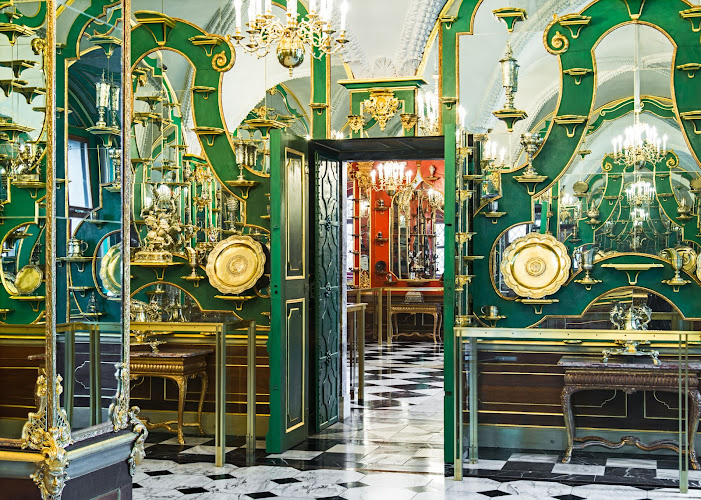
The Grünes Gewölbe, or Green Vault, represents one of those rare museum experiences that genuinely takes your breath away – and I don't say that lightly after visiting countless treasure rooms across Europe. Located in Dresden's historic Residenzschloss, this extraordinary collection houses what many consider the most spectacular treasury museum in the Western world. The name comes from the malachite-green columns that once adorned the original rooms, though you'll find the treasures themselves far more dazzling than any architectural detail. What sets this place apart from your typical museum visit is the sheer audacity of what's on display. We're talking about objects so elaborately crafted, so impossibly detailed, that you'll find yourself questioning whether human hands could actually create such things. The court jeweler Dinglinger spent years – sometimes decades – on individual pieces, and it shows in every facet and flourish. The museum operates across two distinct exhibition areas, which honestly enhances the whole experience. The Historic Green Vault recreates the original Baroque chamber of wonders exactly as Augustus the Strong envisioned it in the early 18th century. Walking through these rooms feels like stepping into a time capsule where excess wasn't just acceptable but celebrated. Meanwhile, the New Green Vault takes a more modern approach, displaying individual masterpieces in climate-controlled glass cases under perfect lighting conditions. Both sections complement each other beautifully, though they require separate tickets – more on that later. Dresden itself suffered catastrophic bombing during World War II, and many of these treasures were actually saved because they'd been moved to safety beforehand. The painstaking reconstruction and restoration work that went into bringing the Green Vault back to its former glory is almost as impressive as the collection itself. You can still sense that weight of history as you move through the spaces.Key Features
The Green Vault's collection spans categories that most museums would need separate wings to accommodate, yet here everything flows together in a symphony of craftsmanship: • The Court of Delhi on the Birthday of the Grand Mogul stands as Johann Melchior Dinglinger's masterpiece – a miniature court scene featuring 137 figures, 32 of them enameled, decorated with over 5,000 diamonds and numerous other precious stones. This single piece took Dinglinger and his workshop seven years to complete. • An extensive collection of ivory carvings that showcase technical virtuosity you honestly have to see to believe, including entire maritime scenes carved from single tusks. • The Dresden Green Diamond, a 41-carat natural green diamond that's one of the largest and finest of its kind in the world. The stone has this peculiar history of being purchased at a Leipzig fair in 1742. • Elaborate drinking vessels fashioned from nautilus shells, ostrich eggs, and other exotic materials, mounted in gold and jewels – because apparently drinking from a regular cup was far too mundane for 17th-century royalty. • The Cherry Stone with 185 Faces, a cherry pit carved with 185 microscopic faces that you'll need the provided magnifying equipment to even comprehend. • Precious stone vessels carved from single pieces of jasper, agate, and other semi-precious stones, demonstrating lapidary skills that have largely disappeared from modern practice. • An impressive array of jewelry, including the Saxon White diamonds and numerous historic pieces that make contemporary crown jewels look almost understated. • Amber artworks that push the material beyond what most people think possible, including entire decorative objects and intricate carvings. • Dinglinger's Golden Coffee Service, which includes a complete tea, coffee, and chocolate service crafted from gold – because silver was apparently too pedestrian. • Bronze statuettes and small-scale sculptures that demonstrate the artistic range beyond just jewelry and decorative arts.Best Time to Visit
Timing your visit to the Grünes Gewölbe requires more strategy than you might expect for a museum. The Historic Green Vault admits only 100 visitors per hour in timed entry slots, which creates an intimate viewing experience but also means you absolutely cannot just show up and hope for the best during peak season. Spring months from April through May offer a sweet spot when Dresden's weather becomes pleasant but before the summer tourist rush really kicks in. You'll have better luck securing tickets without booking months in advance, and the city itself becomes quite lovely as the gardens around the Zwinger and along the Elbe bloom. Early autumn, particularly September and early October, provides another excellent window. The summer crowds have thinned but the weather remains cooperative for exploring Dresden between museum visits. Plus, the fall light streaming through the palace windows adds another dimension to the already spectacular displays. Avoid July and August if you can – not only does Dresden fill with tourists, but the heat can make the palace less comfortable despite modern climate control. December brings Christmas markets that make Dresden absolutely magical, but good luck getting Historic Green Vault tickets unless you've booked far ahead. As for time of day, early morning slots (right when they open) tend to be less crowded even during busy seasons. Late afternoon can work well too, especially for the New Green Vault which doesn't require timed entry. And honestly? Give yourself at least three hours total if you're seeing both sections. Rushing through defeats the entire purpose.How to Get There
Dresden makes reaching the Grünes Gewölbe remarkably straightforward, which is refreshing compared to some European attractions that seem deliberately hidden. The museum sits right in the historic Altstadt (Old Town), making it walkable from most central Dresden hotels. If you're arriving by train at Dresden Hauptbahnhof, the main railway station, you've got about a 15-minute walk through the city center. Follow Prager Strasse toward the Altstadt, and you'll naturally flow toward the palace complex. Trams 4, 8, and 9 also run from the Hauptbahnhof toward the Altstadt if you'd rather ride than walk. The nearest tram stop is actually Theaterplatz, serviced by multiple lines including the 1, 2, and 4. From there, the Residenzschloss is literally right across the plaza. Dresden's tram system is clean, efficient, and honestly one of the better urban transit systems I've encountered in Germany. Day passes make financial sense if you're using transit more than twice. Driving into central Dresden isn't particularly recommended – the Altstadt is largely pedestrianized, and parking can be frustrating. However, wheelchair accessible parking does exist at the museum for visitors who need it, which should be arranged in advance. From Dresden Airport, which is surprisingly small and manageable, the S-Bahn line S2 runs directly to the main station in about 20 minutes. The airport itself sits only about 9 kilometers from the city center. Walking remains the best option for most visitors staying centrally. The approach to the Residenzschloss through Dresden's beautifully reconstructed Baroque center is part of the experience. You'll pass the Semperoper, the Zwinger, and the Frauenkirche along the way.Tips for Visiting
Book your Historic Green Vault tickets well in advance – and I mean weeks or even months during summer. The limited admission creates scarcity that's real, not artificial. The New Green Vault allows same-day tickets, so consider that as a backup if you're visiting spontaneously. Photography isn't permitted in the Historic Green Vault, which initially frustrated me until I realized how much more I actually observed without a camera between me and the objects. The New Green Vault does allow photos without flash. Just leave the camera in your bag for the historic section and be present with what you're seeing. The combination ticket covering both vault sections plus other palace museums provides good value, but only purchase it if you genuinely have time to explore beyond the vaults. Don't buy an extensive ticket package then rush through everything. Storage lockers are available (and mandatory) for bags larger than A4 size. The security measures are thorough but necessary given the collection's value. Plan extra time for security procedures, especially during busy periods. Wear comfortable shoes because you'll be standing and slowly walking for extended periods. The floors are hard, and while you could theoretically speed through, doing so would miss the entire point. Consider renting the audio guide, which provides context that transforms beautiful objects into comprehensible narratives. The plaques alone don't always convey the full story behind these pieces. Visit the cafe on-site before or after rather than trying to squeeze in a meal between vault sections. The quick break helps process what you've seen, and honestly, your brain needs time to absorb this level of visual richness. Wheelchair accessibility throughout the complex is genuinely good, with elevators and accessible restrooms available. The museum takes accessibility seriously, which isn't always the case with historic buildings. If you're traveling with children, consider whether they're ready for this experience. The "good for kids" designation is technically accurate, but children under ten often lack the patience for careful observation of small objects behind glass. The discounts exist, but maybe save this one for slightly older kids who can appreciate craftsmanship. Morning visits offer the best lighting in many rooms, as natural light still plays a role in how you experience certain sections. The interplay between artificial and natural illumination was part of the original design. Finally, manage your expectations about crowds in the Historic Green Vault. Yes, 100 people per hour sounds manageable, but in those relatively intimate spaces, you'll still need patience to view popular pieces. The New Green Vault can feel more crowded despite lacking time limits because there's no admission cap. Consider combining your visit with other Dresden landmarks – the Zwinger Palace, Semperoper, and Frauenkirche are all within easy walking distance. Dresden rewards a full day or two of exploration rather than treating the Green Vault as an isolated destination.Key Features
- Key Features
- Best Time to Visit
- How to Get There
- Tips for Visiting
More Details
Updated March 30, 2026
Table of Contents
Description
The Grünes Gewölbe, or Green Vault, represents one of those rare museum experiences that genuinely takes your breath away – and I don’t say that lightly after visiting countless treasure rooms across Europe. Located in Dresden’s historic Residenzschloss, this extraordinary collection houses what many consider the most spectacular treasury museum in the Western world. The name comes from the malachite-green columns that once adorned the original rooms, though you’ll find the treasures themselves far more dazzling than any architectural detail.
What sets this place apart from your typical museum visit is the sheer audacity of what’s on display. We’re talking about objects so elaborately crafted, so impossibly detailed, that you’ll find yourself questioning whether human hands could actually create such things. The court jeweler Dinglinger spent years – sometimes decades – on individual pieces, and it shows in every facet and flourish.
The museum operates across two distinct exhibition areas, which honestly enhances the whole experience. The Historic Green Vault recreates the original Baroque chamber of wonders exactly as Augustus the Strong envisioned it in the early 18th century. Walking through these rooms feels like stepping into a time capsule where excess wasn’t just acceptable but celebrated. Meanwhile, the New Green Vault takes a more modern approach, displaying individual masterpieces in climate-controlled glass cases under perfect lighting conditions. Both sections complement each other beautifully, though they require separate tickets – more on that later.
Dresden itself suffered catastrophic bombing during World War II, and many of these treasures were actually saved because they’d been moved to safety beforehand. The painstaking reconstruction and restoration work that went into bringing the Green Vault back to its former glory is almost as impressive as the collection itself. You can still sense that weight of history as you move through the spaces.
Key Features
The Green Vault’s collection spans categories that most museums would need separate wings to accommodate, yet here everything flows together in a symphony of craftsmanship:
• The Court of Delhi on the Birthday of the Grand Mogul stands as Johann Melchior Dinglinger’s masterpiece – a miniature court scene featuring 137 figures, 32 of them enameled, decorated with over 5,000 diamonds and numerous other precious stones. This single piece took Dinglinger and his workshop seven years to complete.
• An extensive collection of ivory carvings that showcase technical virtuosity you honestly have to see to believe, including entire maritime scenes carved from single tusks.
• The Dresden Green Diamond, a 41-carat natural green diamond that’s one of the largest and finest of its kind in the world. The stone has this peculiar history of being purchased at a Leipzig fair in 1742.
• Elaborate drinking vessels fashioned from nautilus shells, ostrich eggs, and other exotic materials, mounted in gold and jewels – because apparently drinking from a regular cup was far too mundane for 17th-century royalty.
• The Cherry Stone with 185 Faces, a cherry pit carved with 185 microscopic faces that you’ll need the provided magnifying equipment to even comprehend.
• Precious stone vessels carved from single pieces of jasper, agate, and other semi-precious stones, demonstrating lapidary skills that have largely disappeared from modern practice.
• An impressive array of jewelry, including the Saxon White diamonds and numerous historic pieces that make contemporary crown jewels look almost understated.
• Amber artworks that push the material beyond what most people think possible, including entire decorative objects and intricate carvings.
• Dinglinger’s Golden Coffee Service, which includes a complete tea, coffee, and chocolate service crafted from gold – because silver was apparently too pedestrian.
• Bronze statuettes and small-scale sculptures that demonstrate the artistic range beyond just jewelry and decorative arts.
Best Time to Visit
Timing your visit to the Grünes Gewölbe requires more strategy than you might expect for a museum. The Historic Green Vault admits only 100 visitors per hour in timed entry slots, which creates an intimate viewing experience but also means you absolutely cannot just show up and hope for the best during peak season.
Spring months from April through May offer a sweet spot when Dresden’s weather becomes pleasant but before the summer tourist rush really kicks in. You’ll have better luck securing tickets without booking months in advance, and the city itself becomes quite lovely as the gardens around the Zwinger and along the Elbe bloom.
Early autumn, particularly September and early October, provides another excellent window. The summer crowds have thinned but the weather remains cooperative for exploring Dresden between museum visits. Plus, the fall light streaming through the palace windows adds another dimension to the already spectacular displays.
Avoid July and August if you can – not only does Dresden fill with tourists, but the heat can make the palace less comfortable despite modern climate control. December brings Christmas markets that make Dresden absolutely magical, but good luck getting Historic Green Vault tickets unless you’ve booked far ahead.
As for time of day, early morning slots (right when they open) tend to be less crowded even during busy seasons. Late afternoon can work well too, especially for the New Green Vault which doesn’t require timed entry. And honestly? Give yourself at least three hours total if you’re seeing both sections. Rushing through defeats the entire purpose.
How to Get There
Dresden makes reaching the Grünes Gewölbe remarkably straightforward, which is refreshing compared to some European attractions that seem deliberately hidden. The museum sits right in the historic Altstadt (Old Town), making it walkable from most central Dresden hotels.
If you’re arriving by train at Dresden Hauptbahnhof, the main railway station, you’ve got about a 15-minute walk through the city center. Follow Prager Strasse toward the Altstadt, and you’ll naturally flow toward the palace complex. Trams 4, 8, and 9 also run from the Hauptbahnhof toward the Altstadt if you’d rather ride than walk.
The nearest tram stop is actually Theaterplatz, serviced by multiple lines including the 1, 2, and 4. From there, the Residenzschloss is literally right across the plaza. Dresden’s tram system is clean, efficient, and honestly one of the better urban transit systems I’ve encountered in Germany. Day passes make financial sense if you’re using transit more than twice.
Driving into central Dresden isn’t particularly recommended – the Altstadt is largely pedestrianized, and parking can be frustrating. However, wheelchair accessible parking does exist at the museum for visitors who need it, which should be arranged in advance.
From Dresden Airport, which is surprisingly small and manageable, the S-Bahn line S2 runs directly to the main station in about 20 minutes. The airport itself sits only about 9 kilometers from the city center.
Walking remains the best option for most visitors staying centrally. The approach to the Residenzschloss through Dresden’s beautifully reconstructed Baroque center is part of the experience. You’ll pass the Semperoper, the Zwinger, and the Frauenkirche along the way.
Tips for Visiting
Book your Historic Green Vault tickets well in advance – and I mean weeks or even months during summer. The limited admission creates scarcity that’s real, not artificial. The New Green Vault allows same-day tickets, so consider that as a backup if you’re visiting spontaneously.
Photography isn’t permitted in the Historic Green Vault, which initially frustrated me until I realized how much more I actually observed without a camera between me and the objects. The New Green Vault does allow photos without flash. Just leave the camera in your bag for the historic section and be present with what you’re seeing.
The combination ticket covering both vault sections plus other palace museums provides good value, but only purchase it if you genuinely have time to explore beyond the vaults. Don’t buy an extensive ticket package then rush through everything.
Storage lockers are available (and mandatory) for bags larger than A4 size. The security measures are thorough but necessary given the collection’s value. Plan extra time for security procedures, especially during busy periods.
Wear comfortable shoes because you’ll be standing and slowly walking for extended periods. The floors are hard, and while you could theoretically speed through, doing so would miss the entire point.
Consider renting the audio guide, which provides context that transforms beautiful objects into comprehensible narratives. The plaques alone don’t always convey the full story behind these pieces.
Visit the cafe on-site before or after rather than trying to squeeze in a meal between vault sections. The quick break helps process what you’ve seen, and honestly, your brain needs time to absorb this level of visual richness.
Wheelchair accessibility throughout the complex is genuinely good, with elevators and accessible restrooms available. The museum takes accessibility seriously, which isn’t always the case with historic buildings.
If you’re traveling with children, consider whether they’re ready for this experience. The “good for kids” designation is technically accurate, but children under ten often lack the patience for careful observation of small objects behind glass. The discounts exist, but maybe save this one for slightly older kids who can appreciate craftsmanship.
Morning visits offer the best lighting in many rooms, as natural light still plays a role in how you experience certain sections. The interplay between artificial and natural illumination was part of the original design.
Finally, manage your expectations about crowds in the Historic Green Vault. Yes, 100 people per hour sounds manageable, but in those relatively intimate spaces, you’ll still need patience to view popular pieces. The New Green Vault can feel more crowded despite lacking time limits because there’s no admission cap.
Consider combining your visit with other Dresden landmarks – the Zwinger Palace, Semperoper, and Frauenkirche are all within easy walking distance. Dresden rewards a full day or two of exploration rather than treating the Green Vault as an isolated destination.
Key Highlights
- Key Features
- Best Time to Visit
- How to Get There
- Tips for Visiting
Location
Places to Stay Near Grünes Gewölbe
Find and Book a Tour
Explore More Travel Guides
No reviews found! Be the first to review!
Grünes Gewölbe is a prominent museums located in Dresden.
Visit us at: Residenzschloss, Taschenberg 2, 01067 Dresden, Allemagne.
Traveler Reviews for Grünes Gewölbe
There are no reviews yet. Be the first one to write one.
Have you visited Grünes Gewölbe? Help other travelers by sharing your review.
You Might Also Like

Kamelienhaus Pillnitz
Kunsthofpassage Dresden

Nymphenbad
Find Accommodations Nearby
Recommended Tours & Activities
Visitor Reviews
There are no reviews yet. Be the first one to write one.
Share Your Experience
Have you visited Grünes Gewölbe? Help other travelers by leaving a review.