
Kunsthofpassage Dresden
About Kunsthofpassage Dresden
Description
The Kunsthofpassage Dresden represents one of those magical urban discoveries that makes you feel like you've stumbled onto something special that most tourists rush right past. Tucked away in Dresden's Äußere Neustadt district, this series of interconnected courtyards transforms what could have been ordinary residential space into an artistic playground that challenges everything you thought you knew about German architecture. I remember the first time someone told me about a courtyard where the drainpipes play music when it rains—I honestly thought they'd had one too many beers at the nearby pubs. But that's exactly what you'll find here, and it's just the beginning of what makes this place genuinely unique rather than just another Instagram stop. The passage consists of five distinct courtyards, each with its own artistic theme and personality. Created in the early 2000s by a collective of artists, architects, and local residents who wanted to breathe new life into the neighborhood, the Kunsthofpassage has evolved into a living gallery where art doesn't hang on walls—it literally surrounds you. The facades have been transformed into canvases, the architecture itself becomes sculpture, and every corner reveals something that'll make you stop and stare. What strikes most visitors is how the space manages to be both whimsical and functional. Artists maintain studios here, cafes serve coffee beneath painted archways, and boutique shops sell everything from handcrafted jewelry to quirky home decor. It's not a museum you walk through reverently—it's a working neighborhood where creativity and daily life mesh together in ways that feel organic rather than forced. The passage attracts around 1.5 million visitors annually, yet somehow it never feels overwhelmingly crowded. Maybe that's because the courtyards branch off in unexpected directions, creating pockets of discovery that distribute people naturally throughout the space. Or perhaps it's because the local residents who actually live in the apartments above have kept the area grounded in reality rather than letting it become a theme park version of artistic expression.Key Features
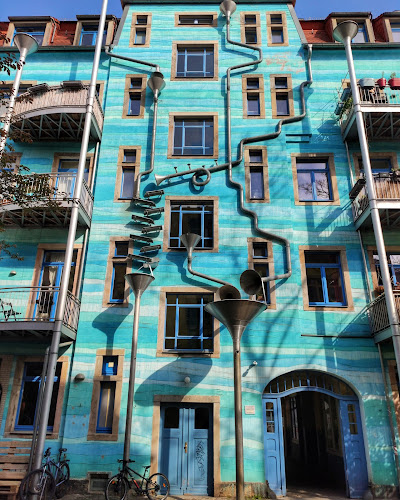
- The Court of Elements (Hof der Elemente): This is the star attraction and probably what you've seen photos of if you've done any research. The blue facade features an elaborate system of funnels, gutters, and drainpipes that creates musical sounds when rainwater flows through them. Designed by artists Annette Paul, Christoph Roßner, and André Tempel, this courtyard celebrates water as a life-giving element through both visual and auditory art.
- The Court of Light (Hof des Lichts): Features mirror installations and reflective surfaces that play with natural light throughout the day. The effect changes dramatically depending on when you visit, with morning sun creating entirely different patterns than afternoon shadows.
- The Court of Mythical Creatures (Hof der Fabelwesen): Decorated with fantastical animals and creatures that seem to climb the walls and peek from windows. Kids absolutely love this one, and honestly so do adults who haven't completely lost their sense of wonder.
- The Court of Metamorphoses (Hof der Metamorphosen): Celebrates transformation and change through its evolving artistic displays and the way natural elements interact with the painted surfaces.
- The Court of Animals (Hof der Tiere): Features playful depictions of various creatures in bright colors that bring joy to what might otherwise be a standard European courtyard.
- Independent Boutiques: Shops selling handmade goods, vintage items, local crafts, and unusual gifts that you won't find in standard souvenir stores.
- Artist Studios: Working spaces where local creators actually produce their art, occasionally visible to passersby through large windows.
- Outdoor Cafes: Several spots to grab coffee, pastries, or light meals while surrounded by the artistic atmosphere.
- Wheelchair Accessible: The courtyards feature accessible entrances, making them navigable for visitors with mobility considerations.
- Family-Friendly Environment: The interactive nature of the art and the relatively contained space makes it suitable for children who might get restless in traditional museums.
Best Time to Visit
Here's where things get interesting, because the "best" time really depends on what experience you're after. Most travel guides will tell you to visit during spring or summer when the weather's pleasant and the outdoor cafes are in full swing. And sure, that's lovely. But they're missing something important. If you want to experience the Court of Elements as it was truly intended, you need to visit during light rain. I know, I know—nobody plans a vacation around drizzly weather. But hear me out. The musical drainpipe system only comes alive when water's flowing through it, creating sounds that range from gentle tinkling to deeper, almost bell-like tones. Checking the weather forecast and timing your visit for a light shower adds a completely different dimension to the experience. That said, if you're not willing to gamble on precipitation, late spring (May through early June) offers a sweet spot of decent weather, manageable tourist numbers, and longer daylight hours. The courtyards face different directions, so the play of light and shadow changes throughout the day—photographers particularly love the golden hour just before sunset when warm light hits the colorful facades. Summer weekends can get genuinely crowded, especially between 11 AM and 4 PM. But even then, arriving early morning (before 10 AM) or in the evening (after 6 PM) lets you explore with significantly fewer people competing for photos. Winter presents its own charm. The crowds thin out considerably, and if you're lucky enough to visit during a light snowfall, the artistic courtyards take on an almost fairytale quality. Plus, the cafes become cozy refuges where you can warm up with hot chocolate while contemplating the frozen artwork outside. Weekdays generally offer a more relaxed experience than weekends, regardless of season. The passage is accessible 24/7 since people actually live there, though shops and cafes keep their own hours, typically opening around 10 AM and closing by 6 or 7 PM.How to Get There
Getting to Kunsthofpassage is straightforward once you understand Dresden's public transportation system, which honestly works better than it has any right to. The passage sits in the Neustadt district, specifically on Alaunstraße in the Äußere Neustadt neighborhood—an area known for its alternative culture, student population, and general creative energy. From Dresden's main train station (Hauptbahnhof), you can take tram lines 7 or 8 toward the Neustadt direction. Get off at the Albertplatz stop, then it's about a 10-minute walk through increasingly interesting streets. You'll want to head north on Königsbrücker Straße, then turn onto Alaunstraße. The passage is between Alaunstraße and Görlitzer Straße, and once you're in the general area, just look for the decorative entrance—or follow the small groups of people with cameras, which usually works just as well. If you're already exploring the Neustadt district, the passage is easily walkable from most locations. The neighborhood itself deserves exploration beyond just the Kunsthofpassage, so don't rush directly there and back. The streets surrounding it feature interesting shops, cafes, and examples of post-reunification urban renewal that tell their own stories. For those who prefer cycling, Dresden's bike rental system makes two-wheeled exploration simple. The Neustadt is relatively flat and bike-friendly, with paths that make reaching the passage pleasant rather than stressful. Bike parking is available near the entrances. Driving is possible but not particularly practical. Parking in the Neustadt can be challenging, and honestly, you'd spend more time looking for a spot than you would just taking the tram. If you must drive, there are parking garages in the broader Neustadt area, but you'll still end up walking the final stretch. The beauty of the Kunsthofpassage's location is that it sits in a genuinely interesting neighborhood rather than being isolated as a standalone attraction. You can easily combine your visit with exploring the broader Neustadt area, which offers a completely different vibe from Dresden's reconstructed historical center across the river.Tips for Visiting
Photography is obviously a huge draw here, but here's something many visitors don't realize until they arrive: the courtyards are relatively narrow, and getting a full facade shot requires a wide-angle lens or some creative positioning. Your phone camera will struggle to capture everything unless you're willing to shoot in panorama mode or embrace partial compositions. Sometimes the detail shots—a single drainpipe, an individual creature, the way light hits a particular wall—end up being more interesting than trying to capture everything at once. The passage is free to enter, which shouldn't be taken for granted. There's no ticket booth, no entrance fee, no pressure to spend money. But the cafes and shops that operate here keep the area maintained and lively, so supporting them if something catches your eye helps sustain the space. The coffee's actually quite good at most spots, not just tourist-trap terrible. Since people live in the apartments surrounding these courtyards, keeping noise levels reasonable shows basic respect. It's not a library, but it's not a concert venue either. This is particularly important if you're visiting early morning or evening when residents might be sleeping or winding down. The courtyards can be slippery when wet—ironic, given that rain is when the Court of Elements performs best. Watch your footing, especially on the older cobblestones and around the drainage areas where water accumulates. Shopping at the boutiques requires a bit of time and patience. These aren't quick-browse souvenir shops with mass-produced magnets. The stores feature handcrafted items, vintage finds, and unique pieces that require actually looking rather than just grabbing. If something catches your eye, it's probably not available anywhere else. The Kunsthofpassage works wonderfully as part of a larger Neustadt exploration rather than as an isolated stop. The surrounding streets—particularly Alaunstraße, Louisenstraße, and Rothenburger Straße—feature interesting architecture, independent shops, multicultural restaurants, and a general atmosphere that feels authentically local rather than tourist-focused. If you're visiting with kids, the Court of Mythical Creatures usually holds their attention best. Let them spot and count the different animals and creatures hidden in the designs. It becomes a game that keeps them engaged while you soak in the artistic details. Don't feel pressure to visit all five courtyards in a specific order or to spend equal time in each. The passages connect in ways that let you wander naturally, and different courtyards will resonate differently with each visitor. Some people spend 20 minutes total, others linger for over an hour. There's no wrong approach. The surrounding neighborhood offers numerous dining options beyond the passage's cafes. The Neustadt is known for its diverse food scene, from traditional German restaurants to Vietnamese, Indian, and Middle Eastern options that reflect Dresden's increasingly multicultural population. Finally, remember that the Kunsthofpassage isn't ancient history—it was created in 2001. This matters because it represents relatively recent urban renewal and community-driven artistic expression rather than centuries-old tradition. Understanding this context adds depth to what you're experiencing and highlights how cities can transform neglected spaces into destinations that benefit both residents and visitors.Key Features
- Five distinct themed courtyards each with unique art and architectural details
- The ‘Singing Drainpipes’ kinetic art installation that plays music when it rains
- Independent cafés, artisan shops, galleries and resident studios
- Vibrant Neustadt atmosphere with colorful façades and street art
- Photogenic nooks and small-scale urban design ideal for photography
More Details
Updated March 30, 2026
Table of Contents
Description
The Kunsthofpassage Dresden represents one of those magical urban discoveries that makes you feel like you’ve stumbled onto something special that most tourists rush right past. Tucked away in Dresden’s Äußere Neustadt district, this series of interconnected courtyards transforms what could have been ordinary residential space into an artistic playground that challenges everything you thought you knew about German architecture.
I remember the first time someone told me about a courtyard where the drainpipes play music when it rains—I honestly thought they’d had one too many beers at the nearby pubs. But that’s exactly what you’ll find here, and it’s just the beginning of what makes this place genuinely unique rather than just another Instagram stop.
The passage consists of five distinct courtyards, each with its own artistic theme and personality. Created in the early 2000s by a collective of artists, architects, and local residents who wanted to breathe new life into the neighborhood, the Kunsthofpassage has evolved into a living gallery where art doesn’t hang on walls—it literally surrounds you. The facades have been transformed into canvases, the architecture itself becomes sculpture, and every corner reveals something that’ll make you stop and stare.
What strikes most visitors is how the space manages to be both whimsical and functional. Artists maintain studios here, cafes serve coffee beneath painted archways, and boutique shops sell everything from handcrafted jewelry to quirky home decor. It’s not a museum you walk through reverently—it’s a working neighborhood where creativity and daily life mesh together in ways that feel organic rather than forced.
The passage attracts around 1.5 million visitors annually, yet somehow it never feels overwhelmingly crowded. Maybe that’s because the courtyards branch off in unexpected directions, creating pockets of discovery that distribute people naturally throughout the space. Or perhaps it’s because the local residents who actually live in the apartments above have kept the area grounded in reality rather than letting it become a theme park version of artistic expression.
Key Features
- The Court of Elements (Hof der Elemente): This is the star attraction and probably what you’ve seen photos of if you’ve done any research. The blue facade features an elaborate system of funnels, gutters, and drainpipes that creates musical sounds when rainwater flows through them. Designed by artists Annette Paul, Christoph Roßner, and André Tempel, this courtyard celebrates water as a life-giving element through both visual and auditory art.
- The Court of Light (Hof des Lichts): Features mirror installations and reflective surfaces that play with natural light throughout the day. The effect changes dramatically depending on when you visit, with morning sun creating entirely different patterns than afternoon shadows.
- The Court of Mythical Creatures (Hof der Fabelwesen): Decorated with fantastical animals and creatures that seem to climb the walls and peek from windows. Kids absolutely love this one, and honestly so do adults who haven’t completely lost their sense of wonder.
- The Court of Metamorphoses (Hof der Metamorphosen): Celebrates transformation and change through its evolving artistic displays and the way natural elements interact with the painted surfaces.
- The Court of Animals (Hof der Tiere): Features playful depictions of various creatures in bright colors that bring joy to what might otherwise be a standard European courtyard.
- Independent Boutiques: Shops selling handmade goods, vintage items, local crafts, and unusual gifts that you won’t find in standard souvenir stores.
- Artist Studios: Working spaces where local creators actually produce their art, occasionally visible to passersby through large windows.
- Outdoor Cafes: Several spots to grab coffee, pastries, or light meals while surrounded by the artistic atmosphere.
- Wheelchair Accessible: The courtyards feature accessible entrances, making them navigable for visitors with mobility considerations.
- Family-Friendly Environment: The interactive nature of the art and the relatively contained space makes it suitable for children who might get restless in traditional museums.
Best Time to Visit
Here’s where things get interesting, because the “best” time really depends on what experience you’re after. Most travel guides will tell you to visit during spring or summer when the weather’s pleasant and the outdoor cafes are in full swing. And sure, that’s lovely. But they’re missing something important.
If you want to experience the Court of Elements as it was truly intended, you need to visit during light rain. I know, I know—nobody plans a vacation around drizzly weather. But hear me out. The musical drainpipe system only comes alive when water’s flowing through it, creating sounds that range from gentle tinkling to deeper, almost bell-like tones. Checking the weather forecast and timing your visit for a light shower adds a completely different dimension to the experience.
That said, if you’re not willing to gamble on precipitation, late spring (May through early June) offers a sweet spot of decent weather, manageable tourist numbers, and longer daylight hours. The courtyards face different directions, so the play of light and shadow changes throughout the day—photographers particularly love the golden hour just before sunset when warm light hits the colorful facades.
Summer weekends can get genuinely crowded, especially between 11 AM and 4 PM. But even then, arriving early morning (before 10 AM) or in the evening (after 6 PM) lets you explore with significantly fewer people competing for photos.
Winter presents its own charm. The crowds thin out considerably, and if you’re lucky enough to visit during a light snowfall, the artistic courtyards take on an almost fairytale quality. Plus, the cafes become cozy refuges where you can warm up with hot chocolate while contemplating the frozen artwork outside.
Weekdays generally offer a more relaxed experience than weekends, regardless of season. The passage is accessible 24/7 since people actually live there, though shops and cafes keep their own hours, typically opening around 10 AM and closing by 6 or 7 PM.
How to Get There
Getting to Kunsthofpassage is straightforward once you understand Dresden’s public transportation system, which honestly works better than it has any right to. The passage sits in the Neustadt district, specifically on Alaunstraße in the Äußere Neustadt neighborhood—an area known for its alternative culture, student population, and general creative energy.
From Dresden’s main train station (Hauptbahnhof), you can take tram lines 7 or 8 toward the Neustadt direction. Get off at the Albertplatz stop, then it’s about a 10-minute walk through increasingly interesting streets. You’ll want to head north on Königsbrücker Straße, then turn onto Alaunstraße. The passage is between Alaunstraße and Görlitzer Straße, and once you’re in the general area, just look for the decorative entrance—or follow the small groups of people with cameras, which usually works just as well.
If you’re already exploring the Neustadt district, the passage is easily walkable from most locations. The neighborhood itself deserves exploration beyond just the Kunsthofpassage, so don’t rush directly there and back. The streets surrounding it feature interesting shops, cafes, and examples of post-reunification urban renewal that tell their own stories.
For those who prefer cycling, Dresden’s bike rental system makes two-wheeled exploration simple. The Neustadt is relatively flat and bike-friendly, with paths that make reaching the passage pleasant rather than stressful. Bike parking is available near the entrances.
Driving is possible but not particularly practical. Parking in the Neustadt can be challenging, and honestly, you’d spend more time looking for a spot than you would just taking the tram. If you must drive, there are parking garages in the broader Neustadt area, but you’ll still end up walking the final stretch.
The beauty of the Kunsthofpassage’s location is that it sits in a genuinely interesting neighborhood rather than being isolated as a standalone attraction. You can easily combine your visit with exploring the broader Neustadt area, which offers a completely different vibe from Dresden’s reconstructed historical center across the river.
Tips for Visiting
Photography is obviously a huge draw here, but here’s something many visitors don’t realize until they arrive: the courtyards are relatively narrow, and getting a full facade shot requires a wide-angle lens or some creative positioning. Your phone camera will struggle to capture everything unless you’re willing to shoot in panorama mode or embrace partial compositions. Sometimes the detail shots—a single drainpipe, an individual creature, the way light hits a particular wall—end up being more interesting than trying to capture everything at once.
The passage is free to enter, which shouldn’t be taken for granted. There’s no ticket booth, no entrance fee, no pressure to spend money. But the cafes and shops that operate here keep the area maintained and lively, so supporting them if something catches your eye helps sustain the space. The coffee’s actually quite good at most spots, not just tourist-trap terrible.
Since people live in the apartments surrounding these courtyards, keeping noise levels reasonable shows basic respect. It’s not a library, but it’s not a concert venue either. This is particularly important if you’re visiting early morning or evening when residents might be sleeping or winding down.
The courtyards can be slippery when wet—ironic, given that rain is when the Court of Elements performs best. Watch your footing, especially on the older cobblestones and around the drainage areas where water accumulates.
Shopping at the boutiques requires a bit of time and patience. These aren’t quick-browse souvenir shops with mass-produced magnets. The stores feature handcrafted items, vintage finds, and unique pieces that require actually looking rather than just grabbing. If something catches your eye, it’s probably not available anywhere else.
The Kunsthofpassage works wonderfully as part of a larger Neustadt exploration rather than as an isolated stop. The surrounding streets—particularly Alaunstraße, Louisenstraße, and Rothenburger Straße—feature interesting architecture, independent shops, multicultural restaurants, and a general atmosphere that feels authentically local rather than tourist-focused.
If you’re visiting with kids, the Court of Mythical Creatures usually holds their attention best. Let them spot and count the different animals and creatures hidden in the designs. It becomes a game that keeps them engaged while you soak in the artistic details.
Don’t feel pressure to visit all five courtyards in a specific order or to spend equal time in each. The passages connect in ways that let you wander naturally, and different courtyards will resonate differently with each visitor. Some people spend 20 minutes total, others linger for over an hour. There’s no wrong approach.
The surrounding neighborhood offers numerous dining options beyond the passage’s cafes. The Neustadt is known for its diverse food scene, from traditional German restaurants to Vietnamese, Indian, and Middle Eastern options that reflect Dresden’s increasingly multicultural population.
Finally, remember that the Kunsthofpassage isn’t ancient history—it was created in 2001. This matters because it represents relatively recent urban renewal and community-driven artistic expression rather than centuries-old tradition. Understanding this context adds depth to what you’re experiencing and highlights how cities can transform neglected spaces into destinations that benefit both residents and visitors.
Key Highlights
- Five distinct themed courtyards each with unique art and architectural details
- The ‘Singing Drainpipes’ kinetic art installation that plays music when it rains
- Independent cafés, artisan shops, galleries and resident studios
- Vibrant Neustadt atmosphere with colorful façades and street art
- Photogenic nooks and small-scale urban design ideal for photography
Location
Places to Stay Near Kunsthofpassage Dresden
Find and Book a Tour
Explore More Travel Guides
No reviews found! Be the first to review!
Kunsthofpassage Dresden is a prominent attractions located in Dresden.
Visit us at: Görlitzer Str. 21-25, 01099 Dresden, Germany.
Traveler Reviews for Kunsthofpassage Dresden
There are no reviews yet. Be the first one to write one.
Have you visited Kunsthofpassage Dresden? Help other travelers by sharing your review.
Nearby Attractions
You Might Also Like

Kamelienhaus Pillnitz

Dresden City Museum

Loschwitz Bridge
Find Accommodations Nearby
Recommended Tours & Activities
Visitor Reviews
There are no reviews yet. Be the first one to write one.
Share Your Experience
Have you visited Kunsthofpassage Dresden? Help other travelers by leaving a review.