
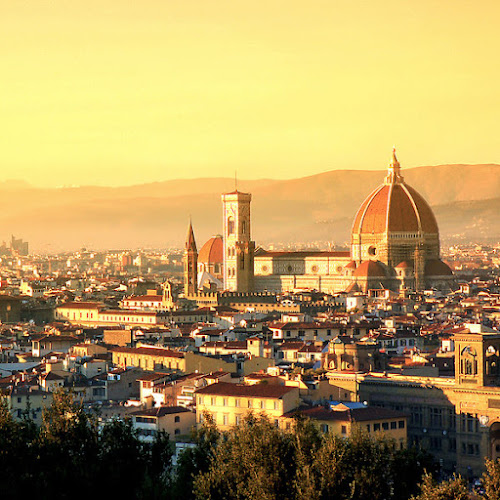
Cathedral of Santa Maria del Fiore
About Cathedral of Santa Maria del Fiore
Description
The Cathedral of Santa Maria del Fiore, or the Duomo as everyone casually calls it (and yes, you will too by day two), is one of those places that resets your internal scale for what humans can actually build. Standing in Florence’s historic core, the cathedral dates back to the late 1200s and still manages to feel gutsy and experimental, not dusty or polite. The first time the writer visited, jet-lagged and slightly cranky, the sight of that massive red-tiled dome snapped everything into focus. Coffee helped, sure, but the Duomo did the heavy lifting.
This cathedral isn’t just a church; it’s an architectural argument made of stone, marble, and stubborn Florentine ambition. The exterior wears bands of green, white, and pink marble like a tailored suit. Inside, things turn unexpectedly restrained. People often expect glitter everywhere and then pause, confused, by the calm, cavernous interior. And honestly, that contrast is part of the charm. It’s not trying to impress you every second. It knows it already has.
Filippo Brunelleschi’s dome dominates the skyline, and there’s a reason architecture students still whisper his name like it’s a magic spell. Built without traditional wooden scaffolding (a mind-bending detail), the dome remains the largest masonry dome in the world. That’s not a marketing line; that’s fact. When you stand underneath it and crane your neck, you feel tiny, but also oddly protected. I once watched a kid ask their parent if it could fall. The answer was no, obviously. It’s been holding strong for nearly 600 years.
The cathedral complex also includes the Baptistry and Giotto’s Campanile, and together they form a kind of holy trinity of Florentine must-sees. Travelers tend to rush through, snapping photos and ticking boxes. But slowing down pays off. The marble panels tell stories. The echo of footsteps feels intentional. And if you visit early or linger late, there’s a quiet hum that makes the place feel lived-in, not staged.
Yes, it gets crowded. Yes, some visitors leave frustrated by lines or rules or the sheer number of people. That’s real. But most walk away stunned, moved, or at least a little humbled. The Duomo doesn’t promise a flawless experience. It promises a memorable one, and it delivers more often than not.
Key Features
- Brunelleschi’s Dome: The iconic red-tiled dome visible from nearly everywhere in Florence, engineered in the 15th century without traditional scaffolding.
- Marble Facade: A geometric mix of white, green, and pink marble that looks different depending on the light. Morning is softer; late afternoon hits harder.
- Interior Frescoes: The Last Judgment fresco inside the dome is intense, chaotic, and oddly modern in its emotional punch.
- Giotto’s Campanile: The elegant bell tower next door offers one of the best views in the city, if your legs are willing.
- The Baptistry: Famous for its bronze doors, especially the ones Michelangelo nicknamed the Gates of Paradise.
- Wheelchair Accessibility: Accessible entrances are available, which matters more than many guides bother to mention.
- Onsite Services: Helpful staff, security, and visitor flow systems that try (sometimes heroically) to manage the crowds.
Best Time to Visit
If the writer had to pick one word of advice here, it would be timing. Early morning, right when things open, is gold. The light is gentler, the crowds thinner, and your patience level higher. Late afternoon can also work, especially outside, when the marble warms up visually and photographers start whispering to themselves.
Spring and fall bring comfortable weather and manageable crowds, though “manageable” is relative. Summer is busy and hot, and Florence heat is no joke. I once underestimated it and ended up hiding in the shade near the Baptistry, pretending to admire the doors while actually rethinking my life choices. Winter is quieter, cooler, and underrated. Fewer lines, more space to breathe. Just pack a coat.
Sundays and religious holidays can limit access to certain areas, since it is still a working cathedral. That’s not a downside, really. It’s a reminder that this place wasn’t built for selfies. Plan around service times if you want full access, and bring a little respect along with your camera.
How to Get There
Florence is a city made for walking, and the Cathedral of Santa Maria del Fiore sits right where you’ll likely wander anyway. From the main train station, it’s an easy stroll, about ten minutes if you don’t get distracted. You will get distracted. That’s part of the deal.
Buses and trams stop nearby, but honestly, walking is faster and more enjoyable. The streets narrow as you approach, and then suddenly the space opens up, and there it is. That reveal never gets old, even on a second or third visit. If you’re staying outside the historic center, public transport gets you close enough, and the final approach on foot feels ceremonial in the best way.
Tips for Visiting
First tip: dress appropriately. Shoulders and knees covered is the rule, and they do enforce it. Watching someone argue about shorts in July is awkward for everyone involved. Just plan ahead.
Second: get tickets in advance if you want to climb the dome or tower. Waiting until the day-of is a gamble, and Florence doesn’t reward gamblers kindly. The climb itself is no joke either. The dome’s staircase narrows dramatically, and if you’re even mildly claustrophobic, take a deep breath. But the view at the top? Worth every step, every complaint muttered under your breath.
Third: pace yourself. There’s a temptation to do the cathedral, dome, tower, and baptistry all in one go. You can, but you might not enjoy it. Break it up. Sit in the square. Watch people. Listen to the bells. Travel isn’t a race, even if your itinerary says otherwise.
Fourth: don’t skip the interior just because someone online said it was “plain.” Plain compared to what, exactly? The scale alone is impressive, and the details reveal themselves slowly. Give it ten minutes of actual attention, not rushed glances.
And finally, allow yourself a moment of awe without documenting it. Put the phone down. Look up. The writer still remembers a quiet second under the dome when everything felt still, despite the crowd. That’s rare. That’s travel gold. You can upload the photos later. The feeling? That one stays with you.
Key Features
- Key Features
- Best Time to Visit
- How to Get There
- Tips for Visiting
More Details
Updated December 31, 2025
Table of Contents
- Description
- Key Features
- Best Time to Visit
- How to Get There
- Tips for Visiting
- Key Highlights
- Location
- Places to Stay Near Cathedral of Santa Maria del Fiore
- Find and Book a Tour
- Explore More Travel Guides
- Nearby Places You Might Like
- Traveler Reviews for Cathedral of Santa Maria del Fiore
- Share Your Experience
Description
The Cathedral of Santa Maria del Fiore, or the Duomo as everyone casually calls it (and yes, you will too by day two), is one of those places that resets your internal scale for what humans can actually build. Standing in Florence’s historic core, the cathedral dates back to the late 1200s and still manages to feel gutsy and experimental, not dusty or polite. The first time the writer visited, jet-lagged and slightly cranky, the sight of that massive red-tiled dome snapped everything into focus. Coffee helped, sure, but the Duomo did the heavy lifting.
This cathedral isn’t just a church; it’s an architectural argument made of stone, marble, and stubborn Florentine ambition. The exterior wears bands of green, white, and pink marble like a tailored suit. Inside, things turn unexpectedly restrained. People often expect glitter everywhere and then pause, confused, by the calm, cavernous interior. And honestly, that contrast is part of the charm. It’s not trying to impress you every second. It knows it already has.
Filippo Brunelleschi’s dome dominates the skyline, and there’s a reason architecture students still whisper his name like it’s a magic spell. Built without traditional wooden scaffolding (a mind-bending detail), the dome remains the largest masonry dome in the world. That’s not a marketing line; that’s fact. When you stand underneath it and crane your neck, you feel tiny, but also oddly protected. I once watched a kid ask their parent if it could fall. The answer was no, obviously. It’s been holding strong for nearly 600 years.
The cathedral complex also includes the Baptistry and Giotto’s Campanile, and together they form a kind of holy trinity of Florentine must-sees. Travelers tend to rush through, snapping photos and ticking boxes. But slowing down pays off. The marble panels tell stories. The echo of footsteps feels intentional. And if you visit early or linger late, there’s a quiet hum that makes the place feel lived-in, not staged.
Yes, it gets crowded. Yes, some visitors leave frustrated by lines or rules or the sheer number of people. That’s real. But most walk away stunned, moved, or at least a little humbled. The Duomo doesn’t promise a flawless experience. It promises a memorable one, and it delivers more often than not.
Key Features
- Brunelleschi’s Dome: The iconic red-tiled dome visible from nearly everywhere in Florence, engineered in the 15th century without traditional scaffolding.
- Marble Facade: A geometric mix of white, green, and pink marble that looks different depending on the light. Morning is softer; late afternoon hits harder.
- Interior Frescoes: The Last Judgment fresco inside the dome is intense, chaotic, and oddly modern in its emotional punch.
- Giotto’s Campanile: The elegant bell tower next door offers one of the best views in the city, if your legs are willing.
- The Baptistry: Famous for its bronze doors, especially the ones Michelangelo nicknamed the Gates of Paradise.
- Wheelchair Accessibility: Accessible entrances are available, which matters more than many guides bother to mention.
- Onsite Services: Helpful staff, security, and visitor flow systems that try (sometimes heroically) to manage the crowds.
Best Time to Visit
If the writer had to pick one word of advice here, it would be timing. Early morning, right when things open, is gold. The light is gentler, the crowds thinner, and your patience level higher. Late afternoon can also work, especially outside, when the marble warms up visually and photographers start whispering to themselves.
Spring and fall bring comfortable weather and manageable crowds, though “manageable” is relative. Summer is busy and hot, and Florence heat is no joke. I once underestimated it and ended up hiding in the shade near the Baptistry, pretending to admire the doors while actually rethinking my life choices. Winter is quieter, cooler, and underrated. Fewer lines, more space to breathe. Just pack a coat.
Sundays and religious holidays can limit access to certain areas, since it is still a working cathedral. That’s not a downside, really. It’s a reminder that this place wasn’t built for selfies. Plan around service times if you want full access, and bring a little respect along with your camera.
How to Get There
Florence is a city made for walking, and the Cathedral of Santa Maria del Fiore sits right where you’ll likely wander anyway. From the main train station, it’s an easy stroll, about ten minutes if you don’t get distracted. You will get distracted. That’s part of the deal.
Buses and trams stop nearby, but honestly, walking is faster and more enjoyable. The streets narrow as you approach, and then suddenly the space opens up, and there it is. That reveal never gets old, even on a second or third visit. If you’re staying outside the historic center, public transport gets you close enough, and the final approach on foot feels ceremonial in the best way.
Tips for Visiting
First tip: dress appropriately. Shoulders and knees covered is the rule, and they do enforce it. Watching someone argue about shorts in July is awkward for everyone involved. Just plan ahead.
Second: get tickets in advance if you want to climb the dome or tower. Waiting until the day-of is a gamble, and Florence doesn’t reward gamblers kindly. The climb itself is no joke either. The dome’s staircase narrows dramatically, and if you’re even mildly claustrophobic, take a deep breath. But the view at the top? Worth every step, every complaint muttered under your breath.
Third: pace yourself. There’s a temptation to do the cathedral, dome, tower, and baptistry all in one go. You can, but you might not enjoy it. Break it up. Sit in the square. Watch people. Listen to the bells. Travel isn’t a race, even if your itinerary says otherwise.
Fourth: don’t skip the interior just because someone online said it was “plain.” Plain compared to what, exactly? The scale alone is impressive, and the details reveal themselves slowly. Give it ten minutes of actual attention, not rushed glances.
And finally, allow yourself a moment of awe without documenting it. Put the phone down. Look up. The writer still remembers a quiet second under the dome when everything felt still, despite the crowd. That’s rare. That’s travel gold. You can upload the photos later. The feeling? That one stays with you.
Key Highlights
- Key Features
- Best Time to Visit
- How to Get There
- Tips for Visiting
Location
Places to Stay Near Cathedral of Santa Maria del Fiore
Find and Book a Tour
Explore More Travel Guides
No reviews found! Be the first to review!
Traveler Reviews for Cathedral of Santa Maria del Fiore
There are no reviews yet. Be the first one to write one.
Have you visited Cathedral of Santa Maria del Fiore? Help other travelers by sharing your review.
You Might Also Like

Piazza della Repubblica

Piazza del Duomo

Cenacolo di Sant'Apollonia
Find Accommodations Nearby
Recommended Tours & Activities
Visitor Reviews
There are no reviews yet. Be the first one to write one.
Share Your Experience
Have you visited Cathedral of Santa Maria del Fiore? Help other travelers by leaving a review.