
Loggia dei Lanzi
About Loggia dei Lanzi
Description
The Loggia dei Lanzi sits right there in Piazza della Signoria, doing what it has done since the 14th century: quietly showing off. And yes, I mean quietly in that Italian way where something is clearly spectacular but doesn’t shout about it. It’s an open-air ceremonial building, built in the late 1300s, with wide arches that frame some of the most famous Renaissance sculptures you’ll ever see without buying a ticket. Which, frankly, still surprises me every time.
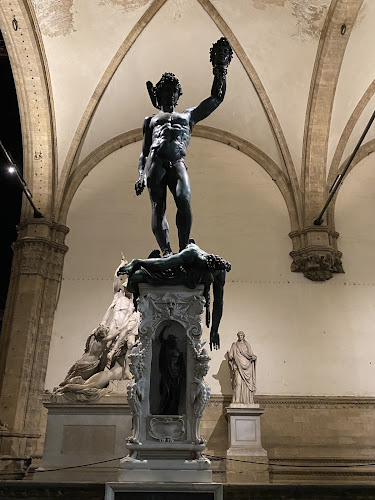
For travelers, this place is a gift. No doors. No lines. No museum hush. You just walk up and there it is, art in the open, art mixed with city noise, with footsteps echoing over stone and the occasional street musician drifting in. I remember my first visit years ago; I was jet-lagged, slightly cranky, and hunting for coffee. I cut across the piazza and suddenly Perseus was holding Medusa’s head like it was no big deal. That woke me up fast.
The Loggia was originally designed as a space for public ceremonies and assemblies of the Florentine Republic. It was political before it was artistic, and you can kind of feel that weight. Those arches weren’t meant to frame selfies; they were meant to frame power. Over time, the Medici family filled it with sculpture, turning it into a statement piece. Look what we own. Look what we control. But today, it feels oddly generous. The city just gives this to you.
It’s also one of the rare places where you can watch people interact with art in real time. Kids point. Couples argue over which statue is best. Tour guides whisper half-truths. Locals barely glance at it, which I find fascinating. When something this grand becomes background, you know it’s deeply woven into daily life.
That said, not everyone falls in love instantly. Some visitors expect a full museum experience and leave a bit confused. Others breeze past without realizing what they’re seeing. But if you slow down, even for ten minutes, the Loggia has a way of pulling you in. And once it does, you’ll probably linger longer than planned.
Key Features
- Open-air Renaissance sculpture gallery accessible 24/7, no ticket required
- Iconic statues including Cellini’s Perseus, Giambologna’s Rape of the Sabine Women, and ancient Roman works
- Wide Gothic arches designed for public ceremonies and political gatherings
- Located directly beside Palazzo Vecchio, adding historical context and drama
- Stone lions (the Marzocco and Medici lions) guarding the entrance, a favorite photo stop
- Family-friendly space where kids can move around freely without museum rules
- Natural lighting that changes the mood of the sculptures throughout the day
Best Time to Visit
Here’s the honest answer: there’s no bad time, but there are definitely better ones. Early morning is magic. Before the tour groups roll in, the piazza feels almost private, and the sculptures glow softly as the sun creeps up. I once stood there at around 7 a.m., coffee in hand, listening to the city wake up. It felt like Florence was letting me in on a secret.
Late evening is another strong contender. The Loggia is lit after dark, and the statues take on a dramatic, almost theatrical look. Shadows deepen. Muscles sharpen. Perseus looks a bit more intense, if that’s possible. It’s romantic, sure, but also slightly eerie in a good way.
Midday, especially in high season, is the most crowded. The piazza fills with tour groups, school kids, and travelers trying to orient themselves. If you go then, embrace the chaos. Stand back, observe people as much as the art. That’s part of the experience too. But if crowds stress you out, aim for early or late.
Season-wise, spring and fall are ideal. Summer heat can be brutal, and while the Loggia offers shade, the surrounding stone radiates warmth. Winter is quieter, cooler, and honestly underrated. Just bring a jacket and an open mind.
How to Get There
Getting to the Loggia dei Lanzi is almost too easy. If you’re anywhere in Florence’s historic center, you’ll likely stumble upon Piazza della Signoria without trying. It’s one of those gravitational points the city pulls you toward.
From the Duomo, it’s a short walk through streets that are distracting in the best way. Shops, gelato, random churches you didn’t plan on entering. Give yourself extra time. Florence does that to you.
If you’re coming by public transport, most buses that stop near the historic center will drop you within walking distance. After that, it’s pedestrian territory. And honestly, walking is the only way to do this city right.
One thing to note: the entrance isn’t wheelchair accessible. The steps are shallow but present, and there’s no ramp. It’s not ideal, and it’s something travelers with mobility concerns should plan for.
Tips for Visiting
First tip: don’t rush it. I know it looks like “just” a covered porch with statues, but give it time. Walk around each sculpture. Notice details. Perseus’s grip. The twisted bodies in the Rape of the Sabine Women, designed to be viewed from every angle. This isn’t accidental.
Second, do a bit of homework beforehand. You don’t need an art history degree, but knowing who made what and why adds layers. Without context, it can feel like visual overload. With context, it becomes a story.
Third, look up. The ceiling of the Loggia often gets ignored, but it matters. Architecture isn’t just a frame here; it’s part of the message. Power, order, elegance. All very Florentine.
If you’re traveling with kids, this is a win. They can move, point, ask loud questions without being shushed. I’ve watched kids reenact statue poses, and honestly, that’s the kind of engagement museums dream of.
Photography tip: wide-angle lenses work best, but even a phone can do wonders. Try shooting from slightly off-center to avoid crowds. And please, don’t climb on anything. Yes, it happens. No, it’s not okay.
And one last thing, a personal plea. Sit nearby for a few minutes. Grab a coffee or just stand at the edge of the piazza. Watch how the Loggia fits into daily life. Street performers setting up. Locals cutting through on errands. Tourists having their wow moment. That mix is the real attraction.
The Loggia dei Lanzi isn’t hidden, and it isn’t exclusive. It doesn’t demand your attention; it earns it. And if you let it, even briefly, it gives you a clearer sense of what Florence really is. Not a postcard. Not a checklist. But a living, breathing place where art and life refuse to be separated.
Key Features
- Open-air Renaissance sculpture gallery accessible 24/7, no ticket required
- Iconic statues including Cellini’s Perseus, Giambologna’s Rape of the Sabine Women, and ancient Roman works
- Wide Gothic arches designed for public ceremonies and political gatherings
- Located directly beside Palazzo Vecchio, adding historical context and drama
- Stone lions (the Marzocco and Medici lions) guarding the entrance, a favorite photo stop
- Family-friendly space where kids can move around freely without museum rules
- Natural lighting that changes the mood of the sculptures throughout the day
More Details
Updated December 31, 2025
Table of Contents
Description
The Loggia dei Lanzi sits right there in Piazza della Signoria, doing what it has done since the 14th century: quietly showing off. And yes, I mean quietly in that Italian way where something is clearly spectacular but doesn’t shout about it. It’s an open-air ceremonial building, built in the late 1300s, with wide arches that frame some of the most famous Renaissance sculptures you’ll ever see without buying a ticket. Which, frankly, still surprises me every time.
For travelers, this place is a gift. No doors. No lines. No museum hush. You just walk up and there it is, art in the open, art mixed with city noise, with footsteps echoing over stone and the occasional street musician drifting in. I remember my first visit years ago; I was jet-lagged, slightly cranky, and hunting for coffee. I cut across the piazza and suddenly Perseus was holding Medusa’s head like it was no big deal. That woke me up fast.
The Loggia was originally designed as a space for public ceremonies and assemblies of the Florentine Republic. It was political before it was artistic, and you can kind of feel that weight. Those arches weren’t meant to frame selfies; they were meant to frame power. Over time, the Medici family filled it with sculpture, turning it into a statement piece. Look what we own. Look what we control. But today, it feels oddly generous. The city just gives this to you.
It’s also one of the rare places where you can watch people interact with art in real time. Kids point. Couples argue over which statue is best. Tour guides whisper half-truths. Locals barely glance at it, which I find fascinating. When something this grand becomes background, you know it’s deeply woven into daily life.
That said, not everyone falls in love instantly. Some visitors expect a full museum experience and leave a bit confused. Others breeze past without realizing what they’re seeing. But if you slow down, even for ten minutes, the Loggia has a way of pulling you in. And once it does, you’ll probably linger longer than planned.
Key Features
- Open-air Renaissance sculpture gallery accessible 24/7, no ticket required
- Iconic statues including Cellini’s Perseus, Giambologna’s Rape of the Sabine Women, and ancient Roman works
- Wide Gothic arches designed for public ceremonies and political gatherings
- Located directly beside Palazzo Vecchio, adding historical context and drama
- Stone lions (the Marzocco and Medici lions) guarding the entrance, a favorite photo stop
- Family-friendly space where kids can move around freely without museum rules
- Natural lighting that changes the mood of the sculptures throughout the day
Best Time to Visit
Here’s the honest answer: there’s no bad time, but there are definitely better ones. Early morning is magic. Before the tour groups roll in, the piazza feels almost private, and the sculptures glow softly as the sun creeps up. I once stood there at around 7 a.m., coffee in hand, listening to the city wake up. It felt like Florence was letting me in on a secret.
Late evening is another strong contender. The Loggia is lit after dark, and the statues take on a dramatic, almost theatrical look. Shadows deepen. Muscles sharpen. Perseus looks a bit more intense, if that’s possible. It’s romantic, sure, but also slightly eerie in a good way.
Midday, especially in high season, is the most crowded. The piazza fills with tour groups, school kids, and travelers trying to orient themselves. If you go then, embrace the chaos. Stand back, observe people as much as the art. That’s part of the experience too. But if crowds stress you out, aim for early or late.
Season-wise, spring and fall are ideal. Summer heat can be brutal, and while the Loggia offers shade, the surrounding stone radiates warmth. Winter is quieter, cooler, and honestly underrated. Just bring a jacket and an open mind.
How to Get There
Getting to the Loggia dei Lanzi is almost too easy. If you’re anywhere in Florence’s historic center, you’ll likely stumble upon Piazza della Signoria without trying. It’s one of those gravitational points the city pulls you toward.
From the Duomo, it’s a short walk through streets that are distracting in the best way. Shops, gelato, random churches you didn’t plan on entering. Give yourself extra time. Florence does that to you.
If you’re coming by public transport, most buses that stop near the historic center will drop you within walking distance. After that, it’s pedestrian territory. And honestly, walking is the only way to do this city right.
One thing to note: the entrance isn’t wheelchair accessible. The steps are shallow but present, and there’s no ramp. It’s not ideal, and it’s something travelers with mobility concerns should plan for.
Tips for Visiting
First tip: don’t rush it. I know it looks like “just” a covered porch with statues, but give it time. Walk around each sculpture. Notice details. Perseus’s grip. The twisted bodies in the Rape of the Sabine Women, designed to be viewed from every angle. This isn’t accidental.
Second, do a bit of homework beforehand. You don’t need an art history degree, but knowing who made what and why adds layers. Without context, it can feel like visual overload. With context, it becomes a story.
Third, look up. The ceiling of the Loggia often gets ignored, but it matters. Architecture isn’t just a frame here; it’s part of the message. Power, order, elegance. All very Florentine.
If you’re traveling with kids, this is a win. They can move, point, ask loud questions without being shushed. I’ve watched kids reenact statue poses, and honestly, that’s the kind of engagement museums dream of.
Photography tip: wide-angle lenses work best, but even a phone can do wonders. Try shooting from slightly off-center to avoid crowds. And please, don’t climb on anything. Yes, it happens. No, it’s not okay.
And one last thing, a personal plea. Sit nearby for a few minutes. Grab a coffee or just stand at the edge of the piazza. Watch how the Loggia fits into daily life. Street performers setting up. Locals cutting through on errands. Tourists having their wow moment. That mix is the real attraction.
The Loggia dei Lanzi isn’t hidden, and it isn’t exclusive. It doesn’t demand your attention; it earns it. And if you let it, even briefly, it gives you a clearer sense of what Florence really is. Not a postcard. Not a checklist. But a living, breathing place where art and life refuse to be separated.
Key Highlights
- Open-air Renaissance sculpture gallery accessible 24/7, no ticket required
- Iconic statues including Cellini’s Perseus, Giambologna’s Rape of the Sabine Women, and ancient Roman works
- Wide Gothic arches designed for public ceremonies and political gatherings
- Located directly beside Palazzo Vecchio, adding historical context and drama
- Stone lions (the Marzocco and Medici lions) guarding the entrance, a favorite photo stop
- Family-friendly space where kids can move around freely without museum rules
- Natural lighting that changes the mood of the sculptures throughout the day
Location
Places to Stay Near Loggia dei Lanzi
Find and Book a Tour
Explore More Travel Guides
No reviews found! Be the first to review!
Traveler Reviews for Loggia dei Lanzi
There are no reviews yet. Be the first one to write one.
Have you visited Loggia dei Lanzi? Help other travelers by sharing your review.
You Might Also Like
David
Opera del Duomo Museum

Fontana del Porcellino
Find Accommodations Nearby
Recommended Tours & Activities
Visitor Reviews
There are no reviews yet. Be the first one to write one.
Share Your Experience
Have you visited Loggia dei Lanzi? Help other travelers by leaving a review.