
Van Abbemuseum
About Van Abbemuseum
Description
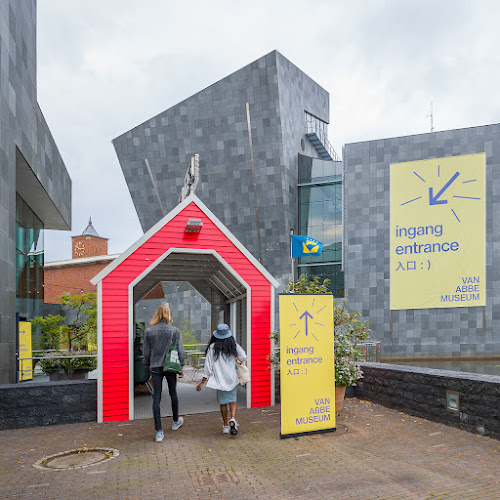
The Van Abbemuseum in Eindhoven, Netherlands, stands as a focused, often provocative destination for anyone curious about contemporary art and modern visual experiments. The museum presents a living collection of modern art, rotating exhibitions and experimental installations that invite thought rather than spoon-feed explanations. Travelers who approach it expecting polished tourist clichés will probably leave a little unsettled — in a good way. The experience leans toward the reflective, sometimes challenging, and frequently surprising.
From the street, the building reads as sleek and purposeful. Inside, the galleries favor generous ceilings, crisp lines and an absence of clutter, which makes each work — whether a large-scale installation, a photograph-rich exhibit or a delicate conceptual piece — feel like an event. The museum has a reputation for encouraging dialogues between works and visitors, so pieces are often arranged to push viewers into making connections. That's not academic talk; it genuinely changes how people move through the space. A solitary bench becomes a stage for people-watching and quiet contemplation, and one small corridor can feel like a momentary refuge from the bustle of the city.
Art lovers will find the Van Abbemuseum especially rewarding because its collection mixes canonical names with lesser-known, experimental practitioners. The museum's holdings range across painting, sculpture, graphic work, photography and immersive installation. Works by internationally recognized artists appear alongside cutting-edge projects from emerging voices, which creates an interesting tension: history alongside new experiments. But, and this is important, visitors should not expect a linear timeline of modern art history. The Van Abbemuseum prefers thematic and conceptual juxtapositions that make the collection feel curated for conversation rather than for a chronological tour.
Exhibitions here often emphasize interaction, politics, design and social practice. Many shows incorporate audio-visual elements, participatory installations or documentary photography. For travellers who enjoy surprises, this is a major plus. One week a gallery might host a kinetic sculpture that hums quietly and rearranges itself over hours, and the next it could run an intense photo series documenting a social movement. Photographers and installation artists get generous space to work; photography exhibitions in particular are presented with clarity and an eye for light, which enhances viewing and makes them feel intimate even in large rooms.
Accessibility and visitor comfort are not afterthoughts. There is a wheelchair-accessible entrance, accessible parking and restrooms adapted for mobility needs. That practical side rarely gets the headlines but it matters a lot to visitors who need it. And yes, gender-neutral restrooms and family-friendly facilities are available — small conveniences that help the museum function as a welcoming place for a diverse audience. There is also an onsite restaurant, which is handy because the Van Abbemuseum rewards slow visits; having a place to sit down, pause and digest what has been seen is a concrete advantage.
People's reactions to the Van Abbemuseum can vary widely and that's part of its charm. Some visitors come away deeply moved by a single work and talk about it for days. Others find certain installations baffling or too conceptual. The museum seems to accept that mix of responses and, frankly, the curator appears to enjoy it. That sense of openness — the museum not being afraid to present pieces that will elicit strong, mixed responses — is refreshing. It gives the place an honest character: this is a museum that trusts visitors with difficult questions, not one that smooths everything into easy admiration.
For travellers planning a stop in Eindhoven, the Van Abbemuseum offers more than indoor shelter from the unpredictable Dutch weather. It functions as a cultural hub where ideas circulate. The programming includes guided tours, workshops and occasional performances. These activities can increase the meaning of a visit dramatically, especially for those who prefer context. Guided tours often unpack the conceptual frameworks behind exhibitions and, surprisingly, sometimes the most memorable moments are small: a museum educator pointing out a subtle photographic detail that changes how the whole piece reads, or a short conversation in the cafe about a recent show.
Historically-minded visitors will notice that the museum has an engaged relationship with the art histories of Europe and beyond, but it does not treat the past as a museum-curated shrine. Instead, older works are used to ask new questions and to rethink modern art's place in contemporary society. That kind of curatorial risk means that even repeat visitors often find something fresh on return visits. The Van Abbemuseum is the sort of institution where the phrase ever-changing actually applies — rotate through exhibitions and a previously quiet corner can turn into a must-see highlight.
Practicalities that matter to travellers: the museum layout is straightforward, but maps and signage are worth noting on arrival. The gallery spaces are larger than they might appear from outside, so allow time to wander slowly. Audio guides may be available during major exhibitions, and these are recommended for visitors who appreciate contextual background without joining a group. Photography policies can vary by show — many installations allow non-flash photos while others prohibit image-making to protect sensitive works — so it's wise to check exhibit-specific rules at the entrance desk.
One anecdote often recounted by the museum's regulars — and included here because it captures the place's subtle personality — is about an early evening when a small group of visitors lingered after closing. The lighting in one gallery softened, the museum's staff quietly closed up, and the remaining people experienced a sudden intimacy with a large installation. That unscripted moment, where strangers discussed an artwork in low voices, is emblematic. The Van Abbemuseum has a way of turning fleeting, personal experiences into something resembling shared memory. The author remembers reading a short, heated exchange between two visitors about a controversial piece; the conversation continued into the cafe over tea. Instances like that make the museum feel alive, not just curated.
For those who care about design and architecture, the spaces themselves are worth attention. The museum's design uses light and line to frame works without dominating them. This minimalist approach can be disarming at first — the spaces are clean to the point of feeling clinical — but that clarity allows visitors to focus wholly on the art. If architecture is part of travel interest, the building provides a useful study in how contemporary museums balance neutrality and presence.
As for photography lovers, the museum's photography exhibitions are presented thoughtfully; prints are displayed with an eye for scale and sequence. Many photographers appreciate the way the Van Abbemuseum treats series: like stories that need room to breathe. Installations that combine image, sound and object are common and these multi-sensory displays tend to leave lasting impressions. But beware: some installations use sensory triggers — flashing lights, loud sounds or interactive elements — which can be intense for certain visitors. The museum usually posts advisories when such features are part of an exhibition.
Finally, it helps to think of the Van Abbemuseum not as a static repository but as an active cultural participant. It partners with artists, community groups and international institutions, and that collaboration shows in programming that is often experimental. Travelers arriving with curiosity — and a tolerance for ambiguity — usually find the museum extremely rewarding. Those expecting a conventional chronological sweep of modern art might be slightly disoriented at first. Yet that disorientation is often the point: art that asks questions and invites debate, rather than neatly summarizing consensus.
In short, the Van Abbemuseum offers a compact, high-quality encounter with contemporary art in Eindhoven, Netherlands. It combines accessibility and thoughtful amenities with programming that leans experimental and conceptual. Visitors who take time, ask questions and let exhibitions unfold at their own pace will likely leave with more than just photographs; they'll carry a few provocative impressions and perhaps a new way of seeing. And yes, the museum can be a bit heady sometimes — but isn't that often the best part of travel?
Key Features
More Details
Updated August 30, 2025
Table of Contents
Description
The Van Abbemuseum in Eindhoven, Netherlands, stands as a focused, often provocative destination for anyone curious about contemporary art and modern visual experiments. The museum presents a living collection of modern art, rotating exhibitions and experimental installations that invite thought rather than spoon-feed explanations. Travelers who approach it expecting polished tourist clichés will probably leave a little unsettled — in a good way. The experience leans toward the reflective, sometimes challenging, and frequently surprising.
From the street, the building reads as sleek and purposeful. Inside, the galleries favor generous ceilings, crisp lines and an absence of clutter, which makes each work — whether a large-scale installation, a photograph-rich exhibit or a delicate conceptual piece — feel like an event. The museum has a reputation for encouraging dialogues between works and visitors, so pieces are often arranged to push viewers into making connections. That’s not academic talk; it genuinely changes how people move through the space. A solitary bench becomes a stage for people-watching and quiet contemplation, and one small corridor can feel like a momentary refuge from the bustle of the city.
Art lovers will find the Van Abbemuseum especially rewarding because its collection mixes canonical names with lesser-known, experimental practitioners. The museum’s holdings range across painting, sculpture, graphic work, photography and immersive installation. Works by internationally recognized artists appear alongside cutting-edge projects from emerging voices, which creates an interesting tension: history alongside new experiments. But, and this is important, visitors should not expect a linear timeline of modern art history. The Van Abbemuseum prefers thematic and conceptual juxtapositions that make the collection feel curated for conversation rather than for a chronological tour.
Exhibitions here often emphasize interaction, politics, design and social practice. Many shows incorporate audio-visual elements, participatory installations or documentary photography. For travellers who enjoy surprises, this is a major plus. One week a gallery might host a kinetic sculpture that hums quietly and rearranges itself over hours, and the next it could run an intense photo series documenting a social movement. Photographers and installation artists get generous space to work; photography exhibitions in particular are presented with clarity and an eye for light, which enhances viewing and makes them feel intimate even in large rooms.
Accessibility and visitor comfort are not afterthoughts. There is a wheelchair-accessible entrance, accessible parking and restrooms adapted for mobility needs. That practical side rarely gets the headlines but it matters a lot to visitors who need it. And yes, gender-neutral restrooms and family-friendly facilities are available — small conveniences that help the museum function as a welcoming place for a diverse audience. There is also an onsite restaurant, which is handy because the Van Abbemuseum rewards slow visits; having a place to sit down, pause and digest what has been seen is a concrete advantage.
People’s reactions to the Van Abbemuseum can vary widely and that’s part of its charm. Some visitors come away deeply moved by a single work and talk about it for days. Others find certain installations baffling or too conceptual. The museum seems to accept that mix of responses and, frankly, the curator appears to enjoy it. That sense of openness — the museum not being afraid to present pieces that will elicit strong, mixed responses — is refreshing. It gives the place an honest character: this is a museum that trusts visitors with difficult questions, not one that smooths everything into easy admiration.
For travellers planning a stop in Eindhoven, the Van Abbemuseum offers more than indoor shelter from the unpredictable Dutch weather. It functions as a cultural hub where ideas circulate. The programming includes guided tours, workshops and occasional performances. These activities can increase the meaning of a visit dramatically, especially for those who prefer context. Guided tours often unpack the conceptual frameworks behind exhibitions and, surprisingly, sometimes the most memorable moments are small: a museum educator pointing out a subtle photographic detail that changes how the whole piece reads, or a short conversation in the cafe about a recent show.
Historically-minded visitors will notice that the museum has an engaged relationship with the art histories of Europe and beyond, but it does not treat the past as a museum-curated shrine. Instead, older works are used to ask new questions and to rethink modern art’s place in contemporary society. That kind of curatorial risk means that even repeat visitors often find something fresh on return visits. The Van Abbemuseum is the sort of institution where the phrase ever-changing actually applies — rotate through exhibitions and a previously quiet corner can turn into a must-see highlight.
Practicalities that matter to travellers: the museum layout is straightforward, but maps and signage are worth noting on arrival. The gallery spaces are larger than they might appear from outside, so allow time to wander slowly. Audio guides may be available during major exhibitions, and these are recommended for visitors who appreciate contextual background without joining a group. Photography policies can vary by show — many installations allow non-flash photos while others prohibit image-making to protect sensitive works — so it’s wise to check exhibit-specific rules at the entrance desk.
One anecdote often recounted by the museum’s regulars — and included here because it captures the place’s subtle personality — is about an early evening when a small group of visitors lingered after closing. The lighting in one gallery softened, the museum’s staff quietly closed up, and the remaining people experienced a sudden intimacy with a large installation. That unscripted moment, where strangers discussed an artwork in low voices, is emblematic. The Van Abbemuseum has a way of turning fleeting, personal experiences into something resembling shared memory. The author remembers reading a short, heated exchange between two visitors about a controversial piece; the conversation continued into the cafe over tea. Instances like that make the museum feel alive, not just curated.
For those who care about design and architecture, the spaces themselves are worth attention. The museum’s design uses light and line to frame works without dominating them. This minimalist approach can be disarming at first — the spaces are clean to the point of feeling clinical — but that clarity allows visitors to focus wholly on the art. If architecture is part of travel interest, the building provides a useful study in how contemporary museums balance neutrality and presence.
As for photography lovers, the museum’s photography exhibitions are presented thoughtfully; prints are displayed with an eye for scale and sequence. Many photographers appreciate the way the Van Abbemuseum treats series: like stories that need room to breathe. Installations that combine image, sound and object are common and these multi-sensory displays tend to leave lasting impressions. But beware: some installations use sensory triggers — flashing lights, loud sounds or interactive elements — which can be intense for certain visitors. The museum usually posts advisories when such features are part of an exhibition.
Finally, it helps to think of the Van Abbemuseum not as a static repository but as an active cultural participant. It partners with artists, community groups and international institutions, and that collaboration shows in programming that is often experimental. Travelers arriving with curiosity — and a tolerance for ambiguity — usually find the museum extremely rewarding. Those expecting a conventional chronological sweep of modern art might be slightly disoriented at first. Yet that disorientation is often the point: art that asks questions and invites debate, rather than neatly summarizing consensus.
In short, the Van Abbemuseum offers a compact, high-quality encounter with contemporary art in Eindhoven, Netherlands. It combines accessibility and thoughtful amenities with programming that leans experimental and conceptual. Visitors who take time, ask questions and let exhibitions unfold at their own pace will likely leave with more than just photographs; they’ll carry a few provocative impressions and perhaps a new way of seeing. And yes, the museum can be a bit heady sometimes — but isn’t that often the best part of travel?
Key Highlights
Van Abbemuseum
Location
Places to Stay Near Van Abbemuseum
Find and Book a Tour
Explore More Travel Guides
No reviews found! Be the first to review!
Traveler Reviews for Van Abbemuseum
There are no reviews yet. Be the first one to write one.
Have you visited Van Abbemuseum? Help other travelers by sharing your review.
You Might Also Like
Philips Museum

Next Nature Museum
St. Catherine's Church
Find Accommodations Nearby
Recommended Tours & Activities
Visitor Reviews
There are no reviews yet. Be the first one to write one.
Share Your Experience
Have you visited Van Abbemuseum? Help other travelers by leaving a review.