
PSV Museum
About PSV Museum
Description
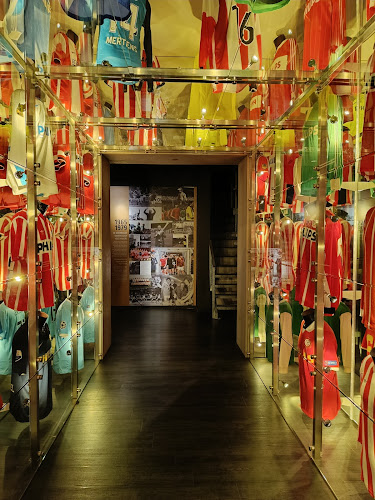
The PSV Museum offers a deep-dive into the story of one of the Netherlands most celebrated football clubs, housed inside the stadium where much of that story was written. It chronicles the club history through trophy cabinets, framed match photos, vintage shirts and other memorabilia that make the club feel alive rather than distant. Visitors will find a steady flow of artifacts from early decades through to modern successes, and the display is organized so that the narrative of the club moves forward in time in a way that even non-football fans can follow.
Exhibits focus on milestones: domestic championship runs, memorable European nights, coaching eras that changed the club, and personalities — players and managers — who left real impressions. And yes, the trophies get a lot of attention. They are arranged to tell a story, not just to sparkle. Dog-eared programme covers sit next to high-definition video clips; a legendary shirt might hang beside a timeline of a season that mattered; audio clips bring big matches back to life. The combination of objects, words and multimedia gives the museum a pace that rarely flags, so visitors rarely feel the museum dragging even when they linger for an hour or two.
Accessibility is straightforward here. The museum has a wheelchair accessible entrance, on-site restrooms and complimentary Wi-Fi — practical things that travellers often forget to check until they need them. Families will notice that exhibits are set up with younger visitors in mind: there are clear photo moments and display heights that don't assume every visitor is taller than a teenager. Kids are welcome; many parents find that the museum's hands-on displays and match footage hold attention well. Conversely, the museum is compact enough that a single visit won't leave anyone drained — which is handy when planning a busy travel day in Eindhoven.
Practical atmosphere matters: the museum feels like part of the stadium rather than a separate, tucked-away attraction. On match days, the vibe changes — more energy, more fans in club shirts, more instant conversations with fellow visitors about line-ups and legends. Off match days, the place is quieter, good for reading the placards slowly and taking photos without crowds. A seasoned traveller once admired the way the museum allowed small moments of discovery — a plaque about a forgotten friendly that changed a season, a youth-team photo that included a name later to become famous. Those quiet discoveries are the sort of things a guidebook doesn't always catch, and that is where the museum rewards slow-looking.
While many visitors expect a linear walk-through, the museum is best experienced with a little wandering: pausing at a trophy case, watching a short video loop about a dramatic match, then circling back to a display of training kits that show how the club evolved visually over decades. The museum also does a decent job of linking the club to the city and the wider story of Dutch football, so people interested in sports history get something broader than a fan shrine. There is a clear sense of identity and continuity — the club's ties to its founding companies and the local community are woven into the narrative, giving context to the silverware and star names.
For photographers and social media-minded travellers, the museum offers definite moments worth photographing: polished trophies under soft lighting, arranged historic pennants, and wall-sized images of key match moments. But the museum is careful about preserving the artifacts, so flash photography may be limited in some areas. Visitors who love to collect small souvenirs should note that the museum itself doesn't have an on-site restaurant, but the stadium area typically has cafes and vendors nearby for a quick snack or drink after the visit.
And speaking of tours: the museum can be paired with other stadium experiences. A stadium tour that includes the dressing rooms, tunnel and pitch-side viewpoints can transform a museum visit from informative to fully immersive. Those short guided tours often add personal anecdotes from local guides about locker room rituals or match-day superstitions — little details that bring the exhibits to life. Even without a guide, the curated labels do a good job communicating the significance of each artifact, so independent visitors won't feel lost.
- Strong emphasis on club history, trophies and key seasons
- Multimedia displays and original memorabilia
- Wheelchair accessible entrance and family-friendly layout
- Free Wi-Fi and on-site restrooms for visitor convenience
- Easy to pair with stadium tours for a fuller experience
The tone inside is mostly respectful rather than loud: this is a place where a quiet gasp at a legendary photo or a low murmur in front of a trophy cabinet is common. The curatorial choices usually reward curiosity — read a plaque, then step back and watch a short clip; or watch a clip first and then examine the accompanying object. It is not a boulevard of interactive bells and whistles, though there are pockets of interactivity that work well, especially for kids. If a visitor expects a fully immersive, hands-on high-tech museum like some of the biggest modern attractions, this museum will feel smaller; but for those who want to connect with the club story and see genuine artifacts up close, it hits the mark.
One of the less obvious but pleasant aspects is the sense of human scale. Exhibits include personal items and localized stories rather than only the big headline moments, which gives visitors insight into the club's culture and the people who shaped it. A photo series about a long-serving youth coach, for example, can be unexpectedly affecting. Those small stories are the sort of detail that makes a museum visit memorable beyond just the shiny trophies.
Visitors who care about planning will appreciate that the museum suits a range of visit lengths. A quick stop of 45–60 minutes covers the main exhibits comfortably. But someone with a deeper interest — maybe a football fan researching a particular era — can easily spend longer. The museum is straightforward to navigate and signposted clearly so that even first-time arrivals can make the most of their time without scrambling for a map.
For trip planning, the museum works well as part of a half-day itinerary around Eindhoven. It connects nicely with nearby museums and city center attractions, as well as dining options for those who want to make a fuller day of it. And for football fans traveling through the Netherlands, a stop here often becomes a highlight precisely because it anchors the abstract stories of matches and trophies in tangible objects and spaces. It makes history feel close, not distant history you read about but never see.
Overall, the PSV Museum is a practical and emotionally satisfying stop for travelers interested in football, sports history, or local culture. It strikes a decent balance between narrative, artifacts and visitor comfort. For many visitors, the museum turns a stadium visit into a meaningful cultural moment, and that, frankly, is the point: letting the past inform the present and giving supporters and curious travelers alike a place to pause, remember and imagine the games still to come.
Key Features
- Strong emphasis on club history, trophies and key seasons
- Multimedia displays and original memorabilia
- Wheelchair accessible entrance and family-friendly layout
- Free Wi-Fi and on-site restrooms for visitor convenience
- Easy to pair with stadium tours for a fuller experience
More Details
Updated August 30, 2025
Table of Contents
Description
The PSV Museum offers a deep-dive into the story of one of the Netherlands most celebrated football clubs, housed inside the stadium where much of that story was written. It chronicles the club history through trophy cabinets, framed match photos, vintage shirts and other memorabilia that make the club feel alive rather than distant. Visitors will find a steady flow of artifacts from early decades through to modern successes, and the display is organized so that the narrative of the club moves forward in time in a way that even non-football fans can follow.
Exhibits focus on milestones: domestic championship runs, memorable European nights, coaching eras that changed the club, and personalities — players and managers — who left real impressions. And yes, the trophies get a lot of attention. They are arranged to tell a story, not just to sparkle. Dog-eared programme covers sit next to high-definition video clips; a legendary shirt might hang beside a timeline of a season that mattered; audio clips bring big matches back to life. The combination of objects, words and multimedia gives the museum a pace that rarely flags, so visitors rarely feel the museum dragging even when they linger for an hour or two.
Accessibility is straightforward here. The museum has a wheelchair accessible entrance, on-site restrooms and complimentary Wi-Fi — practical things that travellers often forget to check until they need them. Families will notice that exhibits are set up with younger visitors in mind: there are clear photo moments and display heights that don’t assume every visitor is taller than a teenager. Kids are welcome; many parents find that the museum’s hands-on displays and match footage hold attention well. Conversely, the museum is compact enough that a single visit won’t leave anyone drained — which is handy when planning a busy travel day in Eindhoven.
Practical atmosphere matters: the museum feels like part of the stadium rather than a separate, tucked-away attraction. On match days, the vibe changes — more energy, more fans in club shirts, more instant conversations with fellow visitors about line-ups and legends. Off match days, the place is quieter, good for reading the placards slowly and taking photos without crowds. A seasoned traveller once admired the way the museum allowed small moments of discovery — a plaque about a forgotten friendly that changed a season, a youth-team photo that included a name later to become famous. Those quiet discoveries are the sort of things a guidebook doesn’t always catch, and that is where the museum rewards slow-looking.
While many visitors expect a linear walk-through, the museum is best experienced with a little wandering: pausing at a trophy case, watching a short video loop about a dramatic match, then circling back to a display of training kits that show how the club evolved visually over decades. The museum also does a decent job of linking the club to the city and the wider story of Dutch football, so people interested in sports history get something broader than a fan shrine. There is a clear sense of identity and continuity — the club’s ties to its founding companies and the local community are woven into the narrative, giving context to the silverware and star names.
For photographers and social media-minded travellers, the museum offers definite moments worth photographing: polished trophies under soft lighting, arranged historic pennants, and wall-sized images of key match moments. But the museum is careful about preserving the artifacts, so flash photography may be limited in some areas. Visitors who love to collect small souvenirs should note that the museum itself doesn’t have an on-site restaurant, but the stadium area typically has cafes and vendors nearby for a quick snack or drink after the visit.
And speaking of tours: the museum can be paired with other stadium experiences. A stadium tour that includes the dressing rooms, tunnel and pitch-side viewpoints can transform a museum visit from informative to fully immersive. Those short guided tours often add personal anecdotes from local guides about locker room rituals or match-day superstitions — little details that bring the exhibits to life. Even without a guide, the curated labels do a good job communicating the significance of each artifact, so independent visitors won’t feel lost.
- Strong emphasis on club history, trophies and key seasons
- Multimedia displays and original memorabilia
- Wheelchair accessible entrance and family-friendly layout
- Free Wi-Fi and on-site restrooms for visitor convenience
- Easy to pair with stadium tours for a fuller experience
The tone inside is mostly respectful rather than loud: this is a place where a quiet gasp at a legendary photo or a low murmur in front of a trophy cabinet is common. The curatorial choices usually reward curiosity — read a plaque, then step back and watch a short clip; or watch a clip first and then examine the accompanying object. It is not a boulevard of interactive bells and whistles, though there are pockets of interactivity that work well, especially for kids. If a visitor expects a fully immersive, hands-on high-tech museum like some of the biggest modern attractions, this museum will feel smaller; but for those who want to connect with the club story and see genuine artifacts up close, it hits the mark.
One of the less obvious but pleasant aspects is the sense of human scale. Exhibits include personal items and localized stories rather than only the big headline moments, which gives visitors insight into the club’s culture and the people who shaped it. A photo series about a long-serving youth coach, for example, can be unexpectedly affecting. Those small stories are the sort of detail that makes a museum visit memorable beyond just the shiny trophies.
Visitors who care about planning will appreciate that the museum suits a range of visit lengths. A quick stop of 45–60 minutes covers the main exhibits comfortably. But someone with a deeper interest — maybe a football fan researching a particular era — can easily spend longer. The museum is straightforward to navigate and signposted clearly so that even first-time arrivals can make the most of their time without scrambling for a map.
For trip planning, the museum works well as part of a half-day itinerary around Eindhoven. It connects nicely with nearby museums and city center attractions, as well as dining options for those who want to make a fuller day of it. And for football fans traveling through the Netherlands, a stop here often becomes a highlight precisely because it anchors the abstract stories of matches and trophies in tangible objects and spaces. It makes history feel close, not distant history you read about but never see.
Overall, the PSV Museum is a practical and emotionally satisfying stop for travelers interested in football, sports history, or local culture. It strikes a decent balance between narrative, artifacts and visitor comfort. For many visitors, the museum turns a stadium visit into a meaningful cultural moment, and that, frankly, is the point: letting the past inform the present and giving supporters and curious travelers alike a place to pause, remember and imagine the games still to come.
Key Highlights
- Strong emphasis on club history, trophies and key seasons
- Multimedia displays and original memorabilia
- Wheelchair accessible entrance and family-friendly layout
- Free Wi-Fi and on-site restrooms for visitor convenience
- Easy to pair with stadium tours for a fuller experience
Location
Places to Stay Near PSV Museum
Find and Book a Tour
Explore More Travel Guides
No reviews found! Be the first to review!
Traveler Reviews for PSV Museum
There are no reviews yet. Be the first one to write one.
Have you visited PSV Museum? Help other travelers by sharing your review.
You Might Also Like

Speelpark de Splinter

Motion Experience
Van Abbemuseum
Find Accommodations Nearby
Recommended Tours & Activities
Visitor Reviews
There are no reviews yet. Be the first one to write one.
Share Your Experience
Have you visited PSV Museum? Help other travelers by leaving a review.