
SCAD Museum of Art
About SCAD Museum of Art
Description
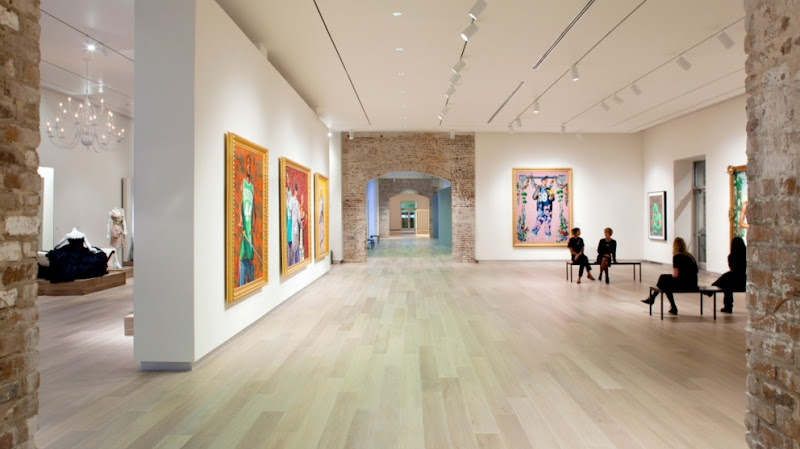
The SCAD Museum of Art serves as the teaching museum of the Savannah College of Art & Design, and it reads more like an active classroom than a staid relic. Housed in a striking building that blends industrial bones with clean galleries, the museum presents contemporary art, design, and experimental work that reflects both the pulse of the international art world and the specific creative energy of SCAD students and faculty. It’s not just a place to stare at paintings; it’s a place to see ideas in motion — installations that hum, photographs that archive ephemeral moments, fashion pieces that double as sculpture, and film and media projects that demand a few quiet minutes of attention.
Visitors to the SCAD Museum of Art will notice quickly that the institution operates on multiple levels. One moment a visitor might be studying an intimate portrait from an established American artist; the next they’re face-to-face with a large-scale installation by an emerging practitioner whose work is still shaking the walls. The museum’s programming mixes a rotating slate of curated exhibitions with student shows and disciplines across photography, fashion, film, architecture, and interactive media. That educational slant gives many exhibitions an extra layer: background information, process work, and in-gallery commentary that often reads like class notes — and that’s a good thing. It makes contemporary work more approachable without dumbing anything down.
And the collection itself has breadth. There are contemporary works by national and international artists alongside pieces acquired to support student learning. The permanent collection includes photography, painting, installation, and fashion artifacts, all of which are used thoughtfully in rotating displays. Because SCAD is a design and art college, the museum often showcases design process and material experiments — think prototypes, textiles, and mixed-media studies — which gives the space a slightly different flavor from a traditional museum. It’s educational in the best sense: revealing the how as much as the what.
Accessibility and practicalities are handled in a straightforward way. The museum provides onsite services, wheelchair-accessible entry and restrooms, and tours that range from informal docent-led walks to more structured educational visits. Families and younger visitors are welcomed; signage and interactive elements are sometimes tailored to make contemporary work less intimidating for kids. There’s a cafe on site for a mid-visit coffee or snack, and paid parking options are available nearby, which helps when planning a day of museum-hopping around Savannah.
What often surprises first-time visitors is how the museum balances seriousness and play. A show might include rigorous conceptual work and then, in the next gallery, a bright, tactile installation that practically invites touch (but don’t touch — the labels will tell you). That contrast keeps the visit lively. The museum also leans into SCAD’s ties to fashion and film, so attendees can expect shows that pull from costume archives, runway projects, and experimental cinema, alongside more conventional gallery exhibitions. For photographers and those interested in visual storytelling, the photography holdings and rotating exhibitions are consistently strong and thoughtfully presented.
On a practical note, the SCAD Museum of Art positions itself as a hub for both visitors interested in global contemporary art and people who want a hands-on look at art education. The museum’s rotating exhibitions mean there is always a reason to return; repeat visits often reveal fresh curatorial angles or newly installed student work. And because SCAD operates year-round, the programming can be ambitious, timely, and at times quietly experimental — which is precisely why some visitors fall in love with the place while others find certain shows challenging. That’s OK. The museum isn’t trying to please everyone; it’s trying to provoke thought and provide learning opportunities.
From a visitor’s planning perspective, it helps to check what’s on view before arriving. Exhibits can be thematic and occasionally text-heavy, so if one prefers a lighter stroll, choosing an exhibition with more visual or installation-based work may suit better. Conversely, if someone loves reading labels and tracing artistic processes, the teaching-museum approach will be a delight. The staff and docents are usually approachable and ready to chat about how an exhibition ties back to SCAD’s curriculum or the broader art world, and there are often accompanying programs like lectures, student walkthroughs, and artist talks that add meaningful context.
One small anecdote worth passing along: a friend of the writer once wandered into a student-curated show purely by chance and left with a new appreciation for contemporary textiles after an impromptu conversation with a graduate assistant. Those little, unexpected moments tend to happen here because the museum feels alive — students arrive with energy, curators experiment, and the layout encourages exploration. It’s a place that rewards curiosity and a willingness to linger.
In sum, the SCAD Museum of Art is a teaching museum with a spirited personality. It bridges professional contemporary practice and academic inquiry, offering exhibitions that are educational, occasionally challenging, and often surprising. For travelers who care about modern art, design, and the behind-the-scenes of artistic production, it stands out as a memorable stop when exploring Savannah’s cultural scene.
Key Features
More Details
Updated August 29, 2025
Table of Contents
Description
The SCAD Museum of Art serves as the teaching museum of the Savannah College of Art & Design, and it reads more like an active classroom than a staid relic. Housed in a striking building that blends industrial bones with clean galleries, the museum presents contemporary art, design, and experimental work that reflects both the pulse of the international art world and the specific creative energy of SCAD students and faculty. It’s not just a place to stare at paintings; it’s a place to see ideas in motion — installations that hum, photographs that archive ephemeral moments, fashion pieces that double as sculpture, and film and media projects that demand a few quiet minutes of attention.
Visitors to the SCAD Museum of Art will notice quickly that the institution operates on multiple levels. One moment a visitor might be studying an intimate portrait from an established American artist; the next they’re face-to-face with a large-scale installation by an emerging practitioner whose work is still shaking the walls. The museum’s programming mixes a rotating slate of curated exhibitions with student shows and disciplines across photography, fashion, film, architecture, and interactive media. That educational slant gives many exhibitions an extra layer: background information, process work, and in-gallery commentary that often reads like class notes — and that’s a good thing. It makes contemporary work more approachable without dumbing anything down.
And the collection itself has breadth. There are contemporary works by national and international artists alongside pieces acquired to support student learning. The permanent collection includes photography, painting, installation, and fashion artifacts, all of which are used thoughtfully in rotating displays. Because SCAD is a design and art college, the museum often showcases design process and material experiments — think prototypes, textiles, and mixed-media studies — which gives the space a slightly different flavor from a traditional museum. It’s educational in the best sense: revealing the how as much as the what.
Accessibility and practicalities are handled in a straightforward way. The museum provides onsite services, wheelchair-accessible entry and restrooms, and tours that range from informal docent-led walks to more structured educational visits. Families and younger visitors are welcomed; signage and interactive elements are sometimes tailored to make contemporary work less intimidating for kids. There’s a cafe on site for a mid-visit coffee or snack, and paid parking options are available nearby, which helps when planning a day of museum-hopping around Savannah.
What often surprises first-time visitors is how the museum balances seriousness and play. A show might include rigorous conceptual work and then, in the next gallery, a bright, tactile installation that practically invites touch (but don’t touch — the labels will tell you). That contrast keeps the visit lively. The museum also leans into SCAD’s ties to fashion and film, so attendees can expect shows that pull from costume archives, runway projects, and experimental cinema, alongside more conventional gallery exhibitions. For photographers and those interested in visual storytelling, the photography holdings and rotating exhibitions are consistently strong and thoughtfully presented.
On a practical note, the SCAD Museum of Art positions itself as a hub for both visitors interested in global contemporary art and people who want a hands-on look at art education. The museum’s rotating exhibitions mean there is always a reason to return; repeat visits often reveal fresh curatorial angles or newly installed student work. And because SCAD operates year-round, the programming can be ambitious, timely, and at times quietly experimental — which is precisely why some visitors fall in love with the place while others find certain shows challenging. That’s OK. The museum isn’t trying to please everyone; it’s trying to provoke thought and provide learning opportunities.
From a visitor’s planning perspective, it helps to check what’s on view before arriving. Exhibits can be thematic and occasionally text-heavy, so if one prefers a lighter stroll, choosing an exhibition with more visual or installation-based work may suit better. Conversely, if someone loves reading labels and tracing artistic processes, the teaching-museum approach will be a delight. The staff and docents are usually approachable and ready to chat about how an exhibition ties back to SCAD’s curriculum or the broader art world, and there are often accompanying programs like lectures, student walkthroughs, and artist talks that add meaningful context.
One small anecdote worth passing along: a friend of the writer once wandered into a student-curated show purely by chance and left with a new appreciation for contemporary textiles after an impromptu conversation with a graduate assistant. Those little, unexpected moments tend to happen here because the museum feels alive — students arrive with energy, curators experiment, and the layout encourages exploration. It’s a place that rewards curiosity and a willingness to linger.
In sum, the SCAD Museum of Art is a teaching museum with a spirited personality. It bridges professional contemporary practice and academic inquiry, offering exhibitions that are educational, occasionally challenging, and often surprising. For travelers who care about modern art, design, and the behind-the-scenes of artistic production, it stands out as a memorable stop when exploring Savannah’s cultural scene.
Key Highlights
SCAD Museum of Art
Location
Places to Stay Near SCAD Museum of Art
Find and Book a Tour
Explore More Travel Guides
No reviews found! Be the first to review!
Traveler Reviews for SCAD Museum of Art
There are no reviews yet. Be the first one to write one.
Have you visited SCAD Museum of Art? Help other travelers by sharing your review.
You Might Also Like

Savannah's Waterfront

Savannah History Museum

Ships Of The Sea Maritime Museum
Find Accommodations Nearby
Recommended Tours & Activities
Visitor Reviews
There are no reviews yet. Be the first one to write one.
Share Your Experience
Have you visited SCAD Museum of Art? Help other travelers by leaving a review.