
Savannah History Museum
About Savannah History Museum
Description
The Savannah History Museum sits inside an evocative 19th-century railway shed and tells the story of Savannah, Georgia through artifacts, film, and hands-on displays. It is a history museum that chooses clarity over spectacle: exhibits trace military episodes, industrial development, local art and culture, and the everyday lives of people who shaped the city. Visitors find old maps and railroad paraphernalia alongside delicate objects of domestic life; a display about military engagements rubs shoulders with a gallery on coastal industry. The mix feels deliberate, the way someone arranges books on a shelf so themes link up when you least expect it.
Because it is housed in an original railway structure, the building itself becomes part of the exhibit. Massive timber beams, industrial ironwork, and the long, warehouse-style interior provide an atmospheric backdrop. The architecture quietly reinforces the story of Savannah as a port city that grew with railroads and commerce. It is the sort of place where a single old locomotive plaque or a ticket window tells a dozen stories if the visitor wants to listen.
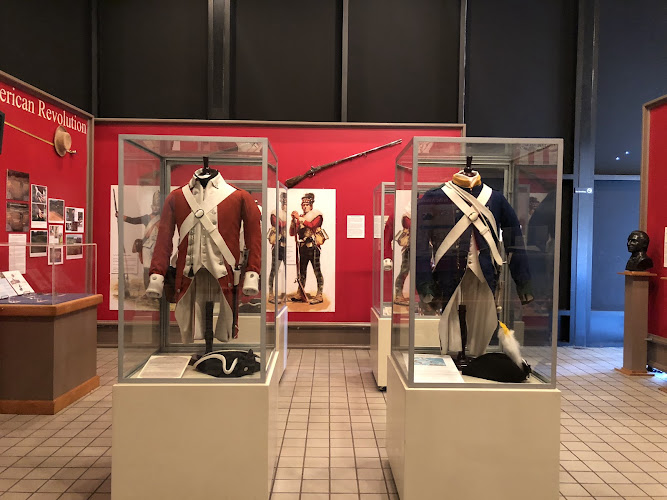
Exhibits balance broad sweeps of regional history with personal objects that anchor abstract ideas. Military history is present but not monolithic: the narrative covers Revolutionary and Civil War eras, and also looks at later military and maritime roles that shaped Savannah. The industrial displays explain the mechanics of port life and rail transport, showing how goods and people moved through the city. Meanwhile, galleries on art and culture highlight local crafts, photography, and community traditions, giving a more intimate sense of everyday life across different eras. In short, the museum does a careful job of connecting big historical forces to small human moments.
The venue makes a point of being accessible to families. There are interactive elements designed to engage kids, from tactile displays to timeline panels that simplify complicated events without dumbing them down. The theater screens short films that provide context before or after a walk through the galleries, which helps visitors who prefer to get the narrative arc first and then explore the details. The on-site gift shop offers tasteful souvenirs and local crafts that often reflect themes from the permanent displays.
Visitors who enjoy guided experiences will appreciate that tours are offered, and these tours often bring out stories that are not printed on placards. Guides sometimes share small, lesser-known anecdotes about the items on display—like the odd provenance of a household object or a family saga connected to Savannah’s maritime trade. Those little human stories are the kind that stick with a visitor long after the museum visit ends.
It is worth noting that the museum keeps practical needs in mind. There are wheelchair-accessible entrances, accessible parking areas, and restrooms that accommodate visitors with mobility needs. That attention to logistics matters when a historic building is repurposed for modern audiences, and the museum handles it thoughtfully; ramps and clear signage are present in ways that feel integrated rather than tacked on.
Admission is charged, which is reasonable given the maintenance of the historic structure and rotating programming. Occasionally the museum hosts special exhibits or events that supplement the permanent galleries; these rotate enough that even repeat visitors can find something fresh on subsequent trips. The theater programming also changes seasonally, sometimes showing locally produced documentaries or curated short films about Savannah’s past, which lends a local flavor that outside travelers often find enriching.
When seasoned travelers describe the museum, they often say it is a concentrated, smartly arranged primer on Savannah’s past. It is not a sprawling national museum with dozens of wings, but that compactness is part of its charm: a two-hour visit will cover the main galleries at a comfortable pace, while history buffs could easily spend a half-day reading labels, watching films, and lingering over certain artifacts. The author once treated a rainy afternoon here as a refuge from wandering the streets and found that the museum offered a surprising number of minute details that made later walking tours of the city much richer.
The museum’s tone is generally educational and rooted in local perspective. The curators try to present multiple sides of complicated histories, including the commercial and cultural forces that made Savannah what it is today. At times, visitors might wish for longer, more in-depth treatments of particular subjects, but the museum does make an effort to point people toward other local sites and resources for deeper study. In other words, it often acts as a starting point rather than the final word on Savannah’s story.
A few practical matters that travelers will care about: the museum is family-friendly, with displays that appeal to young learners, and it is often staffed by volunteers or docents who know the material well. Photography for personal use is usually allowed in the galleries, though flash and tripods may be restricted to protect sensitive artifacts. The gift shop includes books on regional history as well as locally made items, so it is handy for picking up a memento that actually means something.
One underappreciated attribute is how the museum situates artifacts within larger economic and social trends. For example, displays on the railroad and port are not merely about machines and routes; they examine how transportation shaped neighborhoods, labor practices, and the rhythms of daily life. Similarly, cultural exhibits do not stop at pretty objects; they try to contextualize community traditions and artistic expressions within historical circumstances. That approach benefits travelers who want to walk away with an informed sense of place rather than a collection of isolated facts.
And here is a tiny aside the author enjoyed: the way a single small exhibit—an old ledger from a shipping company—can illuminate the global reach of a port town like Savannah. It is an object that at first glance looks dull, but when the entries are read, suddenly one sees a network of trade routes, commodities, and human labor. The museum excels at those little revelations, the kind that make history feel immediate.
For travelers planning their visit, the museum offers a reliable baseline of information about local history. It pairs well with walking along historic streets, visiting nearby historic homes, or spending an afternoon by the river. Many visitors use it as an orientation stop: watch the introductory film, map out places of interest mentioned in exhibits, then set off to explore the city with a clearer sense of what to look for. In that role the museum is especially helpful because it compresses a lot of context into a single, digestible visit.
It is fair to say the museum has earned generally positive impressions from those who go, thanks to its engaging exhibits and the evocative setting of a 19th-century railway shed. At the same time, some visitors expect a broader scope or more interactive high-tech displays, and they may be surprised by the museum’s modest scale. But for people who want a thoughtful, well-organized primer on Savannah’s history—complete with artifacts, stories, and a few cinematic moments—the Savannah History Museum serves that purpose very well.
Finally, the museum’s staff and volunteers are often the unsung highlight. They tend to be knowledgeable, ready with local anecdotes, and patient with questions. Travelers who linger to chat will frequently leave with a tip about a little-known historic house or a neighborhood to explore for architecture. That human element—staff willing to share what they know—turns a factual visit into a memorable one. If a visitor leaves wanting more, that is usually a sign the museum did its job: it opened up curiosity rather than closing the story.
Key Features
More Details
Updated August 29, 2025
Table of Contents
Description
The Savannah History Museum sits inside an evocative 19th-century railway shed and tells the story of Savannah, Georgia through artifacts, film, and hands-on displays. It is a history museum that chooses clarity over spectacle: exhibits trace military episodes, industrial development, local art and culture, and the everyday lives of people who shaped the city. Visitors find old maps and railroad paraphernalia alongside delicate objects of domestic life; a display about military engagements rubs shoulders with a gallery on coastal industry. The mix feels deliberate, the way someone arranges books on a shelf so themes link up when you least expect it.
Because it is housed in an original railway structure, the building itself becomes part of the exhibit. Massive timber beams, industrial ironwork, and the long, warehouse-style interior provide an atmospheric backdrop. The architecture quietly reinforces the story of Savannah as a port city that grew with railroads and commerce. It is the sort of place where a single old locomotive plaque or a ticket window tells a dozen stories if the visitor wants to listen.
Exhibits balance broad sweeps of regional history with personal objects that anchor abstract ideas. Military history is present but not monolithic: the narrative covers Revolutionary and Civil War eras, and also looks at later military and maritime roles that shaped Savannah. The industrial displays explain the mechanics of port life and rail transport, showing how goods and people moved through the city. Meanwhile, galleries on art and culture highlight local crafts, photography, and community traditions, giving a more intimate sense of everyday life across different eras. In short, the museum does a careful job of connecting big historical forces to small human moments.
The venue makes a point of being accessible to families. There are interactive elements designed to engage kids, from tactile displays to timeline panels that simplify complicated events without dumbing them down. The theater screens short films that provide context before or after a walk through the galleries, which helps visitors who prefer to get the narrative arc first and then explore the details. The on-site gift shop offers tasteful souvenirs and local crafts that often reflect themes from the permanent displays.
Visitors who enjoy guided experiences will appreciate that tours are offered, and these tours often bring out stories that are not printed on placards. Guides sometimes share small, lesser-known anecdotes about the items on display—like the odd provenance of a household object or a family saga connected to Savannah’s maritime trade. Those little human stories are the kind that stick with a visitor long after the museum visit ends.
It is worth noting that the museum keeps practical needs in mind. There are wheelchair-accessible entrances, accessible parking areas, and restrooms that accommodate visitors with mobility needs. That attention to logistics matters when a historic building is repurposed for modern audiences, and the museum handles it thoughtfully; ramps and clear signage are present in ways that feel integrated rather than tacked on.
Admission is charged, which is reasonable given the maintenance of the historic structure and rotating programming. Occasionally the museum hosts special exhibits or events that supplement the permanent galleries; these rotate enough that even repeat visitors can find something fresh on subsequent trips. The theater programming also changes seasonally, sometimes showing locally produced documentaries or curated short films about Savannah’s past, which lends a local flavor that outside travelers often find enriching.
When seasoned travelers describe the museum, they often say it is a concentrated, smartly arranged primer on Savannah’s past. It is not a sprawling national museum with dozens of wings, but that compactness is part of its charm: a two-hour visit will cover the main galleries at a comfortable pace, while history buffs could easily spend a half-day reading labels, watching films, and lingering over certain artifacts. The author once treated a rainy afternoon here as a refuge from wandering the streets and found that the museum offered a surprising number of minute details that made later walking tours of the city much richer.
The museum’s tone is generally educational and rooted in local perspective. The curators try to present multiple sides of complicated histories, including the commercial and cultural forces that made Savannah what it is today. At times, visitors might wish for longer, more in-depth treatments of particular subjects, but the museum does make an effort to point people toward other local sites and resources for deeper study. In other words, it often acts as a starting point rather than the final word on Savannah’s story.
A few practical matters that travelers will care about: the museum is family-friendly, with displays that appeal to young learners, and it is often staffed by volunteers or docents who know the material well. Photography for personal use is usually allowed in the galleries, though flash and tripods may be restricted to protect sensitive artifacts. The gift shop includes books on regional history as well as locally made items, so it is handy for picking up a memento that actually means something.
One underappreciated attribute is how the museum situates artifacts within larger economic and social trends. For example, displays on the railroad and port are not merely about machines and routes; they examine how transportation shaped neighborhoods, labor practices, and the rhythms of daily life. Similarly, cultural exhibits do not stop at pretty objects; they try to contextualize community traditions and artistic expressions within historical circumstances. That approach benefits travelers who want to walk away with an informed sense of place rather than a collection of isolated facts.
And here is a tiny aside the author enjoyed: the way a single small exhibit—an old ledger from a shipping company—can illuminate the global reach of a port town like Savannah. It is an object that at first glance looks dull, but when the entries are read, suddenly one sees a network of trade routes, commodities, and human labor. The museum excels at those little revelations, the kind that make history feel immediate.
For travelers planning their visit, the museum offers a reliable baseline of information about local history. It pairs well with walking along historic streets, visiting nearby historic homes, or spending an afternoon by the river. Many visitors use it as an orientation stop: watch the introductory film, map out places of interest mentioned in exhibits, then set off to explore the city with a clearer sense of what to look for. In that role the museum is especially helpful because it compresses a lot of context into a single, digestible visit.
It is fair to say the museum has earned generally positive impressions from those who go, thanks to its engaging exhibits and the evocative setting of a 19th-century railway shed. At the same time, some visitors expect a broader scope or more interactive high-tech displays, and they may be surprised by the museum’s modest scale. But for people who want a thoughtful, well-organized primer on Savannah’s history—complete with artifacts, stories, and a few cinematic moments—the Savannah History Museum serves that purpose very well.
Finally, the museum’s staff and volunteers are often the unsung highlight. They tend to be knowledgeable, ready with local anecdotes, and patient with questions. Travelers who linger to chat will frequently leave with a tip about a little-known historic house or a neighborhood to explore for architecture. That human element—staff willing to share what they know—turns a factual visit into a memorable one. If a visitor leaves wanting more, that is usually a sign the museum did its job: it opened up curiosity rather than closing the story.
Key Highlights
Savannah History Museum
Location
Places to Stay Near Savannah History Museum
Find and Book a Tour
Explore More Travel Guides
No reviews found! Be the first to review!
Traveler Reviews for Savannah History Museum
There are no reviews yet. Be the first one to write one.
Have you visited Savannah History Museum? Help other travelers by sharing your review.
You Might Also Like

Pin Point Heritage Museum
Hearse Ghost Tours

Savannah Children's Museum
Find Accommodations Nearby
Recommended Tours & Activities
Visitor Reviews
There are no reviews yet. Be the first one to write one.
Share Your Experience
Have you visited Savannah History Museum? Help other travelers by leaving a review.