
Webb Military Museum
About Webb Military Museum
Description
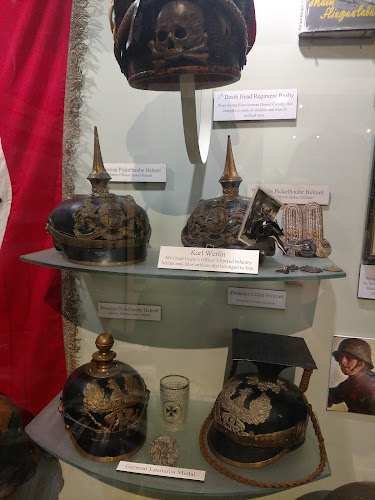
The Webb Military Museum sits amid the historic streets of Savannah and brings military history alive in a way that feels personal rather than encyclopedic. The museum collects artifacts spanning the American Civil War through Desert Storm, and presents them in a walk-through layout that encourages slow, thoughtful exploration. Rather than relying solely on glass cases and wall text, the displays aim to tell the stories behind uniforms, headgear, medals, and everyday equipment — the items that once belonged to real people who served. Visitors note an intimacy here: small groupings of named servicemen, mapped to the artifacts they carried, give context and character to each era on display.
For travelers who love military history, or who just want a grounded counterpoint to Savannah's more touristed squares and riverfront, Webb Military Museum rewards curiosity. Exhibits are organized both chronologically and thematically, so a Civil War buff can linger over period uniforms while someone interested in 20th-century warfare can follow the arc from World War II to Gulf-era conflicts. Many of the uniforms are original, and the headgear and personal items are displayed with clear notes about unit, rank, and sometimes brief biographical sketches. Those little biographical notes are the museum's secret sauce; they turn anonymous artifacts into human stories, and travelers often find themselves surprised at how quickly empathy develops when you read a single line about where a soldier came from and what happened to them.
The museum also honors all branches of service. Air Force, Army, Navy, Marine memorabilia each has its place, and the curators show care in balancing large-scale subjects like campaign history with intimate artifacts such as letters and dog tags. A docent once pointed out a small, tarnished medal that had been tucked away in a drawer for years; it turned out to belong to a local veteran whose grandchildren live two blocks away. Those neighborhood connections make the museum feel less like a sterile institution and more like a communal memory bank. It’s one of those spots where local pride and national history intersect, which for many visitors translates into a meaningful, even emotional, hour or two of the day.
Accessibility and visitor amenities are straightforward and practical. The entrance and parking are wheelchair accessible, and there are accessible restrooms inside. The museum runs guided tours on request, which are especially useful if travelers want a deeper dive or if they’re visiting with children who benefit from a storyteller's flair. There is a gift shop that stocks reproductions, books on military history, patches, pins, and a few locally made keepsakes — perfect for anyone wanting to take something home that actually means something. Admission is fee-based, but most visitors report that the price feels reasonable considering the focused collection and the personalized feel of the exhibits.
From a planning perspective, the Webb Military Museum fits nicely into a day spent exploring downtown Savannah. It tends to be quieter than the main riverfront attractions, so people who prefer less crowded stops will appreciate that. Families with kids find it approachable; exhibits are labeled in plain language and there are tactile elements and kid-friendly explanations in several areas. At the same time there's enough depth for a dedicated military history fan to spend a long time reading and reflecting. And if a visitor happens upon a docent or volunteer with stories about the items on display, that anecdotal layer often elevates the experience from informative to unforgettable.
One odd little thing worth mentioning: because the collection grew organically through donations and local rescues, the layout sometimes feels like a curated garage of national memory. In a good way. That slightly informal vibe is charming to many travelers who enjoy museums that show personality. It’s not polished in the antiseptic sense, and there are corners that feel lovingly lived-in. If the visitor expects a giant, modern museum, they might be surprised. But if they come with the right appetite — for stories, for original uniforms, for veterans honored in named groupings — they’ll leave impressed by the way small artifacts can tell big histories.
Savannah itself enhances the visit. After touring the museum, travelers can wander the historic district to process what they saw, perhaps over a coffee. The museum’s location makes it possible to pair military history with architectural history in a single afternoon. Visitors who like to mix experiences — say, a stately walking tour of historic homes followed by a compact but intense museum visit — report high satisfaction. And those who are deeply moved by the personal stories often say they felt compelled to visit nearby memorials and parks afterwards to continue the reflection.
Practical notes that often get overlooked: photography policies may vary by exhibit, so a polite check with staff is wise before snapping away. The museum staff are generally knowledgeable and willing to share extra context, so don’t be shy about asking questions. For solo travelers, the museum is an easy place to linger without feeling hurried. For group travelers or families, the guided tours add structure and a narrative arc that helps the pieces click together. Many visitors remark on the balance between artifact-rich cases and short interpretive texts; it’s curated to encourage both quick stops and detailed reading.
For people who collect military memorabilia themselves or who study genealogy, Webb Military Museum can be unexpectedly useful. The named groupings of servicemen are sometimes tied to local units or local families, and researchers have been known to make contacts through museum volunteers. The staff can often point visitors to local archives or veterans organizations that hold additional records, so the museum can be a stepping-stone for deeper investigation. One visitor shared that a museum volunteer connected them to a family scrapbook from WWII, which eventually led to a reunion decades later. That kind of connective tissue is rare and special.
In terms of mood, this museum leans toward reverence without being preachy. Exhibits honor service while also presenting objects in their historical context. There are moments that provoke pride, and there are quieter moments that request reflection. The displays about the Civil War are handled with attention to nuance — not glorification — and the modern conflict sections include equipment and personal items that illustrate the continuity of service across generations. Visitors who come hoping to learn something new about American military history will find layers of detail, and those who come looking for emotional connection will likely find it too.
Finally, a personal aside that the staff sometimes repeat to visitors: museum-goers often plan to spend half an hour and end up staying much longer. That seems true across visitor types — couples, solo travelers, families, veterans returning to remember. There’s a snug, compelling pace to the place. It’s not a blockbuster destination, but it is, in its own restrained way, a meaningful stop in Savannah for anyone intrigued by military history, local stories, or the human side of uniforms and gear. If one thing sticks with people after leaving, it’s the realization that history lives in small things, and the Webb Military Museum does a solid job of showing how much those small things can tell us about service, sacrifice, and community.
Key Features
More Details
Updated August 29, 2025
Table of Contents
Description
The Webb Military Museum sits amid the historic streets of Savannah and brings military history alive in a way that feels personal rather than encyclopedic. The museum collects artifacts spanning the American Civil War through Desert Storm, and presents them in a walk-through layout that encourages slow, thoughtful exploration. Rather than relying solely on glass cases and wall text, the displays aim to tell the stories behind uniforms, headgear, medals, and everyday equipment — the items that once belonged to real people who served. Visitors note an intimacy here: small groupings of named servicemen, mapped to the artifacts they carried, give context and character to each era on display.
For travelers who love military history, or who just want a grounded counterpoint to Savannah’s more touristed squares and riverfront, Webb Military Museum rewards curiosity. Exhibits are organized both chronologically and thematically, so a Civil War buff can linger over period uniforms while someone interested in 20th-century warfare can follow the arc from World War II to Gulf-era conflicts. Many of the uniforms are original, and the headgear and personal items are displayed with clear notes about unit, rank, and sometimes brief biographical sketches. Those little biographical notes are the museum’s secret sauce; they turn anonymous artifacts into human stories, and travelers often find themselves surprised at how quickly empathy develops when you read a single line about where a soldier came from and what happened to them.
The museum also honors all branches of service. Air Force, Army, Navy, Marine memorabilia each has its place, and the curators show care in balancing large-scale subjects like campaign history with intimate artifacts such as letters and dog tags. A docent once pointed out a small, tarnished medal that had been tucked away in a drawer for years; it turned out to belong to a local veteran whose grandchildren live two blocks away. Those neighborhood connections make the museum feel less like a sterile institution and more like a communal memory bank. It’s one of those spots where local pride and national history intersect, which for many visitors translates into a meaningful, even emotional, hour or two of the day.
Accessibility and visitor amenities are straightforward and practical. The entrance and parking are wheelchair accessible, and there are accessible restrooms inside. The museum runs guided tours on request, which are especially useful if travelers want a deeper dive or if they’re visiting with children who benefit from a storyteller’s flair. There is a gift shop that stocks reproductions, books on military history, patches, pins, and a few locally made keepsakes — perfect for anyone wanting to take something home that actually means something. Admission is fee-based, but most visitors report that the price feels reasonable considering the focused collection and the personalized feel of the exhibits.
From a planning perspective, the Webb Military Museum fits nicely into a day spent exploring downtown Savannah. It tends to be quieter than the main riverfront attractions, so people who prefer less crowded stops will appreciate that. Families with kids find it approachable; exhibits are labeled in plain language and there are tactile elements and kid-friendly explanations in several areas. At the same time there’s enough depth for a dedicated military history fan to spend a long time reading and reflecting. And if a visitor happens upon a docent or volunteer with stories about the items on display, that anecdotal layer often elevates the experience from informative to unforgettable.
One odd little thing worth mentioning: because the collection grew organically through donations and local rescues, the layout sometimes feels like a curated garage of national memory. In a good way. That slightly informal vibe is charming to many travelers who enjoy museums that show personality. It’s not polished in the antiseptic sense, and there are corners that feel lovingly lived-in. If the visitor expects a giant, modern museum, they might be surprised. But if they come with the right appetite — for stories, for original uniforms, for veterans honored in named groupings — they’ll leave impressed by the way small artifacts can tell big histories.
Savannah itself enhances the visit. After touring the museum, travelers can wander the historic district to process what they saw, perhaps over a coffee. The museum’s location makes it possible to pair military history with architectural history in a single afternoon. Visitors who like to mix experiences — say, a stately walking tour of historic homes followed by a compact but intense museum visit — report high satisfaction. And those who are deeply moved by the personal stories often say they felt compelled to visit nearby memorials and parks afterwards to continue the reflection.
Practical notes that often get overlooked: photography policies may vary by exhibit, so a polite check with staff is wise before snapping away. The museum staff are generally knowledgeable and willing to share extra context, so don’t be shy about asking questions. For solo travelers, the museum is an easy place to linger without feeling hurried. For group travelers or families, the guided tours add structure and a narrative arc that helps the pieces click together. Many visitors remark on the balance between artifact-rich cases and short interpretive texts; it’s curated to encourage both quick stops and detailed reading.
For people who collect military memorabilia themselves or who study genealogy, Webb Military Museum can be unexpectedly useful. The named groupings of servicemen are sometimes tied to local units or local families, and researchers have been known to make contacts through museum volunteers. The staff can often point visitors to local archives or veterans organizations that hold additional records, so the museum can be a stepping-stone for deeper investigation. One visitor shared that a museum volunteer connected them to a family scrapbook from WWII, which eventually led to a reunion decades later. That kind of connective tissue is rare and special.
In terms of mood, this museum leans toward reverence without being preachy. Exhibits honor service while also presenting objects in their historical context. There are moments that provoke pride, and there are quieter moments that request reflection. The displays about the Civil War are handled with attention to nuance — not glorification — and the modern conflict sections include equipment and personal items that illustrate the continuity of service across generations. Visitors who come hoping to learn something new about American military history will find layers of detail, and those who come looking for emotional connection will likely find it too.
Finally, a personal aside that the staff sometimes repeat to visitors: museum-goers often plan to spend half an hour and end up staying much longer. That seems true across visitor types — couples, solo travelers, families, veterans returning to remember. There’s a snug, compelling pace to the place. It’s not a blockbuster destination, but it is, in its own restrained way, a meaningful stop in Savannah for anyone intrigued by military history, local stories, or the human side of uniforms and gear. If one thing sticks with people after leaving, it’s the realization that history lives in small things, and the Webb Military Museum does a solid job of showing how much those small things can tell us about service, sacrifice, and community.
Key Highlights
Webb Military Museum
Location
Places to Stay Near Webb Military Museum
Find and Book a Tour
Explore More Travel Guides
No reviews found! Be the first to review!
Traveler Reviews for Webb Military Museum
There are no reviews yet. Be the first one to write one.
Have you visited Webb Military Museum? Help other travelers by sharing your review.
You Might Also Like

Davenport House Museum Entrance and Shop
Telfair Museums
Chippewa Square
Find Accommodations Nearby
Recommended Tours & Activities
Visitor Reviews
There are no reviews yet. Be the first one to write one.
Share Your Experience
Have you visited Webb Military Museum? Help other travelers by leaving a review.