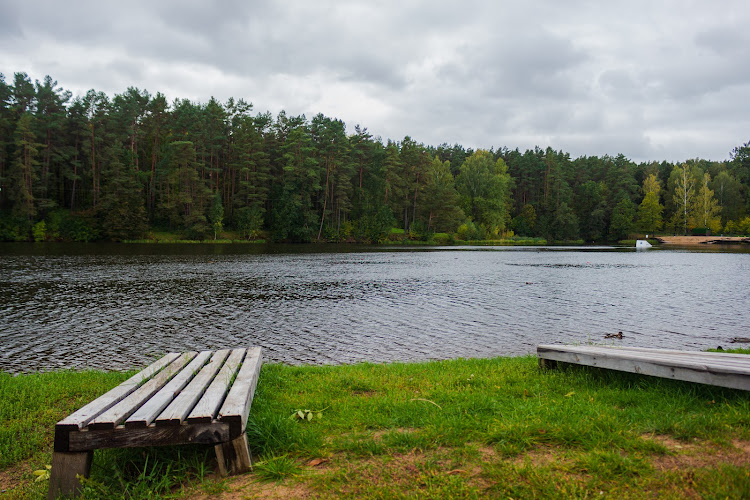
Pecherskiy Lesopark is a highly acclaimed park located in Mogilev, Belarus. With a rating of 4.8 out of 5, it stands out as one of the top-rated parks in the area.
Visitor Guide & Information
Pecherskiy Lesopark is a highly acclaimed park located in Mogilev, Belarus. With a rating of 4.8 out of 5, it stands out as one of the top-rated parks in the area.
Location
You can find Pecherskiy Lesopark at Mogilev, Mogilev Region, Belarus.
What to Expect
Pecherskiy Lesopark offers visitors a chance to enjoy the natural beauty of Mogilev, Belarus. Whether you are looking for a peaceful walk, a picnic spot, or simply a place to relax outdoors, this park provides a welcome green space.
Planning Your Visit
The park is located at Mogilev, Mogilev Region, Belarus. GPS coordinates: 53.925863, 30.299428. Check locally for current opening hours and any admission fees before visiting.
Community & Insider Notes
Last modified August 17, 2026
Pecherskiy Lesopark is a highly acclaimed park located in Mogilev, Belarus. With a rating of 4.8 out of 5, it stands out as one of the top-rated parks in the area.
You can find Pecherskiy Lesopark at Mogilev, Mogilev Region, Belarus.
What to Expect
Pecherskiy Lesopark offers visitors a chance to enjoy the natural beauty of Mogilev, Belarus. Whether you are looking for a peaceful walk, a picnic spot, or simply a place to relax outdoors, this park provides a welcome green space.
Planning Your Visit
The park is located at Mogilev, Mogilev Region, Belarus. GPS coordinates: 53.925863, 30.299428. Check locally for current opening hours and any admission fees before visiting.
Pecherskiy Lesopark sprawls across 330 hectares in Mogilev, Belarus. It’s probably best known for its artificial pond and those massive, timeworn oak trees.
The park offers year-round activities like swimming, boating, skiing, and ice skating. It’s a go-to for families and anyone craving some active time in nature, without having to trek too far from the city.
This forest park traces its roots all the way back to the 16th century when the land was owned by the Kyiv-Pechersk Lavra monastery. Over the years, it bounced between Orthodox, Uniate, and Catholic clergy, served as a bishop’s residence, and even housed a Napoleonic army field hospital in 1812.
Today, there’s a well-kept park zone tucked inside the bigger forest. Locals often treat it as their favorite spot to get away from the city buzz.
Pecherskiy Lesopark gives you 330 hectares of forest and parkland where you can swim in an artificial pond, rent boats or winter sports equipment, and walk trails through woods that include some trees that are hundreds of years old. The park sits on the edge of Mogilev and is perfect for anyone who wants outdoor fun without a long trip.
Key Takeaways
Pecherskiy Lesopark is a 330-hectare forest park in Mogilev with swimming, boating, and winter sports available.
The park has over 400 years of history tied to monasteries, nobility, and military events.
You can visit year-round with equipment rentals available for seasonal activities like skiing and ice skating.
Key Details and Quick Facts
Pecherskiy Lesopark is a 337-hectare forest park in Mogilev, Belarus. It blends protected woodland with developed areas for walking, nature activities, and exploring a site with centuries of stories.
The park is ranked among Mogilev’s top attractions on Tripadvisor. It’s also protected as a nature reserve.
Location & Access
Address: Pecherskiy Reserve, Mogilev, Belarus
Size: 337 hectares of forest and parkland
Status: Protected forest park with managed recreational zones
Historical Background
The land first belonged to the Kiev Pechersk Lavra in the early 1500s. Control shifted between Orthodox, Uniate, and Catholic clergy throughout the 1600s.
It became an episcopal residence in 1644, and later, the eastern section went to Carmelite monks, then Metropolitan Stanislav Bogush-Sestrantsevich in the 1780s. In 1812, French and Polish troops used part of the estate as a military hospital, with Napoleonic soldiers buried on the grounds.
By the 19th century, the area had a military hospital, an almshouse, and psychiatric hospital buildings.
Notable Features
Historic oak grove near the old Bishop’s moat
Site of the former Gortynsky estate, where exotic plants were grown in the 1800s
Memorial cross honoring Belarusian writer Dmitry Zhilunovich (Tishka Gartny)
What to Expect at Pecherskiy Lesopark
You’ll find a 330-hectare urban forest park in Mogilev, popular for its man-made pond (ducks included) and wooded trails that are just right for walking or a bit of quiet time outdoors.
The park is ranked 28th out of 40 attractions in Mogilev on Tripadvisor. The forest landscape gives you a break from city streets, with winding paths and open spots near the water.
Key features you’ll encounter:
An artificial pond where you can watch ducks and other waterfowl
Wooded trails throughout the 330 hectares
Open green spaces for picnicking and leisure
Historic grounds with stories dating back to the 16th century
The land once belonged to the Kyiv-Pechersk Lavra monastery and later held various estates and buildings. You might spot markers or small signs referencing its long history.
This is mainly a nature spot, not an activity center. Don’t expect lots of facilities or entertainment—just a natural setting and space to walk, sit by the pond, or enjoy the forest air.
Plan Your Visit
Pecherskiy Lesopark is open all year, with free admission. You can reach it by local bus or taxi from central Mogilev in about 15-20 minutes.
The park offers bike rentals, boat activities, and a café with a second-floor terrace that overlooks the water.
Best Time to Go
Summer, especially from June through August, is when the park is at its liveliest. All water activities are open, including paddleboard rentals, wakeboarding at the beach, and boat or catamaran rides across the waterways.
The outdoor fitness circuit and forest trails are easiest to access in summer. Spring and early fall are quieter, with nice weather for walking and cycling, and you can still rent bikes.
Winter is more about forest walks—water activities close, and the café has shorter hours. The park’s natural beauty sticks around, but your options are mostly hiking and enjoying the wintry landscape.
Getting There
From Mogilev city center, hop on a public bus to the Sanatorium School-Internat, which is near the park entrance. The ride takes 15-20 minutes, give or take.
Taxis can drop you right at the main park area and are easy to find around Mogilev. If you’re driving, there’s parking near the entrance.
The park is in the Pechersky Reserve area, on Mogilev’s outskirts. Watch for signs that say “Печерский лесопарк” as you get close.
Insider Tips
Bring cash for bike rentals or water equipment—sometimes cards just don’t work out here. The café by the wakeboarding beach has a second-floor terrace; locals say it’s got the best views.
If you’re after a boat or paddleboard on summer weekends, show up early—they book out fast. The outdoor fitness circuit is busiest mid-morning, so sunrise or late afternoon is better if you want some peace.
Mosquito repellent is a must in warmer months, especially if you’re heading into the woods. There are benches scattered throughout for breaks, and you’ll usually see ducks near the water areas where families like to feed them.
Nearby Attractions and Explore More in Belarus
After Pecherskiy Lesopark, you can check out other Mogilev spots like the Memorial Complex Buynichskoe Field (WWII history), the Nikolsky Women’s Monastery, and Star Square in the city center with its town hall and museums.
The Belarusian Heritage Village 19th Century is an open-air museum with traditional wooden architecture. Mogilev’s Museum of Ethnography showcases regional folk culture and artifacts.
There’s also a Fine Arts Museum and an amusement park for families.
Other Belarus Destinations Worth Visiting:
Minsk – The capital, with Independence Square, the National Library, and the Island of Tears memorial.
Brest – Check out the Brest Fortress, a major WWII memorial.
Grodno – Known for its old town and historic churches.
Belovezhskaya Pushcha – An ancient forest and UNESCO World Heritage site where European bison still roam.
Most travelers base themselves in Minsk, about 200 kilometers from Mogilev. Minsk International 2 Airport is the main entry point for international visitors.
You can get to Mogilev by train or bus from Minsk in around three hours. Belarus offers visa-free entry for many nationalities if you arrive through Minsk airport and stay up to 30 days.
The Belarusian ruble is the currency here.
Frequently Asked Questions
Pecherskiy Lesopark is in Mogilev, not Minsk, and people usually ask about getting there, what trails are like, and what to expect in this 337-hectare forest park.
Where exactly is the park located, and what’s the easiest way to reach it from central Minsk without a car?
Pecherskiy Lesopark is in Mogilev, about 200 kilometers east of Minsk. So, you’re looking at an intercity trip, not just a quick bus ride.
The park stretches across Mogilev’s northern outskirts, with main access points near the Pecherskiy psychiatric hospital and along Surganova Street. From Minsk, take a bus or train to Mogilev Central Station, then grab a local bus or taxi to the park.
Most people coming from Minsk make it a day trip or stay overnight. The trip takes around 2.5 to 3 hours by bus or train.
What makes this forested area unique compared with other green spaces nearby, and what details do locals usually overlook?
This park has belonged to religious institutions since the 16th century—first the Kyiv-Pechersk Lavra, then Orthodox bishops, Carmelites, and Catholic clergy. That history shaped its layout and helped preserve big stretches of mature oak and mixed woodland.
It’s not your average city park; it’s wilder, with a big artificial pond where ducks hang out all year. The place covers 337 hectares, making it one of the largest green spaces in the Mogilev area.
A lot of locals miss the historical layers here. There are unmarked burial sites from the 1654 massacre of Mogilev’s Jewish community, mass graves of Napoleonic soldiers, and victims of Nazi gas chambers at the psychiatric hospital in 1941.
There’s also a cross for Belarusian writer Dmitry Zhilunovich (Tishka Hartny) near the park’s edge, though nobody’s quite sure where he’s actually buried.
Which walking routes are best for a first-time visit, and roughly how long do they take at an unhurried pace?
The loop around the central artificial pond is probably the easiest intro—it’ll take you 45 minutes to an hour if you’re not rushing. That way you’ll see the main duck-watching spots.
For a longer walk, head into the woods north and east, where the trails wind through oak groves and open clearings. A full circuit of the developed trails can take two to three hours, depending on how many detours you take.
Signs exist, but they’re a bit hit or miss—stick to the wider paths if you’re new.
What’s the best season and time of day to visit for wildlife, wildflowers, or atmospheric photography?
Early mornings from May to September are best for bird activity and soft light, especially by the pond where waterfowl are most active. Spring wildflowers pop up in April and May, and autumn colors peak late September into early October.
Winter transforms the park into a cross-country skiing and ice-skating spot, with rentals near the main entrance. Summer afternoons can get crowded with families, so weekday mornings are better if you want some space.
Are there any practical visitor tips—surfaces underfoot, mosquitoes, signage, or mobile signal—that can catch travelers off guard?
Trails shift from packed dirt to spots where roots stick up everywhere. Sturdy shoes are a must; sandals just won’t cut it here.
Mosquitoes? They’re relentless near the pond and anywhere shady from late May through August. Honestly, don’t forget repellent unless you enjoy being a snack.
Mobile signal holds up pretty well by the park’s edge, but the deeper you wander, the patchier it gets. Might be worth a heads-up if you’re relying on maps or need to check in.
Most signs are in Russian, and English translations are rare. Facilities are barebones—there aren’t many trash bins, and you’ll only find public restrooms near the main entrance or at rental spots.
What nearby places pair well with a visit, such as viewpoints, lakeside stops, or low-key cafés worth planning around?
The Dnieper River embankment in central Mogilev is about 15 minutes by bus or taxi from Pecherskiy Lesopark. There are riverside walking paths and benches, which are honestly great if you just want to sit and watch the water go by.
Mogilev’s old town, centered on Lenina Street, has a handful of small cafés. The town hall observation deck gives you a pretty solid view across the city—worth a quick detour if you like cityscapes.
The Buynichskoye Pole memorial complex, dedicated to the 1941 battle, is roughly 10 kilometers southeast. It’s got open-air military exhibits, a chapel, and even a small lake tucked away nearby.
Most cafés in Mogilev close by 9 PM, so if you’re the sort who likes lingering over coffee in the evening, you’ll want to keep that in mind.
{“@context”: “https://schema.org”, “@type”: “FAQPage”, “mainEntity”: [{“@type”: “Question”, “name”: “Where exactly is the park located, and what’s the easiest way to reach it from central Minsk without a car?”, “acceptedAnswer”: {“@type”: “Answer”, “text”: “Pecherskiy Lesopark is in Mogilev, about 200 kilometers east of Minsk. So, you’re looking at an intercity trip, not just a quick bus ride. The park stretches across Mogilev’s northern outskirts, with main access points near the Pecherskiy psychiatric hospital and along Surganova Street. From Minsk, take a bus or train to Mogilev Central Station, then grab a local bus or taxi to the park. Most people coming from Minsk make it a day trip or stay overnight. The trip takes around 2.5 to 3 hours by bus or train.”}}, {“@type”: “Question”, “name”: “What makes this forested area unique compared with other green spaces nearby, and what details do locals usually overlook?”, “acceptedAnswer”: {“@type”: “Answer”, “text”: “This park has belonged to religious institutions since the 16th century—first the Kyiv-Pechersk Lavra, then Orthodox bishops , Carmelites, and Catholic clergy. That history shaped its layout and helped preserve big stretches of mature oak and mixed woodland. It’s not your average city park; it’s wilder, with a big artificial pond where ducks hang out all year. The place covers 337 hectares, making it one of the largest green spaces in the Mogilev area. A lot of locals miss the historical layers here. There are unmarked burial sites from the 1654 massacre of Mogilev’s Jewish community, mass graves of Napoleonic soldiers, and victims of Nazi gas chambers at the psychiatric hospital in 1941. There’s also a cross for Belarusian writer Dmitry Zhilunovich (Tishka Hartny) near the park’s edge, though nobody’s quite sure where he’s actually buried.”}}, {“@type”: “Question”, “name”: “Which walking routes are best for a first-time visit, and roughly how long do they take at an unhurried pace?”, “acceptedAnswer”: {“@type”: “Answer”, “text”: “The loop around the central artificial pond is probably the easiest intro—it’ll take you 45 minutes to an hour if you’re not rushing. That way you’ll see the main duck-watching spots. For a longer walk, head into the woods north and east, where the trails wind through oak groves and open clearings . A full circuit of the developed trails can take two to three hours, depending on how many detours you take. Signs exist, but they’re a bit hit or miss—stick to the wider paths if you’re new.”}}, {“@type”: “Question”, “name”: “What’s the best season and time of day to visit for wildlife, wildflowers, or atmospheric photography?”, “acceptedAnswer”: {“@type”: “Answer”, “text”: “Early mornings from May to September are best for bird activity and soft light, especially by the pond where waterfowl are most active. Spring wildflowers pop up in April and May, and autumn colors peak late September into early October. Winter transforms the park into a cross-country skiing and ice-skating spot, with rentals near the main entrance. Summer afternoons can get crowded with families, so weekday mornings are better if you want some space.”}}, {“@type”: “Question”, “name”: “Are there any practical visitor tips—surfaces underfoot, mosquitoes, signage, or mobile signal—that can catch travelers off guard?”, “acceptedAnswer”: {“@type”: “Answer”, “text”: “Trails shift from packed dirt to spots where roots stick up everywhere. Sturdy shoes are a must; sandals just won’t cut it here. Mosquitoes? They’re relentless near the pond and anywhere shady from late May through August. Honestly, don’t forget repellent unless you enjoy being a snack. Mobile signal holds up pretty well by the park’s edge, but the deeper you wander, the patchier it gets. Might be worth a heads-up if you’re relying on maps or need to check in. Most signs are in Russian, and English translations are rare. Facilities are barebones—there aren’t many trash bins, and you’ll only find public restrooms near the main entrance or at rental spots.”}}, {“@type”: “Question”, “name”: “What nearby places pair well with a visit, such as viewpoints, lakeside stops, or low-key cafés worth planning around?”, “acceptedAnswer”: {“@type”: “Answer”, “text”: “The Dnieper River embankment in central Mogilev is about 15 minutes by bus or taxi from Pecherskiy Lesopark. There are riverside walking paths and benches, which are honestly great if you just want to sit and watch the water go by. Mogilev’s old town, centered on Lenina Street, has a handful of small cafés. The town hall observation deck gives you a pretty solid view across the city—worth a quick detour if you like cityscapes. The Buynichskoye Pole memorial complex, dedicated to the 1941 battle, is roughly 10 kilometers southeast. It’s got open-air military exhibits, a chapel, and even a small lake tucked away nearby. Most cafés in Mogilev close by 9 PM, so if you’re the sort who likes lingering over coffee in the evening, you’ll want to keep that in mind.”}}]}
Explore verified points of interest within walking or short transit distance.
No neighboring places mapped within 5 km yet.
Find Places to Stay Nearby
Stay22 provides this accommodation search. We may earn a commission if you book through it; verify current prices and terms with the provider.
🗺️
Interactive accommodation map requires marketing cookies to display live rates.
Recommended Experiences & Activities
GetYourGuide provides this tour inventory. We may earn a commission if you book through it; verify current availability, prices, and terms with the provider.
Top Viator Experiences & Guided Tours in Mogilev
We may earn a commission if you book through links on this page at no extra cost to you. All tours feature verified customer reviews and flexible cancellation options.