Guided Sightseeing Tours & Activities in Tomsk
- Browse sightseeing excursions and activities in Tomsk
- Check live availability, rates & traveler reviews on Viator
- Secure online booking with flexible options
Ulitsa Oktyabr'skiy Vzvoz, 10, Tomsk, Tomsk Oblast, Russie, 634003

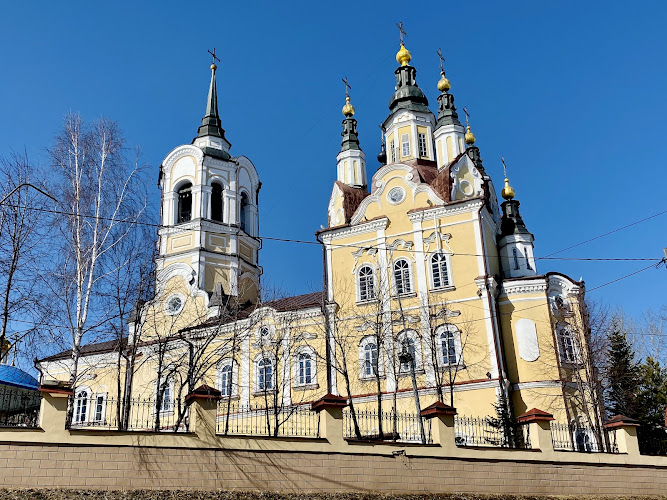
Perched on Voskresenskaya (Resurrection) Mountain in the historic heart of Tomsk, Voskresenskaya Tserkov’ is a quietly majestic example of Siberian sacred architecture and local devotion. Built in the late 18th century and repeatedly rebuilt and restored, the brick church combines traditional Orthodox form with decorative Siberian baroque details and a landmark bell that echoes across the city. Inside, visitors can find well-preserved fresco fragments and a peaceful iconostasis that reflect both pre-revolutionary craft and contemporary liturgical revival following the church’s return to the Russian Orthodox community in the 1990s. The church’s elevated site offers photogenic views across wooden Tomsk streets and invites contemplative pauses between nearby museums and cafes. Whether you come for religious observance, architectural interest, or panoramic cityscapes, Voskresenskaya Tserkov’ rewards a slow visit with layered history, atmospheric interiors, and strong local significance—distinct from other churches with the same name elsewhere in Russia.
Voskresenskaya Tserkov’ stands as a testament to Russian Orthodox architectural tradition and spiritual heritage. This working church continues to serve both as a place of worship and as an attraction that draws visitors from around the world who are fascinated by Eastern Orthodox traditions. The church’s name translates to Resurrection Church in English, which already gives you a sense of the profound religious significance this building holds for the local community.
When I first learned about Orthodox churches, I was honestly a bit intimidated by all the rules and customs, but places like Voskresenskaya Tserkov’ have a way of making even first-time visitors feel the weight of centuries of faith and tradition. The atmosphere inside is something you really can’t capture in photographs—there’s this combination of incense, candlelight, and the resonance of choral singing that creates an experience that’s almost otherworldly.
The church serves multiple purposes in its community. Sure, it’s a tourist attraction, but that’s almost secondary to its primary function as a cathedral where regular services take place. This dual nature actually makes it more interesting for travelers because you’re not just visiting a museum or a preserved historical site. You’re stepping into a living, breathing center of faith that’s been serving its congregation through various historical periods.
What strikes most visitors is the authentic nature of the experience here. This isn’t a place that’s been overly commercialized or sanitized for tourists. And that’s actually part of its charm, though it does mean you need to be respectful of the fact that people come here for genuine spiritual reasons.
The distinguishing characteristics of Voskresenskaya Tserkov’ make it worth adding to any traveler’s itinerary:
• Traditional Orthodox architecture that showcases the distinctive elements of Russian ecclesiastical design, including domes and specific structural elements that have been refined over centuries
• Active worship services where visitors can observe or participate in Orthodox liturgical practices, complete with traditional chanting and rituals that haven’t changed much in hundreds of years
• Religious iconography and interior decorations that follow strict Orthodox conventions, offering insight into this branch of Christianity’s artistic traditions
• Restroom facilities available on-site, which honestly is more important than it sounds when you’re doing a full day of sightseeing
• A welcoming atmosphere that accommodates both worshippers and curious travelers, though you’ll need to follow certain dress codes and behavioral guidelines
• Opportunities to light candles and observe local devotional practices, which can be meaningful even if you’re not Orthodox yourself
• The chance to hear Orthodox choral music during services, which is genuinely one of the most beautiful musical traditions in the world
• Cathedral status indicating its importance within the regional Orthodox hierarchy and suggesting a grander scale than your typical parish church
Timing your visit to Voskresenskaya Tserkov’ can significantly impact your experience, and there’s several factors worth considering here.
For those interested in observing Orthodox services, weekend liturgies provide the fullest experience of what this cathedral is really about. Sunday morning services typically draw the largest congregations and feature the most elaborate musical performances. But be prepared—Orthodox services can run long, sometimes several hours, so maybe don’t plan anything immediately afterward.
If you’re more interested in quietly exploring the architecture and artwork without crowds, weekday afternoons generally offer calmer conditions. You’ll still need to be respectful of any worshippers present, but you’ll have more space to move around and take in the details.
The Orthodox liturgical calendar follows different dates than Western Christian traditions for many holidays, so if you’re visiting during Easter season, check which calendar the church follows. Orthodox Easter celebrations are absolutely spectacular if you can time your visit right, though they’ll also be the most crowded times of year.
Weather-wise, each season offers something different. Winter visits give you that quintessential Russian church experience—there’s something about seeing Orthodox domes against snow that just feels right. But the churches can get cold, so layer up. Spring and fall provide comfortable temperatures for exploring both inside and out. Summer brings longer daylight hours which is practical, though it’s also peak tourist season.
One thing I’ve learned from visiting religious sites is that arriving either right when they open or about an hour before closing often gives you the most peaceful experience. The middle of the day tends to attract tour groups, which can make it harder to appreciate the contemplative atmosphere.
Getting to Voskresenskaya Tserkov’ requires some planning, but it’s definitely manageable even for travelers who don’t speak Russian.
Most visitors find that using a combination of public transportation and walking works well. Russian cities typically have extensive metro and bus systems, and churches are often located in historically significant areas that are already on tourist routes. Download an offline map before you go—seriously, this will save you so much frustration.
If you’re staying in the city center, you might find the church is within walking distance. Orthodox churches were traditionally built to serve neighborhoods, so they’re often integrated into residential areas rather than isolated on hilltops or outskirts.
Taxis and ride-sharing apps work in most Russian cities, and they’re reasonably priced compared to Western standards. Just have the church’s name written in Cyrillic on your phone to show drivers, because pronunciation can be tricky. I’ve definitely butchered church names before and gotten confused looks in return.
For those renting cars, parking near Orthodox churches can be limited since these areas often predate automobile access. Look for public parking a few blocks away rather than circling endlessly looking for a spot right at the entrance.
Organized tours sometimes include Voskresenskaya Tserkov’ as part of religious heritage routes or architectural tours. This can be convenient if you want historical context provided by a guide, though you’ll have less flexibility in how long you spend there.
Making the most of your visit to Voskresenskaya Tserkov’ involves understanding both practical logistics and cultural expectations.
Dress code matters at Orthodox churches. Women should bring a headscarf to cover their hair, and both men and women need to ensure shoulders and knees are covered. No shorts, no tank tops, no revealing clothing. This isn’t about being judgemental—it’s about respecting religious tradition. Some churches provide coverings at the entrance, but don’t count on it.
Photography policies vary, but as a general rule, assume photography isn’t allowed during services unless you see others clearly taking pictures. Even when permitted, flash photography is typically prohibited, and you should never photograph people who are praying without explicit permission. When in doubt, ask or just put the camera away and be present in the moment.
Behavior inside the church should be quiet and respectful. This means silencing phones completely, not having loud conversations, and being mindful that people around you may be engaged in prayer. If a service is happening, enter and exit during breaks rather than during key liturgical moments.
You don’t need to participate in religious practices like crossing yourself or venerating icons if that’s not part of your tradition, but observe how locals are behaving and avoid doing anything that contradicts what you see. Standing when others stand and maintaining silence when others are silent shows basic respect.
The church’s restroom facilities are available, but be aware that not all Orthodox churches maintain public facilities, so this is actually a helpful amenity. Still, come prepared just in case there’s maintenance issues or limited availability.
If you want to light candles—which is a common practice even among non-Orthodox visitors—there’s usually a donation box nearby. Small bills in local currency are appropriate. The candles typically have designated areas: taller candles for prayers for the living, shorter ones for remembering the deceased.
Timing your visit to catch even a few minutes of a service provides cultural insight you won’t get from an empty church. The choral singing alone is worth adjusting your schedule for. Services don’t typically require you to stay for the entire duration—people do come and go, especially during longer services.
Learning a few basic phrases in Russian helps tremendously. Being able to say thank you or excuse me goes a long way toward positive interactions. And honestly, making the effort shows respect for the local culture in a way that just speaking English doesn’t.
Bring cash for candles and donations. Many Orthodox churches haven’t modernized their donation systems to accept cards, and contributing something—even a small amount—is appropriate when visiting a working church as a tourist.
Finally, approach your visit with an open mind and genuine curiosity. Voskresenskaya Tserkov’ isn’t just a building to check off your list. It’s a window into Orthodox spirituality, Russian culture, and architectural traditions that have endured through remarkable historical changes. The travelers who get the most from their visit are the ones who take time to simply sit, observe, and absorb the atmosphere rather than rushing through for quick photos.
Last modified August 17, 2026
Voskresenskaya Tserkov’ stands as a testament to Russian Orthodox architectural tradition and spiritual heritage. This working church continues to serve both as a place of worship and as an attraction that draws visitors from around the world who are fascinated by Eastern Orthodox traditions. The church’s name translates to Resurrection Church in English, which already gives you a sense of the profound religious significance this building holds for the local community.
When I first learned about Orthodox churches, I was honestly a bit intimidated by all the rules and customs, but places like Voskresenskaya Tserkov’ have a way of making even first-time visitors feel the weight of centuries of faith and tradition. The atmosphere inside is something you really can’t capture in photographs—there’s this combination of incense, candlelight, and the resonance of choral singing that creates an experience that’s almost otherworldly.
The church serves multiple purposes in its community. Sure, it’s a tourist attraction, but that’s almost secondary to its primary function as a cathedral where regular services take place. This dual nature actually makes it more interesting for travelers because you’re not just visiting a museum or a preserved historical site. You’re stepping into a living, breathing center of faith that’s been serving its congregation through various historical periods.
What strikes most visitors is the authentic nature of the experience here. This isn’t a place that’s been overly commercialized or sanitized for tourists. And that’s actually part of its charm, though it does mean you need to be respectful of the fact that people come here for genuine spiritual reasons.
The distinguishing characteristics of Voskresenskaya Tserkov’ make it worth adding to any traveler’s itinerary:
• Traditional Orthodox architecture that showcases the distinctive elements of Russian ecclesiastical design, including domes and specific structural elements that have been refined over centuries
• Active worship services where visitors can observe or participate in Orthodox liturgical practices, complete with traditional chanting and rituals that haven’t changed much in hundreds of years
• Religious iconography and interior decorations that follow strict Orthodox conventions, offering insight into this branch of Christianity’s artistic traditions
• Restroom facilities available on-site, which honestly is more important than it sounds when you’re doing a full day of sightseeing
• A welcoming atmosphere that accommodates both worshippers and curious travelers, though you’ll need to follow certain dress codes and behavioral guidelines
• Opportunities to light candles and observe local devotional practices, which can be meaningful even if you’re not Orthodox yourself
• The chance to hear Orthodox choral music during services, which is genuinely one of the most beautiful musical traditions in the world
• Cathedral status indicating its importance within the regional Orthodox hierarchy and suggesting a grander scale than your typical parish church
Timing your visit to Voskresenskaya Tserkov’ can significantly impact your experience, and there’s several factors worth considering here.
For those interested in observing Orthodox services, weekend liturgies provide the fullest experience of what this cathedral is really about. Sunday morning services typically draw the largest congregations and feature the most elaborate musical performances. But be prepared—Orthodox services can run long, sometimes several hours, so maybe don’t plan anything immediately afterward.
If you’re more interested in quietly exploring the architecture and artwork without crowds, weekday afternoons generally offer calmer conditions. You’ll still need to be respectful of any worshippers present, but you’ll have more space to move around and take in the details.
The Orthodox liturgical calendar follows different dates than Western Christian traditions for many holidays, so if you’re visiting during Easter season, check which calendar the church follows. Orthodox Easter celebrations are absolutely spectacular if you can time your visit right, though they’ll also be the most crowded times of year.
Weather-wise, each season offers something different. Winter visits give you that quintessential Russian church experience—there’s something about seeing Orthodox domes against snow that just feels right. But the churches can get cold, so layer up. Spring and fall provide comfortable temperatures for exploring both inside and out. Summer brings longer daylight hours which is practical, though it’s also peak tourist season.
One thing I’ve learned from visiting religious sites is that arriving either right when they open or about an hour before closing often gives you the most peaceful experience. The middle of the day tends to attract tour groups, which can make it harder to appreciate the contemplative atmosphere.
Getting to Voskresenskaya Tserkov’ requires some planning, but it’s definitely manageable even for travelers who don’t speak Russian.
Most visitors find that using a combination of public transportation and walking works well. Russian cities typically have extensive metro and bus systems, and churches are often located in historically significant areas that are already on tourist routes. Download an offline map before you go—seriously, this will save you so much frustration.
If you’re staying in the city center, you might find the church is within walking distance. Orthodox churches were traditionally built to serve neighborhoods, so they’re often integrated into residential areas rather than isolated on hilltops or outskirts.
Taxis and ride-sharing apps work in most Russian cities, and they’re reasonably priced compared to Western standards. Just have the church’s name written in Cyrillic on your phone to show drivers, because pronunciation can be tricky. I’ve definitely butchered church names before and gotten confused looks in return.
For those renting cars, parking near Orthodox churches can be limited since these areas often predate automobile access. Look for public parking a few blocks away rather than circling endlessly looking for a spot right at the entrance.
Organized tours sometimes include Voskresenskaya Tserkov’ as part of religious heritage routes or architectural tours. This can be convenient if you want historical context provided by a guide, though you’ll have less flexibility in how long you spend there.
Making the most of your visit to Voskresenskaya Tserkov’ involves understanding both practical logistics and cultural expectations.
Dress code matters at Orthodox churches. Women should bring a headscarf to cover their hair, and both men and women need to ensure shoulders and knees are covered. No shorts, no tank tops, no revealing clothing. This isn’t about being judgemental—it’s about respecting religious tradition. Some churches provide coverings at the entrance, but don’t count on it.
Photography policies vary, but as a general rule, assume photography isn’t allowed during services unless you see others clearly taking pictures. Even when permitted, flash photography is typically prohibited, and you should never photograph people who are praying without explicit permission. When in doubt, ask or just put the camera away and be present in the moment.
Behavior inside the church should be quiet and respectful. This means silencing phones completely, not having loud conversations, and being mindful that people around you may be engaged in prayer. If a service is happening, enter and exit during breaks rather than during key liturgical moments.
You don’t need to participate in religious practices like crossing yourself or venerating icons if that’s not part of your tradition, but observe how locals are behaving and avoid doing anything that contradicts what you see. Standing when others stand and maintaining silence when others are silent shows basic respect.
The church’s restroom facilities are available, but be aware that not all Orthodox churches maintain public facilities, so this is actually a helpful amenity. Still, come prepared just in case there’s maintenance issues or limited availability.
If you want to light candles—which is a common practice even among non-Orthodox visitors—there’s usually a donation box nearby. Small bills in local currency are appropriate. The candles typically have designated areas: taller candles for prayers for the living, shorter ones for remembering the deceased.
Timing your visit to catch even a few minutes of a service provides cultural insight you won’t get from an empty church. The choral singing alone is worth adjusting your schedule for. Services don’t typically require you to stay for the entire duration—people do come and go, especially during longer services.
Learning a few basic phrases in Russian helps tremendously. Being able to say thank you or excuse me goes a long way toward positive interactions. And honestly, making the effort shows respect for the local culture in a way that just speaking English doesn’t.
Bring cash for candles and donations. Many Orthodox churches haven’t modernized their donation systems to accept cards, and contributing something—even a small amount—is appropriate when visiting a working church as a tourist.
Finally, approach your visit with an open mind and genuine curiosity. Voskresenskaya Tserkov’ isn’t just a building to check off your list. It’s a window into Orthodox spirituality, Russian culture, and architectural traditions that have endured through remarkable historical changes. The travelers who get the most from their visit are the ones who take time to simply sit, observe, and absorb the atmosphere rather than rushing through for quick photos.

No reviews found! Be the first to review!
Voskresenskaya Tserkov’ is a prominent attractions located in Tomsk.
Visit us at: Ulitsa Oktyabr’skiy Vzvoz, 10, Tomsk, Tomsk Oblast, Russie, 634003.
Explore verified points of interest within walking or short transit distance.
No neighboring places mapped within 5 km yet.
Stay22 provides this accommodation search. We may earn a commission if you book through it; verify current prices and terms with the provider.
GetYourGuide provides this tour inventory. We may earn a commission if you book through it; verify current availability, prices, and terms with the provider.
We may earn a commission if you book through links on this page at no extra cost to you. All tours feature verified customer reviews and flexible cancellation options.
No traveler reviews yet. Share your experience below!
No traveler questions yet. Be the first to ask a local!