About Ōura Cathedral

Description

Ōura Cathedral is one of those places that quietly changes how you think about Japan. It’s not loud about it. It doesn’t shout for attention. But you walk in, and suddenly you’re standing inside a Western-style Catholic church built in 1865, in a country where Christianity was once banned outright. That contrast alone is enough to stop most travelers mid-step. And honestly, it stopped me too the first time I visited. I remember thinking, Wait, am I still in Japan?

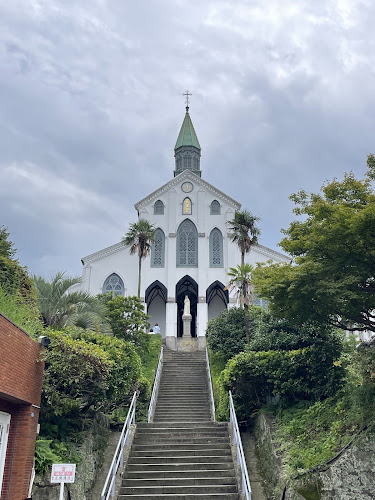
The cathedral sits there with a calm dignity, all pale stone and sharp Gothic lines, and it feels older than it technically is. That’s probably because of what it represents. This is the oldest surviving Christian church in Japan, and for many visitors, that fact alone gives the place a serious emotional weight. It was built just after Japan reopened to the world, and not long after, a group of hidden Christians revealed themselves here. That story still clings to the walls, whether you’re religious or not.

Inside, the light is what really gets you. Sunlight filters through stained glass windows imported from Europe, and the colors spill onto the floor in a way that feels almost cinematic. Reds, blues, and soft yellows drift across the stone. And if you go on a quiet weekday, it can be eerily peaceful. You hear footsteps. A cough. The faint creak of wood. And that’s it.

Now, let’s be fair. Ōura Cathedral isn’t massive, and some travelers leave feeling underwhelmed. It doesn’t take hours to explore, and there are parts that feel more like a historical exhibit than a living church. But that’s also kind of the charm. It asks you to slow down, to pay attention to details, to read the plaques and actually think about what they’re saying. And not everyone wants to do that on vacation, I get it.

What makes this place special isn’t flashy architecture or over-the-top decoration. It’s the story. The survival of faith. The blending of cultures. The quiet bravery of people who kept their beliefs alive in secret for centuries. And yeah, that hits harder when you’re standing right there, looking at the altar.

Key Features

  • Stained glass windows dating back to the 19th century, many brought over from Europe
  • Gothic-style architecture that feels surprisingly at home in Nagasaki
  • Sculptures and religious art with subtle Japanese influences
  • Historical significance tied to the hidden Christian communities of Japan
  • A peaceful interior that encourages slow, respectful exploration
  • Restroom facilities available on-site, which is more useful than it sounds

Best Time to Visit

If you ask me, mornings are the sweet spot. Early to mid-morning, before tour groups roll in, is when Ōura Cathedral feels most like itself. The light through the stained glass is softer then, and the whole place has a kind of hushed reverence. I once went just after opening and ended up sitting on a bench longer than planned, mostly because it felt wrong to rush.

Season-wise, spring and autumn are ideal. Nagasaki can get brutally humid in summer, and the walk up to the cathedral can feel longer than it is when the sun is beating down. Spring brings mild weather and cherry blossoms nearby, which adds a subtle layer of beauty without stealing the show. Autumn has crisp air and fewer crowds, which I personally prefer.

Weekdays are better than weekends if you want space to breathe. And if there’s a religious service happening, be respectful. You may still be allowed inside, but photography and wandering around are usually restricted. Honestly, even just observing quietly from the back can be a meaningful experience.

How to Get There

Getting to Ōura Cathedral is fairly straightforward, especially if you’re already exploring Nagasaki city. Public transportation will take you most of the way, and from there it’s a short walk. The streets leading up to the cathedral are a bit sloped, so wear decent shoes. I learned that the hard way in flimsy sandals. Not my brightest travel moment.

The surrounding area is very walkable and pairs well with other historical spots. Many travelers bundle the cathedral with nearby attractions, which makes sense logistically. Just don’t rush through it as a checkbox item. It deserves more than five minutes and a selfie.

One thing to note is accessibility. The site isn’t particularly friendly for wheelchairs or strollers due to steps and uneven paths. If mobility is a concern, it’s worth planning ahead or asking staff about the easiest route.

Tips for Visiting

First tip, and I can’t stress this enough: slow down. Ōura Cathedral rewards patience. Read the displays. Sit for a moment. Look up at the ceiling. There’s no prize for finishing fast.

Photography is usually allowed, but be mindful. This is still a place of worship. I’ve seen people get a bit too enthusiastic with cameras, and it changes the mood instantly. Phones on silent. Voices low. You know the drill.

Dress modestly. You don’t need to be covered head to toe, but this isn’t the place for beachwear. Even as a non-religious visitor, dressing respectfully just feels right.

Expect a mixed emotional response. Some people feel deeply moved. Others appreciate it more as a historical site. Both reactions are valid. If you’re someone who loves context, reading up a bit on Japan’s Christian history beforehand will make the visit richer. The story of the hidden Christians is heavy, but it adds layers you’d otherwise miss.

There’s a restroom on-site, which is a small but important detail when you’re out sightseeing all day. Trust me on that one.

Finally, don’t be surprised if Ōura Cathedral sticks with you longer than expected. I’ve visited plenty of famous churches around the world, big and small. This one doesn’t overwhelm you at first glance. But days later, I still found myself thinking about the light through the glass, and the idea of faith surviving quietly against all odds. And that, for a traveler, is the kind of memory that lasts.

Key Features

  • Stained glass windows dating back to the 19th century, many brought over from Europe
  • Gothic-style architecture that feels surprisingly at home in Nagasaki
  • Sculptures and religious art with subtle Japanese influences
  • Historical significance tied to the hidden Christian communities of Japan
  • A peaceful interior that encourages slow, respectful exploration
  • Restroom facilities available on-site, which is more useful than it sounds

More Details

Updated January 1, 2026

Description

Ōura Cathedral is one of those places that quietly changes how you think about Japan. It’s not loud about it. It doesn’t shout for attention. But you walk in, and suddenly you’re standing inside a Western-style Catholic church built in 1865, in a country where Christianity was once banned outright. That contrast alone is enough to stop most travelers mid-step. And honestly, it stopped me too the first time I visited. I remember thinking, Wait, am I still in Japan?

The cathedral sits there with a calm dignity, all pale stone and sharp Gothic lines, and it feels older than it technically is. That’s probably because of what it represents. This is the oldest surviving Christian church in Japan, and for many visitors, that fact alone gives the place a serious emotional weight. It was built just after Japan reopened to the world, and not long after, a group of hidden Christians revealed themselves here. That story still clings to the walls, whether you’re religious or not.

Inside, the light is what really gets you. Sunlight filters through stained glass windows imported from Europe, and the colors spill onto the floor in a way that feels almost cinematic. Reds, blues, and soft yellows drift across the stone. And if you go on a quiet weekday, it can be eerily peaceful. You hear footsteps. A cough. The faint creak of wood. And that’s it.

Now, let’s be fair. Ōura Cathedral isn’t massive, and some travelers leave feeling underwhelmed. It doesn’t take hours to explore, and there are parts that feel more like a historical exhibit than a living church. But that’s also kind of the charm. It asks you to slow down, to pay attention to details, to read the plaques and actually think about what they’re saying. And not everyone wants to do that on vacation, I get it.

What makes this place special isn’t flashy architecture or over-the-top decoration. It’s the story. The survival of faith. The blending of cultures. The quiet bravery of people who kept their beliefs alive in secret for centuries. And yeah, that hits harder when you’re standing right there, looking at the altar.

Key Features

  • Stained glass windows dating back to the 19th century, many brought over from Europe
  • Gothic-style architecture that feels surprisingly at home in Nagasaki
  • Sculptures and religious art with subtle Japanese influences
  • Historical significance tied to the hidden Christian communities of Japan
  • A peaceful interior that encourages slow, respectful exploration
  • Restroom facilities available on-site, which is more useful than it sounds

Best Time to Visit

If you ask me, mornings are the sweet spot. Early to mid-morning, before tour groups roll in, is when Ōura Cathedral feels most like itself. The light through the stained glass is softer then, and the whole place has a kind of hushed reverence. I once went just after opening and ended up sitting on a bench longer than planned, mostly because it felt wrong to rush.

Season-wise, spring and autumn are ideal. Nagasaki can get brutally humid in summer, and the walk up to the cathedral can feel longer than it is when the sun is beating down. Spring brings mild weather and cherry blossoms nearby, which adds a subtle layer of beauty without stealing the show. Autumn has crisp air and fewer crowds, which I personally prefer.

Weekdays are better than weekends if you want space to breathe. And if there’s a religious service happening, be respectful. You may still be allowed inside, but photography and wandering around are usually restricted. Honestly, even just observing quietly from the back can be a meaningful experience.

How to Get There

Getting to Ōura Cathedral is fairly straightforward, especially if you’re already exploring Nagasaki city. Public transportation will take you most of the way, and from there it’s a short walk. The streets leading up to the cathedral are a bit sloped, so wear decent shoes. I learned that the hard way in flimsy sandals. Not my brightest travel moment.

The surrounding area is very walkable and pairs well with other historical spots. Many travelers bundle the cathedral with nearby attractions, which makes sense logistically. Just don’t rush through it as a checkbox item. It deserves more than five minutes and a selfie.

One thing to note is accessibility. The site isn’t particularly friendly for wheelchairs or strollers due to steps and uneven paths. If mobility is a concern, it’s worth planning ahead or asking staff about the easiest route.

Tips for Visiting

First tip, and I can’t stress this enough: slow down. Ōura Cathedral rewards patience. Read the displays. Sit for a moment. Look up at the ceiling. There’s no prize for finishing fast.

Photography is usually allowed, but be mindful. This is still a place of worship. I’ve seen people get a bit too enthusiastic with cameras, and it changes the mood instantly. Phones on silent. Voices low. You know the drill.

Dress modestly. You don’t need to be covered head to toe, but this isn’t the place for beachwear. Even as a non-religious visitor, dressing respectfully just feels right.

Expect a mixed emotional response. Some people feel deeply moved. Others appreciate it more as a historical site. Both reactions are valid. If you’re someone who loves context, reading up a bit on Japan’s Christian history beforehand will make the visit richer. The story of the hidden Christians is heavy, but it adds layers you’d otherwise miss.

There’s a restroom on-site, which is a small but important detail when you’re out sightseeing all day. Trust me on that one.

Finally, don’t be surprised if Ōura Cathedral sticks with you longer than expected. I’ve visited plenty of famous churches around the world, big and small. This one doesn’t overwhelm you at first glance. But days later, I still found myself thinking about the light through the glass, and the idea of faith surviving quietly against all odds. And that, for a traveler, is the kind of memory that lasts.

Key Highlights

  • Stained glass windows dating back to the 19th century, many brought over from Europe
  • Gothic-style architecture that feels surprisingly at home in Nagasaki
  • Sculptures and religious art with subtle Japanese influences
  • Historical significance tied to the hidden Christian communities of Japan
  • A peaceful interior that encourages slow, respectful exploration
  • Restroom facilities available on-site, which is more useful than it sounds

Location

Places to Stay Near Ōura Cathedral

Find and Book a Tour

Explore More Travel Guides

No reviews found! Be the first to review!

Traveler Reviews for Ōura Cathedral

There are no reviews yet. Be the first one to write one.

Share Your Experience

Have you visited Ōura Cathedral? Help other travelers by sharing your review.

Find Accommodations Nearby

Recommended Tours & Activities

Visitor Reviews

There are no reviews yet. Be the first one to write one.

Share Your Experience

Have you visited Ōura Cathedral? Help other travelers by leaving a review.