About Museo Ducati

Description

The Museo Ducati is one of those places that manages to feel polished and a little raw at the same time. Located at Ducati’s historic headquarters just outside central Bologna, the museum tells the story of an Italian brand that didn’t just build motorcycles, but built an identity around speed, engineering obsession, and a slightly stubborn refusal to be ordinary. And yes, that attitude comes through clearly once you step inside.

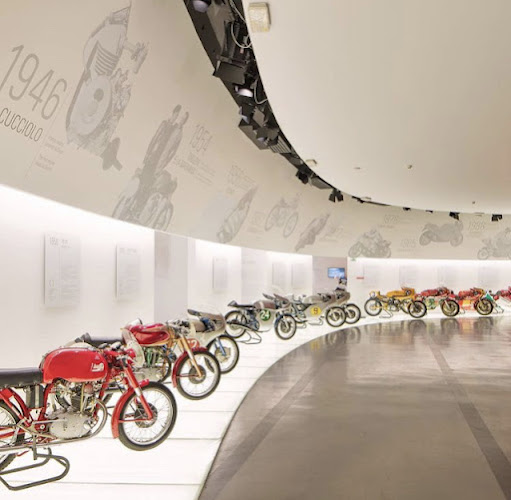
This is not a dusty hall of old machines parked behind ropes. The museum is sleek, almost theatrical, with carefully lit bikes that look like they could roar to life if someone turned a key. The displays follow Ducati’s evolution from its early days making radio components to becoming a global name in racing and performance motorcycles. It’s a timeline, but a lively one, full of twists, risks, and the kind of technical experimentation that Italians are famous for.

The space itself feels modern and purposeful. Walls are clean, exhibits are thoughtfully spaced, and there’s a rhythm to how you move through the rooms. Visitors are guided through decades of innovation, from classic road bikes to championship-winning racing machines. And while hardcore motorcycle fans will probably linger longer, even casual travelers tend to get pulled in. There’s something about seeing engineering pushed to its limits that’s universally appealing.

What really sets the Museo Ducati apart is its connection to the active factory next door. This isn’t a museum frozen in time. It’s part of a living, breathing production site where motorcycles are still being built. During the factory tour, visitors see how modern Ducatis come together, step by precise step. I once did a similar factory visit years ago, and I remember being surprised by how quiet and methodical it was, not loud chaos like I’d imagined. The Ducati experience hits that same note: controlled, exact, almost meditative.

The museum also balances its pride with a sense of realism. Not every experiment worked. Not every season ended with trophies. And that honesty makes the story stronger. You leave with an appreciation not just for success, but for persistence. For travelers who enjoy places with substance and context, the Museo Ducati delivers more than shiny objects.

Key Features

  • Chronological exhibits showcasing Ducati’s history from early engineering roots to modern superbikes
  • Legendary racing motorcycles, including championship-winning MotoGP and Superbike models
  • Authentic racing memorabilia such as helmets, suits, trophies, and technical components
  • Guided factory tours offering a behind-the-scenes look at Ducati motorcycle production
  • Modern, well-designed exhibition space that’s easy to navigate and visually striking
  • Interactive elements and detailed explanations that help non-experts understand complex engineering
  • Wheelchair-accessible entrances, restrooms, and parking for inclusive visiting
  • Family-friendly layout with discounts for kids and practical amenities like changing tables

Best Time to Visit

The Museo Ducati can be visited year-round, but timing does make a difference, especially if a factory tour is high on your list. Spring and early autumn are generally the sweet spots. The weather around Bologna is comfortable, travel crowds are manageable, and factory operations are usually running at full pace. That means a better chance of seeing the production line in action rather than a quiet floor.

Summer can still be a good option, particularly if you’re already in the region, but it comes with caveats. Bologna gets hot, like the kind of heat that makes you question your life choices while waiting for a bus. The museum itself is indoors and climate-controlled, thankfully, but factory tour availability may be limited during holiday periods.

Weekdays are usually calmer than weekends. Travelers who value space to linger, read, and really absorb the exhibits should aim for a morning visit during the week. I’m biased here, but museums feel better before lunch, when your brain isn’t already tired from espresso overload and sightseeing.

If you’re a racing fan, keep an eye on the motorsport calendar. Visiting during or just after a major racing season adds a layer of excitement. There’s something special about seeing a championship bike knowing it was recently on track, not just a relic from decades ago.

How to Get There

Reaching the Museo Ducati is fairly straightforward, even for travelers who prefer not to rent a car. From central Bologna, public transportation options make the journey manageable, though it does take a bit of planning. Buses run regularly toward the area near the Ducati factory, and the ride offers a glimpse into the city’s more industrial side, which is interesting in its own way.

For those driving, the experience is refreshingly stress-free. Parking is free, both in designated lots and on nearby streets, which honestly feels like a small miracle in Italy. The roads leading to the museum are well-marked, and navigation apps handle it without fuss.

Taxis and ride-hailing services are also viable, especially if you’re short on time. It’s not a long trip from the city center, and the cost is reasonable compared to other European cities. And if you’re already planning to explore outside Bologna, pairing the museum with another nearby stop makes logistical sense.

Tips for Visiting

Booking tickets in advance is strongly recommended, especially if you want to join the factory tour. Walk-in availability can be hit or miss, and it’s frustrating to stand there knowing the assembly line is just meters away but off-limits. Planning ahead saves disappointment.

Give yourself enough time. The museum alone can be explored in about an hour, but that’s rushing it. With the factory tour, expect to spend closer to two hours, maybe more if you like reading every panel and staring at engine details like they’re works of art. And honestly, some of them are.

Photography is generally allowed in the museum areas, but be respectful and pay attention to staff guidance, especially during tours. Some sections may have restrictions. And don’t worry, the lighting is excellent, so your photos won’t come out looking like blurry garage shots.

Families traveling with children will appreciate the practical setup. The museum is good for kids, especially those curious about machines, and amenities like changing tables make a difference. Still, younger kids might lose interest quicker, so setting expectations helps.

Accessibility is handled thoughtfully here. Wheelchair-accessible entrances, restrooms, and parking are available, making the visit more comfortable for everyone. It’s not always the case with older Italian attractions, so credit where it’s due.

One personal note: don’t skip reading the smaller stories. The captions, the side panels, the lesser-known engineers and riders. Those details add texture. I’ve walked through plenty of museums where I skimmed and moved on, only to forget most of it later. The Museo Ducati rewards attention. It sticks with you.

And finally, consider pairing your visit with a meal elsewhere afterward. There’s no restaurant on-site, but you’re in the Bologna area, which is basically a promise of good food if you step outside. After a morning surrounded by engines and racing history, sitting down with pasta feels like the perfect contrast.

The Museo Ducati isn’t just for motorcycle obsessives. It’s for travelers who like understanding how passion turns into product, how design meets discipline, and how a brand’s soul is built over time. If you appreciate stories of craftsmanship and ambition, this place earns its spot on your itinerary.

Key Features

  • Chronological exhibits showcasing Ducati’s history from early engineering roots to modern superbikes
  • Legendary racing motorcycles, including championship-winning MotoGP and Superbike models
  • Authentic racing memorabilia such as helmets, suits, trophies, and technical components
  • Guided factory tours offering a behind-the-scenes look at Ducati motorcycle production
  • Modern, well-designed exhibition space that’s easy to navigate and visually striking
  • Interactive elements and detailed explanations that help non-experts understand complex engineering
  • Wheelchair-accessible entrances, restrooms, and parking for inclusive visiting
  • Family-friendly layout with discounts for kids and practical amenities like changing tables

More Details

Updated December 31, 2025

Description

The Museo Ducati is one of those places that manages to feel polished and a little raw at the same time. Located at Ducati’s historic headquarters just outside central Bologna, the museum tells the story of an Italian brand that didn’t just build motorcycles, but built an identity around speed, engineering obsession, and a slightly stubborn refusal to be ordinary. And yes, that attitude comes through clearly once you step inside.

This is not a dusty hall of old machines parked behind ropes. The museum is sleek, almost theatrical, with carefully lit bikes that look like they could roar to life if someone turned a key. The displays follow Ducati’s evolution from its early days making radio components to becoming a global name in racing and performance motorcycles. It’s a timeline, but a lively one, full of twists, risks, and the kind of technical experimentation that Italians are famous for.

The space itself feels modern and purposeful. Walls are clean, exhibits are thoughtfully spaced, and there’s a rhythm to how you move through the rooms. Visitors are guided through decades of innovation, from classic road bikes to championship-winning racing machines. And while hardcore motorcycle fans will probably linger longer, even casual travelers tend to get pulled in. There’s something about seeing engineering pushed to its limits that’s universally appealing.

What really sets the Museo Ducati apart is its connection to the active factory next door. This isn’t a museum frozen in time. It’s part of a living, breathing production site where motorcycles are still being built. During the factory tour, visitors see how modern Ducatis come together, step by precise step. I once did a similar factory visit years ago, and I remember being surprised by how quiet and methodical it was, not loud chaos like I’d imagined. The Ducati experience hits that same note: controlled, exact, almost meditative.

The museum also balances its pride with a sense of realism. Not every experiment worked. Not every season ended with trophies. And that honesty makes the story stronger. You leave with an appreciation not just for success, but for persistence. For travelers who enjoy places with substance and context, the Museo Ducati delivers more than shiny objects.

Key Features

  • Chronological exhibits showcasing Ducati’s history from early engineering roots to modern superbikes
  • Legendary racing motorcycles, including championship-winning MotoGP and Superbike models
  • Authentic racing memorabilia such as helmets, suits, trophies, and technical components
  • Guided factory tours offering a behind-the-scenes look at Ducati motorcycle production
  • Modern, well-designed exhibition space that’s easy to navigate and visually striking
  • Interactive elements and detailed explanations that help non-experts understand complex engineering
  • Wheelchair-accessible entrances, restrooms, and parking for inclusive visiting
  • Family-friendly layout with discounts for kids and practical amenities like changing tables

Best Time to Visit

The Museo Ducati can be visited year-round, but timing does make a difference, especially if a factory tour is high on your list. Spring and early autumn are generally the sweet spots. The weather around Bologna is comfortable, travel crowds are manageable, and factory operations are usually running at full pace. That means a better chance of seeing the production line in action rather than a quiet floor.

Summer can still be a good option, particularly if you’re already in the region, but it comes with caveats. Bologna gets hot, like the kind of heat that makes you question your life choices while waiting for a bus. The museum itself is indoors and climate-controlled, thankfully, but factory tour availability may be limited during holiday periods.

Weekdays are usually calmer than weekends. Travelers who value space to linger, read, and really absorb the exhibits should aim for a morning visit during the week. I’m biased here, but museums feel better before lunch, when your brain isn’t already tired from espresso overload and sightseeing.

If you’re a racing fan, keep an eye on the motorsport calendar. Visiting during or just after a major racing season adds a layer of excitement. There’s something special about seeing a championship bike knowing it was recently on track, not just a relic from decades ago.

How to Get There

Reaching the Museo Ducati is fairly straightforward, even for travelers who prefer not to rent a car. From central Bologna, public transportation options make the journey manageable, though it does take a bit of planning. Buses run regularly toward the area near the Ducati factory, and the ride offers a glimpse into the city’s more industrial side, which is interesting in its own way.

For those driving, the experience is refreshingly stress-free. Parking is free, both in designated lots and on nearby streets, which honestly feels like a small miracle in Italy. The roads leading to the museum are well-marked, and navigation apps handle it without fuss.

Taxis and ride-hailing services are also viable, especially if you’re short on time. It’s not a long trip from the city center, and the cost is reasonable compared to other European cities. And if you’re already planning to explore outside Bologna, pairing the museum with another nearby stop makes logistical sense.

Tips for Visiting

Booking tickets in advance is strongly recommended, especially if you want to join the factory tour. Walk-in availability can be hit or miss, and it’s frustrating to stand there knowing the assembly line is just meters away but off-limits. Planning ahead saves disappointment.

Give yourself enough time. The museum alone can be explored in about an hour, but that’s rushing it. With the factory tour, expect to spend closer to two hours, maybe more if you like reading every panel and staring at engine details like they’re works of art. And honestly, some of them are.

Photography is generally allowed in the museum areas, but be respectful and pay attention to staff guidance, especially during tours. Some sections may have restrictions. And don’t worry, the lighting is excellent, so your photos won’t come out looking like blurry garage shots.

Families traveling with children will appreciate the practical setup. The museum is good for kids, especially those curious about machines, and amenities like changing tables make a difference. Still, younger kids might lose interest quicker, so setting expectations helps.

Accessibility is handled thoughtfully here. Wheelchair-accessible entrances, restrooms, and parking are available, making the visit more comfortable for everyone. It’s not always the case with older Italian attractions, so credit where it’s due.

One personal note: don’t skip reading the smaller stories. The captions, the side panels, the lesser-known engineers and riders. Those details add texture. I’ve walked through plenty of museums where I skimmed and moved on, only to forget most of it later. The Museo Ducati rewards attention. It sticks with you.

And finally, consider pairing your visit with a meal elsewhere afterward. There’s no restaurant on-site, but you’re in the Bologna area, which is basically a promise of good food if you step outside. After a morning surrounded by engines and racing history, sitting down with pasta feels like the perfect contrast.

The Museo Ducati isn’t just for motorcycle obsessives. It’s for travelers who like understanding how passion turns into product, how design meets discipline, and how a brand’s soul is built over time. If you appreciate stories of craftsmanship and ambition, this place earns its spot on your itinerary.

Key Highlights

  • Chronological exhibits showcasing Ducati’s history from early engineering roots to modern superbikes
  • Legendary racing motorcycles, including championship-winning MotoGP and Superbike models
  • Authentic racing memorabilia such as helmets, suits, trophies, and technical components
  • Guided factory tours offering a behind-the-scenes look at Ducati motorcycle production
  • Modern, well-designed exhibition space that’s easy to navigate and visually striking
  • Interactive elements and detailed explanations that help non-experts understand complex engineering
  • Wheelchair-accessible entrances, restrooms, and parking for inclusive visiting
  • Family-friendly layout with discounts for kids and practical amenities like changing tables

Location

Places to Stay Near Museo Ducati

Find and Book a Tour

Explore More Travel Guides

No reviews found! Be the first to review!

Traveler Reviews for Museo Ducati

There are no reviews yet. Be the first one to write one.

Share Your Experience

Have you visited Museo Ducati? Help other travelers by sharing your review.

Find Accommodations Nearby

Recommended Tours & Activities

Visitor Reviews

There are no reviews yet. Be the first one to write one.

Share Your Experience

Have you visited Museo Ducati? Help other travelers by leaving a review.