
Imperial Pavilion Museum
About Imperial Pavilion Museum
Description
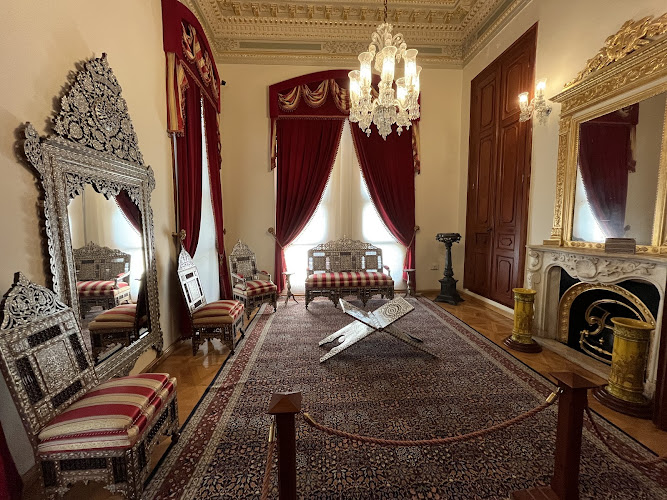
The Imperial Pavilion Museum, known locally as Abdülaziz Av Köşkü or Kasr-ı Hümayun, stands as a curious and elegant chapter in the story of the Ottoman Empire. It is a small palace that carries big ambitions: baroque and ampir (empire) architectural gestures, Ottoman courtly function, and the signature of a famous Ottoman-era architect, Garabet Amira Balyan. The building took its final form during the reign of Sultan Abdülaziz in the 19th century, and that moment — the late Ottoman period when European tastes mixed with classical Ottoman forms — is palpable in every cornice, window frame and ceiling rosette.
One important fact that tends to surprise even seasoned history buffs is that this is one of the only small palaces built outside of Istanbul during the Ottoman era. That gives the Imperial Pavilion Museum a distinctly provincial kind of aristocratic energy. It does not try to outshine Topkapı or Dolmabahçe. Instead it offers an intimate, human-scale encounter with royal design: a private kind of splendor, where rooms meant for hunting parties and private audiences still feel like lived-in fragments of an imperial life. If the word palace conjures vast, echoing halls, this place will recalibrate that image. Here the scale invites curiosity rather than overwhelm.
Architecturally, the pavilion is a study in stylistic conversations. Baroque influences appear in the flourishes and curvature of decorative plaster, while Ampir tendencies lend a disciplined sense of proportion and classical reference. The designer, Garabet Amira Balyan, is part of a family of architects who reshaped Ottoman public buildings in this era, and his fingerprint is visible in the way Eastern ornamentation meets Western draftsmanship. Visitors who care about architecture will spot the mix of pilasters, symmetrical facades, and interior decorative programs that feel European yet filtered through Ottoman preferences for pattern and color.
Inside, the rooms are compact but richly appointed. Ceilings that once sheltered small royal entourages now shelter visitors who want to imagine how the Ottoman court adapted European fashions without losing its identity. The museum setup typically emphasizes history — not just objects, but stories. Period furniture, decorative ceramics, and interpretive displays help place each room in context. But the building itself is an artifact: its layout, circulation, and ornament tell a story about imperial life away from the capital. The experiential value is in connecting the material culture of the late Ottoman court to the idea of regional governance and leisure.
There is a certain charm to visiting a museum that was designed as a private pavilion. Sightlines are shorter, details are easier to examine, and the small scale encourages a slower pace. The gardens and exterior facades, though not endlessly sprawling, provide unexpected photo opportunities; the building’s silhouette and window rhythms photograph well in soft afternoon light. And for those who like to trace the hands of specific makers, knowing that Garabet Amira Balyan was involved lends an extra layer of detective work. The Balyan name is a key that opens doors to understanding the transfer of architectural ideas across the Ottoman world during the 19th century.
Practicalities are part of the charm here too. The museum functions as a history museum that focuses on regional imperial presence: courtly life, hunting culture associated with the pavilion, and how 19th-century Ottoman rulers staged their image outside the capital. It does not present itself as a blockbuster institution with sprawling collections. Instead, it offers concentrated, often beautifully curated exhibits that reward attentiveness. The museum is particularly good for families with children who have an appetite for stories about sultans, hunts, and historical costume; the scale and approachable displays make it easier to keep kids engaged than in larger museums where little ones can get lost and bored.
There are a few practical limits that a traveler should be aware of. The museum does not house a restaurant, so meal planning requires a little extra thought. But this is not a museum that asks visitors to stay for a full-day immersion; most people will be satisfied with a focused one- to two-hour visit. And because the site is smaller and more intimate, interpretive signage can vary — sometimes excellent, sometimes sparse. The best visits are those where a guiding leaflet, a friendly docent, or a well-prepared guidebook accompanies the traveler. That said, the straightforward floor plan and the obvious points of interest make self-guided tours perfectly doable for curious minds.
There is also an atmospheric element that some visitors particularly love: the sense that they are walking through a place that has retained a measure of authenticity. Much of the building’s patina feels genuine rather than theatrical. One cannot help but feel, perching on a bench in a sunlit parlor, that this is where provincial but powerful narratives of empire were quietly enacted. For photography enthusiasts, some corners offer moody light and textured surfaces that do not scream for filters but rather reward a patient eye.
And a small aside from the writer: on a rainy afternoon visit, the author remembers standing in a room where the light slanted through an old window and thinking about how the building had hosted small, intense moments — a sultan writing a decree, a hunting party making plans, a conversation about local governance. Those imaginings are exactly what good history museums aim to produce: an emotional bridge to the past. It is silly but true that a place this modest can produce such vividly felt scenes in the imagination.
For the traveler interested in Ottoman history, architectural transitions of the 19th century, or simply quieter museum experiences away from tourist churn, the Imperial Pavilion Museum offers a clear, focused value proposition. It is a history museum that brings to life the late Ottoman period’s stylistic experiments and regional expressions of imperial power. The narrative is not grand in scale, but it is telling in detail.
From a cultural-heritage perspective, the pavilion also has research value. Scholars who study provincial manifestations of Ottoman authority, the Balyan dynasty’s architectural influence, or the adaptation of European styles in Ottoman domestic architecture will find the site useful if access is granted for deeper study. Local curators have sometimes arranged thematic displays and temporary exhibitions that highlight conservation work, archival materials, or comparative pieces that tie the pavilion into a wider network of 19th-century buildings in the region.
Because the museum is smaller than major metropolitan museums, the visitor experience can feel personal. Staff and curators are often more approachable, and special requests — like close-up looks at certain details or asking for clarification on a display — are more likely to receive a patient answer. That personal feel extends to the overall vibe: it is a place where curiosity is welcome and where slow, deliberate exploration is rewarded. The building invites questions, and if the visitor comes with patience, they leave with stories rather than just images.
To sum up in plain terms: the Imperial Pavilion Museum is a jewel of late Ottoman architecture, a small palace that acts as a compact time capsule. It reveals the interplay of baroque and ampir forms as adapted by Ottoman architects like Garabet Amira Balyan. It provides an intimate, kid-friendly, and historically rich museum experience without the crowds and the overwhelm of larger institutions. And while it lacks on-site dining, it gains points in authenticity, scale, and the ability to make visitors feel like they are uncovering a slightly secret chapter of Ottoman court life.
Visitors who appreciate history told through buildings rather than blockbuster holdings will likely find the Imperial Pavilion Museum especially rewarding. It’s not showy in the way big palaces are, but that very restraint makes its stories feel quieter and, in many ways, more human. The building asks the visitor to slow down, look closely, and connect details to broader historical currents — and for many, that is precisely the point of visiting a history museum in the first place.
Key Features
More Details
Updated August 29, 2025
Table of Contents
Description
The Imperial Pavilion Museum, known locally as Abdülaziz Av Köşkü or Kasr-ı Hümayun, stands as a curious and elegant chapter in the story of the Ottoman Empire. It is a small palace that carries big ambitions: baroque and ampir (empire) architectural gestures, Ottoman courtly function, and the signature of a famous Ottoman-era architect, Garabet Amira Balyan. The building took its final form during the reign of Sultan Abdülaziz in the 19th century, and that moment — the late Ottoman period when European tastes mixed with classical Ottoman forms — is palpable in every cornice, window frame and ceiling rosette.
One important fact that tends to surprise even seasoned history buffs is that this is one of the only small palaces built outside of Istanbul during the Ottoman era. That gives the Imperial Pavilion Museum a distinctly provincial kind of aristocratic energy. It does not try to outshine Topkapı or Dolmabahçe. Instead it offers an intimate, human-scale encounter with royal design: a private kind of splendor, where rooms meant for hunting parties and private audiences still feel like lived-in fragments of an imperial life. If the word palace conjures vast, echoing halls, this place will recalibrate that image. Here the scale invites curiosity rather than overwhelm.
Architecturally, the pavilion is a study in stylistic conversations. Baroque influences appear in the flourishes and curvature of decorative plaster, while Ampir tendencies lend a disciplined sense of proportion and classical reference. The designer, Garabet Amira Balyan, is part of a family of architects who reshaped Ottoman public buildings in this era, and his fingerprint is visible in the way Eastern ornamentation meets Western draftsmanship. Visitors who care about architecture will spot the mix of pilasters, symmetrical facades, and interior decorative programs that feel European yet filtered through Ottoman preferences for pattern and color.
Inside, the rooms are compact but richly appointed. Ceilings that once sheltered small royal entourages now shelter visitors who want to imagine how the Ottoman court adapted European fashions without losing its identity. The museum setup typically emphasizes history — not just objects, but stories. Period furniture, decorative ceramics, and interpretive displays help place each room in context. But the building itself is an artifact: its layout, circulation, and ornament tell a story about imperial life away from the capital. The experiential value is in connecting the material culture of the late Ottoman court to the idea of regional governance and leisure.
There is a certain charm to visiting a museum that was designed as a private pavilion. Sightlines are shorter, details are easier to examine, and the small scale encourages a slower pace. The gardens and exterior facades, though not endlessly sprawling, provide unexpected photo opportunities; the building’s silhouette and window rhythms photograph well in soft afternoon light. And for those who like to trace the hands of specific makers, knowing that Garabet Amira Balyan was involved lends an extra layer of detective work. The Balyan name is a key that opens doors to understanding the transfer of architectural ideas across the Ottoman world during the 19th century.
Practicalities are part of the charm here too. The museum functions as a history museum that focuses on regional imperial presence: courtly life, hunting culture associated with the pavilion, and how 19th-century Ottoman rulers staged their image outside the capital. It does not present itself as a blockbuster institution with sprawling collections. Instead, it offers concentrated, often beautifully curated exhibits that reward attentiveness. The museum is particularly good for families with children who have an appetite for stories about sultans, hunts, and historical costume; the scale and approachable displays make it easier to keep kids engaged than in larger museums where little ones can get lost and bored.
There are a few practical limits that a traveler should be aware of. The museum does not house a restaurant, so meal planning requires a little extra thought. But this is not a museum that asks visitors to stay for a full-day immersion; most people will be satisfied with a focused one- to two-hour visit. And because the site is smaller and more intimate, interpretive signage can vary — sometimes excellent, sometimes sparse. The best visits are those where a guiding leaflet, a friendly docent, or a well-prepared guidebook accompanies the traveler. That said, the straightforward floor plan and the obvious points of interest make self-guided tours perfectly doable for curious minds.
There is also an atmospheric element that some visitors particularly love: the sense that they are walking through a place that has retained a measure of authenticity. Much of the building’s patina feels genuine rather than theatrical. One cannot help but feel, perching on a bench in a sunlit parlor, that this is where provincial but powerful narratives of empire were quietly enacted. For photography enthusiasts, some corners offer moody light and textured surfaces that do not scream for filters but rather reward a patient eye.
And a small aside from the writer: on a rainy afternoon visit, the author remembers standing in a room where the light slanted through an old window and thinking about how the building had hosted small, intense moments — a sultan writing a decree, a hunting party making plans, a conversation about local governance. Those imaginings are exactly what good history museums aim to produce: an emotional bridge to the past. It is silly but true that a place this modest can produce such vividly felt scenes in the imagination.
For the traveler interested in Ottoman history, architectural transitions of the 19th century, or simply quieter museum experiences away from tourist churn, the Imperial Pavilion Museum offers a clear, focused value proposition. It is a history museum that brings to life the late Ottoman period’s stylistic experiments and regional expressions of imperial power. The narrative is not grand in scale, but it is telling in detail.
From a cultural-heritage perspective, the pavilion also has research value. Scholars who study provincial manifestations of Ottoman authority, the Balyan dynasty’s architectural influence, or the adaptation of European styles in Ottoman domestic architecture will find the site useful if access is granted for deeper study. Local curators have sometimes arranged thematic displays and temporary exhibitions that highlight conservation work, archival materials, or comparative pieces that tie the pavilion into a wider network of 19th-century buildings in the region.
Because the museum is smaller than major metropolitan museums, the visitor experience can feel personal. Staff and curators are often more approachable, and special requests — like close-up looks at certain details or asking for clarification on a display — are more likely to receive a patient answer. That personal feel extends to the overall vibe: it is a place where curiosity is welcome and where slow, deliberate exploration is rewarded. The building invites questions, and if the visitor comes with patience, they leave with stories rather than just images.
To sum up in plain terms: the Imperial Pavilion Museum is a jewel of late Ottoman architecture, a small palace that acts as a compact time capsule. It reveals the interplay of baroque and ampir forms as adapted by Ottoman architects like Garabet Amira Balyan. It provides an intimate, kid-friendly, and historically rich museum experience without the crowds and the overwhelm of larger institutions. And while it lacks on-site dining, it gains points in authenticity, scale, and the ability to make visitors feel like they are uncovering a slightly secret chapter of Ottoman court life.
Visitors who appreciate history told through buildings rather than blockbuster holdings will likely find the Imperial Pavilion Museum especially rewarding. It’s not showy in the way big palaces are, but that very restraint makes its stories feel quieter and, in many ways, more human. The building asks the visitor to slow down, look closely, and connect details to broader historical currents — and for many, that is precisely the point of visiting a history museum in the first place.
Key Highlights
Imperial Pavilion Museum
Location
Places to Stay Near Imperial Pavilion Museum
Find and Book a Tour
Explore More Travel Guides
No reviews found! Be the first to review!
Traveler Reviews for Imperial Pavilion Museum
There are no reviews yet. Be the first one to write one.
Have you visited Imperial Pavilion Museum? Help other travelers by sharing your review.
You Might Also Like

Espark Shopping Mall
Recep Tayyip Erdogan Park
Şehzadeler Müzesi
Find Accommodations Nearby
Recommended Tours & Activities
Visitor Reviews
There are no reviews yet. Be the first one to write one.
Share Your Experience
Have you visited Imperial Pavilion Museum? Help other travelers by leaving a review.