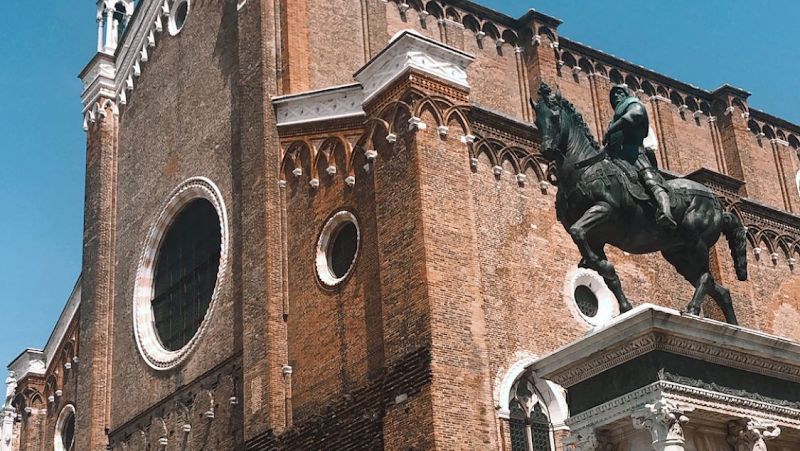
About Giardini della Biennale

## Giardini della Biennale (Venice): what to expect at the Venice Biennale Gardens Giardini della Biennale—often shortened to “the Giardini”—is one of the rare places in Venice where the city’s cultural identity and its physical geography line up perfectly. It’s a public garden area in the Castello district, created from what was once marshland, and today it’s best known as one of the main venues of La Biennale di Venezia. If your mental picture of Venice is all canals, palazzi, and narrow alleyways, the Giardini can feel like a reset: open paths, shade, and a slower pace—until a Biennale is in full swing, when the walkways suddenly become part of an international conversation about art, architecture, and national identity. Quick facts (from your listing details) - Name: Giardini della Biennale - Address: C. Giazzo, 30122 Venezia VE, Italy Biennale di Venezia - Coordinates: 45.4287722, 12.3580806 - Type: Tourist attraction - Rating: 4.5 --- ## Why the Giardini matter in Venice ### A Napoleonic project that became a cultural landmark The Giardini were created under Napoleon’s rule, when an area of marshland was drained to form a public garden on the edge of the Bacino di San Marco. That origin story matters because it explains the Giardini’s “different” feeling in Venice: they weren’t shaped by medieval foot traffic or incremental development. They were planned as civic space. ### The Biennale’s permanent “pavilion city” The Giardini now host 29 foreign country pavilions, some designed by notable architects, and those pavilions are generally visitable during exhibition periods. Biennale di Venezia In practice, that means the Giardini function like a small, walkable campus where architecture becomes part of the exhibition experience—not just a container for it. If you’re visiting during an Art Biennale or Architecture Biennale season, the Giardini are not simply “a park with museums.” They’re one of the core stages of the event. Biennale di Venezia --- ## What you’ll actually do there ### 1) Walk the gardens as a garden (even if you’re not going inside) Even without entering any pavilions, the Giardini are a practical place to slow down. Venice can be physically intense—bridges, crowds, heat reflecting off stone—and the Giardini’s paths and trees offer a different rhythm. This is also one of the reasons locals and long-stay visitors often treat it as a “real Venice” break from the postcard routes—though the vibe changes dramatically during Biennale peaks. ### 2) Visit national pavilions (when they’re open) During exhibitions, the pavilion model is what makes the Giardini distinct. Each participating country’s pavilion is its own curated world, and the architectural shells themselves can be part of the point. La Biennale’s venue description highlights examples such as Josef Hoffmann’s Austria Pavilion and references pavilions associated with architects including Gerrit Thomas Rietveld and Alvar Aalto. Biennale di Venezia A useful way to approach it: - Don’t try to “complete” everything in one pass. - Pick a handful of pavilions based on what you genuinely enjoy (installation-heavy work, design research, political themes, emerging practices). - Leave time to wander between them without rushing—movement is part of how the Giardini works as a venue. ### 3) Use the Giardini as one half of a Biennale day The Biennale’s major sites are commonly described as Giardini and Arsenale. Even if you’re not deeply invested in contemporary art or architecture, splitting your day between the two can give you a clearer sense of how Venice stages cultural events inside historic infrastructure. (The Giardini feel like a curated campus; the Arsenale is often more industrial in character.) --- ## How to get to Giardini della Biennale ### Vaporetto (water bus): the most direct option The nearest water-bus stops are typically labeled Giardini or Giardini Biennale. One practical reference point: the “Giardini and Giardini Biennale” ACTV stop is served by multiple lines, including 1, 2, 4.1, 4.2, 5.1, 5.2, 6, 8, and N. If you like having a simple backbone route, ACTV Lines 4.1 and 4.2 are commonly described as orbital routes around Venice, and they include a Giardini Biennale stop in their stop lists. Venice Italy Reality check: vaporetto routes and service patterns can change seasonally and during major events. For anything time-sensitive, verify on the official ACTV/AVM resources close to your visit. ### Walking (best paired with nearby Castello sights) If you’re already in Castello or near the Arsenale area, walking is straightforward and often more pleasant than packing onto a boat—especially in shoulder seasons. It also lets you see how Venice transitions from tourist core into residential edges. --- ## When to go: timing that actually affects your experience ### Biennale season vs. non-season - During Biennale exhibitions: expect queues, security checks, and a very different crowd pattern. Pavilions are the main draw, and the gardens become a thoroughfare. Biennale di Venezia - Outside exhibition periods: the Giardini read more like public green space. Some pavilion buildings may not be accessible in the same way because La Biennale notes visits are tied to exhibition periods. Biennale di Venezia ### Opening hours aren’t “one set of hours” For example, the official Biennale information page for Biennale Architettura 2025 lists specific opening hours and closures (including Monday closures with exceptions). Biennale di Venezia That’s a good illustration of the bigger point: hours and access rules depend on the specific exhibition and year, so avoid relying on generic “Venice attraction hours” pages. --- ## Practical tips most people only learn after arriving ### Plan for mental fatigue, not just walking fatigue The Giardini can be deceptively draining during exhibitions: dense ideas, long labels, and sensory overload. If you want a better day: - Pick a theme before you enter (materials, ecology, nationalism, housing, digital craft—whatever fits the year). - Schedule a “low-input” break in the gardens between pavilion clusters. ### Don’t assume you’ll see “all countries” Even though the Giardini host 29 foreign pavilions, the Biennale ecosystem is bigger than the Giardini, and many countries also exhibit elsewhere in Venice depending on the edition. Biennale di Venezia The payoff comes from depth, not completion. --- ## Accessibility and inclusivity notes Venice’s built environment can be challenging for some travelers (bridges, uneven paving, narrow passages). The Giardini’s more open paths may feel easier than many parts of the historic center, but accessibility conditions can still vary and may change with event infrastructure (temporary ramps, queues, entry controls). For the most reliable, current guidance, check the official Biennale visitor information for the specific exhibition dates you’re attending. Biennale di Venezia --- ## Outdated-data flags (what to verify before you go) - Exhibition calendar + opening hours: these change by year and by Biennale edition; use the official Biennale “Information” page for the edition you’re attending. Biennale di Venezia - Vaporetto routes and stops: line coverage can shift seasonally and during major events; confirm close to travel time. --- ## Internal links (contextual, but I can’t verify your site URLs) You asked for two internal links; I can do that only if I can confirm the exact RealJourneyTravels.com URLs/slugs. If you share your Venice hub slug (or your internal search results for “Venice” and “Venice Biennale”), I’ll insert two clean, contextual internal links without guessing.

Key Features

Giardini della Biennale

More Details

Updated June 11, 2025

## Giardini della Biennale (Venice): what to expect at the Venice Biennale Gardens

Giardini della Biennale—often shortened to “the Giardini”—is one of the rare places in Venice where the city’s cultural identity and its physical geography line up perfectly. It’s a public garden area in the Castello district, created from what was once marshland, and today it’s best known as one of the main venues of La Biennale di Venezia.

If your mental picture of Venice is all canals, palazzi, and narrow alleyways, the Giardini can feel like a reset: open paths, shade, and a slower pace—until a Biennale is in full swing, when the walkways suddenly become part of an international conversation about art, architecture, and national identity.

Quick facts (from your listing details)
– Name: Giardini della Biennale
– Address: C. Giazzo, 30122 Venezia VE, Italy Biennale di Venezia
– Coordinates: 45.4287722, 12.3580806
– Type: Tourist attraction
– Rating: 4.5

## Why the Giardini matter in Venice

### A Napoleonic project that became a cultural landmark
The Giardini were created under Napoleon’s rule, when an area of marshland was drained to form a public garden on the edge of the Bacino di San Marco. That origin story matters because it explains the Giardini’s “different” feeling in Venice: they weren’t shaped by medieval foot traffic or incremental development. They were planned as civic space.

### The Biennale’s permanent “pavilion city”
The Giardini now host 29 foreign country pavilions, some designed by notable architects, and those pavilions are generally visitable during exhibition periods. Biennale di Venezia In practice, that means the Giardini function like a small, walkable campus where architecture becomes part of the exhibition experience—not just a container for it.

If you’re visiting during an Art Biennale or Architecture Biennale season, the Giardini are not simply “a park with museums.” They’re one of the core stages of the event. Biennale di Venezia

## What you’ll actually do there

### 1) Walk the gardens as a garden (even if you’re not going inside)
Even without entering any pavilions, the Giardini are a practical place to slow down. Venice can be physically intense—bridges, crowds, heat reflecting off stone—and the Giardini’s paths and trees offer a different rhythm. This is also one of the reasons locals and long-stay visitors often treat it as a “real Venice” break from the postcard routes—though the vibe changes dramatically during Biennale peaks.

### 2) Visit national pavilions (when they’re open)
During exhibitions, the pavilion model is what makes the Giardini distinct. Each participating country’s pavilion is its own curated world, and the architectural shells themselves can be part of the point. La Biennale’s venue description highlights examples such as Josef Hoffmann’s Austria Pavilion and references pavilions associated with architects including Gerrit Thomas Rietveld and Alvar Aalto. Biennale di Venezia

A useful way to approach it:
– Don’t try to “complete” everything in one pass.
– Pick a handful of pavilions based on what you genuinely enjoy (installation-heavy work, design research, political themes, emerging practices).
– Leave time to wander between them without rushing—movement is part of how the Giardini works as a venue.

### 3) Use the Giardini as one half of a Biennale day
The Biennale’s major sites are commonly described as Giardini and Arsenale. Even if you’re not deeply invested in contemporary art or architecture, splitting your day between the two can give you a clearer sense of how Venice stages cultural events inside historic infrastructure. (The Giardini feel like a curated campus; the Arsenale is often more industrial in character.)

## How to get to Giardini della Biennale

### Vaporetto (water bus): the most direct option
The nearest water-bus stops are typically labeled Giardini or Giardini Biennale. One practical reference point: the “Giardini and Giardini Biennale” ACTV stop is served by multiple lines, including 1, 2, 4.1, 4.2, 5.1, 5.2, 6, 8, and N.

If you like having a simple backbone route, ACTV Lines 4.1 and 4.2 are commonly described as orbital routes around Venice, and they include a Giardini Biennale stop in their stop lists. Venice Italy

Reality check: vaporetto routes and service patterns can change seasonally and during major events. For anything time-sensitive, verify on the official ACTV/AVM resources close to your visit.

### Walking (best paired with nearby Castello sights)
If you’re already in Castello or near the Arsenale area, walking is straightforward and often more pleasant than packing onto a boat—especially in shoulder seasons. It also lets you see how Venice transitions from tourist core into residential edges.

## When to go: timing that actually affects your experience

### Biennale season vs. non-season
– During Biennale exhibitions: expect queues, security checks, and a very different crowd pattern. Pavilions are the main draw, and the gardens become a thoroughfare. Biennale di Venezia
– Outside exhibition periods: the Giardini read more like public green space. Some pavilion buildings may not be accessible in the same way because La Biennale notes visits are tied to exhibition periods. Biennale di Venezia

### Opening hours aren’t “one set of hours”
For example, the official Biennale information page for Biennale Architettura 2025 lists specific opening hours and closures (including Monday closures with exceptions). Biennale di Venezia That’s a good illustration of the bigger point: hours and access rules depend on the specific exhibition and year, so avoid relying on generic “Venice attraction hours” pages.

## Practical tips most people only learn after arriving

### Plan for mental fatigue, not just walking fatigue
The Giardini can be deceptively draining during exhibitions: dense ideas, long labels, and sensory overload. If you want a better day:
– Pick a theme before you enter (materials, ecology, nationalism, housing, digital craft—whatever fits the year).
– Schedule a “low-input” break in the gardens between pavilion clusters.

### Don’t assume you’ll see “all countries”
Even though the Giardini host 29 foreign pavilions, the Biennale ecosystem is bigger than the Giardini, and many countries also exhibit elsewhere in Venice depending on the edition. Biennale di Venezia The payoff comes from depth, not completion.

## Accessibility and inclusivity notes

Venice’s built environment can be challenging for some travelers (bridges, uneven paving, narrow passages). The Giardini’s more open paths may feel easier than many parts of the historic center, but accessibility conditions can still vary and may change with event infrastructure (temporary ramps, queues, entry controls). For the most reliable, current guidance, check the official Biennale visitor information for the specific exhibition dates you’re attending. Biennale di Venezia

## Outdated-data flags (what to verify before you go)

– Exhibition calendar + opening hours: these change by year and by Biennale edition; use the official Biennale “Information” page for the edition you’re attending. Biennale di Venezia
– Vaporetto routes and stops: line coverage can shift seasonally and during major events; confirm close to travel time.

## Internal links (contextual, but I can’t verify your site URLs)
You asked for two internal links; I can do that only if I can confirm the exact RealJourneyTravels.com URLs/slugs. If you share your Venice hub slug (or your internal search results for “Venice” and “Venice Biennale”), I’ll insert two clean, contextual internal links without guessing.

Key Highlights

Giardini della Biennale

Location

Places to Stay Near Giardini della Biennale"You can always find something interesting at Biennale."

Find and Book a Tour

Explore More Travel Guides

No reviews found! Be the first to review!

Traveler Reviews for Giardini della Biennale

There are no reviews yet. Be the first one to write one.

Share Your Experience

Have you visited Giardini della Biennale? Help other travelers by sharing your review.

Find Accommodations Nearby

Recommended Tours & Activities

Visitor Reviews

There are no reviews yet. Be the first one to write one.

Share Your Experience

Have you visited Giardini della Biennale? Help other travelers by leaving a review.