
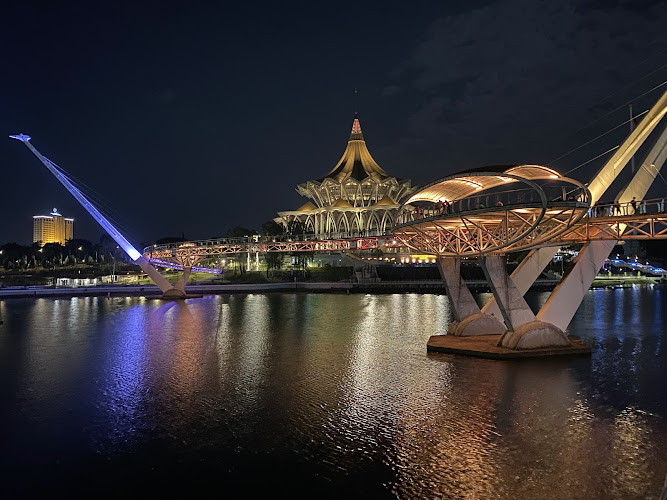
Darul Hana Bridge
About Darul Hana Bridge
Description
The Darul Hana Bridge in Kuching is more than just a way to cross the Sarawak River—it’s an experience that stays with you long after you’ve left. This pedestrian bridge, with its elegant S-shaped curve, connects the Kuching Waterfront on the south bank to the north bank, where the State Legislative Assembly building, Astana, and Fort Margherita stand proudly. Its name, Darul Hana, translates to “Home of Peace and Tranquillity,” and honestly, it couldn’t be more fitting.
Standing on the bridge at sunset, you’ll see why locals and travelers alike can’t stop talking about it. The golden hues reflecting off the water, the sound of gentle chatter from nearby cafes, and the soft hum of the city—it all comes together in a moment that feels almost cinematic. And when night falls, the bridge transforms entirely. Its dynamic lighting system bathes the walkway in shifting colors, turning it into a glowing ribbon that dances across the river.
I remember the first time I walked across it—it was humid, the kind of thick tropical air that clings to your skin. But as the breeze rolled in from the river, I forgot about the heat. Watching families take selfies, couples holding hands, and street performers filling the air with music—it felt like the heartbeat of Kuching was right there on that bridge.
Architecturally, it’s impressive too. The 336-meter structure was designed to symbolize unity and harmony between communities on both sides of the river. It’s not just a bridge; it’s a statement, a modern landmark that still respects the deep cultural roots of Sarawak. Some visitors say it’s best seen at night, others swear by early morning walks when the city is still waking up. Either way, it’s one of those places that quietly earns your admiration.
Key Features
- Unique S-shaped design symbolizing unity and connection across the Sarawak River.
- Pedestrian-only access, making it safe and relaxing to stroll across at any time of day.
- Panoramic views of Kuching’s skyline, the Sarawak State Legislative Assembly building, and the historic Astana.
- Dynamic LED lighting system that illuminates the bridge in vibrant colors after sunset.
- Viewing platforms at both ends for photography, rest, or just soaking in the scenery.
- Wheelchair-accessible entrances and parking, ensuring inclusivity for all visitors.
- Nearby amenities such as restrooms, food stalls, and souvenir shops along the waterfront.
What makes the Darul Hana Bridge stand out isn’t just its looks—it’s the way it brings people together. You’ll often see locals jogging across it in the morning, tourists snapping photos in the afternoon, and musicians setting up small performances in the evening. It’s got that rare mix of modern design and local soul. And honestly, if you’re a photographer, this spot is gold. The angles, reflections, and lighting give you endless creative possibilities.
Best Time to Visit
If you’re planning your visit, timing matters. The bridge is open all day, but the experience changes dramatically depending on when you go. Mornings are peaceful, with fewer crowds and soft light perfect for photography. Midday can be hot—Kuching’s tropical sun doesn’t play around—so bring water and maybe a hat if you’re walking then.
But evening? That’s when the magic happens. Around 6:30 to 7:00 PM, as the sun dips below the horizon, the bridge begins to glow. The LED lights come alive, cycling through colors that reflect beautifully off the river. It’s also when the waterfront gets livelier, with food vendors setting up and music drifting through the air. If you’re lucky, you might catch one of the cultural performances or local events that occasionally take place near the bridge.
I’d personally recommend visiting twice—once during the day to appreciate the architecture and again at night to experience its atmosphere. It’s like seeing two different personalities of the same place.
How to Get There
Getting to the Darul Hana Bridge is pretty straightforward. Most travelers start from the Kuching Waterfront, which is one of the city’s most popular gathering spots. From there, the entrance to the bridge is just a short walk away. If you’re staying in central Kuching, you can easily reach it on foot or by a quick Grab ride (Malaysia’s version of Uber).
For those coming from the north side—say, after visiting the State Legislative Assembly or Fort Margherita—you can access the bridge from that end as well. It’s designed to be approachable from both sides, which is part of what makes it so convenient.
If you’re driving, there’s parking available nearby, and the area is quite pedestrian-friendly. The bridge’s accessibility features, including ramps and wide walkways, make it suitable for wheelchairs and strollers too.
And here’s a small piece of advice from personal experience: go early if you’re driving on weekends. The waterfront area can get crowded, especially when there’s an event or festival happening nearby.
Tips for Visiting
A few practical tips can make your visit smoother and more enjoyable. First off, bring your camera or smartphone—this is one of those places where you’ll want to take a lot of photos. The lighting, the reflections, and the architecture all come together to create some truly striking shots.
- Visit at sunset or night: The bridge’s lighting system creates a stunning visual show after dark.
- Stay hydrated: The tropical climate can be intense, especially during midday walks.
- Wear comfortable shoes: You’ll likely want to explore both sides of the river, and the waterfront stretch is best enjoyed on foot.
- Be patient with crowds: The bridge is popular, especially on weekends and holidays. A little patience goes a long way.
- Check for events: Sometimes the area hosts cultural performances or local festivals—catching one adds a special touch to your visit.
- Mind the weather: Rain showers can appear suddenly in Kuching, so pack a small umbrella just in case.
If you’re traveling with kids, the bridge is safe and family-friendly. There are railings all along the walkway, and the gentle slope makes it easy for strollers. For those with mobility challenges, the wheelchair-accessible features are a big plus.
And here’s a small personal confession—I’ve been to Kuching several times, and I still find myself drawn back to this bridge. There’s something about standing in the middle, watching the city lights shimmer on the river, that makes you feel connected—not just to the place but to the people around you. It’s one of those rare spots where you can pause, breathe, and just take it all in.
So, whether you’re a first-time visitor to Sarawak or a returning traveler, the Darul Hana Bridge deserves a spot on your itinerary. It’s not just a bridge—it’s a story of connection, culture, and community told through steel, light, and water. And once you’ve walked across it, you’ll understand why so many people fall in love with it.
Key Features
- Unique S-shaped design symbolizing unity and connection across the Sarawak River.
- Pedestrian-only access, making it safe and relaxing to stroll across at any time of day.
- Panoramic views of Kuching’s skyline, the Sarawak State Legislative Assembly building, and the historic Astana.
- Dynamic LED lighting system that illuminates the bridge in vibrant colors after sunset.
- Viewing platforms at both ends for photography, rest, or just soaking in the scenery.
- Wheelchair-accessible entrances and parking, ensuring inclusivity for all visitors.
- Nearby amenities such as restrooms, food stalls, and souvenir shops along the waterfront.
Tours & Activities
GetYourGuide provides this tour inventory. We may earn a commission if you book through it; verify current availability, prices, and terms with the provider.
Visitor Reviews
There are no reviews yet. Be the first one to write one.
Share Your Experience
Have you visited Darul Hana Bridge? Help other travelers by leaving a review.