
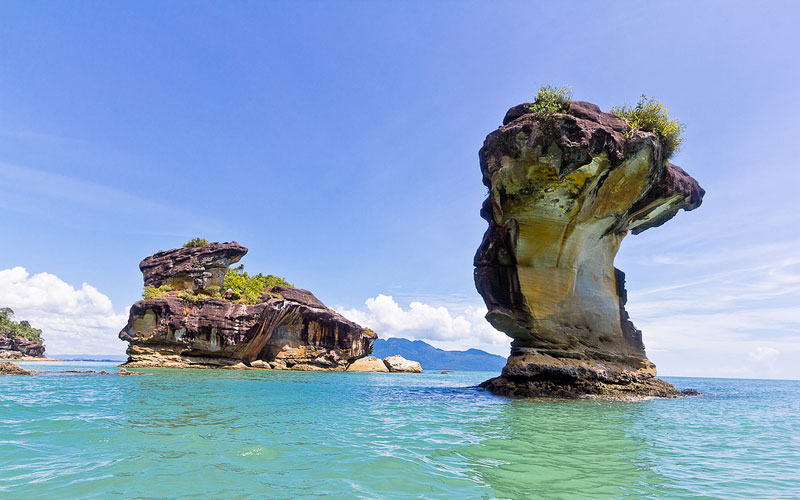
Bako National Park
About Bako National Park
Description
Bako National Park in Sarawak, Malaysia, is one of those rare places that feels like stepping into another world entirely. It’s not the biggest park around, but what it lacks in size, it more than makes up for in raw, untamed beauty. Imagine jagged cliffs rising over turquoise waters, beaches so quiet you can hear the rustle of palm leaves, and trails that twist through tangled mangroves and rainforest. That’s Bako – wild, unpredictable, and absolutely worth the journey.
The park’s charm lies in its diversity. Within just a few square kilometers, you’ll find almost every type of Bornean ecosystem – from swamp forest and mangroves to dipterocarp and cliff vegetation. And honestly, that’s part of what makes it so fascinating. You can hike for an hour and feel like you’ve traveled through five different worlds. It’s a living classroom of nature, and if you’re anything like me, you’ll find yourself stopping every few steps just to take it all in.
Of course, it’s not perfect – the weather can be humid and unpredictable, and sometimes the trails get muddy enough to swallow your shoes whole. But that’s part of the adventure, isn’t it? You don’t come to Bako expecting luxury. You come for the experience, for the sense of discovery that’s getting harder to find these days.
One of the park’s biggest draws is its wildlife. The proboscis monkeys are the undeniable stars here – those long-nosed, pot-bellied creatures that look like they’ve wandered straight out of a cartoon. You’ll also spot silvered leaf monkeys, bearded pigs, and a riot of tropical birds if you keep your eyes peeled. It’s the kind of place where patience pays off, and every rustle in the trees might be something extraordinary.
Key Features
- Stunning coastal cliffs and sea stacks shaped by centuries of erosion
- Seven distinct ecosystems packed into a compact area
- Home to the rare proboscis monkey and over 150 bird species
- Network of well-marked hiking trails ranging from short walks to full-day treks
- Secluded beaches perfect for picnics and quiet reflection
- Public restrooms and picnic tables available near the park headquarters
- Kid-friendly trails and educational opportunities for families
- Rustic accommodation options for those who want to stay overnight
Best Time to Visit
If you ask ten people when to visit Bako, you’ll probably get ten different answers. Personally, I think the dry season – roughly March through September – is the sweet spot. The trails are more manageable, and you’ve got a better chance of spotting wildlife lounging in the open. The rainy months can be tricky, with sudden downpours turning paths into slippery slides, but they also bring out the lushest greens you’ll ever see.
Mornings are magical here. The air feels cooler, the light softer, and the animals more active. If you can catch the sunrise over the cliffs, you’ll understand why locals always say Bako has a soul of its own. And if you’re into photography, those golden hours are pure gold – literally.
That said, don’t let a little rain scare you off. Some of my best memories are of sitting under a shelter during a tropical storm, listening to the forest come alive with sound. There’s something oddly peaceful about it, like the park is reminding you who’s really in charge.
How to Get There
Getting to Bako National Park is a bit of an adventure in itself, but that’s half the fun. Most travelers start from Kuching, the capital of Sarawak, which is about 37 kilometers away. You’ll first need to reach Bako Village – a small fishing village that serves as the park’s gateway. From there, a short boat ride (usually 20–30 minutes) takes you across the river and straight into the park.
And here’s a little tip from experience: the boat ride is not just a means to an end. It’s part of the whole experience. Keep your camera handy because the views of the coastline are jaw-dropping. Sometimes you’ll even spot dolphins if you’re lucky. The boats usually stop running by mid-afternoon, so plan your return accordingly or prepare to stay overnight – which, honestly, is not a bad idea at all.
The park doesn’t allow private cars beyond the village, so you’ll need to leave your vehicle there. The facilities are basic but adequate, and the boat operators are used to dealing with travelers. Just make sure to check the tide schedule – at low tide, boats can’t reach the jetty, and you might have to wade through shallow water to get on or off.
Tips for Visiting
Let’s be real – Bako isn’t a walk in the park (well, technically it is, but you know what I mean). It’s wild, humid, and sometimes unpredictable. But that’s exactly what makes it so memorable. Here are a few things I’ve learned along the way that might help you make the most of your trip.
- Start early: The earlier you arrive, the more wildlife you’ll see. By midday, most animals are hiding from the heat, and you’ll be too.
- Pack light but smart: Bring water, insect repellent, a hat, and a rain poncho. You’ll thank yourself later.
- Wear proper footwear: The trails can get muddy and slippery, so skip the flip-flops. Trust me on this one.
- Stay overnight if you can: The park feels completely different after dark. You might hear the calls of nocturnal animals or catch a glimpse of glowing fungi – yes, that’s a thing.
- Respect the wildlife: Don’t feed the animals, no matter how cute they look. The bearded pigs, in particular, are notorious for hanging around the canteen hoping for snacks.
- Bring cash: There are no ATMs or card facilities in the park, so plan ahead for boat rides and park fees.
- Check tide times: Boat transfers depend heavily on tides, and missing one can mean waiting several hours for the next ride.
- Embrace the unpredictability: Sometimes, the weather changes in minutes. It’s all part of the Bako experience.
One thing I always tell people: don’t rush through Bako. This isn’t a place to tick off a list; it’s a place to slow down, breathe, and just exist for a while. Sit under a tree, listen to the cicadas, and let the sea breeze wash over you. You’ll leave with muddy shoes, maybe a few mosquito bites, but also a deep sense of connection to nature that’s hard to find anywhere else.
And if you’re traveling with kids, it’s surprisingly family-friendly. The shorter trails are manageable for little legs, and spotting monkeys in the wild is something they’ll remember for years. Just keep an eye on them – the forest has a way of swallowing up daydreamers.
In the end, Bako National Park isn’t just a destination – it’s an experience that stays with you. It’s raw, real, and refreshingly unpolished. Whether you’re a hiker, a photographer, or just someone craving a genuine connection with nature, this place delivers. And when you finally take that boat ride back to the mainland, with the cliffs fading into the mist, you’ll probably find yourself already planning a return trip. I know I did.
Key Features
- Stunning coastal cliffs and sea stacks shaped by centuries of erosion
- Seven distinct ecosystems packed into a compact area
- Home to the rare proboscis monkey and over 150 bird species
- Network of well-marked hiking trails ranging from short walks to full-day treks
- Secluded beaches perfect for picnics and quiet reflection
- Public restrooms and picnic tables available near the park headquarters
- Kid-friendly trails and educational opportunities for families
- Rustic accommodation options for those who want to stay overnight
More Details
Updated December 1, 2025
Table of Contents
Description
Bako National Park in Sarawak, Malaysia, is one of those rare places that feels like stepping into another world entirely. It’s not the biggest park around, but what it lacks in size, it more than makes up for in raw, untamed beauty. Imagine jagged cliffs rising over turquoise waters, beaches so quiet you can hear the rustle of palm leaves, and trails that twist through tangled mangroves and rainforest. That’s Bako – wild, unpredictable, and absolutely worth the journey.
The park’s charm lies in its diversity. Within just a few square kilometers, you’ll find almost every type of Bornean ecosystem – from swamp forest and mangroves to dipterocarp and cliff vegetation. And honestly, that’s part of what makes it so fascinating. You can hike for an hour and feel like you’ve traveled through five different worlds. It’s a living classroom of nature, and if you’re anything like me, you’ll find yourself stopping every few steps just to take it all in.
Of course, it’s not perfect – the weather can be humid and unpredictable, and sometimes the trails get muddy enough to swallow your shoes whole. But that’s part of the adventure, isn’t it? You don’t come to Bako expecting luxury. You come for the experience, for the sense of discovery that’s getting harder to find these days.
One of the park’s biggest draws is its wildlife. The proboscis monkeys are the undeniable stars here – those long-nosed, pot-bellied creatures that look like they’ve wandered straight out of a cartoon. You’ll also spot silvered leaf monkeys, bearded pigs, and a riot of tropical birds if you keep your eyes peeled. It’s the kind of place where patience pays off, and every rustle in the trees might be something extraordinary.
Key Features
- Stunning coastal cliffs and sea stacks shaped by centuries of erosion
- Seven distinct ecosystems packed into a compact area
- Home to the rare proboscis monkey and over 150 bird species
- Network of well-marked hiking trails ranging from short walks to full-day treks
- Secluded beaches perfect for picnics and quiet reflection
- Public restrooms and picnic tables available near the park headquarters
- Kid-friendly trails and educational opportunities for families
- Rustic accommodation options for those who want to stay overnight
Best Time to Visit
If you ask ten people when to visit Bako, you’ll probably get ten different answers. Personally, I think the dry season – roughly March through September – is the sweet spot. The trails are more manageable, and you’ve got a better chance of spotting wildlife lounging in the open. The rainy months can be tricky, with sudden downpours turning paths into slippery slides, but they also bring out the lushest greens you’ll ever see.
Mornings are magical here. The air feels cooler, the light softer, and the animals more active. If you can catch the sunrise over the cliffs, you’ll understand why locals always say Bako has a soul of its own. And if you’re into photography, those golden hours are pure gold – literally.
That said, don’t let a little rain scare you off. Some of my best memories are of sitting under a shelter during a tropical storm, listening to the forest come alive with sound. There’s something oddly peaceful about it, like the park is reminding you who’s really in charge.
How to Get There
Getting to Bako National Park is a bit of an adventure in itself, but that’s half the fun. Most travelers start from Kuching, the capital of Sarawak, which is about 37 kilometers away. You’ll first need to reach Bako Village – a small fishing village that serves as the park’s gateway. From there, a short boat ride (usually 20–30 minutes) takes you across the river and straight into the park.
And here’s a little tip from experience: the boat ride is not just a means to an end. It’s part of the whole experience. Keep your camera handy because the views of the coastline are jaw-dropping. Sometimes you’ll even spot dolphins if you’re lucky. The boats usually stop running by mid-afternoon, so plan your return accordingly or prepare to stay overnight – which, honestly, is not a bad idea at all.
The park doesn’t allow private cars beyond the village, so you’ll need to leave your vehicle there. The facilities are basic but adequate, and the boat operators are used to dealing with travelers. Just make sure to check the tide schedule – at low tide, boats can’t reach the jetty, and you might have to wade through shallow water to get on or off.
Tips for Visiting
Let’s be real – Bako isn’t a walk in the park (well, technically it is, but you know what I mean). It’s wild, humid, and sometimes unpredictable. But that’s exactly what makes it so memorable. Here are a few things I’ve learned along the way that might help you make the most of your trip.
- Start early: The earlier you arrive, the more wildlife you’ll see. By midday, most animals are hiding from the heat, and you’ll be too.
- Pack light but smart: Bring water, insect repellent, a hat, and a rain poncho. You’ll thank yourself later.
- Wear proper footwear: The trails can get muddy and slippery, so skip the flip-flops. Trust me on this one.
- Stay overnight if you can: The park feels completely different after dark. You might hear the calls of nocturnal animals or catch a glimpse of glowing fungi – yes, that’s a thing.
- Respect the wildlife: Don’t feed the animals, no matter how cute they look. The bearded pigs, in particular, are notorious for hanging around the canteen hoping for snacks.
- Bring cash: There are no ATMs or card facilities in the park, so plan ahead for boat rides and park fees.
- Check tide times: Boat transfers depend heavily on tides, and missing one can mean waiting several hours for the next ride.
- Embrace the unpredictability: Sometimes, the weather changes in minutes. It’s all part of the Bako experience.
One thing I always tell people: don’t rush through Bako. This isn’t a place to tick off a list; it’s a place to slow down, breathe, and just exist for a while. Sit under a tree, listen to the cicadas, and let the sea breeze wash over you. You’ll leave with muddy shoes, maybe a few mosquito bites, but also a deep sense of connection to nature that’s hard to find anywhere else.
And if you’re traveling with kids, it’s surprisingly family-friendly. The shorter trails are manageable for little legs, and spotting monkeys in the wild is something they’ll remember for years. Just keep an eye on them – the forest has a way of swallowing up daydreamers.
In the end, Bako National Park isn’t just a destination – it’s an experience that stays with you. It’s raw, real, and refreshingly unpolished. Whether you’re a hiker, a photographer, or just someone craving a genuine connection with nature, this place delivers. And when you finally take that boat ride back to the mainland, with the cliffs fading into the mist, you’ll probably find yourself already planning a return trip. I know I did.
Key Highlights
- Stunning coastal cliffs and sea stacks shaped by centuries of erosion
- Seven distinct ecosystems packed into a compact area
- Home to the rare proboscis monkey and over 150 bird species
- Network of well-marked hiking trails ranging from short walks to full-day treks
- Secluded beaches perfect for picnics and quiet reflection
- Public restrooms and picnic tables available near the park headquarters
- Kid-friendly trails and educational opportunities for families
- Rustic accommodation options for those who want to stay overnight
Location
Places to Stay Near Bako National Park
Find and Book a Tour
Explore More Travel Guides
No reviews found! Be the first to review!
Traveler Reviews for Bako National Park
There are no reviews yet. Be the first one to write one.
Have you visited Bako National Park? Help other travelers by sharing your review.
You Might Also Like

Hulu Tamu Hot Springs

Hutan Lipur Gunung Angsi

Teluk Cempedak
Find Accommodations Nearby
Recommended Tours & Activities
Visitor Reviews
There are no reviews yet. Be the first one to write one.
Share Your Experience
Have you visited Bako National Park? Help other travelers by leaving a review.