
Church of San Ferdinando
About Church of San Ferdinando
Key Features
More Details
Updated June 11, 2025
## Church of San Ferdinando in Livorno: Plain Facade, Powerful Story
From the square, the Church of San Ferdinando looks almost unfinished: a rough stone façade, no marble cladding, a modest doorway. Step inside, though, and you’re in one of the richest examples of Baroque art in Livorno – and at the center of a story about slavery, ransom, and a remarkably cosmopolitan port city.
—
## Quick Facts
– Name: Chiesa di San Ferdinando (also called San Ferdinando Re or Chiesa della Crocetta)
– Location: Piazza Anita Garibaldi 1, 57123 Livorno, Tuscany, Italy – on the edge of the Venezia Nuova / “New Venice” district near the canals and Piazza del Luogo Pio
– GPS (approx.): 43.5541° N, 10.3052° E
– Denomination / Style: Roman Catholic, early-18th-century Baroque
– Architects: Design by Giovan Battista Foggini; completed by Giovanni del Fantasia around 1716
– Key theme: The Trinitarian order and the ransoming of enslaved people from North Africa
– Main highlight: Giovanni Baratta’s marble group The Liberated Slaves at the high altar
– Typical reviews: Recent online ratings usually fall around 4–4.5 out of 5, but these aggregate scores change over time.
– Access: Entry is generally free; there are steps at the entrance, which can be a barrier for some visitors. Always confirm current hours and accessibility locally, as these details can change.
—
## A Church Built Around the Idea of Freedom
### Trinitarians in a Free-Port City
Livorno isn’t just another Tuscan port; for centuries it was a free port under the Medici, deliberately designed to attract traders – and people – from across the Mediterranean. Laws known as the Leggi Livornine encouraged merchants of many faiths to settle here and guaranteed unusually broad religious freedoms for the time.
Within this cosmopolitan environment, a Trinitarian friar, Francesco di San Lorenzo, founded a confraternity in 1653 dedicated specifically to ransoming Christian captives held in North African states. The group built an earlier oratory and convent on this site, linked to an older chapel dedicated to the Nativity of Mary. When that structure deteriorated, the current Church of San Ferdinando was commissioned in the early 1700s.
### From Medici Patronage to Earthquakes and War
– 1707–1716: Construction of the new Baroque church begins around 1707, based on designs by court architect Giovan Battista Foggini, and is completed roughly a decade later under Giovanni del Fantasia.
– Dedication: It is dedicated to Saint Ferdinand III of Castile, partly as a gesture of gratitude toward Prince Ferdinando, son of Grand Duke Cosimo III de’ Medici, who strongly backed the project.
– Consecration & Repairs: The church was consecrated in 1717 and later repaired after earthquakes in 1742 and 1824, reflecting both its importance and its vulnerability in a seismically active region.
– Napoleonic Suppression: In 1808 the Trinitarian community here was suppressed under Napoleonic reforms; the parish lacked resident clerics until the Trinitarians regained control in 1853.
– World War II: Venezia Nuova was heavily bombed during the Second World War; San Ferdinando lost its bell tower and parts of several chapels, which were later rebuilt.
That sequence explains a lot of what you see today: an austere exterior, a richly layered interior, and a continuous thread of resilience.
—
## Architecture: From Unfinished Facade to Full-Blown Baroque
### Outside: Rough Stone and an “Unfinished” Look
Don’t be surprised if your first reaction is: Is this it? The façade was never clad in the marble revetment originally planned. Instead you see horizontal stone bands, a single portal, and a central window—visually interesting, but far from the polished frontispieces found elsewhere in Tuscany.
To one side stands the reconstructed bell tower, a post-WWII rebuild that gives the complex its present silhouette on Piazza Anita Garibaldi.
### Inside: Latin-Cross Plan and Baroque Drama
The interior layout follows a Latin cross:
– A single central nave with a barrel-vaulted ceiling,
– Side chapels opening off the nave, richly faced with colored marbles,
– A crossing crowned by an internal dome, which from outside is disguised by an octagonal lantern.
Stucco work, sculptural niches, and altars in polychrome marble put San Ferdinando firmly in the Livornese Baroque camp. Local tourism authorities explicitly highlight it as one of the clearest Baroque showpieces in the city’s Venezia Nuova district.
—
## What to Look For Inside
### 1. The Liberated Slaves – A Baroque Anti-Slavery Statement
At the main altar you’ll find Giovanni Baratta’s sculptural group commonly known as I Schiavi Liberati (“The Liberated Slaves”) or The Vision of Saint John of Matha.
Key details to notice:
– An angel stands above two men: one freed from chains, the other still bound.
– The composition explicitly reflects the Trinitarians’ mission: raising funds to ransom captives seized by Barbary corsairs and other powers in the Mediterranean.
– Local interpretation panels and tourism materials underline how the angel is relatively neutral in its symbolism, echoing imagery that can resonate across multiple religious traditions—fitting for a port city that long prided itself on religious plurality. Tuscany
For a church rooted in the economy of a free port, the choice to put enslaved people at the visual and theological center is unusually direct. It’s also one of the most memorable Baroque ensembles in Livorno.
### 2. Statues of Kings and the “Global” Pantheon
Look along the pilasters and in the side chapels and you’ll see a surprising line-up:
– Ferdinand III of Castile
– Henry II, Holy Roman Emperor
– Louis IX of France
– Edward the Confessor of England
– Leopold III of Austria
– Casimir of Poland
The first four are carved in marble, the latter two in stucco.
This sequence of canonized kings mirrors Livorno’s political and commercial geography: the port was dealing with Catholic monarchies across Europe, and here they appear, literally built into the church’s supporting structure.
### 3. Trinitarian Saints and the Chapels
Several chapels are explicitly tied to the Trinitarian order:
– A chapel for Blessed Giovan Battista della Concezione, a reformer of the Trinitarians.
– Another honoring founders John of Matha and Felix of Valois, with sculpted reliefs showing them in adoration of the Trinity.
– A crossing chapel dedicated to Jesus the Nazarene, containing a wooden statue modeled on an image preserved in Madrid and reportedly rescued from Morocco in the 17th century.
– A chapel of Madonna del Buon Rimedio (Our Lady of Good Remedy), a Marian title historically important to the Trinitarians.
Taken together, these spaces function almost like a visual manual of the order’s spirituality and history.
### 4. The Marble Floor and Tombs
Don’t forget to look down. The marble pavement is inlaid with tombstones, including several of French origin—another nod to the international mix of Livorno’s community.
Behind the main altar you’ll find the tomb of Francesco Terriesi, a wealthy benefactor who, alongside Prince Ferdinando, provided major funding for the construction of the church.
—
## Practical Visiting Tips
### Getting There
– On foot: From the Venezia Nuova canals, Piazza Anita Garibaldi is only a short walk, near Piazza del Luogo Pio and close to several bridges and canal-side streets.
– By public transport / car: Local municipal and mapping sites list the address as Piazza Anita Garibaldi 1, 57123 Livorno, with the contact number +39 0586 888541 and the Diocese of Livorno website for reference. Details such as phone numbers and URLs can change, so treat them as starting points rather than guarantees.
### Opening Hours, Costs & Accessibility
– Cost: Multiple recent tourism sources categorize San Ferdinando as free to enter and not requiring reservations. Policies can be revised, especially for special events, so check locally or via the diocese before planning around this.
– Hours: Specific daily schedules vary by season and parish needs and are not consistently published across sources. To avoid outdated information, it’s safest to confirm current opening times with the tourist office or directly with the parish.
– Accessibility: The municipality notes that there are steps at the entrance. There is no mention in official municipal summaries of a ramp or lift, so visitors with limited mobility may need assistance.
### Combining San Ferdinando with Nearby Sights
From a planning perspective, San Ferdinando fits naturally into an itinerary that also explores:
– The Venezia Nuova canal district – the historic mercantile quarter laid out with canals and bridges, reflecting Livorno’s role as a Medici free port.
– The nearby Fortezza Nuova and Medici port area, which together show the military and commercial framework that made churches like San Ferdinando possible in the first place. Britannica
Both of those phrases (“Venezia Nuova canal district” and “Medici port and Fortezza Nuova”) make excellent contextual internal-link targets from this article.
—
## Why the Church Matters Today
San Ferdinando isn’t the largest or most famous church in Tuscany, but it condenses several important threads:
– Baroque art with a clear social message – The Liberated Slaves isn’t just decoration; it’s a direct comment on captivity and freedom, carved for a congregation whose daily work involved buying people out of slavery.
– A mirror of Livorno’s multicultural past – foreign merchants, canonized kings from multiple realms, French tombstones, and a congregation working across the Mediterranean all reflect a city that long lived off international exchange.
– A survivor of earthquakes, suppression, and bombing – the building’s history of damage and repair is recorded clearly in historical and municipal sources, and underlines how much of WWII-era Livorno had to be rebuilt.
Table of Contents
Key Highlights
Church of San Ferdinando
Location
Places to Stay Near Church of San Ferdinando"... vc ver as paredes da Igreja bem de perto, através do Smartphone."
Find and Book a Tour
Explore More Travel Guides
No reviews found! Be the first to review!
Traveler Reviews for Church of San Ferdinando
There are no reviews yet. Be the first one to write one.
Have you visited Church of San Ferdinando? Help other travelers by sharing your review.
You Might Also Like
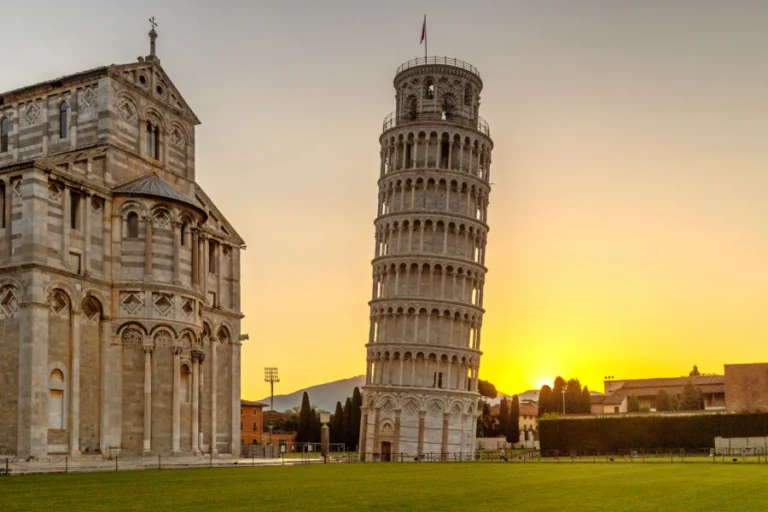
Leaning Tower of Pisa

Costiera di Calafuria
Civic Museum
Find Accommodations Nearby
Recommended Tours & Activities
Visitor Reviews
There are no reviews yet. Be the first one to write one.
Share Your Experience
Have you visited Church of San Ferdinando? Help other travelers by leaving a review.