
Cattedrale di San Lorenzo
About Cattedrale di San Lorenzo
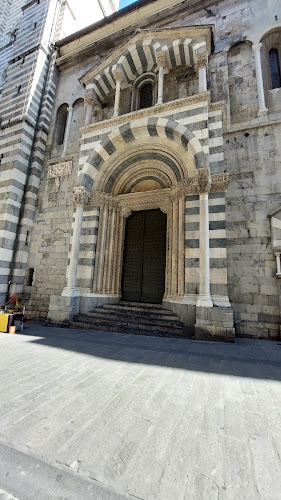
The Cattedrale di San Lorenzo stands as one of Genoa’s most remarkable architectural achievements, and honestly, when you first catch sight of those distinctive black-and-white striped marble bands wrapping around the facade, it’s hard not to stop in your tracks. This isn’t your typical Italian cathedral – though Italy certainly doesn’t lack stunning churches. What makes San Lorenzo special is how it manages to feel both imposing and inviting at the same time, a rare quality that draws thousands of visitors through its doors each year.
Built primarily during the Romanesque period, the cathedral has been serving the spiritual and cultural needs of Genoa since the medieval era. I’ve always found it fascinating how buildings like this carry centuries of history within their walls, and San Lorenzo doesn’t disappoint on that front. The structure underwent significant modifications over the years, incorporating Gothic and Renaissance elements that blend surprisingly well with the original Romanesque design. The result is a layered architectural experience that rewards careful observation.
Inside, you’ll discover an interior that contrasts beautifully with the striped exterior. The frescoed ceilings and walls tell biblical stories through art that has survived wars, earthquakes, and the simple passage of time. But what really sets this cathedral apart from countless others across Italy are the holy relics housed within its treasury. These aren’t just any religious artifacts – some of them have captivated believers and scholars for generations, adding an extra dimension of intrigue to any visit.
The cathedral serves as both an active place of worship and a major tourist destination, which means you might find yourself sharing the space with local parishioners attending mass alongside visitors snapping photos. This dual nature creates an interesting dynamic that reminds you this isn’t just a museum piece – it’s a living, breathing part of Genoa’s contemporary life.
Key Features
The Cattedrale di San Lorenzo offers visitors numerous elements worth exploring:
- Iconic Black-and-White Striped Facade – The alternating bands of white Carrara marble and dark stone create an immediately recognizable pattern that’s become synonymous with Ligurian Romanesque architecture. These stripes aren’t just decorative; they represent a building tradition unique to this region of Italy.
- Three Gothic Portals – The main entrance features three elaborately carved doorways dating from the 13th century, each adorned with sculptures depicting biblical scenes and local saints. The craftsmanship here deserves more than a passing glance.
- Chapel of St. John the Baptist – This Renaissance chapel contains what many believe to be the remains of St. John the Baptist, making it one of the most significant religious sites within the cathedral. The ornate marble work and bronze gates protecting the relics are masterpieces in themselves.
- Museum del Tesoro – The cathedral treasury houses an extraordinary collection of sacred objects, including the Sacro Catino (a green glass dish once believed to be the Holy Grail) and a polished quartz plate purported to have been used during the Last Supper.
- Frescoed Interior</vaults – The ceiling and walls feature frescoes from various periods, creating a visual timeline of artistic styles spanning several centuries. The baroque frescoes in the nave are particularly impressive when natural light floods through the windows.
- Bell Towers – Two asymmetrical towers frame the facade, with the right tower offering a slightly different architectural style than its companion. This imperfection adds character rather than detracting from the overall appearance.
- British Bomb Remnant – A fascinating and somewhat sobering historical artifact – an unexploded British naval shell from World War II that crashed through the roof in 1941 is preserved within the cathedral as a reminder of the building’s resilience.
- Wheelchair Accessible Entrance – The cathedral provides accessible entry for visitors with mobility challenges, making this historic site available to everyone who wants to experience its beauty.
Best Time to Visit
Timing your visit to the Cattedrale di San Lorenzo can significantly impact your experience, and I’ve learned through various travels that even an hour’s difference can change everything about how you encounter a place.
The cathedral opens to tourists throughout most of the year, but the sweet spot for visiting is definitely during the spring months of April and May or the early autumn period of September and October. During these times, Genoa experiences pleasant temperatures and fewer cruise ship crowds than the peak summer months. You’ll actually have space to look up at those frescoes without someone’s backpack bumping into you every few seconds.
Summer, particularly July and August, brings the largest crowds. If you must visit during these months, try arriving right when the doors open in the morning. There’s something special about experiencing San Lorenzo in those quiet early hours anyway – the light hits the striped facade differently, and you might catch locals coming in for morning prayers rather than competing with tour groups.
Winter presents an interesting option for those who don’t mind cooler weather. January and February see significantly fewer tourists, though you’ll need to bundle up for Genoa’s damp winter climate. But the advantage is having the cathedral almost to yourself, which is increasingly rare at major Italian attractions these days.
Regardless of the season, avoid visiting during the middle of the day on weekends if possible. The cathedral sees peak crowds between 11 AM and 3 PM, especially on Saturdays when both tourists and locals converge. Weekday mornings offer the best balance of good lighting and manageable crowd levels.
If you’re interested in attending mass, the cathedral holds services throughout the week. Experiencing San Lorenzo during a religious ceremony provides completely different perspective from a standard tourist visit. Just be respectful of worshippers and refrain from wandering around or taking photos during services.
How to Get There
Getting to the Cattedrale di San Lorenzo is straightforward since it occupies a central position in Genoa’s historic center. The cathedral sits in the heart of the old town, making it accessible through various transportation methods depending on where you’re starting from.
If you’re arriving in Genoa by train, the main railway station is Genova Piazza Principe. From there, you can take the metro to San Giorgio station and then walk approximately fifteen minutes through the historic streets to reach the cathedral. Alternatively, several bus lines connect the train station to the old town center. The walk itself takes about twenty-five minutes if you’re up for it, and you’ll pass through interesting neighborhoods along the way.
For those staying elsewhere in Genoa, the metro system provides convenient access to the historic center. The closest metro stop is San Giorgio, which places you within easy walking distance of the cathedral. From the station, follow the signs toward the centro storico, and you’ll naturally gravitate toward San Lorenzo as you navigate the medieval street layout.
Buses offer another reliable option, with multiple lines serving stops near the cathedral. Numbers 18, 19, and 20 all stop within a few blocks of San Lorenzo. Genoa’s bus system can feel confusing at first, but the drivers are generally patient with tourists trying to figure out their stops.
Driving to the cathedral isn’t recommended unless absolutely necessary. The historic center restricts vehicle access through a ZTL (limited traffic zone) system, and parking is both scarce and expensive in the area. If you must drive, look for parking garages on the periphery of the old town and walk in from there.
Walking remains the best way to approach the cathedral if you’re already staying in or near the historic center. Genoa’s old town is relatively compact, and wandering through the narrow caruggi (alleyways) gives you a feel for the city’s character that you’d miss by taking public transportation.
Tips for Visiting
Making the most of your visit to the Cattedrale di San Lorenzo requires a bit of planning and awareness of local customs. Here are practical suggestions drawn from common visitor experiences and the realities of visiting active religious sites in Italy.
Dress appropriately for visiting a functioning cathedral. This means covering shoulders and knees – no tank tops, shorts, or short skirts. Churches in Italy enforce these dress codes more strictly than many tourists expect, and it would be disappointing to be turned away at the entrance after making the trip. Bring a lightweight scarf or shawl if you’re planning to wear something sleeveless; you can throw it over your shoulders before entering.
Purchase a ticket for the museum treasury even if you’re on a tight budget. Many visitors skip this thinking the main cathedral is sufficient, but the treasury contains some of the most historically significant items. The supposed Holy Grail alone is worth the modest admission fee. Plus, the treasury is usually less crowded than the main cathedral floor, giving you more contemplative time with the exhibits.
Photography is generally allowed inside the cathedral, but flash photography is prohibited. And please, be mindful about taking photos during mass or when people are praying. There’s an unfortunate trend of tourists treating active worship spaces solely as photo opportunities, which creates understandable tension with local congregations.
Allow at least an hour for a thorough visit, possibly ninety minutes if you’re including the treasury and want to really absorb the details. Rushing through defeats the purpose of visiting a place like this. Find a pew, sit down for a few minutes, and just look around. Notice how the light changes, how the space feels, how centuries of human devotion have shaped this building.
The cathedral is accessible for wheelchair users through the main entrance, which is an important consideration that not all historic Italian churches can claim. However, note that there’s no accessible parking lot directly adjacent to the building, so plan accordingly for drop-off and pick-up if mobility is a concern.
Visit the exterior from different angles and times of day if you can. The black-and-white striping photographs completely differently depending on lighting conditions. Early morning side-lighting creates dramatic shadows that bring out the three-dimensional quality of the facade, while softer afternoon light shows the colors more accurately.
Don’t overlook the smaller chapels and side altars inside the main cathedral. Everyone gravitates toward the central nave and main altar, but some of the most intricate artwork hides in the less-trafficked side areas. Take time to circle the entire interior perimeter.
Consider hiring a local guide or renting an audio guide if you want deeper historical context. The cathedral’s architecture and relics have complex stories that aren’t always obvious from visual inspection alone. Understanding the history enriches the experience significantly.
Finally, combine your cathedral visit with exploring the surrounding historic center. San Lorenzo sits amid some of Genoa’s most atmospheric medieval streets, and the area contains numerous other churches, palaces, and historic sites within walking distance. The cathedral makes an excellent anchor point for a morning or afternoon of exploration rather than being treated as an isolated stop on a checklist of attractions.
You Might Also Like

Acquario di Genova

Basilica della Santissima Annunziata del Vastato

Biosfera
Tours & Activities
GetYourGuide provides this tour inventory. We may earn a commission if you book through it; verify current availability, prices, and terms with the provider.
Visitor Reviews
There are no reviews yet. Be the first one to write one.
Share Your Experience
Have you visited Cattedrale di San Lorenzo? Help other travelers by leaving a review.