
Catacombs of Paris
About Catacombs of Paris
Description
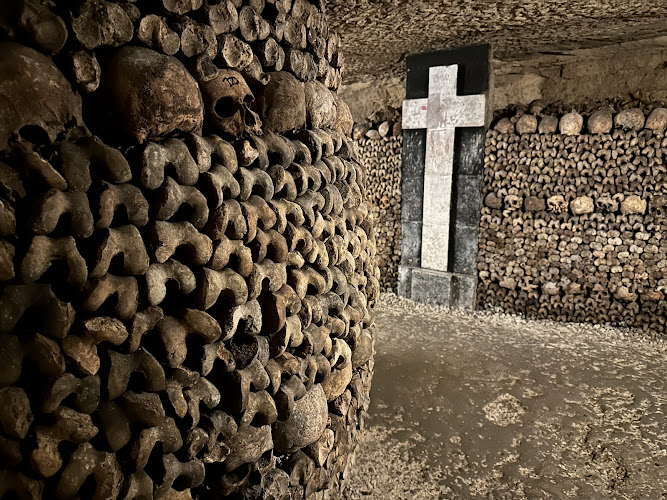
The Catacombs of Paris are one of those places that leave you both awestruck and a little unsettled at the same time. It’s not every day you find yourself wandering through a dimly lit maze lined with millions of human bones, arranged with eerie precision. Hidden beneath the bustling streets of Paris, this underground ossuary was created in the late 18th century when overcrowded cemeteries forced the city to find a new resting place for its dead. What they built is part history, part art, and part haunting reminder of mortality.
Walking through the tunnels feels like stepping into another world—quiet, cool, and heavy with the weight of centuries. The air smells faintly of stone and earth, and the echo of your footsteps seems to follow you around every corner. The walls are lined with skulls and femurs, stacked neatly in patterns that are both beautiful and macabre. It’s a strange kind of beauty, one that makes you reflect on how fleeting life can be. There’s something oddly peaceful about it too, like the city’s chaotic energy has been muted underground.
Some visitors come for the history, others for the thrill. Personally, I found it to be a mix of both. You can almost feel the stories of those who once walked above these tunnels centuries ago. And while it’s not a place for the faint-hearted, it’s undeniably one of the most fascinating historical attractions in Paris. The Catacombs are more than just a tourist stop—they’re a journey into the city’s hidden depths, both literally and metaphorically.
Key Features
- Ancient Limestone Quarries: Originally mined to build Paris’s grand architecture, these tunnels were later transformed into an ossuary, giving them a dual legacy of creation and remembrance.
- Millions of Human Remains: The bones of over six million Parisians are carefully arranged along the passageways, forming walls, arches, and even artistic designs.
- Atmospheric Lighting: The soft illumination enhances the eerie yet respectful ambiance, allowing visitors to appreciate the details without losing the mystery.
- Audio Guide Available: An optional audio guide provides historical context, legends, and insights that make the experience more meaningful and immersive.
- Women-Owned Operation: The site identifies as women-owned, adding a modern touch of empowerment to a place steeped in ancient history.
- Gender-Neutral Restrooms: A small but thoughtful amenity that reflects inclusivity and accessibility for all visitors.
- Onsite Services: Staff are available to assist with questions, ticketing, and guidance throughout the visit.
It’s worth noting that the Catacombs are not wheelchair accessible due to the narrow tunnels, uneven floors, and steep stairways. That said, for those who can manage the descent, the experience is unforgettable. The site’s staff are friendly and knowledgeable, and despite the somber setting, there’s a sense of care and respect in how the space is maintained.
Best Time to Visit
If you want to avoid long lines (and trust me, they can get quite long), it’s best to visit during the shoulder seasons—spring or autumn. Early mornings or late afternoons tend to be quieter, giving you more space to explore at your own pace. Summer can be crowded, and the wait times can stretch for hours, especially on weekends. But the silver lining? The underground temperature stays cool year-round, around 14°C (57°F), which feels like a blessing on a hot Paris day.
Winter visits have their charm too. There’s something about descending into the Catacombs when it’s cold and gray outside that adds an extra layer of atmosphere. The contrast between the warmth of Parisian cafés above and the chill of the tunnels below is oddly poetic. Just remember to bring a light jacket—the air down there can feel damp, even in summer.
How to Get There
Reaching the Catacombs is surprisingly easy. Located in the southern part of Paris, they’re accessible by metro, bus, or even on foot if you’re staying nearby. The metro is usually the most convenient option—just hop off at a nearby station and follow the signs. The entrance is discreet, almost unassuming, which makes discovering it feel like uncovering a secret. If you’re a fan of walking, the surrounding neighborhood is worth exploring too, filled with local cafés and bakeries that make a perfect post-visit stop.
For those planning ahead (and you really should), buying tickets online in advance is highly recommended. The number of visitors allowed inside at once is limited for safety reasons, so spontaneous visits can lead to long waits. And honestly, standing in line for hours on a busy Paris street isn’t the best way to spend your day. Pre-booking saves time and lets you plan the rest of your itinerary more smoothly.
Tips for Visiting
Visiting the Catacombs is unlike any other tourist attraction in Paris, so a little preparation goes a long way. Here are some practical tips—mixed in with a few things I learned the hard way:
- Book Ahead: Tickets often sell out, especially during peak tourist months. Reserve online to skip the long queues.
- Wear Comfortable Shoes: The pathways can be uneven and slightly damp. Trust me, you don’t want to navigate centuries-old tunnels in flimsy footwear.
- Mind the Stairs: There are over 130 steps down and about the same number back up. It’s not too bad, but it can be tiring if you’re not used to it.
- Keep It Respectful: Remember, this is a burial site. Photography is allowed, but loud chatter or flash photography can feel out of place.
- Bring a Light Jacket: The temperature underground stays cool year-round, so even on warm days, it’s nice to have an extra layer.
- Use the Audio Guide: It adds so much depth to your visit. You’ll learn about the history of the quarries, the relocation of the bones, and even some fascinating legends.
- Go Early or Late: The middle of the day tends to be busiest. Early morning visits are peaceful and give you time to linger without feeling rushed.
- Don’t Rush: Take your time to absorb the atmosphere. It’s not just about seeing bones—it’s about understanding the story behind them.
One thing I didn’t expect during my first visit was how reflective the experience would be. I went in thinking it would be spooky, maybe even morbid, but I left feeling oddly calm. There’s a quiet dignity to the place, a reminder that life above ground is fleeting and precious. It’s strange how standing among bones can make you feel more alive, but that’s exactly what the Catacombs do—they put everything into perspective.
And if you’re traveling with kids, it’s worth noting that while the Catacombs are technically suitable for children, the atmosphere might be too intense for some. The dim lighting and skeletal displays can be overwhelming. Gauge your child’s comfort level before you go. For older kids interested in history or archaeology, though, it’s an unforgettable experience.
After emerging back into the daylight, you’ll probably feel a mix of emotions—relief, fascination, maybe even a touch of melancholy. But that’s the beauty of the Catacombs: they remind you that beneath the glamour and romance of Paris lies a deep, layered history. It’s not all glittering lights and art museums. Some of the city’s most powerful stories are hidden underground, waiting quietly for you to discover them.
So if you’re the kind of traveler who loves exploring the unusual, the historical, and the slightly eerie, the Catacombs of Paris deserve a spot on your itinerary. Bring your curiosity, a good pair of shoes, and a sense of adventure—you’ll need all three. And when you climb back up those stairs into the sunlight, you might just find yourself seeing Paris in a whole new light.
Key Features
- Key Features
- Best Time to Visit
- How to Get There
- Tips for Visiting
More Details
Updated December 1, 2025
Table of Contents
Description
The Catacombs of Paris are one of those places that leave you both awestruck and a little unsettled at the same time. It’s not every day you find yourself wandering through a dimly lit maze lined with millions of human bones, arranged with eerie precision. Hidden beneath the bustling streets of Paris, this underground ossuary was created in the late 18th century when overcrowded cemeteries forced the city to find a new resting place for its dead. What they built is part history, part art, and part haunting reminder of mortality.
Walking through the tunnels feels like stepping into another world—quiet, cool, and heavy with the weight of centuries. The air smells faintly of stone and earth, and the echo of your footsteps seems to follow you around every corner. The walls are lined with skulls and femurs, stacked neatly in patterns that are both beautiful and macabre. It’s a strange kind of beauty, one that makes you reflect on how fleeting life can be. There’s something oddly peaceful about it too, like the city’s chaotic energy has been muted underground.
Some visitors come for the history, others for the thrill. Personally, I found it to be a mix of both. You can almost feel the stories of those who once walked above these tunnels centuries ago. And while it’s not a place for the faint-hearted, it’s undeniably one of the most fascinating historical attractions in Paris. The Catacombs are more than just a tourist stop—they’re a journey into the city’s hidden depths, both literally and metaphorically.
Key Features
- Ancient Limestone Quarries: Originally mined to build Paris’s grand architecture, these tunnels were later transformed into an ossuary, giving them a dual legacy of creation and remembrance.
- Millions of Human Remains: The bones of over six million Parisians are carefully arranged along the passageways, forming walls, arches, and even artistic designs.
- Atmospheric Lighting: The soft illumination enhances the eerie yet respectful ambiance, allowing visitors to appreciate the details without losing the mystery.
- Audio Guide Available: An optional audio guide provides historical context, legends, and insights that make the experience more meaningful and immersive.
- Women-Owned Operation: The site identifies as women-owned, adding a modern touch of empowerment to a place steeped in ancient history.
- Gender-Neutral Restrooms: A small but thoughtful amenity that reflects inclusivity and accessibility for all visitors.
- Onsite Services: Staff are available to assist with questions, ticketing, and guidance throughout the visit.
It’s worth noting that the Catacombs are not wheelchair accessible due to the narrow tunnels, uneven floors, and steep stairways. That said, for those who can manage the descent, the experience is unforgettable. The site’s staff are friendly and knowledgeable, and despite the somber setting, there’s a sense of care and respect in how the space is maintained.
Best Time to Visit
If you want to avoid long lines (and trust me, they can get quite long), it’s best to visit during the shoulder seasons—spring or autumn. Early mornings or late afternoons tend to be quieter, giving you more space to explore at your own pace. Summer can be crowded, and the wait times can stretch for hours, especially on weekends. But the silver lining? The underground temperature stays cool year-round, around 14°C (57°F), which feels like a blessing on a hot Paris day.
Winter visits have their charm too. There’s something about descending into the Catacombs when it’s cold and gray outside that adds an extra layer of atmosphere. The contrast between the warmth of Parisian cafés above and the chill of the tunnels below is oddly poetic. Just remember to bring a light jacket—the air down there can feel damp, even in summer.
How to Get There
Reaching the Catacombs is surprisingly easy. Located in the southern part of Paris, they’re accessible by metro, bus, or even on foot if you’re staying nearby. The metro is usually the most convenient option—just hop off at a nearby station and follow the signs. The entrance is discreet, almost unassuming, which makes discovering it feel like uncovering a secret. If you’re a fan of walking, the surrounding neighborhood is worth exploring too, filled with local cafés and bakeries that make a perfect post-visit stop.
For those planning ahead (and you really should), buying tickets online in advance is highly recommended. The number of visitors allowed inside at once is limited for safety reasons, so spontaneous visits can lead to long waits. And honestly, standing in line for hours on a busy Paris street isn’t the best way to spend your day. Pre-booking saves time and lets you plan the rest of your itinerary more smoothly.
Tips for Visiting
Visiting the Catacombs is unlike any other tourist attraction in Paris, so a little preparation goes a long way. Here are some practical tips—mixed in with a few things I learned the hard way:
- Book Ahead: Tickets often sell out, especially during peak tourist months. Reserve online to skip the long queues.
- Wear Comfortable Shoes: The pathways can be uneven and slightly damp. Trust me, you don’t want to navigate centuries-old tunnels in flimsy footwear.
- Mind the Stairs: There are over 130 steps down and about the same number back up. It’s not too bad, but it can be tiring if you’re not used to it.
- Keep It Respectful: Remember, this is a burial site. Photography is allowed, but loud chatter or flash photography can feel out of place.
- Bring a Light Jacket: The temperature underground stays cool year-round, so even on warm days, it’s nice to have an extra layer.
- Use the Audio Guide: It adds so much depth to your visit. You’ll learn about the history of the quarries, the relocation of the bones, and even some fascinating legends.
- Go Early or Late: The middle of the day tends to be busiest. Early morning visits are peaceful and give you time to linger without feeling rushed.
- Don’t Rush: Take your time to absorb the atmosphere. It’s not just about seeing bones—it’s about understanding the story behind them.
One thing I didn’t expect during my first visit was how reflective the experience would be. I went in thinking it would be spooky, maybe even morbid, but I left feeling oddly calm. There’s a quiet dignity to the place, a reminder that life above ground is fleeting and precious. It’s strange how standing among bones can make you feel more alive, but that’s exactly what the Catacombs do—they put everything into perspective.
And if you’re traveling with kids, it’s worth noting that while the Catacombs are technically suitable for children, the atmosphere might be too intense for some. The dim lighting and skeletal displays can be overwhelming. Gauge your child’s comfort level before you go. For older kids interested in history or archaeology, though, it’s an unforgettable experience.
After emerging back into the daylight, you’ll probably feel a mix of emotions—relief, fascination, maybe even a touch of melancholy. But that’s the beauty of the Catacombs: they remind you that beneath the glamour and romance of Paris lies a deep, layered history. It’s not all glittering lights and art museums. Some of the city’s most powerful stories are hidden underground, waiting quietly for you to discover them.
So if you’re the kind of traveler who loves exploring the unusual, the historical, and the slightly eerie, the Catacombs of Paris deserve a spot on your itinerary. Bring your curiosity, a good pair of shoes, and a sense of adventure—you’ll need all three. And when you climb back up those stairs into the sunlight, you might just find yourself seeing Paris in a whole new light.
Key Highlights
- Key Features
- Best Time to Visit
- How to Get There
- Tips for Visiting
Location
Places to Stay Near Catacombs of Paris
Find and Book a Tour
Explore More Travel Guides
No reviews found! Be the first to review!
Traveler Reviews for Catacombs of Paris
There are no reviews yet. Be the first one to write one.
Have you visited Catacombs of Paris? Help other travelers by sharing your review.
You Might Also Like

Parc zoologique de Paris
Jardin des Abbesses

Panthéon
Find Accommodations Nearby
Recommended Tours & Activities
Visitor Reviews
There are no reviews yet. Be the first one to write one.
Share Your Experience
Have you visited Catacombs of Paris? Help other travelers by leaving a review.