
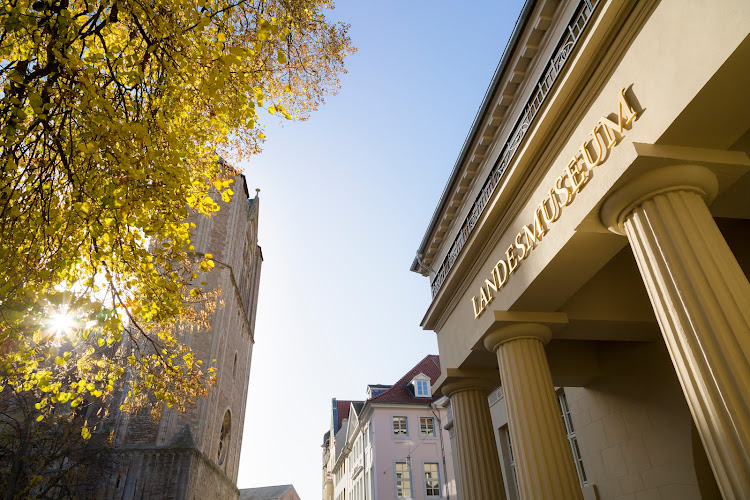
Braunschweigisches Landesmuseum – Haus Der Religionen
About Braunschweigisches Landesmuseum – Haus Der Religionen
Description
The Braunschweigisches Landesmuseum – Haus der Religionen presents itself as a layered museum experience rooted in regional memory, archaeology and the stories of faith that shaped Lower Saxony. Founded in 1891 as the Vaterländisches Museum through civic initiative, the institution has spent more than 120 years collecting, conserving, researching and presenting objects that tell the story of the Braunschweig region. Today it exists across several historic sites rather than a single building: while the Vieweghaus at Burgplatz is undergoing extensive renovations and remains closed until around 2028, visitors can still explore important branches that bring the museum’s mission to life.
At Museum Hinter Aegidien the permanent exhibition on German-Jewish history in Lower Saxony, Ein Teil von uns, stands out as a thoughtful and sometimes quiet treatment of complex local narratives. It focuses on lives, families and community institutions over centuries, balancing archival documents, personal items and well-curated explanatory panels. Temporary exhibitions rotate regularly in this space, so every visit offers a fresh perspective or a special project that complements the permanent storylines.
For families and those who like a more tactile, narrative-driven approach, the Familienmuseum in St. Ulrici-Brüdern offers Bruneswic anno 1221, a hands-on exploration of medieval Brunswick. Children and adults alike appreciate the interactive elements: replicas, role-play corners and storytelling stations that turn abstract medieval facts into something bodily and immediate. This branch demonstrates how the Landesmuseum works as both a serious historical archive and a place that invites playful curiosity.
Archaeology and medieval holdings are core strengths. The museum’s collection includes finds unearthed across the region, from prehistoric tools to medieval everyday objects, which together reveal changing settlement patterns, craft traditions and trade networks. Religious artifacts and church-related material are given careful attention in the Haus der Religionen context, where the material traces of belief—objects, bells, liturgical textiles, architecture—are used to map broader cultural shifts. That emphasis on religious material culture is not about doctrine; it’s about the way people lived, made sense of life and built community.
Practical matters are dealt with in a visitor-friendly way: many branches offer wheelchair-accessible entrances and restrooms, public toilets and free Wi-Fi, and staff frequently design programs specifically for children and families. Nevertheless, the museum recommends booking tickets in advance for certain exhibitions and workshops, because popular temporary shows and school group slots can fill up. There is no on-site restaurant at some branches, so visitors often plan a nearby cafe stop or picnic into their schedule.
What makes the Braunschweigisches Landesmuseum distinctive is not just the artifacts but the way local voices are woven into displays. The Ein Teil von uns exhibition, for instance, places local stories and family histories at the center rather than treating Jewish history as an abstract, distant subject. And Bruneswic anno 1221 doesn’t merely show medieval things; it stages short, surprising encounters with the past that linger—the smell of an herb bundle, the creak of a simulated market stall, a child discovering that medieval coins were heavy little slabs of lived value.
There are quieter, less-advertised strengths too. Curators sometimes open small, behind-the-scenes displays of conservation work or archival material, giving a glimpse into the research machinery of the Landesmuseum. Researchers and volunteers who have been with the institution for decades often lead specialized tours or workshops; those personal connections give exhibitions a warmth and specificity visitors notice. And because the museum operates through several buildings, it encourages a kind of slow exploration of Braunschweig itself: wandering from an Aegidien courtyard into a medieval church hall feels like tracing the city’s layers.
The renovation of the Vieweghaus has been a mixed blessing: it temporarily limits a single, centralized experience on Burgplatz, but it also encourages visitors to discover the museum’s satellite sites, which many find more intimate and engaging. For those who care about accessibility, the museum’s efforts to provide step-free access and gender-neutral facilities at key locations is meaningful. Families will find programs tailored to different ages, while history buffs can follow thematic trails—medieval law, local crafts, religious diversity—through rotating exhibitions and object-led displays.
In short, the Braunschweigisches Landesmuseum – Haus der Religionen functions as a regional memory bank with a curious, hands-on side. It is scholarly without being aloof and playful without being superficial. Whether one is primarily interested in archaeology, local history, religious material culture or family-friendly engagements with the past, the museum’s dispersed but coherent approach makes it a useful stop on any Braunschweig itinerary. Visitors who take the time to move between sites are likely to leave with a richer sense of how the city and region evolved—politically, economically and spiritually—over many centuries.
Key Features
More Details
Updated August 29, 2025
Table of Contents
Description
The Braunschweigisches Landesmuseum – Haus der Religionen presents itself as a layered museum experience rooted in regional memory, archaeology and the stories of faith that shaped Lower Saxony. Founded in 1891 as the Vaterländisches Museum through civic initiative, the institution has spent more than 120 years collecting, conserving, researching and presenting objects that tell the story of the Braunschweig region. Today it exists across several historic sites rather than a single building: while the Vieweghaus at Burgplatz is undergoing extensive renovations and remains closed until around 2028, visitors can still explore important branches that bring the museum’s mission to life.
At Museum Hinter Aegidien the permanent exhibition on German-Jewish history in Lower Saxony, Ein Teil von uns, stands out as a thoughtful and sometimes quiet treatment of complex local narratives. It focuses on lives, families and community institutions over centuries, balancing archival documents, personal items and well-curated explanatory panels. Temporary exhibitions rotate regularly in this space, so every visit offers a fresh perspective or a special project that complements the permanent storylines.
For families and those who like a more tactile, narrative-driven approach, the Familienmuseum in St. Ulrici-Brüdern offers Bruneswic anno 1221, a hands-on exploration of medieval Brunswick. Children and adults alike appreciate the interactive elements: replicas, role-play corners and storytelling stations that turn abstract medieval facts into something bodily and immediate. This branch demonstrates how the Landesmuseum works as both a serious historical archive and a place that invites playful curiosity.
Archaeology and medieval holdings are core strengths. The museum’s collection includes finds unearthed across the region, from prehistoric tools to medieval everyday objects, which together reveal changing settlement patterns, craft traditions and trade networks. Religious artifacts and church-related material are given careful attention in the Haus der Religionen context, where the material traces of belief—objects, bells, liturgical textiles, architecture—are used to map broader cultural shifts. That emphasis on religious material culture is not about doctrine; it’s about the way people lived, made sense of life and built community.
Practical matters are dealt with in a visitor-friendly way: many branches offer wheelchair-accessible entrances and restrooms, public toilets and free Wi-Fi, and staff frequently design programs specifically for children and families. Nevertheless, the museum recommends booking tickets in advance for certain exhibitions and workshops, because popular temporary shows and school group slots can fill up. There is no on-site restaurant at some branches, so visitors often plan a nearby cafe stop or picnic into their schedule.
What makes the Braunschweigisches Landesmuseum distinctive is not just the artifacts but the way local voices are woven into displays. The Ein Teil von uns exhibition, for instance, places local stories and family histories at the center rather than treating Jewish history as an abstract, distant subject. And Bruneswic anno 1221 doesn’t merely show medieval things; it stages short, surprising encounters with the past that linger—the smell of an herb bundle, the creak of a simulated market stall, a child discovering that medieval coins were heavy little slabs of lived value.
There are quieter, less-advertised strengths too. Curators sometimes open small, behind-the-scenes displays of conservation work or archival material, giving a glimpse into the research machinery of the Landesmuseum. Researchers and volunteers who have been with the institution for decades often lead specialized tours or workshops; those personal connections give exhibitions a warmth and specificity visitors notice. And because the museum operates through several buildings, it encourages a kind of slow exploration of Braunschweig itself: wandering from an Aegidien courtyard into a medieval church hall feels like tracing the city’s layers.
The renovation of the Vieweghaus has been a mixed blessing: it temporarily limits a single, centralized experience on Burgplatz, but it also encourages visitors to discover the museum’s satellite sites, which many find more intimate and engaging. For those who care about accessibility, the museum’s efforts to provide step-free access and gender-neutral facilities at key locations is meaningful. Families will find programs tailored to different ages, while history buffs can follow thematic trails—medieval law, local crafts, religious diversity—through rotating exhibitions and object-led displays.
In short, the Braunschweigisches Landesmuseum – Haus der Religionen functions as a regional memory bank with a curious, hands-on side. It is scholarly without being aloof and playful without being superficial. Whether one is primarily interested in archaeology, local history, religious material culture or family-friendly engagements with the past, the museum’s dispersed but coherent approach makes it a useful stop on any Braunschweig itinerary. Visitors who take the time to move between sites are likely to leave with a richer sense of how the city and region evolved—politically, economically and spiritually—over many centuries.
Key Highlights
Braunschweigisches Landesmuseum – Haus Der Religionen
Location
Places to Stay Near Braunschweigisches Landesmuseum - Haus Der Religionen
Find and Book a Tour
Explore More Travel Guides
No reviews found! Be the first to review!
Traveler Reviews for Braunschweigisches Landesmuseum – Haus Der Religionen
There are no reviews yet. Be the first one to write one.
Have you visited Braunschweigisches Landesmuseum – Haus Der Religionen? Help other travelers by sharing your review.
You Might Also Like
Braunschweiger Löwe
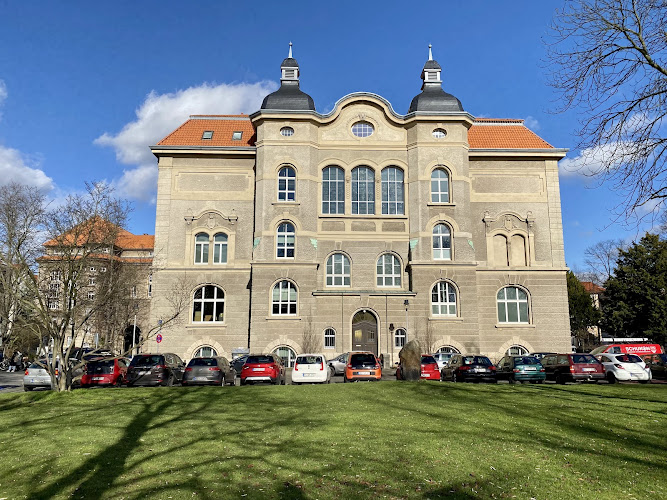
City of Brunswick, Municipal Museum
Kohlmarkt Braunschweig
Find Accommodations Nearby
Recommended Tours & Activities
Visitor Reviews
There are no reviews yet. Be the first one to write one.
Share Your Experience
Have you visited Braunschweigisches Landesmuseum – Haus Der Religionen? Help other travelers by leaving a review.