
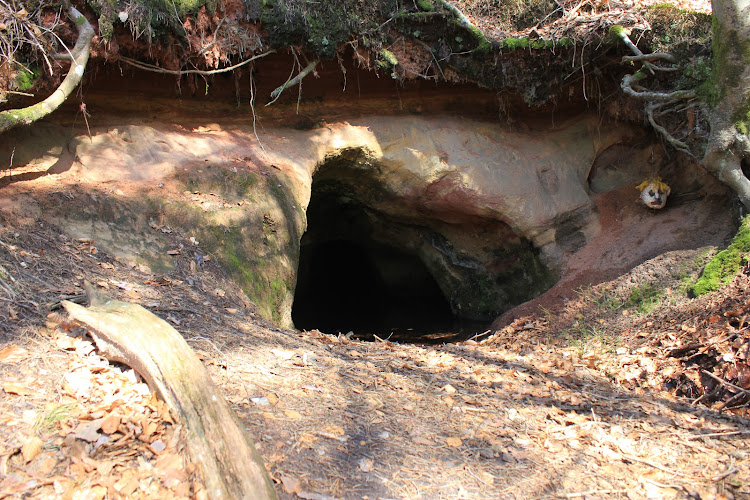
Eulenhöhle
About Eulenhöhle
Description
The Eulenhöhle stands as one of Germany's most fascinating underground wonders, carved deep into the limestone bedrock over thousands of years. This remarkable cave system offers visitors a chance to step into a completely different world - one where time seems to have stopped and nature's artistry takes center stage.
What strikes most people first about the Eulenhöhle is just how different it feels from the moment you descend into its depths. The temperature drops noticeably, providing a refreshing escape during warmer months, and there's this almost mystical quality to the air that's hard to describe until you experience it yourself. And honestly, photos just don't do it justice - the scale and intricate formations need to be witnessed in person.
The cave gets its name from the German word "Eule," meaning owl, though you're more likely to encounter bats than owls during your visit. These fascinating creatures have made the cave their home for centuries, playing a crucial role in the local ecosystem. The acoustic properties inside are absolutely incredible too; even the slightest whisper seems to carry further than you'd expect.
Geologically speaking, the Eulenhöhle represents millions of years of patient water erosion, creating chambers and passages that range from surprisingly spacious halls to more intimate corridors where you'll need to watch your head. The limestone formations tell a story that stretches back to when this entire region was under ancient seas.
Key Features
Travelers who venture into the Eulenhöhle will discover several remarkable features that set this cave apart from other underground attractions:
- Stunning stalactite and stalagmite formations - Some reaching impressive heights and displaying intricate patterns that have taken millennia to form
- Multiple interconnected chambers - Each with its own distinct character and geological features
- Natural bat habitat - Home to several species of bats that visitors can observe (from a respectful distance)
- Unique acoustic properties - The cave's structure creates fascinating sound effects and echoes
- Constant cool temperature - Maintaining around 8-10°C year-round, making it a natural air conditioning system
- Ancient rock formations - Visible layers of geological history spanning millions of years
- Underground streams and water features - Small waterways that continue the cave's formation process
- Educational geological displays - Information points explaining the cave's formation and ecosystem
But here's something most guidebooks won't tell you - the cave has this almost meditative quality that's really hard to find elsewhere. I've noticed that people tend to naturally lower their voices when they're inside, not just out of respect for the bats, but because there's something about the space that just demands a quieter, more contemplative approach.
Best Time to Visit
The beauty of the Eulenhöhle is that it maintains its appeal throughout the year, though certain seasons definitely offer distinct advantages for different types of travelers.
Summer months (June through August) are particularly popular, and for good reason. When temperatures outside are soaring into the high 20s or 30s Celsius, stepping into the cave's consistent 8-10°C environment provides immediate relief. It's like nature's own air conditioning system, and trust me, after spending a hot day exploring the surrounding countryside, that cool air feels absolutely amazing.
Spring and fall present their own unique charms. During these shoulder seasons, you'll encounter fewer crowds, which means a more intimate experience with the cave's natural wonders. The contrast between the mild outdoor temperatures and the cave's coolness is less dramatic but still refreshing. Plus, parking and accommodation in the surrounding area tend to be more readily available and often less expensive.
Winter visits offer perhaps the most striking temperature differential - stepping from near-freezing outdoor conditions into the cave's relatively warmer environment creates an almost tropical feeling. The formations often appear more dramatic in winter lighting conditions, and there's something particularly magical about emerging from this underground world into a snow-covered landscape.
For bat enthusiasts, late spring through early fall provides the best opportunities to observe these fascinating creatures in their natural habitat. They're most active during these warmer months, though it's worth noting that certain areas may have seasonal restrictions to protect breeding populations.
Honestly, I'd avoid peak summer weekends if possible - the cave can get quite crowded, and part of what makes this place special is the sense of being connected to something ancient and timeless, which is harder to achieve when you're shuffling along with a large group.
How to Get There
Getting to the Eulenhöhle requires a bit of planning, but the journey itself becomes part of the adventure. The cave is located in a region that's well-connected by Germany's efficient transportation network, though having your own vehicle definitely provides the most flexibility.
If you're driving, the route takes you through some genuinely beautiful countryside that's worth savoring rather than rushing through. The roads leading to the cave area are generally well-maintained, though some of the final approaches involve narrower rural roads where you'll want to take your time. Parking facilities are available near the cave entrance, but spaces can fill up during peak season, so arriving earlier in the day is typically wise.
Public transportation is definitely possible, though it requires more coordination. The regional train network connects to nearby towns, and from there, local bus services can get you within walking distance of the cave. This approach actually has its advantages - you get to see more of the local landscape and maybe discover some unexpected gems along the way. But be sure to check current schedules, especially for return journeys, as service can be limited in the evenings.
For international visitors, the nearest major airport is within reasonable driving distance, and car rental facilities are readily available. Many travelers combine their Eulenhöhle visit with exploration of other regional attractions, making a rental car particularly worthwhile.
One thing that caught me off guard during my first visit was how the final approach to the cave involves a bit of walking over uneven terrain. It's not particularly challenging, but it's definitely not wheelchair accessible, and you'll want to wear appropriate footwear.
Tips for Visiting
Preparing properly for your Eulenhöhle adventure can make the difference between a good experience and an absolutely memorable one. And trust me, there are some things I wish I'd known before my first visit that would've made the day even better.
First and foremost - bring layers. I cannot emphasize this enough. That 8-10°C temperature inside feels refreshing for the first few minutes, but if you're spending an hour or more exploring (which you absolutely should), you'll want that extra warmth. A light fleece or warm jacket is perfect, and it's easy enough to carry when you're outside in warmer weather.
Footwear deserves serious consideration. The cave floors can be uneven and occasionally damp, so sturdy shoes with good grip are essential. I've seen people attempt visits in flip-flops or dress shoes, and it just doesn't work. Your feet will thank you for choosing comfort and safety over style.
Photography enthusiasts should bring a reliable flashlight or headlamp in addition to their camera equipment. While the cave has some lighting, natural formations often look more dramatic with additional illumination. However, be mindful of flash photography, especially in areas where bats are present - it can be disruptive to these sensitive creatures.
Speaking of cameras, managing expectations around photography is important. The lighting conditions inside are challenging, and many smartphones struggle with the low-light environment. But sometimes the best souvenirs are the memories anyway, and being fully present in the moment often beats trying to capture everything through a lens.
Consider bringing a small backpack for carrying layers, water, and any photography equipment. The cave exploration involves some walking and occasional climbing over uneven surfaces, so having your hands free is definitely advantageous.
Timing your visit strategically can significantly enhance the experience. Early morning or later afternoon visits often provide the most comfortable lighting transitions and fewer crowds. Plus, the surrounding landscape looks particularly beautiful during golden hour if you're planning to explore the area further.
Finally, approach the cave with respect for both its natural environment and its wildlife inhabitants. The formations you'll see have taken thousands of years to develop, and the ecosystem supporting the local bat population is delicate. Following posted guidelines isn't just about rules - it's about preserving this incredible natural wonder for future generations to discover and enjoy.
Key Features
- Key Features
- Best Time to Visit
- How to Get There
- Tips for Visiting
More Details
Updated September 12, 2025
Table of Contents
Description
The Eulenhöhle stands as one of Germany’s most fascinating underground wonders, carved deep into the limestone bedrock over thousands of years. This remarkable cave system offers visitors a chance to step into a completely different world – one where time seems to have stopped and nature’s artistry takes center stage.
What strikes most people first about the Eulenhöhle is just how different it feels from the moment you descend into its depths. The temperature drops noticeably, providing a refreshing escape during warmer months, and there’s this almost mystical quality to the air that’s hard to describe until you experience it yourself. And honestly, photos just don’t do it justice – the scale and intricate formations need to be witnessed in person.
The cave gets its name from the German word “Eule,” meaning owl, though you’re more likely to encounter bats than owls during your visit. These fascinating creatures have made the cave their home for centuries, playing a crucial role in the local ecosystem. The acoustic properties inside are absolutely incredible too; even the slightest whisper seems to carry further than you’d expect.
Geologically speaking, the Eulenhöhle represents millions of years of patient water erosion, creating chambers and passages that range from surprisingly spacious halls to more intimate corridors where you’ll need to watch your head. The limestone formations tell a story that stretches back to when this entire region was under ancient seas.
Key Features
Travelers who venture into the Eulenhöhle will discover several remarkable features that set this cave apart from other underground attractions:
- Stunning stalactite and stalagmite formations – Some reaching impressive heights and displaying intricate patterns that have taken millennia to form
- Multiple interconnected chambers – Each with its own distinct character and geological features
- Natural bat habitat – Home to several species of bats that visitors can observe (from a respectful distance)
- Unique acoustic properties – The cave’s structure creates fascinating sound effects and echoes
- Constant cool temperature – Maintaining around 8-10°C year-round, making it a natural air conditioning system
- Ancient rock formations – Visible layers of geological history spanning millions of years
- Underground streams and water features – Small waterways that continue the cave’s formation process
- Educational geological displays – Information points explaining the cave’s formation and ecosystem
But here’s something most guidebooks won’t tell you – the cave has this almost meditative quality that’s really hard to find elsewhere. I’ve noticed that people tend to naturally lower their voices when they’re inside, not just out of respect for the bats, but because there’s something about the space that just demands a quieter, more contemplative approach.
Best Time to Visit
The beauty of the Eulenhöhle is that it maintains its appeal throughout the year, though certain seasons definitely offer distinct advantages for different types of travelers.
Summer months (June through August) are particularly popular, and for good reason. When temperatures outside are soaring into the high 20s or 30s Celsius, stepping into the cave’s consistent 8-10°C environment provides immediate relief. It’s like nature’s own air conditioning system, and trust me, after spending a hot day exploring the surrounding countryside, that cool air feels absolutely amazing.
Spring and fall present their own unique charms. During these shoulder seasons, you’ll encounter fewer crowds, which means a more intimate experience with the cave’s natural wonders. The contrast between the mild outdoor temperatures and the cave’s coolness is less dramatic but still refreshing. Plus, parking and accommodation in the surrounding area tend to be more readily available and often less expensive.
Winter visits offer perhaps the most striking temperature differential – stepping from near-freezing outdoor conditions into the cave’s relatively warmer environment creates an almost tropical feeling. The formations often appear more dramatic in winter lighting conditions, and there’s something particularly magical about emerging from this underground world into a snow-covered landscape.
For bat enthusiasts, late spring through early fall provides the best opportunities to observe these fascinating creatures in their natural habitat. They’re most active during these warmer months, though it’s worth noting that certain areas may have seasonal restrictions to protect breeding populations.
Honestly, I’d avoid peak summer weekends if possible – the cave can get quite crowded, and part of what makes this place special is the sense of being connected to something ancient and timeless, which is harder to achieve when you’re shuffling along with a large group.
How to Get There
Getting to the Eulenhöhle requires a bit of planning, but the journey itself becomes part of the adventure. The cave is located in a region that’s well-connected by Germany’s efficient transportation network, though having your own vehicle definitely provides the most flexibility.
If you’re driving, the route takes you through some genuinely beautiful countryside that’s worth savoring rather than rushing through. The roads leading to the cave area are generally well-maintained, though some of the final approaches involve narrower rural roads where you’ll want to take your time. Parking facilities are available near the cave entrance, but spaces can fill up during peak season, so arriving earlier in the day is typically wise.
Public transportation is definitely possible, though it requires more coordination. The regional train network connects to nearby towns, and from there, local bus services can get you within walking distance of the cave. This approach actually has its advantages – you get to see more of the local landscape and maybe discover some unexpected gems along the way. But be sure to check current schedules, especially for return journeys, as service can be limited in the evenings.
For international visitors, the nearest major airport is within reasonable driving distance, and car rental facilities are readily available. Many travelers combine their Eulenhöhle visit with exploration of other regional attractions, making a rental car particularly worthwhile.
One thing that caught me off guard during my first visit was how the final approach to the cave involves a bit of walking over uneven terrain. It’s not particularly challenging, but it’s definitely not wheelchair accessible, and you’ll want to wear appropriate footwear.
Tips for Visiting
Preparing properly for your Eulenhöhle adventure can make the difference between a good experience and an absolutely memorable one. And trust me, there are some things I wish I’d known before my first visit that would’ve made the day even better.
First and foremost – bring layers. I cannot emphasize this enough. That 8-10°C temperature inside feels refreshing for the first few minutes, but if you’re spending an hour or more exploring (which you absolutely should), you’ll want that extra warmth. A light fleece or warm jacket is perfect, and it’s easy enough to carry when you’re outside in warmer weather.
Footwear deserves serious consideration. The cave floors can be uneven and occasionally damp, so sturdy shoes with good grip are essential. I’ve seen people attempt visits in flip-flops or dress shoes, and it just doesn’t work. Your feet will thank you for choosing comfort and safety over style.
Photography enthusiasts should bring a reliable flashlight or headlamp in addition to their camera equipment. While the cave has some lighting, natural formations often look more dramatic with additional illumination. However, be mindful of flash photography, especially in areas where bats are present – it can be disruptive to these sensitive creatures.
Speaking of cameras, managing expectations around photography is important. The lighting conditions inside are challenging, and many smartphones struggle with the low-light environment. But sometimes the best souvenirs are the memories anyway, and being fully present in the moment often beats trying to capture everything through a lens.
Consider bringing a small backpack for carrying layers, water, and any photography equipment. The cave exploration involves some walking and occasional climbing over uneven surfaces, so having your hands free is definitely advantageous.
Timing your visit strategically can significantly enhance the experience. Early morning or later afternoon visits often provide the most comfortable lighting transitions and fewer crowds. Plus, the surrounding landscape looks particularly beautiful during golden hour if you’re planning to explore the area further.
Finally, approach the cave with respect for both its natural environment and its wildlife inhabitants. The formations you’ll see have taken thousands of years to develop, and the ecosystem supporting the local bat population is delicate. Following posted guidelines isn’t just about rules – it’s about preserving this incredible natural wonder for future generations to discover and enjoy.
Key Highlights
- Key Features
- Best Time to Visit
- How to Get There
- Tips for Visiting
Location
Places to Stay Near Eulenhöhle
Find and Book a Tour
Explore More Travel Guides
No reviews found! Be the first to review!
Traveler Reviews for Eulenhöhle
There are no reviews yet. Be the first one to write one.
Have you visited Eulenhöhle? Help other travelers by sharing your review.
You Might Also Like
Kaiserbrunnen

Exit Adventures Kaiserslautern
Kapaun Softball Field
Find Accommodations Nearby
Recommended Tours & Activities
Visitor Reviews
There are no reviews yet. Be the first one to write one.
Share Your Experience
Have you visited Eulenhöhle? Help other travelers by leaving a review.