Biblioteca Comunale dell’Archiginnasio
About Biblioteca Comunale dell’Archiginnasio
Description
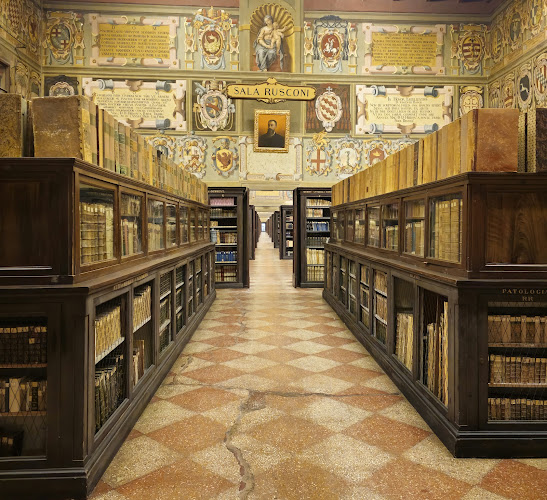
The Biblioteca Comunale dell'Archiginnasio isn’t just a library, and honestly, calling it “just” anything feels wrong. This place carries centuries on its walls, literally. Set inside a 16th-century building that once housed the University of Bologna, it’s one of those attractions that quietly knocks you sideways. You walk in expecting shelves and silence, and instead you get frescoes, coats of arms everywhere you look, and an anatomical theater that makes you pause and think about how learning used to be a physical, risky, almost daring thing.
The first time I visited, I remember thinking I’d pop in for 20 minutes and then go hunt for coffee. Two hours later, I was still there, craning my neck at the ceiling and running my fingers along the worn wood railings. And yes, you’re allowed to be there as a traveler, not just as a scholar. That’s the beauty of it. The Archiginnasio Library is both a working public library and a major tourist attraction, and somehow it manages to serve both worlds without feeling awkward.
The building dates back to 1563, commissioned by Pope Pius IV, and it was meant to bring all university faculties under one roof. Law students, medical students, philosophers, all sharing the same space. You can feel that ambition when you’re inside. The walls are plastered with thousands of coats of arms representing students and professors from across Europe. It’s like an Instagram feed from the Renaissance, only more permanent and way more impressive.
Then there’s the Anatomical Theatre. Even if you’re squeamish, don’t skip it. This wooden room was where anatomy lessons happened in the 17th century, with students standing in tiers watching dissections. The professor’s chair is still there, flanked by carved figures of famous doctors. The ceiling features Apollo surrounded by constellations, which feels poetic considering what was happening below. Learning about the human body under the stars. I got goosebumps, not gonna lie.
As a library, it holds hundreds of thousands of volumes, including rare manuscripts and incunabula. But you don’t need to be a book nerd to appreciate it. Even people who normally breeze through museums seem to slow down here. The atmosphere does that to you. It’s quiet, but not stiff. Old, but not dusty in spirit. And yes, it’s accessible, with a wheelchair-friendly entrance, which matters more than many guides bother to mention.
Key Features
- The Anatomical Theatre: A 17th-century wooden lecture hall used for anatomy lessons, with original carvings and a stunning symbolic ceiling.
- Historic Frescoes: Walls and ceilings covered in detailed frescoes that tell stories of knowledge, power, and academic pride.
- Coats of Arms: Thousands of heraldic shields representing students and professors, creating a visual archive of centuries of scholarship.
- Rare Book Collections: Manuscripts, early printed books, and archival materials that quietly anchor Bologna’s intellectual legacy.
- Public Library Atmosphere: Locals actually use it, which gives the place a lived-in, authentic feel.
- Central Courtyard: A peaceful space to pause, look up, and let the scale of the building sink in.
- Wheelchair Accessible Entrance: Practical and thoughtful, making the site welcoming to more visitors.
Best Time to Visit
Timing matters here, more than you might expect. Mornings are my personal pick, especially midweek. The light filtering through the windows hits the frescoes just right, and the crowds are thinner. You can actually hear your footsteps echo a bit, which somehow adds to the mood. Late mornings to early afternoons are busier, especially in peak travel months, and the Anatomical Theatre can feel a bit rushed then.
If you’re visiting Bologna in spring or fall, you’re in luck. The weather is pleasant, and the library feels like a calm counterbalance to the busy streets outside. Summer can be hot, but the thick walls keep things cooler than you’d expect. Winter has its own charm too. I once visited on a rainy December afternoon, and the quiet was almost monastic. It felt like the building was whispering its stories just to me. Maybe that’s romanticizing it, but hey, travel does that.
Weekends tend to attract more tourists, while weekdays see more students and locals. Neither is better or worse, just different vibes. If you like observing daily life, go on a weekday. If you want that buzz of shared discovery, weekends work.
How to Get There
Getting to the Biblioteca Comunale dell'Archiginnasio is refreshingly easy. Bologna’s historic center is compact, and walking is often the best option. You’ll likely already be nearby if you’re exploring the main squares or food markets. And honestly, walking through Bologna is half the fun. Porticoes everywhere, little shops, random moments of beauty. Don’t rush it.
If walking isn’t ideal, public transport is efficient and straightforward. Buses stop close enough that you won’t feel stranded. Taxis are also an option, though they’re a bit unnecessary unless mobility is an issue or you’re on a tight schedule.
For travelers using wheelchairs or strollers, the area around the library is mostly manageable, with paved streets and accessible entry. It’s not perfect, because old cities rarely are, but it’s better than many historic sites of similar age.
Tips for Visiting
First tip: slow down. This isn’t a place to sprint through for photos. Give yourself at least an hour, more if you’re the curious type. Read the plaques, look closely at the carvings, notice how worn the floors are. Those details stick with you.
Second, don’t be shy about stepping into spaces that look “academic.” It’s a public library, and visitors are welcome. Just be respectful. Keep your voice down, silence your phone, the usual stuff. Watching locals study or read adds another layer to the experience.
Photography rules can vary in certain rooms, so pay attention to signs. And please, for the love of all things Renaissance, don’t use flash. It’s distracting and kind of rude, if I’m being honest.
If you’re traveling with kids or teens, frame the visit as a story rather than a lesson. The Anatomical Theatre especially can spark curiosity about how science evolved. I’ve seen bored-looking teenagers suddenly perk up there, which says a lot.
And here’s a slightly selfish tip: sit in the courtyard for a few minutes before you leave. Even if you think you’re done. Let the experience settle. I usually end up reflecting on how many generations passed through that same space, worrying about exams, careers, life. Makes your own travel stresses feel pretty small.
Finally, pair your visit with something simple afterward. A walk, a coffee, maybe jotting notes in a journal. The Archiginnasio has a way of lingering in your thoughts, and giving it space to do that is part of the pleasure. You came to Bologna for culture, right? This is culture, quietly doing its thing, waiting for you to notice.
Key Features
- Key Features
- Best Time to Visit
- How to Get There
- Tips for Visiting
More Details
Updated December 31, 2025
Table of Contents
- Description
- Key Features
- Best Time to Visit
- How to Get There
- Tips for Visiting
- Key Highlights
- Location
- Places to Stay Near Biblioteca Comunale dell'Archiginnasio
- Find and Book a Tour
- Explore More Travel Guides
- Nearby Places You Might Like
- Traveler Reviews for Biblioteca Comunale dell’Archiginnasio
- Share Your Experience
Description
The Biblioteca Comunale dell’Archiginnasio isn’t just a library, and honestly, calling it “just” anything feels wrong. This place carries centuries on its walls, literally. Set inside a 16th-century building that once housed the University of Bologna, it’s one of those attractions that quietly knocks you sideways. You walk in expecting shelves and silence, and instead you get frescoes, coats of arms everywhere you look, and an anatomical theater that makes you pause and think about how learning used to be a physical, risky, almost daring thing.
The first time I visited, I remember thinking I’d pop in for 20 minutes and then go hunt for coffee. Two hours later, I was still there, craning my neck at the ceiling and running my fingers along the worn wood railings. And yes, you’re allowed to be there as a traveler, not just as a scholar. That’s the beauty of it. The Archiginnasio Library is both a working public library and a major tourist attraction, and somehow it manages to serve both worlds without feeling awkward.
The building dates back to 1563, commissioned by Pope Pius IV, and it was meant to bring all university faculties under one roof. Law students, medical students, philosophers, all sharing the same space. You can feel that ambition when you’re inside. The walls are plastered with thousands of coats of arms representing students and professors from across Europe. It’s like an Instagram feed from the Renaissance, only more permanent and way more impressive.
Then there’s the Anatomical Theatre. Even if you’re squeamish, don’t skip it. This wooden room was where anatomy lessons happened in the 17th century, with students standing in tiers watching dissections. The professor’s chair is still there, flanked by carved figures of famous doctors. The ceiling features Apollo surrounded by constellations, which feels poetic considering what was happening below. Learning about the human body under the stars. I got goosebumps, not gonna lie.
As a library, it holds hundreds of thousands of volumes, including rare manuscripts and incunabula. But you don’t need to be a book nerd to appreciate it. Even people who normally breeze through museums seem to slow down here. The atmosphere does that to you. It’s quiet, but not stiff. Old, but not dusty in spirit. And yes, it’s accessible, with a wheelchair-friendly entrance, which matters more than many guides bother to mention.
Key Features
- The Anatomical Theatre: A 17th-century wooden lecture hall used for anatomy lessons, with original carvings and a stunning symbolic ceiling.
- Historic Frescoes: Walls and ceilings covered in detailed frescoes that tell stories of knowledge, power, and academic pride.
- Coats of Arms: Thousands of heraldic shields representing students and professors, creating a visual archive of centuries of scholarship.
- Rare Book Collections: Manuscripts, early printed books, and archival materials that quietly anchor Bologna’s intellectual legacy.
- Public Library Atmosphere: Locals actually use it, which gives the place a lived-in, authentic feel.
- Central Courtyard: A peaceful space to pause, look up, and let the scale of the building sink in.
- Wheelchair Accessible Entrance: Practical and thoughtful, making the site welcoming to more visitors.
Best Time to Visit
Timing matters here, more than you might expect. Mornings are my personal pick, especially midweek. The light filtering through the windows hits the frescoes just right, and the crowds are thinner. You can actually hear your footsteps echo a bit, which somehow adds to the mood. Late mornings to early afternoons are busier, especially in peak travel months, and the Anatomical Theatre can feel a bit rushed then.
If you’re visiting Bologna in spring or fall, you’re in luck. The weather is pleasant, and the library feels like a calm counterbalance to the busy streets outside. Summer can be hot, but the thick walls keep things cooler than you’d expect. Winter has its own charm too. I once visited on a rainy December afternoon, and the quiet was almost monastic. It felt like the building was whispering its stories just to me. Maybe that’s romanticizing it, but hey, travel does that.
Weekends tend to attract more tourists, while weekdays see more students and locals. Neither is better or worse, just different vibes. If you like observing daily life, go on a weekday. If you want that buzz of shared discovery, weekends work.
How to Get There
Getting to the Biblioteca Comunale dell’Archiginnasio is refreshingly easy. Bologna’s historic center is compact, and walking is often the best option. You’ll likely already be nearby if you’re exploring the main squares or food markets. And honestly, walking through Bologna is half the fun. Porticoes everywhere, little shops, random moments of beauty. Don’t rush it.
If walking isn’t ideal, public transport is efficient and straightforward. Buses stop close enough that you won’t feel stranded. Taxis are also an option, though they’re a bit unnecessary unless mobility is an issue or you’re on a tight schedule.
For travelers using wheelchairs or strollers, the area around the library is mostly manageable, with paved streets and accessible entry. It’s not perfect, because old cities rarely are, but it’s better than many historic sites of similar age.
Tips for Visiting
First tip: slow down. This isn’t a place to sprint through for photos. Give yourself at least an hour, more if you’re the curious type. Read the plaques, look closely at the carvings, notice how worn the floors are. Those details stick with you.
Second, don’t be shy about stepping into spaces that look “academic.” It’s a public library, and visitors are welcome. Just be respectful. Keep your voice down, silence your phone, the usual stuff. Watching locals study or read adds another layer to the experience.
Photography rules can vary in certain rooms, so pay attention to signs. And please, for the love of all things Renaissance, don’t use flash. It’s distracting and kind of rude, if I’m being honest.
If you’re traveling with kids or teens, frame the visit as a story rather than a lesson. The Anatomical Theatre especially can spark curiosity about how science evolved. I’ve seen bored-looking teenagers suddenly perk up there, which says a lot.
And here’s a slightly selfish tip: sit in the courtyard for a few minutes before you leave. Even if you think you’re done. Let the experience settle. I usually end up reflecting on how many generations passed through that same space, worrying about exams, careers, life. Makes your own travel stresses feel pretty small.
Finally, pair your visit with something simple afterward. A walk, a coffee, maybe jotting notes in a journal. The Archiginnasio has a way of lingering in your thoughts, and giving it space to do that is part of the pleasure. You came to Bologna for culture, right? This is culture, quietly doing its thing, waiting for you to notice.

Key Highlights
- Key Features
- Best Time to Visit
- How to Get There
- Tips for Visiting
Location
Places to Stay Near Biblioteca Comunale dell'Archiginnasio
Find and Book a Tour
Explore More Travel Guides
No reviews found! Be the first to review!
Traveler Reviews for Biblioteca Comunale dell’Archiginnasio
There are no reviews yet. Be the first one to write one.
Have you visited Biblioteca Comunale dell’Archiginnasio? Help other travelers by sharing your review.
Find Accommodations Nearby
Recommended Tours & Activities
Visitor Reviews
There are no reviews yet. Be the first one to write one.
Share Your Experience
Have you visited Biblioteca Comunale dell’Archiginnasio? Help other travelers by leaving a review.