
Bab El Mers باب المرس
About Bab El Mers باب المرس
Description
Standing as one of Tunis's most evocative historical gateways, Bab El Mers represents a fascinating slice of the city's maritime heritage that many travelers tend to overlook. This ancient gate once served as a critical passageway connecting the old medina to the bustling port area, and honestly, it's a shame that more visitors don't make the effort to seek it out during their Tunisian adventures. The name itself tells you everything you need to know about its original purpose—"Bab El Mers" translates roughly to "Gate of the Port" in Arabic, and for centuries this archway witnessed the comings and goings of merchants, sailors, and travelers from across the Mediterranean. I've always found it remarkable how certain structures can serve as silent witnesses to history, and this particular gate has seen empires rise and fall, trade routes shift, and countless human stories unfold beneath its stones. What makes Bab El Mers particularly special is how it bridges—quite literally—the commercial heart of historic Tunis with the sea that shaped the city's destiny. Walking through this gate today, you're following in the footsteps of Ottoman administrators, French colonial officers, Arab traders, and probably a few pirates too if we're being honest about Mediterranean history. The stonework bears the weathering of salt air and centuries, giving it an authenticity that you just can't replicate in restored monuments. The gate stands as a testament to Tunis's strategic importance as a port city, something that often gets overshadowed by discussions of the more famous medina gates. But here's the thing—while tourists flock to the better-known entrances, Bab El Mers offers something different. It's quieter, more contemplative, and gives you a genuine sense of discovery that's increasingly rare in today's over-touristed world. For families traveling with children, this historical landmark provides an accessible introduction to Tunisian history without requiring hours of museum-going or complicated explanations. Kids can actually visualize what it meant for this gate to control access between the city and the sea, making history tangible rather than abstract.Key Features
Visitors to Bab El Mers will encounter several distinctive characteristics that set this landmark apart: • Architectural elements reflecting the defensive and commercial purposes the gate served throughout different historical periods • Strategic positioning that once controlled movement between the medina and the port district of Tunis • Original stonework showing the patina of age and exposure to Mediterranean weather conditions over centuries • Family-friendly accessibility that makes it suitable for travelers with children of various ages • Relatively crowd-free atmosphere compared to more famous historical sites in Tunis • Authentic neighborhood surroundings that haven't been overly commercialized or adapted for tourism • Photographic opportunities capturing the intersection of ancient architecture and contemporary Tunisian street life • Close proximity to traditional markets and local businesses that continue operating much as they have for generations • Architectural details that reflect various rulers and administrations who controlled Tunis throughout history • A tangible connection to Tunisia's maritime heritage and its role in Mediterranean trade networksBest Time to Visit
Timing your visit to Bab El Mers requires thinking about both weather and the rhythms of local life. The gate itself is accessible year-round since it's essentially an open-air monument rather than a building with operating hours, but your experience will vary considerably depending on when you go. Spring months, particularly March through May, offer probably the most comfortable conditions for exploring this area. The temperatures haven't yet climbed to summer's intensity, and the light has this beautiful quality that's perfect for photography. And you'll find the surrounding neighborhoods are particularly lively during this season as locals emerge from winter and the city takes on renewed energy. Early mornings present the best opportunity for capturing the gate without crowds—not that this place gets particularly packed, but if you want those unobstructed photos, aim for around 8 or 9 AM. The morning light from the east also illuminates the stonework beautifully, revealing textures and details that get washed out during midday. Fall, especially September and October, runs a close second to spring. The summer tourist crowds have thinned, temperatures become manageable again, and there's often this pleasant warmth to the air that makes wandering the old streets genuinely enjoyable rather than an endurance test. Summer visits are certainly possible, but I'll be straight with you—July and August can be brutal. If you're here during peak summer, visit either very early morning or late afternoon to avoid the worst heat. The area around Bab El Mers doesn't have much shade, and the stone and pavement retain heat like you wouldn't believe. Winter isn't a bad choice either, particularly if you don't mind cooler temperatures. December through February sees fewer tourists, giving you a more authentic sense of how locals interact with these historical spaces daily. Just bring a jacket because Mediterranean winters can be surprisingly chilly, especially with wind coming off the water. Fridays deserve special mention—this is the main prayer day in Tunisia, and while the gate itself remains accessible, you'll notice different rhythms to the surrounding neighborhood. Some shops might be closed during prayer times, though this also means you might have the area more to yourself.How to Get There
Reaching Bab El Mers requires a bit more intentionality than simply stumbling across it during a medina wander, but that's part of what keeps it authentic and less touristy. If you're staying in the medina or central Tunis, walking is definitely your best option. The gate sits on the northeastern edge of the old city, and following the perimeter of the medina walls will eventually bring you there. Ask locals for directions to "Bab El Mers" and most will be able to point you in the right direction—Tunisians are generally quite helpful with navigation questions, especially if you make an effort with a few Arabic phrases. Taxis represent another practical option, though you'll want to use the meter or agree on a price beforehand to avoid the tourist markup. Most taxi drivers know the major gates around the medina, so "Bab El Mers" should be recognized. Having the Arabic name ready helps—باب المرس—which you can show if there's any confusion. The Tunis light rail system, known as the Metro Leger, can get you relatively close depending on where you're coming from. The nearest stops would be in the general medina area, from which you'd walk the remaining distance. It's not the most direct route, but the metro is clean, efficient, and gives you a slice of everyday Tunisian life. If you're feeling adventurous, the local bus system services this area, though I'll admit the routes can be confusing for first-time visitors. Buses are incredibly cheap but require some patience and possibly a willingness to ask fellow passengers for help. For those renting cars—and honestly, I wouldn't recommend driving in the medina area unless you're comfortable with narrow streets and assertive local driving styles—you'll need to park outside the old city and walk in. There are parking areas around the medina perimeter, though finding spots can be challenging during busy times. GPS coordinates work reasonably well if you're using navigation apps, though be aware that some mapping services are more accurate than others in the medina's warren of streets. Download offline maps before you go, just in case.Tips for Visiting
Making the most of your visit to Bab El Mers involves some practical preparation and realistic expectations. This isn't a major museum or a heavily interpreted tourist site—it's an authentic historical structure in an active neighborhood, which means your experience depends partly on what you bring to it. Wear comfortable walking shoes because the streets around the gate are paved with uneven stones that can be tough on feet. Sandals work fine in dry weather, but if it's been raining, you'll want closed shoes with good grip. Bring water, especially during warmer months. The area around Bab El Mers isn't lined with tourist cafes the way some parts of the medina are, so staying hydrated requires planning ahead. Photography is generally welcome, though as always, ask before photographing local people. The gate itself makes a wonderful subject, particularly if you frame it with the surrounding architecture or capture the contrast between ancient stones and modern street life. Modest dress helps you blend in and shows respect for local customs. While Tunis is relatively liberal by regional standards, covering shoulders and knees remains a good general rule, particularly if you plan to explore the surrounding neighborhoods beyond just the gate itself. Learning a few basic Arabic or French phrases pays dividends. Even just "Shukran" (thank you) or "Bonjour" opens doors and creates friendly interactions with locals you'll encounter. Don't rush your visit. Yes, the gate itself can be viewed in minutes, but the real value comes from absorbing the atmosphere, imagining the history, and perhaps wandering the nearby streets to see how this area functions today. I've found that sitting for a few minutes and just watching daily life unfold around historical sites often proves more memorable than quick photo stops. Consider combining your visit with exploration of the surrounding area—this part of Tunis has traditional markets, authentic eateries, and neighborhoods that see few foreign visitors. The gate serves as an excellent starting point for a more extensive urban exploration. If you're traveling with children, prepare them with a bit of historical context beforehand. Explaining how cities needed gates to control who entered and exited makes the structure more meaningful than just "another old building." Kids often enjoy imagining guards checking travelers or merchants bringing goods from ships. Safety around Bab El Mers is generally good, but standard urban awareness applies. Keep valuables secure, stay aware of your surroundings, and trust your instincts if something feels off. Finally, manage your expectations appropriately. This isn't the Colosseum or the Pyramids—it's a historical gate in a working neighborhood. But if you appreciate authentic historical sites that haven't been overly restored or commercialized, Bab El Mers offers exactly that genuine experience that's becoming harder to find in our increasingly homogenized tourist landscape.Key Features
- Historic arched gateway with weathered stone and traditional Moroccan plasterwork
- Quiet, authentic medina setting away from major tourist hubs
- Close proximity to local markets and everyday street life
- Photogenic scenes ideal for street and architectural photography
- Easy walking connections to Meknes’ main monuments and squares
More Details
Updated March 30, 2026
Table of Contents
Description
Standing as one of Tunis’s most evocative historical gateways, Bab El Mers represents a fascinating slice of the city’s maritime heritage that many travelers tend to overlook. This ancient gate once served as a critical passageway connecting the old medina to the bustling port area, and honestly, it’s a shame that more visitors don’t make the effort to seek it out during their Tunisian adventures.
The name itself tells you everything you need to know about its original purpose—”Bab El Mers” translates roughly to “Gate of the Port” in Arabic, and for centuries this archway witnessed the comings and goings of merchants, sailors, and travelers from across the Mediterranean. I’ve always found it remarkable how certain structures can serve as silent witnesses to history, and this particular gate has seen empires rise and fall, trade routes shift, and countless human stories unfold beneath its stones.
What makes Bab El Mers particularly special is how it bridges—quite literally—the commercial heart of historic Tunis with the sea that shaped the city’s destiny. Walking through this gate today, you’re following in the footsteps of Ottoman administrators, French colonial officers, Arab traders, and probably a few pirates too if we’re being honest about Mediterranean history. The stonework bears the weathering of salt air and centuries, giving it an authenticity that you just can’t replicate in restored monuments.
The gate stands as a testament to Tunis’s strategic importance as a port city, something that often gets overshadowed by discussions of the more famous medina gates. But here’s the thing—while tourists flock to the better-known entrances, Bab El Mers offers something different. It’s quieter, more contemplative, and gives you a genuine sense of discovery that’s increasingly rare in today’s over-touristed world.
For families traveling with children, this historical landmark provides an accessible introduction to Tunisian history without requiring hours of museum-going or complicated explanations. Kids can actually visualize what it meant for this gate to control access between the city and the sea, making history tangible rather than abstract.
Key Features
Visitors to Bab El Mers will encounter several distinctive characteristics that set this landmark apart:
• Architectural elements reflecting the defensive and commercial purposes the gate served throughout different historical periods
• Strategic positioning that once controlled movement between the medina and the port district of Tunis
• Original stonework showing the patina of age and exposure to Mediterranean weather conditions over centuries
• Family-friendly accessibility that makes it suitable for travelers with children of various ages
• Relatively crowd-free atmosphere compared to more famous historical sites in Tunis
• Authentic neighborhood surroundings that haven’t been overly commercialized or adapted for tourism
• Photographic opportunities capturing the intersection of ancient architecture and contemporary Tunisian street life
• Close proximity to traditional markets and local businesses that continue operating much as they have for generations
• Architectural details that reflect various rulers and administrations who controlled Tunis throughout history
• A tangible connection to Tunisia’s maritime heritage and its role in Mediterranean trade networks
Best Time to Visit
Timing your visit to Bab El Mers requires thinking about both weather and the rhythms of local life. The gate itself is accessible year-round since it’s essentially an open-air monument rather than a building with operating hours, but your experience will vary considerably depending on when you go.
Spring months, particularly March through May, offer probably the most comfortable conditions for exploring this area. The temperatures haven’t yet climbed to summer’s intensity, and the light has this beautiful quality that’s perfect for photography. And you’ll find the surrounding neighborhoods are particularly lively during this season as locals emerge from winter and the city takes on renewed energy.
Early mornings present the best opportunity for capturing the gate without crowds—not that this place gets particularly packed, but if you want those unobstructed photos, aim for around 8 or 9 AM. The morning light from the east also illuminates the stonework beautifully, revealing textures and details that get washed out during midday.
Fall, especially September and October, runs a close second to spring. The summer tourist crowds have thinned, temperatures become manageable again, and there’s often this pleasant warmth to the air that makes wandering the old streets genuinely enjoyable rather than an endurance test.
Summer visits are certainly possible, but I’ll be straight with you—July and August can be brutal. If you’re here during peak summer, visit either very early morning or late afternoon to avoid the worst heat. The area around Bab El Mers doesn’t have much shade, and the stone and pavement retain heat like you wouldn’t believe.
Winter isn’t a bad choice either, particularly if you don’t mind cooler temperatures. December through February sees fewer tourists, giving you a more authentic sense of how locals interact with these historical spaces daily. Just bring a jacket because Mediterranean winters can be surprisingly chilly, especially with wind coming off the water.
Fridays deserve special mention—this is the main prayer day in Tunisia, and while the gate itself remains accessible, you’ll notice different rhythms to the surrounding neighborhood. Some shops might be closed during prayer times, though this also means you might have the area more to yourself.
How to Get There
Reaching Bab El Mers requires a bit more intentionality than simply stumbling across it during a medina wander, but that’s part of what keeps it authentic and less touristy.
If you’re staying in the medina or central Tunis, walking is definitely your best option. The gate sits on the northeastern edge of the old city, and following the perimeter of the medina walls will eventually bring you there. Ask locals for directions to “Bab El Mers” and most will be able to point you in the right direction—Tunisians are generally quite helpful with navigation questions, especially if you make an effort with a few Arabic phrases.
Taxis represent another practical option, though you’ll want to use the meter or agree on a price beforehand to avoid the tourist markup. Most taxi drivers know the major gates around the medina, so “Bab El Mers” should be recognized. Having the Arabic name ready helps—باب المرس—which you can show if there’s any confusion.
The Tunis light rail system, known as the Metro Leger, can get you relatively close depending on where you’re coming from. The nearest stops would be in the general medina area, from which you’d walk the remaining distance. It’s not the most direct route, but the metro is clean, efficient, and gives you a slice of everyday Tunisian life.
If you’re feeling adventurous, the local bus system services this area, though I’ll admit the routes can be confusing for first-time visitors. Buses are incredibly cheap but require some patience and possibly a willingness to ask fellow passengers for help.
For those renting cars—and honestly, I wouldn’t recommend driving in the medina area unless you’re comfortable with narrow streets and assertive local driving styles—you’ll need to park outside the old city and walk in. There are parking areas around the medina perimeter, though finding spots can be challenging during busy times.
GPS coordinates work reasonably well if you’re using navigation apps, though be aware that some mapping services are more accurate than others in the medina’s warren of streets. Download offline maps before you go, just in case.
Tips for Visiting
Making the most of your visit to Bab El Mers involves some practical preparation and realistic expectations. This isn’t a major museum or a heavily interpreted tourist site—it’s an authentic historical structure in an active neighborhood, which means your experience depends partly on what you bring to it.
Wear comfortable walking shoes because the streets around the gate are paved with uneven stones that can be tough on feet. Sandals work fine in dry weather, but if it’s been raining, you’ll want closed shoes with good grip.
Bring water, especially during warmer months. The area around Bab El Mers isn’t lined with tourist cafes the way some parts of the medina are, so staying hydrated requires planning ahead.
Photography is generally welcome, though as always, ask before photographing local people. The gate itself makes a wonderful subject, particularly if you frame it with the surrounding architecture or capture the contrast between ancient stones and modern street life.
Modest dress helps you blend in and shows respect for local customs. While Tunis is relatively liberal by regional standards, covering shoulders and knees remains a good general rule, particularly if you plan to explore the surrounding neighborhoods beyond just the gate itself.
Learning a few basic Arabic or French phrases pays dividends. Even just “Shukran” (thank you) or “Bonjour” opens doors and creates friendly interactions with locals you’ll encounter.
Don’t rush your visit. Yes, the gate itself can be viewed in minutes, but the real value comes from absorbing the atmosphere, imagining the history, and perhaps wandering the nearby streets to see how this area functions today. I’ve found that sitting for a few minutes and just watching daily life unfold around historical sites often proves more memorable than quick photo stops.
Consider combining your visit with exploration of the surrounding area—this part of Tunis has traditional markets, authentic eateries, and neighborhoods that see few foreign visitors. The gate serves as an excellent starting point for a more extensive urban exploration.
If you’re traveling with children, prepare them with a bit of historical context beforehand. Explaining how cities needed gates to control who entered and exited makes the structure more meaningful than just “another old building.” Kids often enjoy imagining guards checking travelers or merchants bringing goods from ships.
Safety around Bab El Mers is generally good, but standard urban awareness applies. Keep valuables secure, stay aware of your surroundings, and trust your instincts if something feels off.
Finally, manage your expectations appropriately. This isn’t the Colosseum or the Pyramids—it’s a historical gate in a working neighborhood. But if you appreciate authentic historical sites that haven’t been overly restored or commercialized, Bab El Mers offers exactly that genuine experience that’s becoming harder to find in our increasingly homogenized tourist landscape.
Key Highlights
- Historic arched gateway with weathered stone and traditional Moroccan plasterwork
- Quiet, authentic medina setting away from major tourist hubs
- Close proximity to local markets and everyday street life
- Photogenic scenes ideal for street and architectural photography
- Easy walking connections to Meknes’ main monuments and squares
Location
Places to Stay Near Bab El Mers
Find and Book a Tour
Explore More Travel Guides
No reviews found! Be the first to review!
Bab El Mers باب المرس is a prominent Site historique located in Meknes.
Visit us at: VCRV+VXM, Boulevard Abderrahmane Ben Zidane, Meknes, Marrocos.
Traveler Reviews for Bab El Mers باب المرس
There are no reviews yet. Be the first one to write one.
Have you visited Bab El Mers باب المرس? Help other travelers by sharing your review.
Nearby Attractions
You Might Also Like
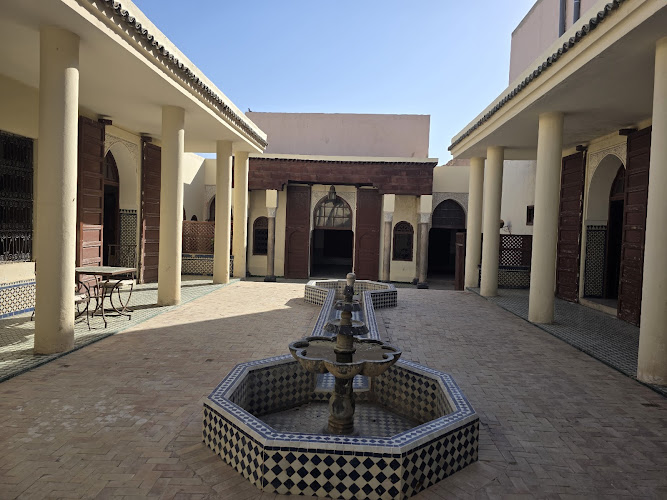
Meknes Museum

Place Lalla Aouda
Friendly Morocco
Find Accommodations Nearby
Recommended Tours & Activities
Visitor Reviews
There are no reviews yet. Be the first one to write one.
Share Your Experience
Have you visited Bab El Mers باب المرس? Help other travelers by leaving a review.