Arco del Meloncello
About Arco del Meloncello
Description
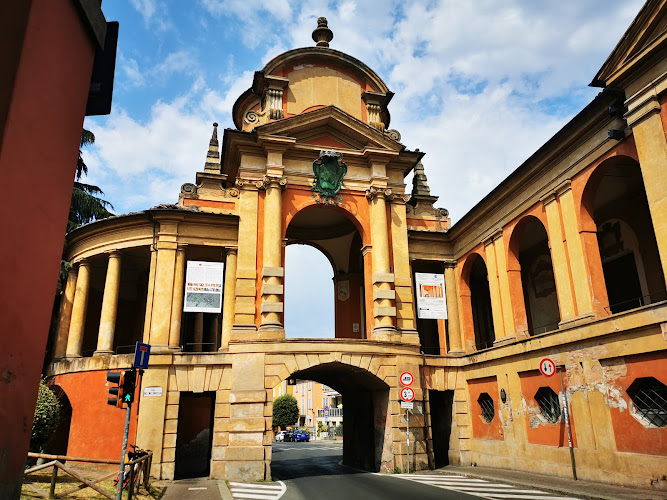
The Arco del Meloncello is one of those places that quietly sneaks up on you. It’s not loud or flashy, and it doesn’t try to be. Sitting along the famous Portico di San Luca, this 18th-century Rococo arch was built for a very practical reason: to let pilgrims walk safely above a busy road on their long, often emotional journey to the Sanctuary of the Madonna di San Luca. And yet, despite that humble purpose, it manages to feel oddly poetic.
If you’re walking under the endless covered portico (all 666 arches of it, yes really), the Arco del Meloncello feels like a pause in the story. I remember the first time I reached it, slightly sweaty, mildly questioning my life choices after climbing for what felt like forever. Then suddenly the portico lifts, curves, and crosses over the road like a soft ribbon. It’s elegant but not showy, decorative but not overdone. That’s Bologna in a nutshell, honestly.
The structure dates back to 1732 and reflects the Rococo style with gentle curves, playful lines, and a sense of lightness. Unlike grand arches meant to celebrate military victories or royal egos, this one exists for walkers. Regular people. Pilgrims. Curious travelers like you, probably holding a phone in one hand and a water bottle in the other.
What really makes the Arco del Meloncello special is its role as part of a larger ritual. It’s not a standalone monument you check off a list in five minutes. It’s a chapter in a longer walk, a transition point between the city and the hill. And yes, you can drive past it and snap a quick photo, but that kind of misses the point. This arch was made to be experienced on foot, slowly, with time to notice how the light changes under the curves.
Is it perfect? No. Some visitors expect something grander and leave a bit underwhelmed. Others, like me, find that its charm grows the longer you linger. It’s subtle. And subtle places tend to stick with you longer than the obvious ones.
Key Features
- 18th-century Rococo design with soft curves and decorative elegance
- Built specifically to allow pilgrims to cross over the road safely
- Part of the historic Portico di San Luca pilgrimage route
- Photogenic arches and stairways from multiple angles
- Open-air structure accessible at all hours
- Family-friendly stop along a longer walking route
- Seamless blend of architecture and everyday city life
One thing people don’t always notice right away is how cleverly engineered it is. The arch doesn’t just cross the road; it curves and adapts to the terrain, almost like it’s bowing politely to the landscape. And if you step back far enough, you’ll see how the portico seems to wrap around it, like arms around a shoulder.
Best Time to Visit
The Arco del Meloncello can technically be visited year-round, but timing matters more than you’d think. Early morning is magic. The road below is quieter, the light is soft, and you might even hear birds instead of engines. I once passed through just after sunrise and felt like I’d accidentally wandered into a private moment between the city and the hills.
Spring and early autumn are the sweet spots. The temperatures are kind, not too hot, not too chilly, and the walk along the portico feels pleasant instead of punishing. Summer can be rough, especially midday. There’s shade, yes, but Bologna heat has a way of sneaking up on you. If you go in summer, start early or go late. Trust me on this one.
Winter has its own appeal, though fewer people talk about it. The crowds thin out, and the arch feels more contemplative. On foggy days, it almost looks like it’s floating. Just be mindful of slippery steps if it’s been raining. They don’t mess around.
Weekends naturally bring more foot traffic, especially when locals are doing the full walk to San Luca. If you like a bit of life and movement, that’s great. If you prefer quiet moments, aim for a weekday morning.
How to Get There
Getting to the Arco del Meloncello is refreshingly straightforward. Most travelers reach it as part of the walk from the city toward the Sanctuary of San Luca. You start in the urban sprawl, under the first arches, and gradually move toward greener surroundings. The arch appears about a third of the way in, acting as a sort of gateway between city life and hillside calm.
If walking isn’t your thing (no judgment, we all have days), public transport will get you close. From there, it’s a short stroll to the arch. You’ll know you’re near when the portico starts doing that elegant bend over the road.
Drivers can pass beneath it, but parking nearby can be tricky and honestly a bit stressful. Bologna isn’t famous for generous parking, and this area is no exception. If you can avoid driving, do. Walking gives you the context that makes the arch meaningful in the first place.
For cyclists, it’s doable but requires attention. The road sees regular traffic, and while locals handle it like pros, visitors should stay alert.
Tips for Visiting
First tip: don’t rush it. Even if the Arco del Meloncello itself doesn’t take long to see, the experience around it deserves time. Pause under the arch. Look up. Notice how the light plays along the curves. It sounds cheesy, but it works.
Wear comfortable shoes. This feels obvious, but I’ve seen people attempt the portico in flimsy sandals and regret it deeply by the time they reach the arch. The steps are uneven in places, and your feet will thank you later.
Bring water, especially in warmer months. There are no restrooms at the arch itself, and amenities are limited along the route. Plan ahead so you’re not distracted by basic needs when you’d rather be admiring architecture.
If you’re traveling with kids, the arch is actually a nice mini-goal. It breaks up the walk and gives them something concrete to reach. I once overheard a parent calling it the bridge in the sky, and honestly, that sold it pretty well.
Photography-wise, don’t just shoot from one angle. Walk below it, above it, and around it. The arch changes character depending on where you stand. Late afternoon light can be especially flattering, but even cloudy days give it a moody charm.
Lastly, manage expectations. This isn’t a colossal monument that dominates the skyline. It’s quieter, more thoughtful. Some people pass through and shrug. Others, myself included, find it oddly memorable. Go in with curiosity rather than a checklist, and you’ll probably walk away liking it more than you expected.
And one more thing, kind of an aside. If you’re doing the full pilgrimage walk, the Arco del Meloncello is a good moment to check in with yourself. Are you tired? Hungry? Weirdly emotional for no reason? Totally normal. That’s the walk doing its thing. Take a breath, keep going, and let the arch do what it’s done for centuries: carry you gently from one part of the journey to the next.
Key Features
- 18th-century Rococo design with soft curves and decorative elegance
- Built specifically to allow pilgrims to cross over the road safely
- Part of the historic Portico di San Luca pilgrimage route
- Photogenic arches and stairways from multiple angles
- Open-air structure accessible at all hours
- Family-friendly stop along a longer walking route
- Seamless blend of architecture and everyday city life
More Details
Updated December 31, 2025
Table of Contents
Description
The Arco del Meloncello is one of those places that quietly sneaks up on you. It’s not loud or flashy, and it doesn’t try to be. Sitting along the famous Portico di San Luca, this 18th-century Rococo arch was built for a very practical reason: to let pilgrims walk safely above a busy road on their long, often emotional journey to the Sanctuary of the Madonna di San Luca. And yet, despite that humble purpose, it manages to feel oddly poetic.
If you’re walking under the endless covered portico (all 666 arches of it, yes really), the Arco del Meloncello feels like a pause in the story. I remember the first time I reached it, slightly sweaty, mildly questioning my life choices after climbing for what felt like forever. Then suddenly the portico lifts, curves, and crosses over the road like a soft ribbon. It’s elegant but not showy, decorative but not overdone. That’s Bologna in a nutshell, honestly.
The structure dates back to 1732 and reflects the Rococo style with gentle curves, playful lines, and a sense of lightness. Unlike grand arches meant to celebrate military victories or royal egos, this one exists for walkers. Regular people. Pilgrims. Curious travelers like you, probably holding a phone in one hand and a water bottle in the other.
What really makes the Arco del Meloncello special is its role as part of a larger ritual. It’s not a standalone monument you check off a list in five minutes. It’s a chapter in a longer walk, a transition point between the city and the hill. And yes, you can drive past it and snap a quick photo, but that kind of misses the point. This arch was made to be experienced on foot, slowly, with time to notice how the light changes under the curves.
Is it perfect? No. Some visitors expect something grander and leave a bit underwhelmed. Others, like me, find that its charm grows the longer you linger. It’s subtle. And subtle places tend to stick with you longer than the obvious ones.
Key Features
- 18th-century Rococo design with soft curves and decorative elegance
- Built specifically to allow pilgrims to cross over the road safely
- Part of the historic Portico di San Luca pilgrimage route
- Photogenic arches and stairways from multiple angles
- Open-air structure accessible at all hours
- Family-friendly stop along a longer walking route
- Seamless blend of architecture and everyday city life
One thing people don’t always notice right away is how cleverly engineered it is. The arch doesn’t just cross the road; it curves and adapts to the terrain, almost like it’s bowing politely to the landscape. And if you step back far enough, you’ll see how the portico seems to wrap around it, like arms around a shoulder.
Best Time to Visit
The Arco del Meloncello can technically be visited year-round, but timing matters more than you’d think. Early morning is magic. The road below is quieter, the light is soft, and you might even hear birds instead of engines. I once passed through just after sunrise and felt like I’d accidentally wandered into a private moment between the city and the hills.
Spring and early autumn are the sweet spots. The temperatures are kind, not too hot, not too chilly, and the walk along the portico feels pleasant instead of punishing. Summer can be rough, especially midday. There’s shade, yes, but Bologna heat has a way of sneaking up on you. If you go in summer, start early or go late. Trust me on this one.
Winter has its own appeal, though fewer people talk about it. The crowds thin out, and the arch feels more contemplative. On foggy days, it almost looks like it’s floating. Just be mindful of slippery steps if it’s been raining. They don’t mess around.
Weekends naturally bring more foot traffic, especially when locals are doing the full walk to San Luca. If you like a bit of life and movement, that’s great. If you prefer quiet moments, aim for a weekday morning.
How to Get There
Getting to the Arco del Meloncello is refreshingly straightforward. Most travelers reach it as part of the walk from the city toward the Sanctuary of San Luca. You start in the urban sprawl, under the first arches, and gradually move toward greener surroundings. The arch appears about a third of the way in, acting as a sort of gateway between city life and hillside calm.
If walking isn’t your thing (no judgment, we all have days), public transport will get you close. From there, it’s a short stroll to the arch. You’ll know you’re near when the portico starts doing that elegant bend over the road.
Drivers can pass beneath it, but parking nearby can be tricky and honestly a bit stressful. Bologna isn’t famous for generous parking, and this area is no exception. If you can avoid driving, do. Walking gives you the context that makes the arch meaningful in the first place.
For cyclists, it’s doable but requires attention. The road sees regular traffic, and while locals handle it like pros, visitors should stay alert.
Tips for Visiting
First tip: don’t rush it. Even if the Arco del Meloncello itself doesn’t take long to see, the experience around it deserves time. Pause under the arch. Look up. Notice how the light plays along the curves. It sounds cheesy, but it works.
Wear comfortable shoes. This feels obvious, but I’ve seen people attempt the portico in flimsy sandals and regret it deeply by the time they reach the arch. The steps are uneven in places, and your feet will thank you later.
Bring water, especially in warmer months. There are no restrooms at the arch itself, and amenities are limited along the route. Plan ahead so you’re not distracted by basic needs when you’d rather be admiring architecture.
If you’re traveling with kids, the arch is actually a nice mini-goal. It breaks up the walk and gives them something concrete to reach. I once overheard a parent calling it the bridge in the sky, and honestly, that sold it pretty well.
Photography-wise, don’t just shoot from one angle. Walk below it, above it, and around it. The arch changes character depending on where you stand. Late afternoon light can be especially flattering, but even cloudy days give it a moody charm.
Lastly, manage expectations. This isn’t a colossal monument that dominates the skyline. It’s quieter, more thoughtful. Some people pass through and shrug. Others, myself included, find it oddly memorable. Go in with curiosity rather than a checklist, and you’ll probably walk away liking it more than you expected.
And one more thing, kind of an aside. If you’re doing the full pilgrimage walk, the Arco del Meloncello is a good moment to check in with yourself. Are you tired? Hungry? Weirdly emotional for no reason? Totally normal. That’s the walk doing its thing. Take a breath, keep going, and let the arch do what it’s done for centuries: carry you gently from one part of the journey to the next.

Key Highlights
- 18th-century Rococo design with soft curves and decorative elegance
- Built specifically to allow pilgrims to cross over the road safely
- Part of the historic Portico di San Luca pilgrimage route
- Photogenic arches and stairways from multiple angles
- Open-air structure accessible at all hours
- Family-friendly stop along a longer walking route
- Seamless blend of architecture and everyday city life
Location
Places to Stay Near Arco del Meloncello
Find and Book a Tour
Explore More Travel Guides
No reviews found! Be the first to review!
Traveler Reviews for Arco del Meloncello
There are no reviews yet. Be the first one to write one.
Have you visited Arco del Meloncello? Help other travelers by sharing your review.
Find Accommodations Nearby
Recommended Tours & Activities
Visitor Reviews
There are no reviews yet. Be the first one to write one.
Share Your Experience
Have you visited Arco del Meloncello? Help other travelers by leaving a review.