
Last modified August 19, 2026
Yes, Washington DC is safe for a normal visit, and the city’s own numbers back that up: reported crime is down 20 percent so far in 2026 and homicides are down 32 percent. The complication is that total violent crime is up 4 percent over the same period, and one offense category explains the whole increase. Almost none of that risk sits where visitors go. The crime a tourist in DC is realistically going to meet is theft: the Metropolitan Police Department has logged 9,374 thefts and 68 homicides so far this year, so a theft is about 138 times more common. Pack accordingly and the rest of this page is detail.
The short version
- All reported crime in DC is down 20 percent in 2026 to date; property crime is down 22 percent and homicide is down 32 percent (MPD, as of 17 August 2026).
- Total violent crime is up 4 percent. Assault with a dangerous weapon rose 40 percent and accounts for the entire increase. Strip that one category out and violent crime fell 14 percent.
- Independent per-capita figures agree on direction: DC’s homicide rate in the first half of 2026 was 6.2 per 100,000, down 65 percent from its 2023 peak.
- Property crime is 87 percent of everything DC police recorded this year. Theft, not violence, is the visitor’s actual exposure.
- National Guard soldiers have been on DC streets since August 2025 and the deployment now runs through the end of 2029. You will see them. They are not a sign of an emergency in progress.
- Time-sensitive: on 21 to 23 August 2026 the Freedom 250 Grand Prix restricts access to three Smithsonian museums and closes roads across the National Mall.
Is Washington DC safe to visit right now, in August 2026?
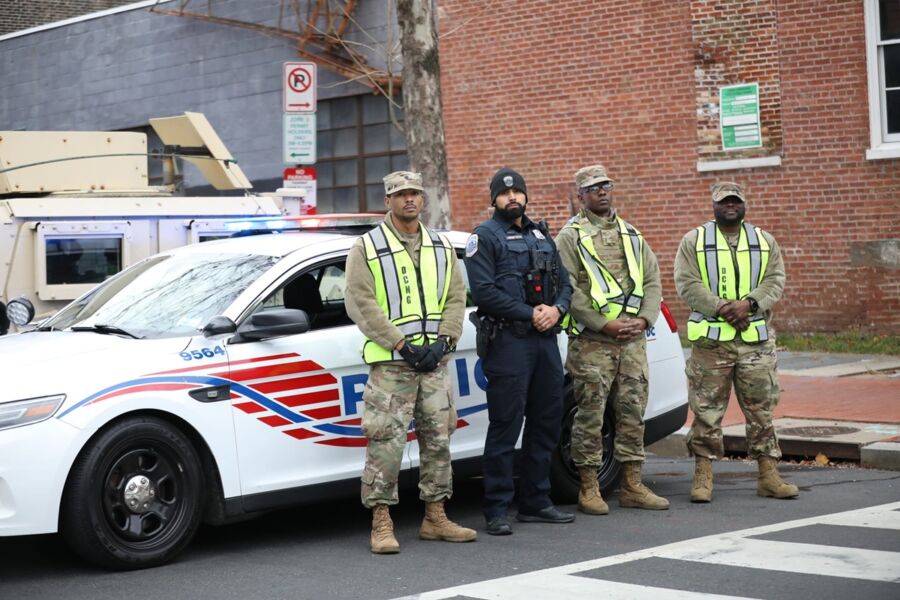
Yes. There is no travel restriction, no curfew for adults, and no advisory telling visitors to stay away. What has changed since August 2025 is the look of the capital rather than the risk in it, and the change is a federal one rather than a local law enforcement one. National Guard soldiers began patrolling DC in August 2025 at the direction of the Trump administration, and a year on they are, as The New York Times described it, fixtures in Metro stations, on downtown streets and around federal parks. The White House has extended the deployment through the end of 2029, at an estimated additional cost of 1.4 billion dollars according to figures given to the Senate Armed Services Committee.
For a visitor this matters in one practical way and one perceptual way. Practically, expect more uniformed presence at Metro stations and around federal property, and expect occasional bag checks and closures around federal buildings. Perceptually, armed soldiers on street corners read as danger to people who are not used to seeing them. DC residents themselves are split on whether the deployment helped. The crime data does not show a city in crisis either before or after it started.
| What changed | What a visitor actually sees |
|---|---|
| National Guard deployment, since August 2025 | Uniformed soldiers at Metro stations, downtown blocks and federal parks. Extended through end of 2029. |
| Expanded federal law enforcement presence | More marked vehicles and foot patrols in central DC alongside Metropolitan Police officers. |
| Security around federal property | Bag checks, metal detectors at museums, closed sidewalks near some federal buildings. |
| Reported crime trend over the same period | All crime down 20 percent year to date; violent crime up 4 percent on one category. |
One dated thing to plan around: 21 to 23 August 2026
The Freedom 250 Grand Prix runs on and around the National Mall from 21 to 23 August 2026, and the Smithsonian has published exactly which museums it affects. This is not a safety problem, it is a why-can-I-not-get-in problem, and it will catch anyone who planned a Mall day without checking.
| Museum | Access on 22 to 23 August 2026 |
|---|---|
| National Air and Space Museum | Stripes ticket-area holders only. On 21 to 23 August, visitors must get a same-day pass from the QR code on signs outside the museum. No advance passes. |
| National Museum of the American Indian | Stripes ticket-area holders only. No timed-entry pass needed. |
| National Museum of Natural History | Stars ticket-area holders only. No timed-entry pass needed. |
| Everything else on the Mall | Normal opening, but allow extra travel time for road closures and security screening. |
Outside that window, the 17 free Smithsonian museums and the National Zoo run their usual schedule, and admission is free at all of them. The Smithsonian Castle’s first floor is temporarily open through 7 September 2026.
What does DC’s own crime data actually say in 2026?

Reported crime in Washington DC fell 20 percent in 2026 to date, from 16,160 offenses to 12,965. That figure comes from the Metropolitan Police Department’s own year-to-date comparison, current as of 17 August 2026. Homicides dropped from 100 to 68, robbery from 915 to 795, motor vehicle theft from 2,969 to 1,425. One line runs the other way: assault with a dangerous weapon climbed from 558 to 781.
| Offense | 2025 | 2026 | Change |
|---|---|---|---|
| Homicide | 100 | 68 | -32% |
| Sex abuse | 60 | 60 | 0% |
| Assault with a dangerous weapon | 558 | 781 | +40% |
| Robbery | 915 | 795 | -13% |
| Violent crime, total | 1,633 | 1,704 | +4% |
| Burglary | 457 | 461 | +1% |
| Motor vehicle theft | 2,969 | 1,425 | -52% |
| Theft from auto | 3,836 | 2,450 | -36% |
| Theft, other | 7,261 | 6,924 | -5% |
| Arson | 4 | 1 | -75% |
| Property crime, total | 14,527 | 11,261 | -22% |
| All crime, total | 16,160 | 12,965 | -20% |
MPD labels these preliminary. Classifications get amended, cases get unfounded, and the totals use DC Code offense definitions rather than the FBI’s national reporting standard, so they are not directly comparable with another city’s FBI figures. They are, however, the same numbers the city and its critics both argue over, which makes them the honest starting point for anyone visiting or living here.
For longer context, DC recorded 127 homicides in all of 2026, down from 187 in 2024 and 274 in 2023. That 2023 figure was the city’s worst in two decades. The 2025 total was the lowest since 2014, when the city recorded 105.
Why does DC violent crime look like it is rising and falling at the same time?
Because one offense category is moving against every other one, and different articles pick whichever line supports their argument. Assault with a dangerous weapon rose by 223 incidents this year. Every other violent category combined fell by 152. The net is the plus 4 percent headline, and it is entirely produced by that single category.
Here is the arithmetic, because nobody else shows it. Total violent crime in 2026 to date was 1,633, of which 558 was assault with a dangerous weapon, leaving 1,075. In 2026 the totals are 1,704 and 781, leaving 923. That is a 14 percent fall in everything except assault with a dangerous weapon, sitting underneath a 4 percent rise in the headline.
The Council on Criminal Justice, which converts police counts into rates per 100,000 residents and compares 36 cities, found the same split independently. In the first half of 2026 DC’s aggravated assault rate rose 45 percent while the average across the 21 cities reporting that offense fell 2 percent. Gun assault rose 13 percent in DC while the nine-city average fell 6 percent. Those two categories are where DC is genuinely diverging from the national trend, and any page that tells you crime is simply down is skipping them.
Assault with a dangerous weapon is also, for a visitor, the least randomly distributed category on the list. It is overwhelmingly an offense between people who know each other or who are already in a dispute, concentrated in certain residential blocks and often tied to an existing conflict. It is not the crime that finds a stranger walking back from a monument.
How does DC compare with its own worst years and with 2019?
On seven of eight measured offenses, DC in 2026 is below where it was in 2019, and every violent category is far below its 2023 peak. The Council on Criminal Justice published these per-100,000 rates on 11 August 2026, covering January 2018 through June 2026.
| Offense | H1 2026 rate | Worst year on record here | Change vs H1 2025 | Change vs H1 2019 |
|---|---|---|---|---|
| Homicide | 6.2 | 17.5 (2023) | -41% | -43% |
| Aggravated assault | 87.4 | 117.7 (2018) | +45% | -21% |
| Gun assault | 40.4 | 69.5 (2023) | +13% | -14% |
| Sexual assault | 6.2 | 21.6 (2018) | -10% | -59% |
| Robbery | 88.4 | 225.3 (2023) | -20% | -36% |
| Carjacking | 8.9 | 67.5 (2023) | -63% | -1% |
| Larceny | 1,008.2 | 1,696.3 (2019) | -18% | -41% |
| Motor vehicle theft | 160.2 | 523.9 (2023) | -54% | +14% |
Two rows deserve attention. Carjacking has collapsed from 67.5 per 100,000 in the first half of 2023 to 8.9, an 87 percent fall, which retires the single most-repeated warning in older DC travel writing. And motor vehicle theft is the one offense still above its 2019 level, up 14 percent, despite falling 54 percent in the last year alone. If you are bringing or renting a car, that is the number that applies to you.
Which crime is a visitor to Washington DC actually likely to meet?
Theft, by a wide margin. Property crime was 11,261 of the 12,965 offenses DC police recorded this year, or 87 percent of everything reported. Within that, plain theft (6,924) and theft from a parked vehicle (2,450) are the two largest categories in the entire dataset, ahead of every violent offense combined.
| What it is | Recorded in 2026 so far | Compared with homicide |
|---|---|---|
| Theft, other (bags, phones, shop theft) | 6,924 | 102x more common |
| Theft from a parked vehicle | 2,450 | 36x more common |
| Motor vehicle theft | 1,425 | 21x more common |
| Robbery (theft with force or threat) | 795 | 12x more common |
| Burglary | 461 | 7x more common |
| Homicide | 68 | baseline |
That distribution is the single most useful thing on this page, because it tells you where to spend your attention. A visitor who guards a bag on a crowded Metro platform and leaves nothing visible in a parked car has addressed roughly 72 percent of DC’s recorded crime. A visitor who worries about homicide has addressed 0.5 percent of it and will have a worse trip.

Where in Washington DC does the crime actually happen?
Overwhelmingly east of the Anacostia River, in Wards 7 and 8, which contain no major visitor attractions. DC’s violent crime is geographically concentrated to an unusual degree for a large city in the United States, and the concentration falls almost entirely outside the visitor footprint. The National Mall, the museum corridor, Capitol Hill, Penn Quarter, Dupont Circle, Foggy Bottom and Georgetown sit in the western and central wards, where the reported violent-crime rate is a fraction of the city-wide figure.
This is why DC crime coverage and DC visitor experience feel like they describe two different cities. Both are accurate. They are describing different neighborhoods.
| Area | What is there | What the data supports saying |
|---|---|---|
| National Mall and museum corridor | Smithsonians, monuments, memorials | Heavily patrolled by US Park Police and MPD, plus a federal presence. Pickpocketing and bag theft in crowds is the realistic risk in the areas around the National Mall. |
| Capitol Hill, Penn Quarter, Chinatown | Capitol, museums, restaurants, arena | Busy and well lit into the evening. Standard urban theft awareness applies, particularly around the arena on event nights. |
| Georgetown, Dupont Circle, Foggy Bottom | Shopping, dining, university, hotels | Among the lowest-crime parts of the city. Car break-ins are the recurring complaint, not violence. |
| Adams Morgan, U Street, 14th Street | Nightlife | Fine, with the usual late-night bar-district caveats. Use a rideshare after 1am rather than walking a long way home. |
| Wards 7 and 8, east of the Anacostia | Residential neighborhoods, few visitor sites | Where most of the city’s violent crime is recorded. There is no tourist reason to be there, and no reason to fear it from across the river. |
One caution about the neighborhood ranking sites. Several popular tools publish a crime score per neighborhood, and those scores are modelled estimates built on top of coarse inputs, not counts MPD publishes at that level. This page does not reproduce them. If you want block-level data, DC’s own crime map at crimecards.dc.gov is the primary source.
Is Washington DC a safe place to live?
For residents the picture is better than it has been in years, with the important caveat that it varies enormously by neighborhood. Living in the nation’s capital is a different question from visiting it, because residents park on the street, commute at odd hours and spend time in parts of the city no tourist reaches. Certain neighborhoods carry a violent crime rate several times higher than the city-wide average, and certain others sit below the national average for a large American city.
The trend a prospective resident should care about is the direction. Violent crimes across the District fell 29 percent in 2026 and property crimes fell 16 percent, and both continued down through 2026 apart from the assault category discussed above. Property theft is the offense that touches daily life most often: theft from parked cars alone runs into the thousands each year, and it is high in exactly the dense, walkable areas people want to live in.
If you are weighing a move rather than a trip, the useful exercise is to pull the last twelve months for a specific address on DC Crime Cards rather than reading a city-wide number. The city-wide number is generally true and almost never true of the block you are considering.
Is the Washington DC Metro safe?
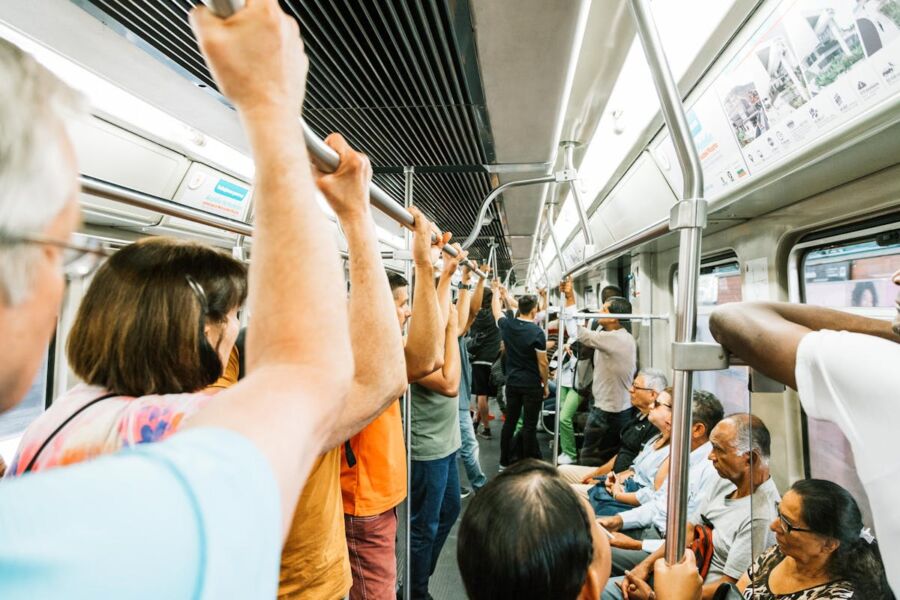
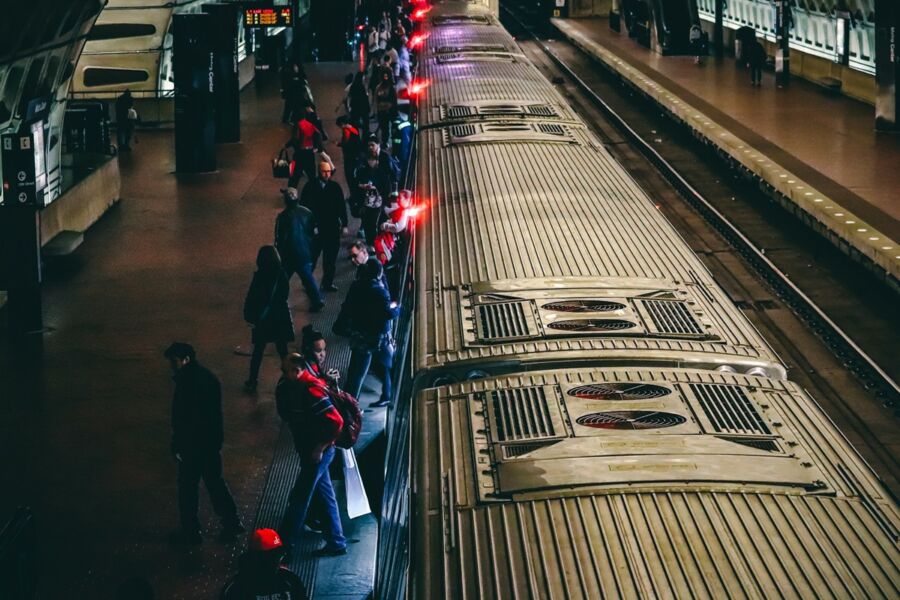
Yes, and it has improved faster than the city around it. Metro reports that Part 1 crimes, the category covering assault, robbery, larceny and vehicle theft, fell 61 percent per million rides in fiscal year 2026 compared with fiscal 2023. Overall crime on the system is down 12 percent year over year, and that happened while ridership was rising.
Metro attributes the change to a combination of fare enforcement, more Metro Transit Police officers, a crisis intervention team and better cameras. Fare enforcement in particular went up 908 percent in fiscal 2026 against fiscal 2023, which is a policing-the-gate strategy rather than a policing-the-platform one. General Manager Randy Clarke has claimed it is now the safest transit system in the country.
What that leaves for a visitor is the ordinary stuff. Keep a phone in a zipped pocket rather than a hand near the doors, stand back from the platform edge, and if your car is empty at 11pm on a Sunday, move to a busier one at the next stop. Buy a SmarTrip card or add it to a phone wallet before your first ride so you are not standing at a machine with a wallet open.
Is Washington DC safe at night?
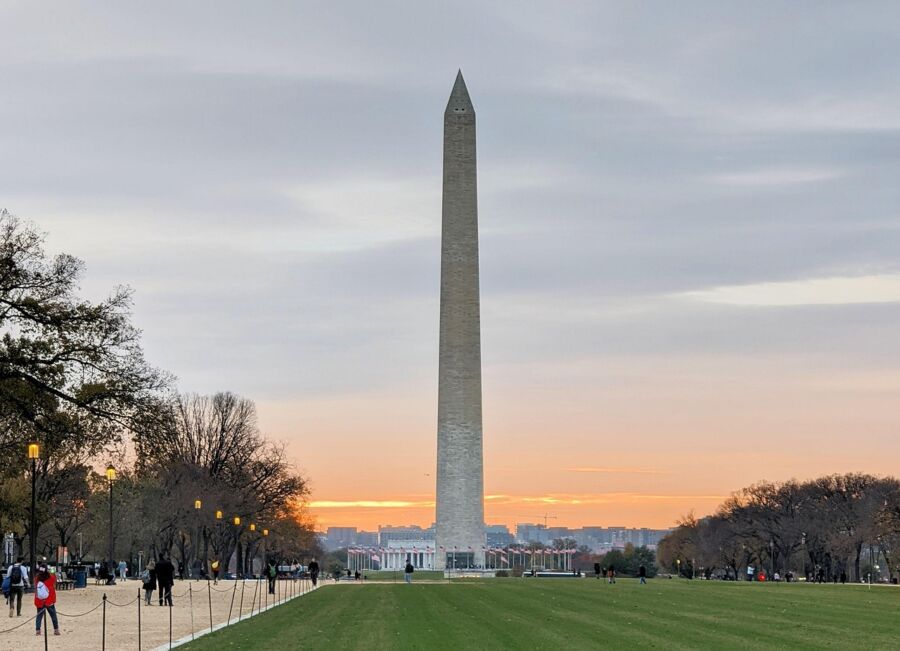
In the central and western parts of the city, yes, with normal city-at-night judgement. The Mall itself empties out after dark and the monuments are genuinely one of DC’s best night experiences, floodlit and quiet, with Park Police present. The parts that feel uneasy at 11pm are the long, empty stretches between lit areas, and the answer to those is a rideshare rather than a long walk.
Three specifics that hold up against the data. Robbery, the offense most associated with being out late, is down 13 percent this year and its rate is 61 percent below the 2023 peak. Carjacking, which had a genuine spike in 2023 and generated most of the older nighttime warnings, is down 87 percent from that peak. And the categories that did rise, assault with a dangerous weapon and gun assault, are concentrated in residential areas that a visitor is not walking through at midnight.
DC’s curfew law applies to minors. There is no general curfew for adult visitors, and no restriction on being out at night. The Metropolitan Police Department publishes the current terms on its DC curfew law page.
What should you actually do differently in DC?
Five things, ranked by how much of DC’s recorded crime they address. Generic advice to stay aware of your surroundings is not wrong, it is just untargeted. These are matched to the offense distribution above.
- Leave nothing visible in a parked car, including in the trunk if you loaded it in public view. Theft from auto is 2,450 offenses this year, the second largest category in the city, and it is almost entirely opportunistic.
- Carry a bag that closes and wear it across the body, in front of you on crowded Metro platforms and inside busy museums. Plain theft is 6,924 offenses, the largest single category.
- If you rent a car, park in a garage rather than on the street overnight. Motor vehicle theft has fallen 52 percent this year but remains the one offense above its 2019 level.
- Use rideshare or Metro rather than long late-night walks between lit areas. This is the only step aimed at violent crime, and it is the reason it sits fourth rather than first.
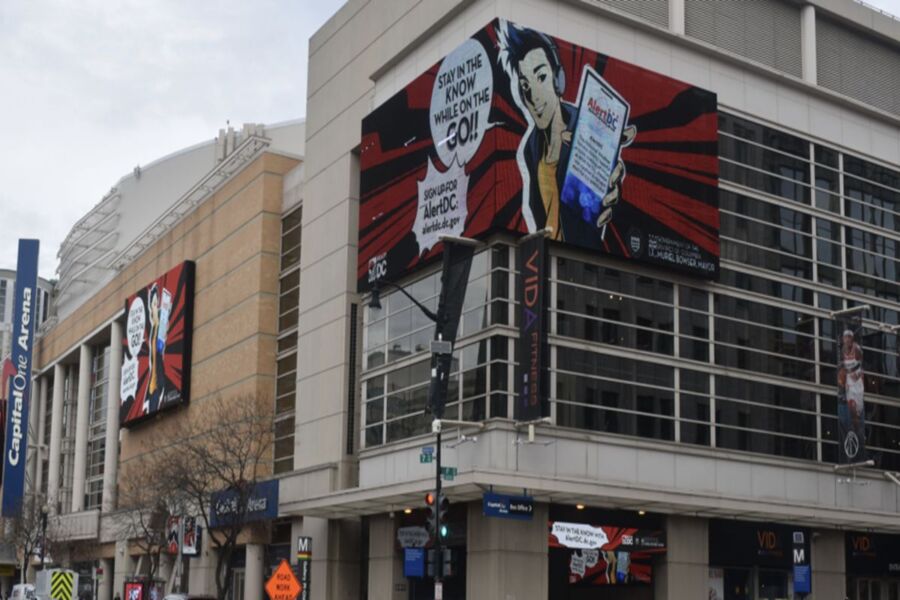
- Save 911 for emergencies and 311 for everything else, and sign up for AlertDC at alertdc.dc.gov if you want closure and incident notifications during your stay.
Mistakes visitors make in DC
- Treating a 2023-era warning as current. Carjacking is down 87 percent from its 2023 peak and most of the alarming DC advice online was written in that year.
- Reading the National Guard presence as evidence of danger. It has been continuous since August 2025 and now runs to 2029 regardless of what the crime numbers do.
- Judging a neighborhood by a modelled crime score. Those tools estimate; MPD counts.
- Driving into the city center. Parking is expensive, theft from parked cars is the second largest offense category, and the Metro reaches nearly every attraction.
- Planning a Mall day on 22 or 23 August 2026 without checking the Grand Prix museum restrictions above.
- Assuming the museums are ticketed. They are free. Some require a timed-entry pass, which is also free and worth booking ahead in summer.
What this page deliberately does not publish
Three things were researched for this update and left out on purpose, because publishing them would have meant guessing.
- A ranked list of safest and most dangerous DC neighborhoods with crime scores. MPD does not publish comparable rates at neighborhood level, and the free tools that do are running models, not counts. A ranked table would look authoritative and would not be.
- A DC-versus-other-cities league table. MPD’s totals use DC Code offense definitions rather than the FBI’s national standard, and MPD says so on its own data page. Any table putting DC next to New York or Chicago on those numbers is comparing different definitions.
- A count of National Guard personnel currently deployed. Reported figures moved between roughly 2,300 and 5,000 across 2026 as units rotated, and no single authoritative current number was verifiable at the time of writing. What is verifiable is that the deployment is continuing through 2029.
Frequently asked questions
Is Washington DC safe for tourists in 2026?
Yes. Reported crime across DC is down 20 percent in 2026 to date and homicides are down 32 percent, and the city’s violent crime is concentrated in residential areas east of the Anacostia River that contain no visitor attractions. The realistic risk in the museum and monument corridor is theft from bags and parked cars.
Is Washington DC dangerous at night?
Not in the central and western parts of the city, where nearly all visitors stay. Robbery is down 13 percent this year and carjacking is down 87 percent from its 2023 peak. Use Metro or a rideshare instead of long walks between lit areas after around 11pm, and treat the nightlife strips on 14th Street and in Adams Morgan the way you would any bar district.
Is crime going up or down in Washington DC?
Both, depending on which line you read, which is why coverage looks contradictory. All reported crime is down 20 percent and property crime down 22 percent, while total violent crime is up 4 percent. That entire increase comes from assault with a dangerous weapon, which rose from 558 to 781 offenses. Every other violent category fell, and violent crime excluding that one category is down 14 percent.
Is the National Guard still in Washington DC?
Yes. Soldiers have been deployed in DC continuously since August 2025 and the White House has extended the deployment through the end of 2029. Visitors see them at Metro stations, on downtown streets and around federal parks. It has no practical effect on a normal visit beyond a heavier uniformed presence and occasional security screening near federal property.
Which parts of Washington DC should visitors avoid?
There is no area a visitor needs to avoid so much as areas there is no reason to visit. The bulk of DC’s violent crime is recorded in Wards 7 and 8, east of the Anacostia River, which are residential and hold almost no attractions. Every major site sits west of the river in areas with a fraction of the city-wide rate.
Is the DC Metro safe to use?
Yes. Metro reports Part 1 crimes down 61 percent per million rides in fiscal 2026 against fiscal 2023, and overall crime on the system down 12 percent year over year, achieved while ridership rose. Keep a phone in a zipped pocket rather than in your hand near the doors, and move to a busier car if yours is empty late at night.
Is it safe to rent a car in Washington DC?
It is safe, but it is the one area where DC still lags 2019. Motor vehicle theft fell 54 percent in the last year yet its rate remains 14 percent above the 2019 level, and theft from parked cars is the second largest offense category in the city at 2,450 incidents this year. Park in a garage overnight, leave nothing visible, and consider skipping the car entirely since Metro reaches nearly every attraction.
Are the Smithsonian museums open in August 2026?
Yes, and admission is free at all 17 DC-area Smithsonian museums and the National Zoo. One exception applies from 21 to 23 August 2026, when the Freedom 250 Grand Prix restricts the National Air and Space Museum and the National Museum of the American Indian to Stripes ticket-area holders and the National Museum of Natural History to Stars ticket-area holders on 22 and 23 August, with road closures across the Mall.
Booking and getting around
Guided walks solve the two problems this page keeps returning to: they keep you in the busy, well-patrolled corridor, and they get you oriented on day one so you are not standing on a corner with a phone out. Browse guided tours and museum experiences in Washington DC, or narrow it to walking tours in Georgetown, one of the lowest-crime parts of the city. Viator also lists Washington DC day tours if you want to compare.
Disclosure: some links on this page are affiliate links. If you book through one, Real Journey Travels may earn a commission at no extra cost to you. It does not change what we recommend, and none of the crime figures on this page come from a commercial source.
More safety guides
We run the same data-first treatment on other cities where the headlines and the statistics disagree: whether Baltimore is safe for visitors, whether Atlanta is safe for visitors, Munich safety and the German knife laws that catch travelers out, and the most dangerous places in France. If you are travelling by yourself, start with our solo travel safety guide and its companion solo travel safety tips. For packing and logistics, see our travel hacks.
Sources and method
Every figure on this page comes from a primary source, dated below. Ratios and the violent-crime-excluding-assault calculation were computed from the MPD counts, with the arithmetic printed in the text so you can check it.
- Metropolitan Police Department, District Crime Data at a Glance, 2026 year-to-date comparison as of 17 August 2026, plus 2025 year-end and the 20-year homicide series.
- Council on Criminal Justice, Crime in Washington DC: What You Need to Know, updated 11 August 2026, for rates per 100,000 residents and the 36-city comparison.
- Smithsonian Institution, Plan Your Smithsonian Visit, for the 21 to 23 August 2026 Freedom 250 Grand Prix access restrictions.
- The Week, How has a year of National Guard deployment affected Washington, DC?, 14 August 2026, for the deployment extension and cost estimate.
- DC Crime Cards, the District’s own interactive crime map, for block-level and ward-level data.
- Washington Metropolitan Area Transit Authority crime reporting for fiscal year 2026, as presented by Metro officials.
Last updated 19 August 2026. This update rebuilt the page around primary crime data, which it previously contained none of. Added: the full MPD year-to-date table current as of 17 August 2026, the Council on Criminal Justice per-100,000 rate table, the arithmetic showing that assault with a dangerous weapon accounts for the entire rise in violent crime, the offense-frequency comparison, the National Guard deployment status, the Metro crime figures, and the Freedom 250 Grand Prix museum restrictions for 21 to 23 August 2026. Removed: 45 internal links whose destinations were unrelated to Washington DC, and a broken video embed whose source address was malformed. Crime figures move; the MPD page linked above is refreshed regularly and is the place to check before you travel.


