

Last modified August 9, 2026
Yes, Munich is safe. Munich police recorded 98,478 offenses in 2026, a rate of 5,798 per 100,000 residents, which is less than half the rate of Berlin, Hamburg, Frankfurt, Cologne or Bremen. When the Polizeipräsidium published the figures on 23 March 2026, Munich was named Germany’s safest city with more than 200,000 people for the 50th time. The realistic risk to a visitor is pickpocketing in three predictable places, plus one legal trap that catches foreigners every weekend: Germany’s knife rules, where a fine in a prohibition zone can reach €10,000 for a blade you thought was a picnic tool.
This guide contains affiliate links. If you book a tour through them we may earn a commission at no extra cost to you. Safety facts here come from Munich police, the City of Munich and German federal law, never from a partner.
Is Munich safe to visit in 2026?
Munich is safe to visit, and the numbers are not close. The city’s crime rate fell 1.8% in 2026 and is down 10.8% over ten years, while the police clearance rate rose to 62.9%. The United States State Department rates Germany as a whole Level 2, Exercise Increased Caution, and that rating is about terrorism risk across Europe rather than anything specific to Munich’s streets.
| Measure | Munich, latest figure | Source and date |
|---|---|---|
| Recorded offenses | 98,478 in 2026, down 1.8% | Polizeipräsidium München, 23 Mar 2026 |
| Crime rate | 5,798 per 100,000 residents | Polizeiliche Kriminalstatistik 2025 |
| National ranking | Safest German city over 200,000 people, 50th time | Polizeipräsident Thomas Hampel |
| Clearance rate | 62.9%, up from 60.3% | Polizeiliche Kriminalstatistik 2025 |
| Numbeo crime index | 21.1 crime, 78.9 safety | Numbeo, 2026 |
| US travel advisory | Level 2, Exercise Increased Caution (Germany) | US State Department |
Two caveats belong next to those numbers. A crime rate is a city-wide average and says nothing about the one crowded platform you happen to be standing on, and the Numbeo index is crowd-sourced perception rather than police data, so treat it as a mood reading and the Kriminalstatistik as the fact.
What those numbers describe is a Bavarian capital where low crime is the long-run norm rather than a recent achievement. Munich has always scored near the top of global quality-of-life rankings, and the safety result comes from the same conditions: high employment, dense public services and a compact center that local people use at every hour of the day. Relatively few large cities in the world combine all three, which is why the city keeps its title year after year.
What is Munich’s crime rate, and what is actually rising?
Munich’s overall crime rate is falling, but two categories rose in 2026, and neither of them is street violence. Residential burglary and internet fraud went up. Burglary still sits 34.5% below where it was ten years ago, so the 2025 increase is a bump inside a long decline rather than a reversal.
| Category | 2025 | Change on 2024 | What it means for a visitor |
|---|---|---|---|
| All offenses | 98,478 | Down 1.8% | Baseline is improving |
| Residential burglary | 1,008 | Up 14.8% | Lock apartment rentals; still down 34.5% over 10 years |
| Internet-related crime | 4,093 | Up 17.8% | Booking and ticket scams, not street crime |
| Alter Botanischer Garten area | 436 | Down 66% from 1,284 | The old hotspot got dramatically safer |
That last row is the finding most safety guides have missed. Search results still tell visitors to avoid the park beside the Hauptbahnhof. Munich police counted 436 offenses there in 2026 against 1,284 the year before, a 66% drop, after the city cut back the shrubs, improved the lighting, installed video surveillance, raised the street-work budget and opened a small football pitch, a skate spot and a streetball court in the park.
Which areas of Munich should you avoid?
Munich has no no-go district. It has one pocket that behaves differently from the rest of the city: the Bahnhofsviertel, the few blocks around the Hauptbahnhof, including Schillerstraße and parts of Bayerstraße. Late at night it is scruffier, louder and more alcohol-heavy than anywhere else you will walk. Tourists are not attacked there. What you will see is public drinking, the occasional argument, and pickpockets working the crowd.
Since the Alter Botanischer Garten task force moved its focus south into the rest of the station quarter in autumn 2025, the same treatment is being applied there. Outer residential districts such as Neuperlach, Hasenbergl, Milbertshofen and Moosach turn up in “areas to avoid” lists mainly because they are ordinary housing estates with nothing for a tourist to do, not because they are dangerous. Choosing where to stay in Munich on safety grounds is largely a solved problem: Altstadt-Lehel, Au-Haidhausen, Maxvorstadt and Schwabing are all fine at any hour. If you would rather have a local walk you through the Old Town on a first evening, guided Munich walking tours start from Marienplatz year round.
Is Munich safe at night, and safe for walking at night alone?
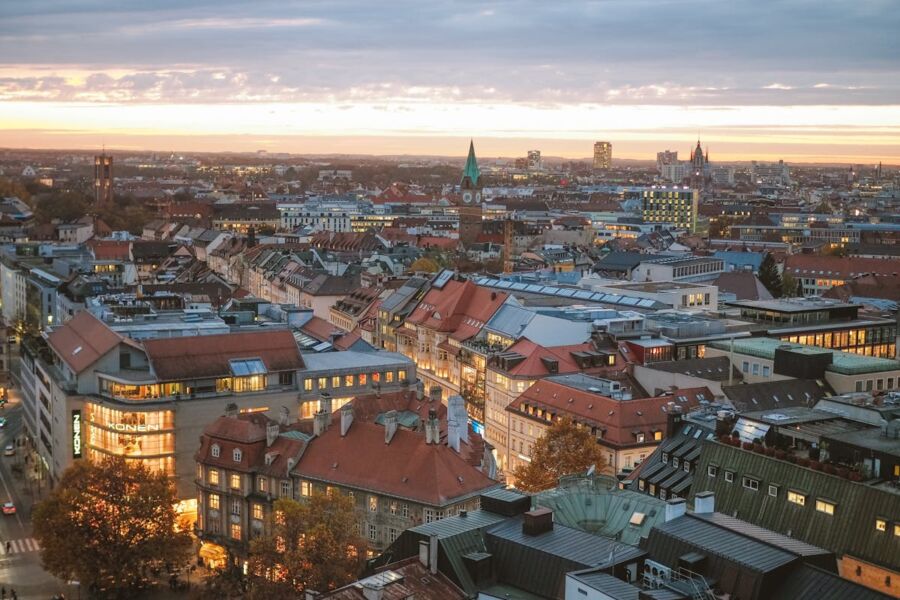
Walking alone at night in central Munich is normal and routine, including for women. The city center stays lit and populated, the U-Bahn and S-Bahn run night services on Friday and Saturday, and violent crime against strangers is rare enough that it makes the news when it happens. The practical rule is narrow: the one stretch worth routing around after midnight is the block immediately outside the Hauptbahnhof, and the fix is to walk one street further into the Altstadt or take a tram.
Solo travelers should apply the same habits that work anywhere: valuables in a front pocket or a zipped cross-body bag, phone off the restaurant table, and a booked taxi rather than an unmarked car outside a club. Our wider solo travel safety tips cover the rest.
Munich’s nightlife districts are among its safest. Schwabing runs to student bars and clubs, and the Glockenbachviertel is the city’s main LGBTQ+ quarter and one of the friendliest parts of town after dark. Neither has bad neighborhoods in the sense visitors worry about; both are lively rather than rough, and the trouble is limited to closing-time noise. The one thing worth staying aware of your surroundings for is the walk between the last bar and the U-Bahn, because that is when phones come out and bags hang open.
Which knives and weapons are banned in Munich, and where?
This is the rule most visitors do not know they are breaking. Germany tightened its weapons law in October 2024, and the result is that a pocket knife which is perfectly legal to own becomes an offense the moment you carry it into a station, a festival or a marked zone. In a weapons prohibition zone the fine can reach €10,000. Owning a banned knife type is a criminal matter carrying a fine or up to three years in prison.
| Where you are | Rule | Applies to |
|---|---|---|
| Any public event: festival, market, concert, cinema, sports fixture | Total knife ban | Every knife type, any blade length, ticketed or not |
| Long-distance trains and coaches, and their stations | Blanket weapons ban | Deutsche Bahn, Flixbus, main station buildings |
| Munich Hauptbahnhof and Munich Ost, many weekends | Temporary carrying ban, Friday afternoon to Sunday morning | Knives of all kinds, firearms, alarm guns, blunt and stabbing weapons |
| Alter Botanischer Garten and Karl-Stützel-Platz | Permanent zone since 15 Jan 2025 | Weapons and knives, plus carrying or drinking alcohol and cannabis |
| Ordinary streets | General law | No blade over 12 cm; switchblades, butterfly, fist and push-dagger knives banned outright |
The Munich station bans are not permanent fixtures you can look up once. The Bundespolizeidirektion München issues them as repeating weekend orders across Munich Hauptbahnhof, Munich Ost and the main stations in Nuremberg, Regensburg, Würzburg and Aschaffenburg, covering platforms, pedestrian tunnels, S-Bahn stops and every publicly accessible level. Recent examples ran 27 to 29 March 2026, 29 to 31 May 2026 and 24 to 26 July 2026. Enforcement is real: in one nationwide weekend operation, 1,900 federal officers checked more than 11,600 people at 41 stations and seized over 300 dangerous objects.
The Alter Botanischer Garten ordinance is the stricter one, because it also bans alcohol. Munich city council passed it on 18 December 2024 and it took effect on 15 January 2025 for an initial two years, covering the park and the adjoining Karl-Stützel-Platz around the clock. Carrying or drinking alcohol there is an offense, not merely discouraged, and penalties include fines and bans from entering the area. A beer in that particular park, two minutes from the station where you arrive, is the single easiest way for a visitor to pick up a fine in Munich.
Is public transport in Munich safe?
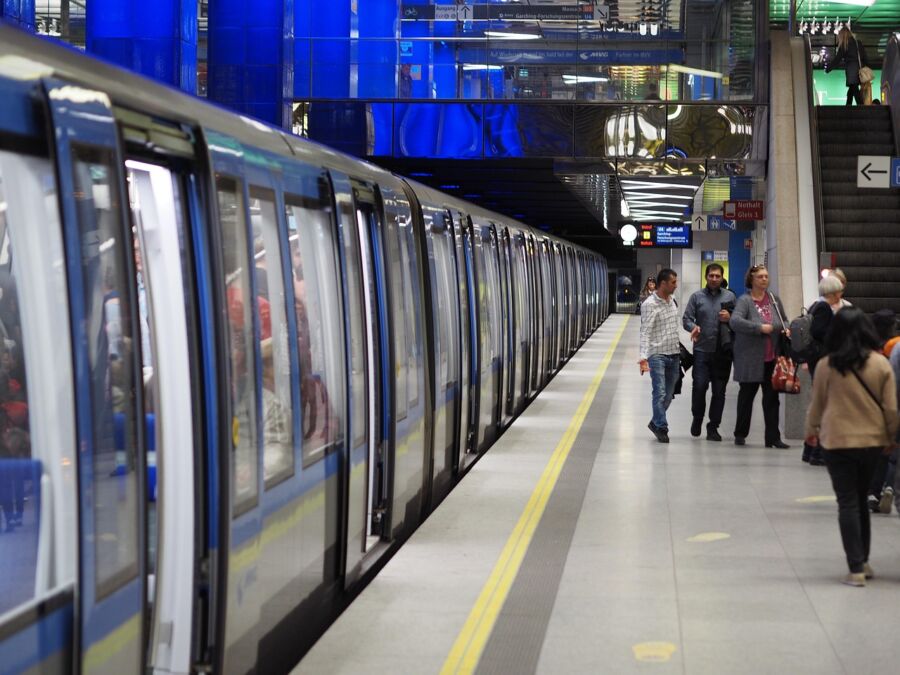
The MVV network is safe, well lit and camera-covered, and the crime that does happen on it is almost entirely theft. Pickpocketing concentrates in a small number of predictable spots, and knowing them is worth more than any general advice about staying alert.
| Where | When it peaks | What to do |
|---|---|---|
| Hauptbahnhof concourse and platforms | Rush hour and Oktoberfest | Bag zipped and in front while you read the boards |
| Marienplatz interchange | Midday and event days | Do not stand still in the escalator crush with an open bag |
| Crowded U-Bahn carriages | Boarding and the doors closing | Phone away before the doors open, not after |
| Marienplatz and Viktualienmarkt street level | All day in season | Decline the petition clipboard and the free wrist bracelet |
The upside of an excellent network is that you can explore Munich without a car and without much planning. One day ticket covers the U-Bahn, S-Bahn, tram and bus across the inner zone, which puts the Old Town, the English Garden, the museums and most of the things visitors come for within twenty minutes of each other. Munich’s history sits inside a walkable ring, so the majority of a first trip happens on foot or on public transportation, and the beautiful parts of the city are also the busiest and best-lit parts.
Validate your ticket before boarding. Fare inspectors are plain-clothed and frequent, and “I did not know” is not accepted. If you are driving instead, note that navigation apps behave differently here: see our guide to whether Waze is legal to use in Germany, because the speed-camera alert function is not.
Is Oktoberfest safe, and what is banned at the gate?
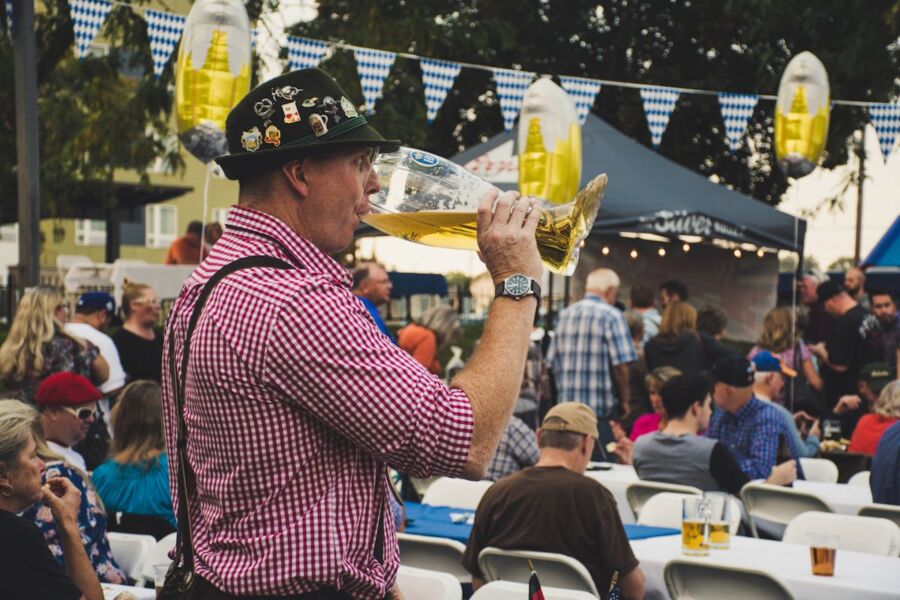
Oktoberfest 2026 runs from 19 September to 4 October, and the gate rules are stricter than most first-time visitors expect. Security staff check every bag at the entrance and attach a tag whose color changes daily, so yesterday’s tag will not get you back in.
| Item | Rule at the Wiesn |
|---|---|
| Bags and backpacks | Maximum 3 litres and no larger than 20 x 15 x 10 cm |
| Larger backpacks and holdalls | Not admitted at all |
| Knives of any kind | Banned under the national public-events rule |
| Glass bottles, gas sprays, corrosive or dye substances | Banned even inside a permitted small bag |
| Pushchairs | Banned all day Saturdays and public holidays, and from 6 p.m. on other days |
Most people enjoy the Wiesn without incident. Inside the tents the risks are ordinary festival risks: an unattended drink, a phone left on the bench, and a stein of Wiesn beer that is stronger than the beer you are used to. Keep cards and cash in an inside pocket, agree a meeting point before you go in, and plan the journey home before you start drinking rather than after. Guided Munich tours and Oktoberfest experiences handle the tent reservation and the transport, which removes the part of the night that usually goes wrong.
Are Munich’s Christmas markets safe?
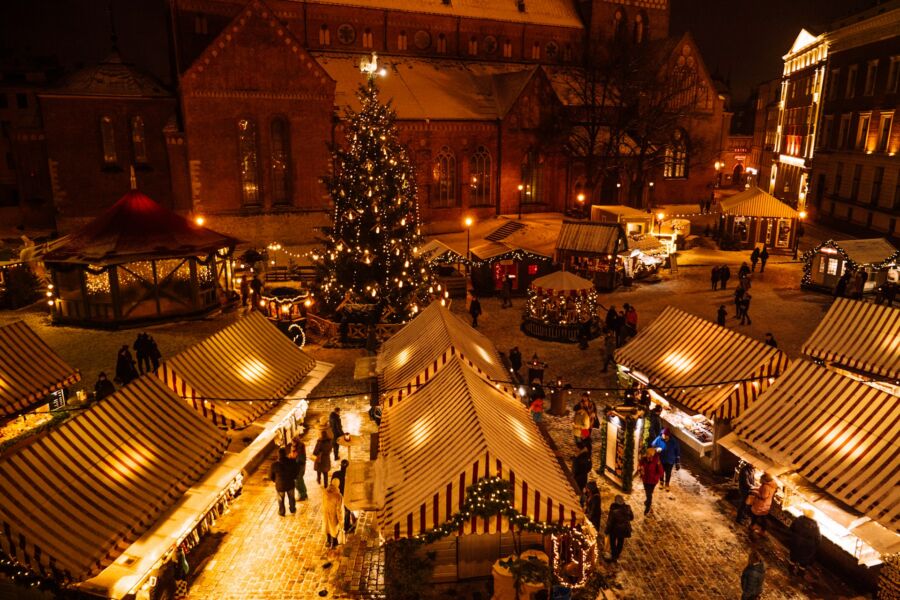
Yes, with two specifics worth knowing. German Christmas markets count as public events, so the total knife ban applies there exactly as it does at Oktoberfest, and vehicle barriers and visible police are now standard. The atmosphere is the whole point of going, and the everyday risk is simply crowd theft: stalls are cash-heavy, hands are full of Glühwein, and browsing a stall is the moment a bag is easiest to open. Draw cash inside a bank rather than at a street machine, carry only what the evening needs, and remember that markets close around 9 p.m., which puts a lot of people onto the U-Bahn at once.
Is Munich safer than Berlin, and is it really Germany’s safest city?
On recorded crime, yes, and by a wide margin: Munich’s 5,798 offenses per 100,000 residents is less than half the rate recorded in Berlin, Hamburg, Frankfurt, Cologne and Bremen. That gap is the reason Munich has held the safest-big-city title 50 times. That is a good result rather than a perfect one, and it does not make Berlin dangerous for a visitor; it means Berlin rewards more street awareness in more districts, while in Munich the caution you need is concentrated into a few hundred meters around one station. If you are comparing European city breaks on safety, our write-ups on the most dangerous places in France and the most dangerous places in Greece use the same method.
What do you do if something goes wrong?
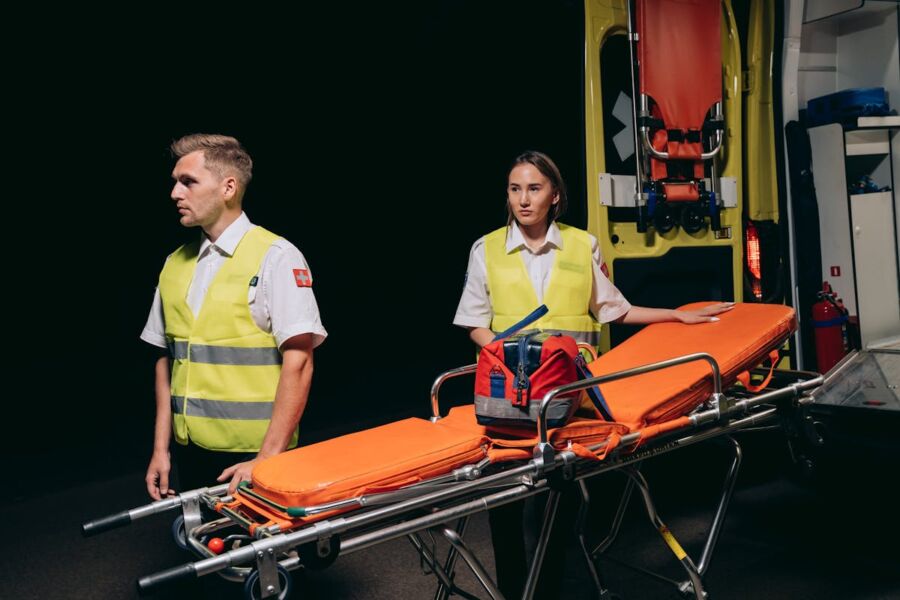
Call 110 for police and 112 for fire and medical. Both work from any mobile, including a locked handset, and operators generally speak English. Report a theft the same day and ask for a copy of the report, because insurers require it and so does the lost property office before it will return a bicycle.
Lost property in Munich is split across three separate offices, and sending everyone to the city office is the mistake most guides make. Where you lost the item decides who has it.
| Where you lost it | Which office | Practical detail |
|---|---|---|
| Street, shop, taxi, city area | City Fundbüro, visitor address Implerstraße 11 | By appointment only; postal address Ruppertstraße 19; +49 89 233-96045 |
| U-Bahn, tram or bus | MVG Fundbüro, Elsenheimer Straße 61 | First floor, separate from the city office |
| S-Bahn or a train, or the station itself | Deutsche Bahn lost property, Hauptbahnhof ticket office | Handles everything inside the rail network |
Two rules people get wrong. Items are normally kept for three months, not six, and anything worth under €10 may be held for as little as four weeks, so go early. And if a finder claims it, you pay a finder’s fee: 5% of value up to €500, then 3% above that. On an €800 camera that is €34.
Bavarian travel tips: small rules that carry fines
Crossing against a red pedestrian light is an offense, but the penalty is modest: a warning fine of about €5, rising to roughly €10 if an accident results. Guides that describe it as a hefty fine are wrong. The real reason to wait is that Munich drivers and cyclists both assume you will. Cycle lanes run alongside pavements and often have their own signals; standing in one is the most common way a visitor gets shouted at in this city.
What we deliberately did not publish
An earlier version of this page said Munich has a dedicated tourist police office in the city center, gave the lost property office as Poccistraße 8, and said items are held for six months. We could not verify the tourist police office in any official source and have removed the claim; the address and the retention period were both wrong and have been corrected above. We have also removed a passage that linked the character of two outer districts to their immigrant populations. Munich police publish crime by area, not by ethnicity, and there is no figure that supports the connection.
Frequently asked questions
Is Munich safe for solo female travelers?
Yes. Munich is one of the safest large cities in Europe for women travelling alone, with night U-Bahn and S-Bahn services on Friday and Saturday and a well-lit, populated center. The precautions that matter are ordinary ones: a zipped cross-body bag in crowds at Marienplatz and the Hauptbahnhof, a booked taxi rather than an unmarked car after a club, and routing around the block immediately outside the Hauptbahnhof after midnight.
Is Munich safe to live in?
Yes. Munich has recorded the lowest crime rate of any German city with more than 200,000 residents 50 times, most recently in the 2025 police statistics published in March 2026, at 5,798 offenses per 100,000 people. The practical trade-off for residents is not safety but cost: Munich is Germany’s most expensive city for housing.
Which part of Munich has the most crime?
The Bahnhofsviertel, the blocks around the Hauptbahnhof. Within it, the Alter Botanischer Garten was the worst single location until a city task force intervened; recorded offenses there fell 66 percent in one year, from 1,284 in 2024 to 436 in 2026. A weapons, knife, alcohol and cannabis ban has applied to the park and the adjoining square around the clock since 15 January 2025.
Can I carry a pocket knife in Munich?
Only in limited places. Blades over 12 cm cannot be carried in public at all, and switchblades, butterfly knives, fist knives and push daggers are banned outright. Knives of every type are prohibited at public events including Oktoberfest and the Christmas markets, on long-distance trains and coaches, and inside weapons prohibition zones, where fines can reach 10,000 euros. Munich Hauptbahnhof is frequently placed under a temporary weekend carrying ban by the federal police.
Do people in Munich speak English?
Widely, especially in hotels, restaurants and anywhere tourist-facing, and emergency operators on 110 and 112 generally do. Older residents and small shopkeepers may not, so a few German phrases help. Ticket machines, station signage and the MVG app all offer English.
Is tap water safe to drink in Munich?
Yes. Munich draws its drinking water largely from protected alpine and pre-alpine sources and it is safe straight from the tap across the city. Restaurants will usually serve bottled water by default and charge for it, so ask specifically for tap water if you would rather not pay.
When is the best time to visit Munich?
Late spring through early autumn for weather, and September if you want Oktoberfest, which runs 19 September to 4 October in 2026. July is the warmest month, averaging a high of 24.9 C (76.8 F) and a low of 14.3 C (57.7 F). January is the coldest, averaging a high of 3.8 C (38.8 F) and a low of -2.1 C (28.2 F), with Christmas markets running through December.
Sources and how we checked
Crime figures come from the Polizeiliche Kriminalstatistik 2025 presented by the Polizeipräsidium München and published by the City of Munich on 23 March 2026, including the Alter Botanischer Garten task-force result. Weapons and knife rules come from Germany’s weapons law as revised in October 2024, the Munich city ordinances covering the Alter Botanischer Garten and Karl-Stützel-Platz (in force 15 January 2025), and the recurring weekend orders issued by the Bundespolizeidirektion München. Oktoberfest gate rules come from the official Wiesn visitor service. Lost property details come from the City of Munich Fundbüro service page. The travel advisory level is the US State Department’s rating for Germany. Perception scores are Numbeo’s crowd-sourced 2026 index and are labelled as such rather than mixed in with police data.
Last updated 8 August 2026. This rewrite replaced the previous version’s unsourced reassurance with the 2025 police statistics published in March 2026, added the weapons and knife rules that now apply at Munich stations, public events and the Alter Botanischer Garten, corrected the lost property office address and retention period, corrected the jaywalking fine, and removed an unsupported passage about two outer districts. Rules of this kind change; check the current federal police orders before travelling with any blade.