
Last modified August 17, 2026
Yes, Baltimore is safe for a normal visit in 2026, and the city’s reputation is now about a decade out of date. Baltimore recorded 133 homicides in 2026, down 31% from 194 the year before and the fewest in nearly half a century, according to the Baltimore Police Department. Through the first half of 2026 homicides fell another 23%. But the number that matters to a traveler is a different one: while every violent-crime category dropped, theft is the one category that did not. BPD’s own year-end report says overall crime fell 10% “with all categories down, except for larcenies.” If something happens to you in Baltimore, it will almost certainly happen to your bag or your car.
Is Baltimore safe to visit in 2026?
For a visitor staying in the harbor districts, Baltimore is about as safe as any mid-sized American city, and getting safer fast. The violence that built the city’s reputation is real, concentrated, and falling faster here than in almost any comparable city. The Council on Criminal Justice, which tracks 40-plus US cities on identical definitions, puts it plainly: Baltimore’s homicide rate “is among the highest in the study sample but has dropped more sharply than in other large cities.”
Both halves of that sentence are true and most coverage of Baltimore picks only one. Here is the current picture from the police department’s own reporting.
| Measure | Latest figure | Change | Source and date |
|---|---|---|---|
| Homicides, full year 2025 | 133 | Down 31% from 194 | BPD year-end report, 1 Jan 2026 |
| Homicides, 1 Jan to 1 Jul 2026 | 50 | Down 23% from 65 | BPD mid-year report, 1 Jul 2026 |
| Non-fatal shootings, 2025 | 311 | Down 24% from 412 | BPD year-end report |
| Carjackings, 2025 | Not published as a count | Down 37% | BPD year-end report |
| All NIBRS Group A crime, 2025 | Not published as a count | Down 10%, larcenies the only rise | BPD year-end report |
| Homicide clearance rate, 2025 | 65% | National average 57.8% | BPD year-end report |
| Robbery clearance rate, 2025 | 44% | National average 27.6% | BPD year-end report |
Two things in that table are worth pausing on. The clearance rates are unusually high for a big American city, which matters to a visitor because a police department that solves robberies is a police department worth reporting one to. And the larceny exception is the whole story of this page.
How safe is Baltimore by the numbers, and how much have crime rates actually fallen?
Baltimore’s homicide rate fell roughly 60% in four years. With 133 homicides against a US Census Bureau population estimate of 569,997 for 1 July 2025, the 2025 rate works out at 23.3 homicides per 100,000 residents. The comparable figures for 2020 and 2021 were 57.1 and 58.3. That calculation is ours, from the two published numbers, and it is the arithmetic behind every “48-year low” headline you will have seen. Rate per resident, not raw count, is the only way to compare cities honestly, and it is the same test we apply in our roundup of the world’s genuinely dangerous travel destinations.
A note on where these crime stats come from. Baltimore moved from the FBI’s Uniform Crime Reports summary system to the National Incident-Based Reporting System on 1 January 2025, and BPD publishes weekly executive summaries plus incident-level reported crimes through Open Baltimore, the city’s open data portal. Any crime index you see on a property or home-security site is a modeled derivative of that raw data, not a separate measurement.
The Council on Criminal Justice measured the first half of 2026 against the same period in dozens of other cities. Its rates are per 100,000 residents for January to June, and they cover violent and property crimes side by side.
| Offense | Baltimore rate, H1 2025 | Change vs H1 2024 | Study-city average change | Vs H1 2019 |
|---|---|---|---|---|
| Homicide | 11.8 | Down 24% | Down 17% | Down 56% |
| Robbery | 274.2 | Down 23% | Down 20% | Down 30% |
| Aggravated assault | 417.1 | Down 12% | Down 10% | Down 10% |
| Gun assault | 98.4 | Down 9% | Down 21% | Down 18% |
| Sexual assault | 22.0 | Down 35% | Down 10% | Down 18% |
| Carjacking | 32.6 | Down 18% | Down 24% | Down 19% |
| Larceny | 1,270.3 | Down 1% | Down 12% | Down 4% |
| Motor vehicle theft | 397.0 | Down 33% | Down 25% | Up 28% |
Read the last two rows against the first. Baltimore’s homicide rate is 56% below where it sat before the pandemic. Its motor vehicle theft rate is 28% above it. Larceny has barely moved while the average study city cut it by 12%. The risk profile of the city has inverted, and almost nothing written for visitors has caught up.
What is the one Baltimore crime risk that has not improved?
Theft from parked cars is the crime a visitor is most likely to meet, and it is the one category still going the wrong way. This is not a hunch. BPD’s 2025 year-end report lists larcenies as the sole exception to a 10% citywide drop. The Council on Criminal Justice has larceny down 1% in Baltimore against a 12% average elsewhere. And early-2026 BPD figures reported by FOX45 showed larcenies up 18%, larceny from auto up 31% and larceny of vehicle parts up 32% against the same week a year earlier, with vehicle-parts theft in the Southeast district up 83%.
That last set comes from a seven-day comparison, which is a noisy window and we are flagging it as such rather than dressing it up as a trend. The direction, though, matches both annual sources.
The practical consequence: the safety advice that dominates search results for this question is aimed at the wrong risk. Being told to “stay aware after dark near the Inner Harbor” is fine and largely beside the point. The thing that will actually cost you a day of your trip is leaving a bag visible in a rental car in a Fells Point side street. If you want the generic version of that habit, our travel security kit guide covers the locks and bags that make opportunistic theft harder anywhere.
| What you are doing | The realistic risk | What actually helps |
|---|---|---|
| Parking a rental car overnight | Break-in, parts theft (catalytic converters, sensors, badges) | Use a staffed garage rather than street parking; leave the trunk and cabin visibly empty |
| Walking the harbor promenade in daylight | Very low; opportunistic phone snatching at worst | Phone in a pocket, not in a hand at chest height |
| Bar districts after midnight | Alcohol-related assault and theft, as in any US city | Stay in the lit commercial spine; book the ride before you leave the bar |
| Light rail or metro late at night | Low-frequency but real; thin ridership after hours | Ride in a busier car with other passengers; rideshare after roughly 10 p.m. |
| Walking from a harbor district into a residential one | The gradient is sharp and unmarked | Check the route rather than the destination; six blocks changes the picture |
Is the Inner Harbor area safe, and what is happening to it in 2026?
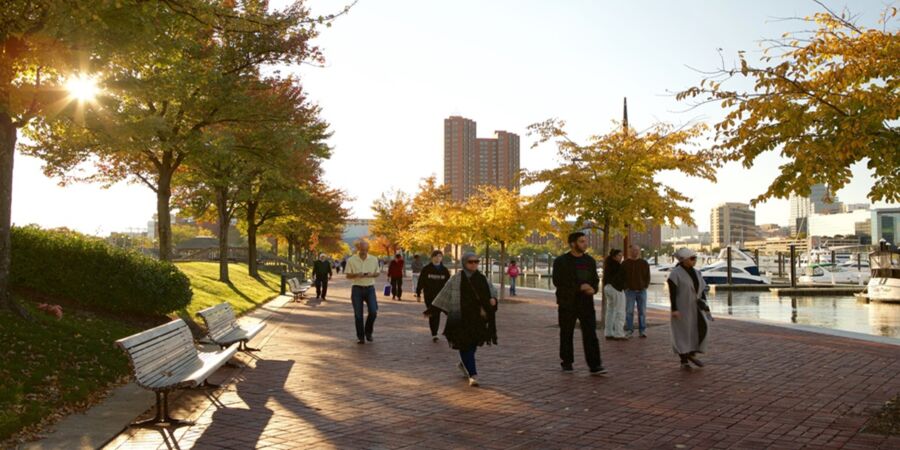
The Inner Harbor is the most heavily patrolled and most heavily observed part of Baltimore, and it is also a building site from late 2026. That second fact is the one no safety guide mentions, and it changes what a visit looks like.
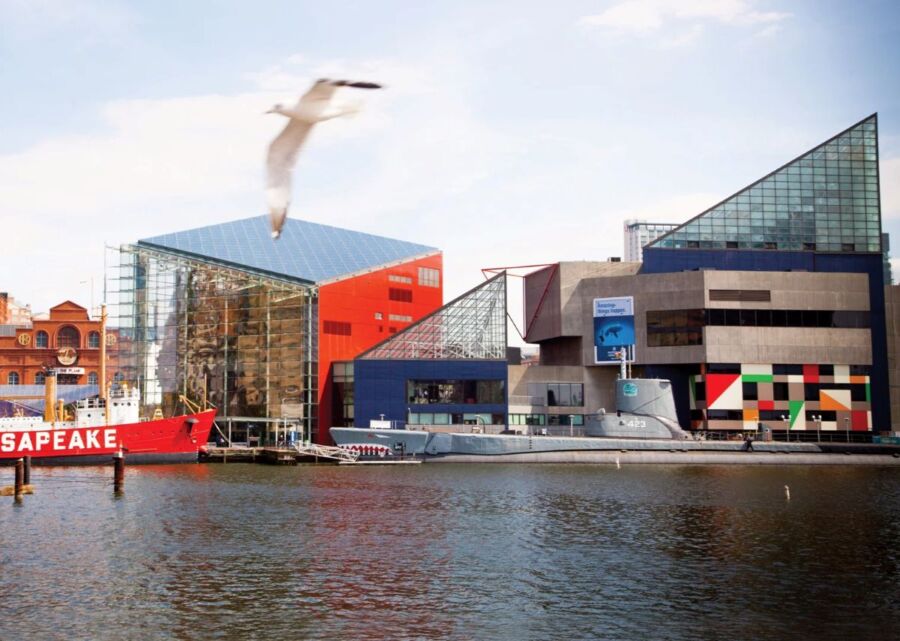
MCB Real Estate’s $900 million Harborplace redevelopment is expected to begin construction in the fourth quarter of 2026, with Whiting-Turner as general contractor. The two Harborplace pavilions at Light and Pratt streets are scheduled for demolition in the first phase, because they sit on utility lines and storm drains being rebuilt underneath. The full scheme is not expected to finish before 2031. If you are visiting in late 2026 or in 2027, plan for hoarding, closed frontage and rerouted pedestrian flow around the north-west corner of the basin. The waterfront promenade, the National Aquarium, the Historic Ships and Federal Hill Park are not part of the demolition.
On safety specifically: the harbor and downtown core are covered by the Downtown Partnership of Baltimore’s Downtown Baltimore Guides and Clean Street Ambassadors, a uniformed hospitality and presence team, coordinated since September 2025 through a Strategic Operations Center that routes calls to social workers, cleaning crews or public-safety staff as appropriate. Separately, BPD’s Safe Places network reached 194 participating businesses by mid-2026, which are premises that will let anyone who feels unsafe wait inside while help is called. Between them these are the most visible public safety measures a visitor will actually encounter, and they are concentrated in exactly the square mile most people spend their trip in.
Which Baltimore neighborhoods should a visitor actually use?
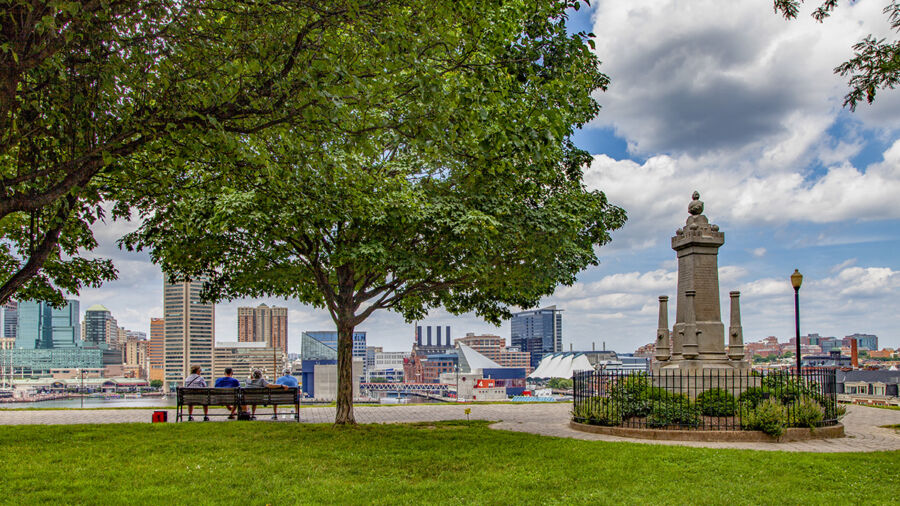
Almost everything a visitor comes for sits in a band of waterfront and near-north neighborhoods that a person can walk between. We are deliberately not publishing a ranked table of “safest neighborhoods in Baltimore” with crime scores attached, because the free neighborhood-level figures that every such table is built on are modeled estimates rather than counts, and the police department does not publish comparable neighborhood rates. What follows is what each area is for.
| Area | What you go for | Notes for a visitor |
|---|---|---|
| Inner Harbor and downtown | National Aquarium, Historic Ships, Oriole Park at Camden Yards, M&T Bank Stadium | Highest footfall and patrol density; construction disruption from late 2026 |
| Harbor East and Fells Point | Restaurants, cobbled waterfront streets, nightlife | Busy and walkable; the side streets are where cars get broken into |
| Federal Hill and Riverside | Park, skyline views, bars, walk to the stadiums | Steep, residential, quiet after about 10 p.m. |
| Locust Point | Fort McHenry, Under Armour campus, waterfront bars | A peninsula with one road in; drive or rideshare |
| Canton | Square, waterfront park, dog-friendly bars | Furthest east of the walkable harbor chain |
| Mount Vernon | Walters Art Museum, Peabody, Washington Monument, Edgar Allan Poe’s grave at Westminster Hall nearby | Ten minutes north of the harbor; the cultural center |
| Hampden and Roland Park | The Avenue on 36th Street, Hon Fest, independent shops | Take a rideshare; the route north is not a pleasant walk |
| Druid Hill Park | Maryland Zoo, Rawlings Conservatory, reservoir loop | Daylight only, and drive to the entrance you want |
What parts of Baltimore should visitors avoid?
The parts of Baltimore that carry the city’s violence are residential neighborhoods that contain nothing a visitor was looking for anyway. That is the honest version of the advice. Concentrated violence in Baltimore sits largely in West and East Baltimore corridors and in a handful of south-city pockets, and it is overwhelmingly directed within small networks of people who know each other, not at strangers passing through.
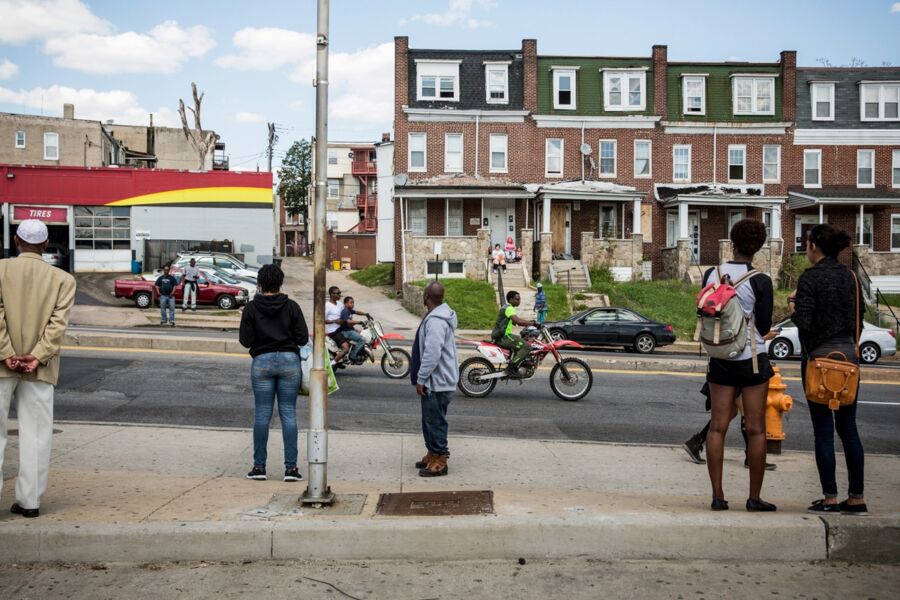
So the useful instruction is not a list of names to fear. It is this: in Baltimore the change happens over a few blocks, not a few miles. A visitor who walks north-west out of downtown, or straight north out of Mount Vernon past North Avenue, crosses that gradient without any visual warning. Check the walking route, not just the destination, and if a route takes you off a commercial street into six blocks of rowhouses to save ten minutes, take the ten minutes.
People also search this page by neighborhood name, so here is the plain answer for the ones that come up most. These are residential areas, and the question to ask about each is not “how dangerous is it” but “do I have a reason to be there”.
| Neighborhood | What it is | Reason for a visitor to go |
|---|---|---|
| Sandtown-Winchester, Harlem Park | West Baltimore rowhouse neighborhoods, long-term disinvestment, among the highest crime rates in the city | None |
| Greenmount East | East Baltimore residential, similarly high crime rates | None |
| Cherry Hill, Brooklyn, Curtis Bay | South Baltimore residential, physically separated from the harbor districts | None |
| Fairfield | Industrial and port land on the Patapsco, warehouses and empty lots | None |
| Pigtown (Washington Village) | Mixed residential just west of the stadiums, changes character block by block | Only if walking to Oriole Park at Camden Yards from the west |
| Baltimore Peninsula (formerly Port Covington) | New waterfront development south of Federal Hill | Restaurants, offices, Under Armour campus; drive or rideshare |
| Lexington Market area | Rebuilt historic market on the west edge of downtown | Yes, in daylight; the market itself is the destination, the blocks west of it are not |
Is Baltimore safe to walk around at night?
In the harbor districts, yes, on lit commercial streets, with the same care you would use in any US city after midnight. Fells Point, Harbor East, Federal Hill and the Inner Harbor promenade all keep evening footfall. What changes after dark is not the neighborhood, it is the density of other people, and Baltimore’s residential blocks empty out early. The situational awareness that matters here is spatial rather than temporal: you are far more likely to get mugged because you drifted four blocks off a commercial street than because it turned 11 p.m.
One local rule visitors run into without warning: Baltimore enforces a seasonal youth curfew each summer, in force in 2026 from the Friday before Memorial Day, 22 May, through 30 August. Children under 14 are barred from public places from 9 p.m. to 6 a.m.; the curfew for 14 to 17-year-olds starts at 11 p.m., with hours the city describes as varying by day of the week. Minors accompanied by a parent, traveling to or from work, at a supervised event, in an emergency or engaged in First Amendment activity are exempt. If you are traveling with teenagers in July, this applies to you. The city pairs it with extended recreation-center hours and says youth victims of non-fatal shootings have fallen 57% since 2023.
Is Baltimore safer than Washington DC or New York?
Baltimore’s homicide rate is still high by US city standards, and most head-to-head comparisons you will read are built wrong. Three traps make them useless.
- Counts against rates. A city of 570,000 and a city of 8 million cannot be compared on totals. Baltimore’s 2025 figure is 133 homicides, or 23.3 per 100,000 residents.
- City limits against metro areas. Baltimore City is an independent city of about 570,000 people that excludes its suburbs entirely, while many comparison figures for other places quietly include theirs. The same city looks twice as dangerous when you draw the boundary tightly.
- Mismatched years and definitions. Baltimore moved to the FBI’s National Incident-Based Reporting System on 1 January 2025, and BPD notes it also reclassified historical homicides into the years they occurred. Comparisons that straddle that change are comparing two different counting systems.
The defensible statement is the Council on Criminal Justice’s, because it applies one definition across dozens of cities: Baltimore’s homicide rate remains among the highest in that sample, and it has fallen further and faster than the sample average on almost every measure. For a visitor, the second half of that is the operative half, because the categories that fell hardest are the ones that were never aimed at visitors, and the category that did not fall is.
The other thing worth knowing is that the cities Baltimore gets bracketed with in national headlines, Detroit and St. Louis and Memphis, are usually ranked on totals or on commercial crime indexes rather than on a single consistent definition across a matched set of years. That is why the same city can be called the third most dangerous in the United States by one list and left off another entirely. Treat any list of the most dangerous cities in the U.S. as a claim about a methodology, not about a place, and check which major metropolitan boundary and which year it used before you let it change your plans.
Can a visitor carry a gun in Baltimore?
No, not on an out-of-state permit. Maryland recognizes no other state’s carry permit at all. This catches out American road-trippers arriving from Virginia, Pennsylvania or West Virginia more than any other rule in this article, and no Baltimore travel guide mentions it.
- Carrying a handgun in Maryland, openly or concealed, requires a Maryland Wear and Carry Permit. There is no reciprocity and the state is not authorized to enter reciprocity agreements.
- Non-residents can apply for a Maryland permit on the same terms as residents: 21 or over (18 where employment requires it), a qualifying firearms training course completed within two years of applying, and all federal requirements met.
- Transporting a firearm through Maryland is governed by separate transport rules and is not the same thing as carrying it.
If you are driving into the city armed on a home-state permit, you are committing an offense at the state line. Check Maryland State Police guidance before the trip, not after.
Getting around Baltimore safely
- Rideshare. Uber and Lyft both operate across the city and at BWI Marshall, where app-based pickups use designated zones. Match the plate and the driver photo before you get in, the same habit that works anywhere. If you are pricing a there-and-back trip, our guide to how Lyft round trips are charged explains why adding a stop changes the fare.
- Parking. This is the decision that matters most. A staffed garage costs a few dollars more than a street space and removes the single most likely thing to go wrong on your trip.
- Light rail and metro. Fine in daylight and around events. After about 10 p.m. the cars thin out; ride where other people are or switch to a car.
- Walking between districts. The harbor chain from Federal Hill through the Inner Harbor to Harbor East, Fells Point and Canton is continuous and walkable. Going north beyond Mount Vernon, or west out of downtown, is where people get caught out.
Is it safe to live in Baltimore, and should you move to Baltimore?
The risks that matter to a resident are almost the inverse of the ones that matter to a visitor, so do not use a travel page to pick places to live. A visitor is exposed for three days, in daylight, in the popular areas, with nothing parked overnight. Someone who moves here is exposed to burglary, arson, auto thefts and the year-round overall crime rate of one specific set of blocks, and none of that is visible from the harbor.
If that is your question, three practical steps. Pull the crime data for the exact Baltimore neighborhood blocks you are considering from Open Data Baltimore rather than a national crime index. Ask what the last twelve months look like, not the last five years, because Baltimore’s numbers have moved faster than most published summaries. And weigh the family-friendly neighborhood measures people actually live with, schools, lighting, parking and how the street reads at 10 p.m. on a Tuesday, against the headline violent crime rate. Roland Park, Mount Washington, Hampden, Locust Point and Canton come up most often as safe neighborhoods in that conversation, for reasons that have as much to do with density and street life as with policing.
Five mistakes visitors make in Baltimore
- Treating the city’s reputation as current. The figures that built it are from the 2015 to 2021 period. The 2025 and 2026 numbers describe a different city.
- Preparing for violent crime and ignoring theft. Larceny is the only category that did not fall, and it is the one aimed at people passing through.
- Street-parking a rental car with luggage in the trunk. Vehicle theft is still 28% above its pre-pandemic level and parts theft is climbing.
- Trusting a walking app’s shortest route. The route matters more than the destination here, and the shortest line between two harbor districts sometimes is not through them.
- Arriving armed on an out-of-state permit. Maryland honors none of them.
Frequently asked questions
Is Baltimore safe for tourists?
Yes. Tourist Baltimore is a compact band of waterfront and near-north districts with high footfall and the city’s heaviest police and ambassador presence. Violent crime in Baltimore is concentrated in residential neighborhoods that visitors have no reason to enter, and it fell 31% in 2026 and a further 23% through the first half of 2026.
Is the Inner Harbor safe at night?
Yes, on the promenade and the lit commercial streets around it, where footfall holds into the evening. Expect construction hoarding from late 2026 as the Harborplace redevelopment begins and the two pavilions at Light and Pratt streets are demolished.
How dangerous is Baltimore compared with the rest of the US?
Baltimore’s homicide rate of about 23.3 per 100,000 residents in 2026 is still high among large US cities, but the Council on Criminal Justice found it has fallen more sharply than in the other cities it tracks, and it is 56% below its pre-pandemic level.
What is the most likely crime to affect a visitor to Baltimore?
Theft, and specifically theft from a parked car. Larceny was the only crime category that did not fall in Baltimore’s 2025 police report, and motor vehicle theft remains 28% above its 2019 level even after a 33% year-on-year drop.
Is Baltimore safe to walk around?
In the harbor districts and Mount Vernon, yes, in daylight and on lit commercial streets after dark. The gradient between visitor areas and high-crime residential blocks in Baltimore is measured in blocks rather than miles, so check the walking route rather than only the destination.
Does Baltimore have a curfew?
For minors only, and seasonally. In 2026 the summer youth curfew runs from 22 May to 30 August: under-14s are barred from public places from 9 p.m. to 6 a.m., and the curfew for 14 to 17-year-olds begins at 11 p.m. Minors with a parent, at work, at a supervised event or in an emergency are exempt.
Is Baltimore’s crime rate going up or down in 2026?
Down for violence and up for theft. Homicides through 1 July 2026 were 50 against 65 a year earlier, a 23% fall, while early-2026 police figures reported by FOX45 showed larceny from auto up 31% and larceny of vehicle parts up 32% against the same week in 2026.
Sources and method
- Baltimore Police Department, 2025 Year-End Report, 1 January 2026, for the 2025 homicide, shooting, carjacking, clearance and NIBRS Group A figures.
- Baltimore Police Department, 2026 Mid-Year Crime Report, 1 July 2026, for the 2026 homicide, clearance and Safe Places figures.
- Council on Criminal Justice, Crime in Baltimore: What You Need to Know, for the per-100,000 rates and the comparisons against other study cities.
- FOX45, Baltimore sees uptick in several crime categories to start 2026, 18 January 2026, for the early-2026 larceny figures.
- Open Baltimore and the BPD public crime map for incident-level data.
The 23.3 per 100,000 figure is our own calculation: 133 homicides divided by the US Census Bureau’s 569,997 population estimate for 1 July 2025, multiplied by 100,000. We have deliberately not published neighborhood crime scores, because the neighborhood-level sources available for free are modeled estimates rather than police counts, and we have not published a Baltimore-against-other-cities league table, because the year, boundary and counting-system mismatches described above make most of those tables meaningless.
Last updated 17 August 2026. This rewrite replaced 2023-vintage crime statistics with the 2025 year-end and 2026 mid-year police reports, added the Council on Criminal Justice rate comparisons, added the Harborplace demolition timetable, the 2026 youth curfew dates and Maryland’s carry-permit rule, and removed a section of home-security advice that had nothing to do with visiting the city.
Disclosure: this article contains affiliate links. If you book a tour or an activity through one of them we may earn a commission at no extra cost to you. It does not affect what we recommend, and no company paid for a mention on this page.
Planning the rest of the trip? Compare notes with our guides to safety in Washington DC and safety in Atlanta, read our solo travel safety guide, or browse guided tours and activities in Baltimore and things to do around the harbor.


