About Kinkaku-ji

Description

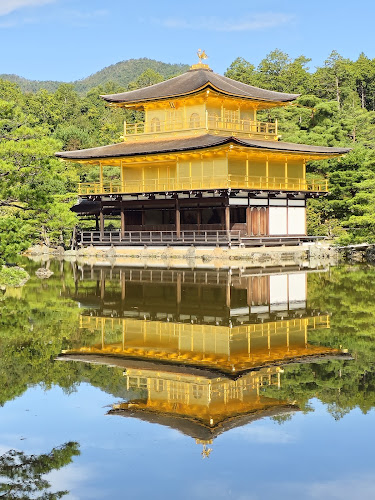
Kinkaku-ji, or the Golden Pavilion, is one of those places that somehow manages to live up to the hype — and that’s saying something. Standing before it, you can’t help but pause for a moment. The temple glimmers under the Kyoto sun, its top two floors covered entirely in gold leaf, reflecting perfectly in the still waters of the mirror pond below. It’s the kind of view that makes you forget about your phone for a second… though, let’s be honest, you’ll still take a dozen photos.

Originally built in the late 14th century as the retirement villa of shogun Ashikaga Yoshimitsu, Kinkaku-ji became a Zen Buddhist temple after his death. Despite being burned down multiple times (most famously in 1950 by a monk), it has always risen again, restored to its gleaming glory. There’s something poetic about that — beauty reborn from ashes, quite literally.

Walking through the temple grounds feels like stepping into a painting. The gardens are meticulously designed, blending water, stone, and greenery in a way that feels both natural and intentional. Every turn reveals a new angle of the pavilion, sometimes framed by pine trees, sometimes mirrored in the pond. And even when it’s crowded — which it often is — there’s a calmness that seeps into you. Maybe it’s the sound of the water, or maybe it’s just Kyoto’s magic.

That said, not everyone falls head over heels for it. Some visitors find it a bit too polished, too perfect — like a movie set rather than a spiritual site. But personally, I think that’s part of its charm. Kinkaku-ji isn’t trying to hide its grandeur; it’s unapologetically golden, and that’s what makes it unforgettable.

Key Features

  • The Golden Pavilion: The top two floors are covered in gold leaf, symbolizing purity and detachment from worldly concerns. It’s a stunning sight, especially when the sunlight hits just right.
  • Kyokochi (Mirror Pond): The pond surrounding the temple reflects the pavilion and nearby trees, creating a postcard-perfect scene that changes with the seasons.
  • Zen Gardens: The surrounding gardens are a masterclass in Japanese landscaping — winding paths, moss-covered stones, and carefully placed pines that seem effortlessly arranged.
  • Small Shrines: Along the path, you’ll find small Shinto shrines and statues, including one where visitors toss coins for good luck. It’s a fun little ritual to try.
  • Tea Houses: Traditional tea houses within the grounds offer a quiet break and a taste of matcha with a view of the temple. A moment of peace amid the buzz of tourists.
  • Accessibility: The temple grounds are generally wheelchair accessible, with ramps and restrooms available, though some paths can be a bit uneven.

And oh, the smell of pine mixed with the faint scent of incense — that’s something photos can’t capture.

Best Time to Visit

Kyoto is beautiful year-round, but Kinkaku-ji has its own rhythm depending on the season. Spring brings cherry blossoms that flutter like pink confetti, while autumn sets the hills ablaze with fiery red maples. Personally, I think winter is underrated here. When the pavilion is dusted with snow, it looks like something out of a fairytale — the gold against the white is just unreal.

Summer, on the other hand, can be hot and humid, and the crowds are at their thickest. If you go then, try to arrive early in the morning or just before closing time. The light is softer, the air cooler, and the crowds thinner. You’ll thank yourself later.

Weekdays are generally calmer than weekends, though in Kyoto, “calm” is a relative term. This is one of Japan’s most visited spots, after all. But even with a bit of jostling, it’s worth every step.

How to Get There

Reaching Kinkaku-ji is pretty straightforward, though it’s not right next to a train station. Most travelers take a bus from central Kyoto — buses 101 or 205 from Kyoto Station drop you off near the entrance. It’s about a 40-minute ride, depending on traffic. If you’re not a fan of crowded buses (and who is?), a taxi can be a more comfortable option, especially if you’re traveling with friends or family.

For those who like walking, you can make a day of it by combining Kinkaku-ji with nearby attractions like Ryoan-ji (the famous rock garden) and Ninna-ji Temple. They’re all within a few kilometers of each other, and it’s a lovely stroll if the weather cooperates. Just wear comfy shoes — Kyoto’s cobblestones can be unforgiving.

And if you’re using a bike, there’s a parking area near the entrance. Kyoto’s bike-friendly vibe makes it a fun way to explore, though the uphill ride might test your legs a bit.

Tips for Visiting

First things first — go early. The temple opens around 9 a.m., and by then, there’s already a line forming. Arriving right at opening gives you a few precious minutes of quiet before the tour groups roll in. Late afternoon is another good window, especially if you want that golden-hour glow on the pavilion.

Bring cash for small purchases, like souvenirs or snacks from nearby stalls. Japan is modern in many ways, but cash still rules in temple areas. And speaking of snacks, there’s a little stand near the exit that sells matcha ice cream — trust me, it’s worth it.

Photography is allowed, but be mindful of others. Everyone’s trying to get that perfect reflection shot, and it can feel like a polite battle of tripods sometimes. My advice? Take your photos, then put your camera away for a bit. Just stand there and soak it in. The gold, the water, the trees — it’s one of those rare places that feels timeless.

Accessibility-wise, the main path is mostly smooth and suitable for wheelchairs, though some side paths are gravelly. Restrooms are available and accessible, which is always a relief after a long bus ride. There’s no on-site parking for visitors, so plan accordingly if you’re driving.

One thing that surprises many people is that you can’t actually go inside the pavilion. It’s closed to the public, and you’ll be viewing it from across the pond. Some folks find that disappointing, but honestly, the view from the outside is what makes it special. The reflection, the symmetry — it’s art viewed from the perfect distance.

And here’s a little personal tip: if you’re visiting in winter, bring gloves. Kyoto mornings can be chilly, and the temple grounds are open-air. I learned that the hard way when my fingers went numb halfway through taking photos. Also, take your time wandering through the garden path after seeing the pavilion. There are smaller shrines, hidden viewpoints, and even a spot where you can toss coins for luck — I missed it on my first visit and only found it the second time around.

Lastly, remember to be respectful. This isn’t just a tourist attraction; it’s a sacred site. Keep your voice low, avoid touching the structures, and take a moment to appreciate what it represents — centuries of craftsmanship, spirituality, and resilience.

In the end, Kinkaku-ji isn’t just about the gold. It’s about the feeling it leaves you with — that quiet awe that lingers even after you’ve left. Whether you’re a history buff, a photographer, or just someone looking for a bit of peace, this shimmering temple in Kyoto has a way of staying with you. And honestly, that’s the best souvenir you can take home.

Key Features

  • Key Features
  • Best Time to Visit
  • How to Get There
  • Tips for Visiting

More Details

Updated December 1, 2025

Description

Kinkaku-ji, or the Golden Pavilion, is one of those places that somehow manages to live up to the hype — and that’s saying something. Standing before it, you can’t help but pause for a moment. The temple glimmers under the Kyoto sun, its top two floors covered entirely in gold leaf, reflecting perfectly in the still waters of the mirror pond below. It’s the kind of view that makes you forget about your phone for a second… though, let’s be honest, you’ll still take a dozen photos.

Originally built in the late 14th century as the retirement villa of shogun Ashikaga Yoshimitsu, Kinkaku-ji became a Zen Buddhist temple after his death. Despite being burned down multiple times (most famously in 1950 by a monk), it has always risen again, restored to its gleaming glory. There’s something poetic about that — beauty reborn from ashes, quite literally.

Walking through the temple grounds feels like stepping into a painting. The gardens are meticulously designed, blending water, stone, and greenery in a way that feels both natural and intentional. Every turn reveals a new angle of the pavilion, sometimes framed by pine trees, sometimes mirrored in the pond. And even when it’s crowded — which it often is — there’s a calmness that seeps into you. Maybe it’s the sound of the water, or maybe it’s just Kyoto’s magic.

That said, not everyone falls head over heels for it. Some visitors find it a bit too polished, too perfect — like a movie set rather than a spiritual site. But personally, I think that’s part of its charm. Kinkaku-ji isn’t trying to hide its grandeur; it’s unapologetically golden, and that’s what makes it unforgettable.

Key Features

  • The Golden Pavilion: The top two floors are covered in gold leaf, symbolizing purity and detachment from worldly concerns. It’s a stunning sight, especially when the sunlight hits just right.
  • Kyokochi (Mirror Pond): The pond surrounding the temple reflects the pavilion and nearby trees, creating a postcard-perfect scene that changes with the seasons.
  • Zen Gardens: The surrounding gardens are a masterclass in Japanese landscaping — winding paths, moss-covered stones, and carefully placed pines that seem effortlessly arranged.
  • Small Shrines: Along the path, you’ll find small Shinto shrines and statues, including one where visitors toss coins for good luck. It’s a fun little ritual to try.
  • Tea Houses: Traditional tea houses within the grounds offer a quiet break and a taste of matcha with a view of the temple. A moment of peace amid the buzz of tourists.
  • Accessibility: The temple grounds are generally wheelchair accessible, with ramps and restrooms available, though some paths can be a bit uneven.

And oh, the smell of pine mixed with the faint scent of incense — that’s something photos can’t capture.

Best Time to Visit

Kyoto is beautiful year-round, but Kinkaku-ji has its own rhythm depending on the season. Spring brings cherry blossoms that flutter like pink confetti, while autumn sets the hills ablaze with fiery red maples. Personally, I think winter is underrated here. When the pavilion is dusted with snow, it looks like something out of a fairytale — the gold against the white is just unreal.

Summer, on the other hand, can be hot and humid, and the crowds are at their thickest. If you go then, try to arrive early in the morning or just before closing time. The light is softer, the air cooler, and the crowds thinner. You’ll thank yourself later.

Weekdays are generally calmer than weekends, though in Kyoto, “calm” is a relative term. This is one of Japan’s most visited spots, after all. But even with a bit of jostling, it’s worth every step.

How to Get There

Reaching Kinkaku-ji is pretty straightforward, though it’s not right next to a train station. Most travelers take a bus from central Kyoto — buses 101 or 205 from Kyoto Station drop you off near the entrance. It’s about a 40-minute ride, depending on traffic. If you’re not a fan of crowded buses (and who is?), a taxi can be a more comfortable option, especially if you’re traveling with friends or family.

For those who like walking, you can make a day of it by combining Kinkaku-ji with nearby attractions like Ryoan-ji (the famous rock garden) and Ninna-ji Temple. They’re all within a few kilometers of each other, and it’s a lovely stroll if the weather cooperates. Just wear comfy shoes — Kyoto’s cobblestones can be unforgiving.

And if you’re using a bike, there’s a parking area near the entrance. Kyoto’s bike-friendly vibe makes it a fun way to explore, though the uphill ride might test your legs a bit.

Tips for Visiting

First things first — go early. The temple opens around 9 a.m., and by then, there’s already a line forming. Arriving right at opening gives you a few precious minutes of quiet before the tour groups roll in. Late afternoon is another good window, especially if you want that golden-hour glow on the pavilion.

Bring cash for small purchases, like souvenirs or snacks from nearby stalls. Japan is modern in many ways, but cash still rules in temple areas. And speaking of snacks, there’s a little stand near the exit that sells matcha ice cream — trust me, it’s worth it.

Photography is allowed, but be mindful of others. Everyone’s trying to get that perfect reflection shot, and it can feel like a polite battle of tripods sometimes. My advice? Take your photos, then put your camera away for a bit. Just stand there and soak it in. The gold, the water, the trees — it’s one of those rare places that feels timeless.

Accessibility-wise, the main path is mostly smooth and suitable for wheelchairs, though some side paths are gravelly. Restrooms are available and accessible, which is always a relief after a long bus ride. There’s no on-site parking for visitors, so plan accordingly if you’re driving.

One thing that surprises many people is that you can’t actually go inside the pavilion. It’s closed to the public, and you’ll be viewing it from across the pond. Some folks find that disappointing, but honestly, the view from the outside is what makes it special. The reflection, the symmetry — it’s art viewed from the perfect distance.

And here’s a little personal tip: if you’re visiting in winter, bring gloves. Kyoto mornings can be chilly, and the temple grounds are open-air. I learned that the hard way when my fingers went numb halfway through taking photos. Also, take your time wandering through the garden path after seeing the pavilion. There are smaller shrines, hidden viewpoints, and even a spot where you can toss coins for luck — I missed it on my first visit and only found it the second time around.

Lastly, remember to be respectful. This isn’t just a tourist attraction; it’s a sacred site. Keep your voice low, avoid touching the structures, and take a moment to appreciate what it represents — centuries of craftsmanship, spirituality, and resilience.

In the end, Kinkaku-ji isn’t just about the gold. It’s about the feeling it leaves you with — that quiet awe that lingers even after you’ve left. Whether you’re a history buff, a photographer, or just someone looking for a bit of peace, this shimmering temple in Kyoto has a way of staying with you. And honestly, that’s the best souvenir you can take home.

Key Highlights

  • Key Features
  • Best Time to Visit
  • How to Get There
  • Tips for Visiting

Location

Places to Stay Near Kinkaku-ji

Find and Book a Tour

Explore More Travel Guides

No reviews found! Be the first to review!

Traveler Reviews for Kinkaku-ji

There are no reviews yet. Be the first one to write one.

Share Your Experience

Have you visited Kinkaku-ji? Help other travelers by sharing your review.

Find Accommodations Nearby

Recommended Tours & Activities

Visitor Reviews

There are no reviews yet. Be the first one to write one.

Share Your Experience

Have you visited Kinkaku-ji? Help other travelers by leaving a review.